Caption
Complete case caption with court name and docket number placed at top so the order ties directly to the case file and avoids clerk confusion during entry.
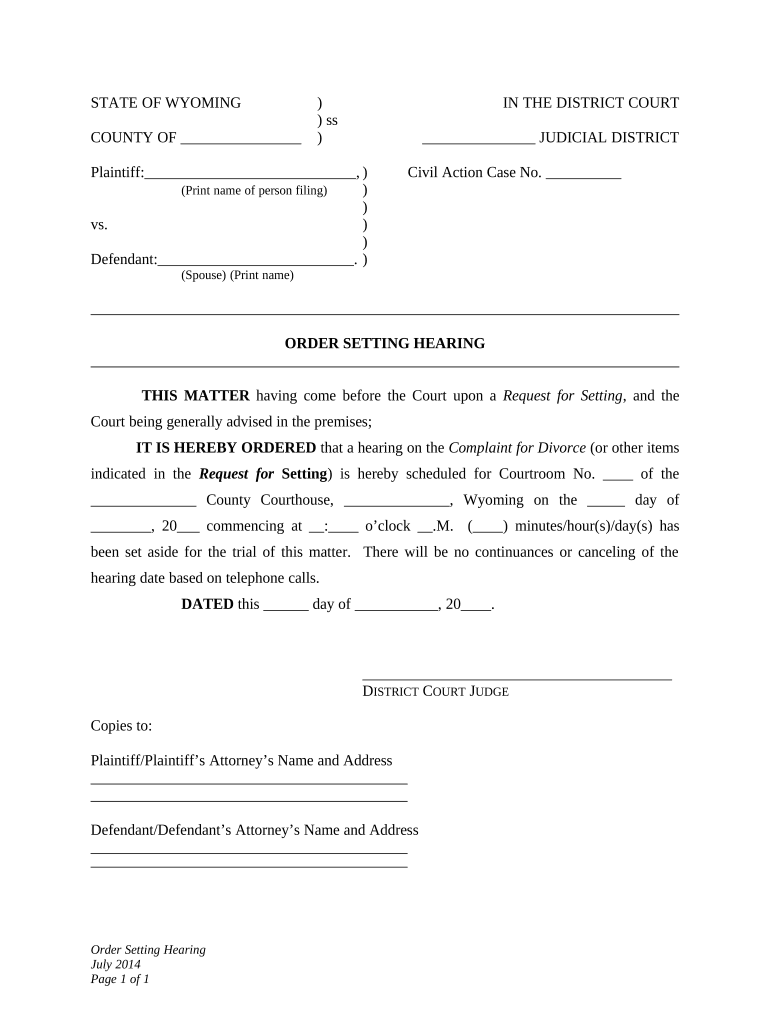
A correctly prepared order and clear hearing record reduce disputes about deadlines, preserve rights to appeal, and limit the chance of missed service or late filings. Precise orders help courts manage dockets and give parties a reliable roadmap for discovery, motions, and trial preparation.

Proper preparation by all participants shortens the hearing, reduces follow-up disputes, and creates an enforceable written order for the case file.
| Field | Configuration |
|---|---|
| File Format | Use PDF/A for main documents and ensure searchable text where required. |
| Signature Type | Select e-signature with audit trail or wet ink depending on court acceptance. |
| Service Method | Enable email service notifications and prepare hard-copy service if local rules require it. |
| Retention Setting | Archive final signed order in a secure system for statutory retention periods. |
Use platforms that provide a tamper-evident audit trail, retain copies per regulatory requirements, and integrate with e-filing portals where available.
Complete case caption with court name and docket number placed at top so the order ties directly to the case file and avoids clerk confusion during entry.
Brief background statements that identify prior orders, notices, or stipulations to provide context for the scheduling directives entered by the judge.
Numbered directives with precise deadlines, method of service, and responsible parties so obligations are enforceable and measurable against the court’s calendar.
Specific calendar dates and times, with fallback language for continuances, minimize ambiguity and reduce the need for future scheduling motions.
Designate space for the judge’s signature, date, and clerk stamps; include preparer contact to facilitate administrative follow-up if the court edits the order.
List parties served, service method, and filing date so the order file includes proof of notice and reduces post-entry challenges.
Serve notice per local rules; often several days to weeks before hearing.
File the proposed order per clerk requirements before the hearing date.
Local rules may set a deadline to file objections to proposed orders.
Timely motion required; courts review availability and prejudice.
Court signs and files order; parties should retrieve the filed copy promptly.
Prepare proposed order and confirm internal approval before serving opposing parties.
Serve opposing parties and file proof of service to establish notice.
Appear, address disputes succinctly, and accept judge edits or clarifications.
Obtain signed order and store a certified copy in the case file and records system.
| signNow | DocuSign | Adobe Sign | PandaDoc | HelloSign | |
|---|---|---|---|---|---|
| Starting Price | $8/user/mo | $15/user/mo | $14/user/mo | $19/user/mo | $15/user/mo |
| Free Trial | 7-day free trial | Varies | Varies | Varies | Varies |
| Bulk Send | Yes | Yes | Yes | Yes | No |
| Audit Trail | Yes | Yes | Yes | Yes | Yes |
| HIPAA Compliant | Yes | Yes | Yes | No | No |
A commercial litigation team files a proposed case-management order to set discovery deadlines and trial dates.
In a family law matter the parties submit a proposed order addressing temporary custody and exchange dates.