Establishing secure connection…Loading editor…Preparing document…

Oregon Workers' Compensation Form

This template is fully customizable. Edit the text, fill out the fields, and send it for signature. Give it a try!
Oregon Workers' Compensation Form

What the Oregon Workers' Compensation Form Is and when it applies

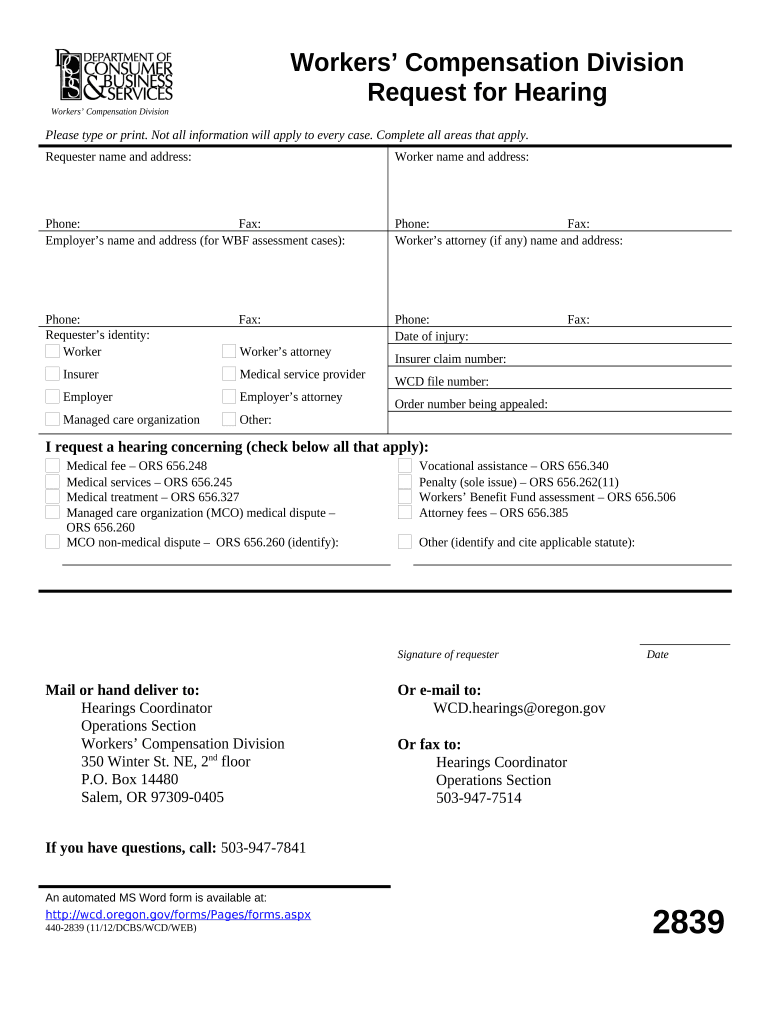
The Oregon Workers' Compensation Form documents an employee's work-related injury or occupational illness for submission to the Oregon Workers' Compensation Division (WCD) or an employer's claims administrator. It captures claimant identity, employer details, injury description, date and location of the incident, treating provider information, and lost-time or wage-loss details. Employers, medical providers, and employees use this form to open or manage a claim, trigger benefits, and create an official record for claims handling, medical authorization, and potential wage-replacement or medical-payments processing.

Why the form matters for claims and compliance

Filing a complete Oregon Workers' Compensation Form starts the formal claims process, documents the employer's notice obligation, and supports timely medical and wage benefits. Accurate submission reduces administrative delays, helps preserve legal rights, and creates a traceable record for audits or disputes under Oregon workers' compensation law.

Why the form matters for claims and compliance

Primary users and stakeholders for the form

Key stakeholders routinely involved include employers and HR teams, injured employees, treating medical providers, and insurers or third-party administrators.

  • Employers and HR: report incident details, payroll data, and employer contact information to initiate a claim.
  • Injured employees: provide personal details, incident narrative, and authorization for medical treatment and records release.
  • Medical providers / clinics: supply diagnosis, treatment dates, work restrictions, and return-to-work recommendations.

Step-by-step: completing and submitting the Oregon Workers' Compensation Form

Follow these steps in order to prepare the form and begin claims intake.

  • 01
    Gather documents: Collect ID, payroll record, and any incident reports before you start.
  • 02
    Complete claimant section: Enter personal details, job title, and contact information accurately.
  • 03
    Describe the incident: Provide clear facts: date, time, place, and injury mechanism.
  • 04
    Submit to employer/insurer: Send the completed form to your employer or the insurer's claims intake channel.

How the intake and routing process typically flows

Understand the common routing so you can track the claim from submission to adjudication.

  • Employee completes form: Employee provides incident and medical details to employer or clinic.
  • Employer reviews and forwards: Employer confirms employment details and forwards to insurer or WCD.
  • Insurer assigns claim number: Claims unit opens file, assigns a claim number, and logs the report.
  • Medical care authorized: Insurer or employer authorizes treatment and begins benefit evaluation.

Digital setup: configuring an online submission workflow

If you accept electronic forms, configure fields and routing to match your claims process.

Field Configuration
Claimant fields Require name, DOB, contact, and SSN/TIN masking where needed
Incident fields Make date and description required with MM/DD/YYYY validation
Provider fields Capture clinic details and phone number; set as required
Routing Auto-forward to HR, claims inbox, and insurer with attachments

Delivery options and technical requirements for eSubmission

Ensure the chosen platform supports HIPAA protections if medical details are included and provides an audit trail for compliance.

  • Accepted formats: PDF and DOCX are standard; preserve original formatting and include audit metadata
  • Authentication: Use email verification, SMS codes, or multi-factor for higher-assurance signers
  • Integrations: Connect with HRIS, claim systems, or cloud storage to automate intake and retention

Key timelines and what to expect after filing

Timely reporting and follow-up protect benefits and limit employer liability; note these common timing milestones.

Employer reporting expectation:

Report the injury internally immediately; many insurers expect notice within 24–72 hours

Claim opening:

Insurer typically opens the claim within a few business days after receipt

Medical authorization:

Initial treatment authorization often occurs within 1–7 business days

Benefit decision:

Compensability decisions can take several weeks depending on investigation

Appeal deadlines:

Oregon contest or appeal windows vary; act promptly if you disagree with decisions

Milestones from report to resolution

A sequential view helps participants track progress and required actions at each stage.

01

Initial Report

Employee or employer documents the incident and files the form.

02

Insurer Intake

Insurer registers the report and assigns a claim number.

03

Medical Review

Provider records and treatment details are reviewed for compensability.

04

Decision & Benefits

Insurer issues compensability and benefit determinations or denial.

Common errors that delay claims

  • Incomplete incident descriptions that omit time, place, or mechanism of injury.
  • Mismatched names or incorrect DOBs that prevent claim matching.
  • Missing provider contact or treatment dates that delay medical bill processing.
  • Failure to submit required attachments such as initial medical reports or employer payroll details.

Risks from incorrect or late filings

Delayed Benefits: Incomplete forms can delay medical or wage-replacement payments.
Claim Denial Risk: Insufficient incident detail may lead to compensability denials.
Audit Exposure: Missing employer records may trigger administrative review and fines.
Legal Disputes: Incorrect filings can complicate litigation or appeals.
Privacy Violations: Improper handling of medical data can trigger HIPAA obligations.
Worker Retention: Delays or denials can harm employee relations and retention.

Data and security items to protect on the form

Personally Identifiable Information: SSNs and DOBs
Medical Information: Diagnosis and treatment details
Employment Details: Wages and job classification
Provider Records: Medical invoices and notes
Audit Trail: Timestamps and signer IPs
Access Controls: Role-based permissions

Representative use cases from typical organizations

These examples illustrate how employers and clinics use the form to manage claims and care coordination.

Small Employer

A retail store logs a back strain from lifting inventory

  • Employer documents shift details and witness statement
  • The insurer authorized medical care within days; timely reporting reduced wage-loss disputes and streamlined return-to-work coordination.

Medical Clinic

An urgent-care clinic records work-related sprain treatment

  • Clinic includes NPI and treatment dates
  • Using standardized fields allowed the clinic to provide clear invoices and supporting documentation that accelerated claim adjudication and payment.

Practical tips for completing the Oregon Workers' Compensation Form efficiently

Apply consistent procedures to reduce errors and speed processing across claims.

Standardize intake
Use a single digital template and validation rules to prevent missing or malformed entries.
Verify identities
Confirm claimant identity with ID and employment records to avoid mismatches.
Attach supporting records
Include initial medical reports, witness statements, and relevant payroll data for faster decisions.
Preserve the audit trail
Use systems that record timestamps, signer identity, and file versions for compliance and defense.

Comparing eSignature vendor pricing and key capabilities for form processing

Basic pricing and feature availability across common eSignature vendors; signNow is listed first per comparative format.

signNow DocuSign Adobe Sign PandaDoc HelloSign
Starting Price $8/user/mo $15/user/mo $14/user/mo $19/user/mo $15/user/mo
Free Trial 7-day trial Varies Varies Varies Varies
Bulk Send Yes Yes Yes Yes No
Audit Trail Yes Yes Yes Yes Yes
HIPAA Compliant Yes Yes Yes No No
Envelope Cap No cap 100 envelopes/user/year Varies by plan Varies by plan Varies by plan

How electronic signatures compare to digital (cryptographic) signatures

Understanding the difference helps determine the appropriate signing method for workers' compensation records.

Criteria Electronic Signature Digital Signature (PKI)
Definition any electronic mark cryptographic certificate-based signature
Legal status accepted under esign/ueta accepted and provides stronger non-repudiation
Auditability audit trail evidence cryptographic integrity and certificate chain
Typical use day-to-day forms high-assurance or regulated records

Frequently asked questions about the Oregon Workers' Compensation Form

Answers to common questions about completion, submission, signatures, and recordkeeping.


Need help? Contact support

be ready to get more
Join over 28 million airSlate SignNow users