Establishing secure connection…Loading editor…Preparing document…

Participation Agreement

This template is fully customizable. Edit the text, fill out the fields, and send it for signature. Give it a try!
Participation Agreement

What a Participation Agreement Is and when it applies

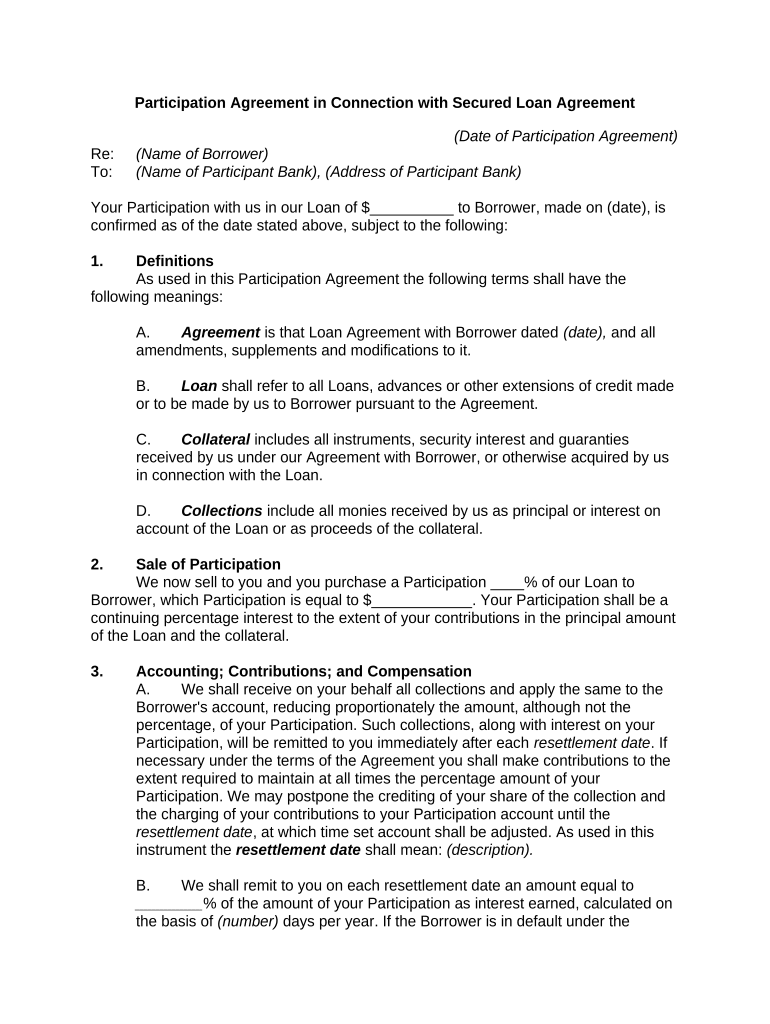
A Participation Agreement is a legally binding contract that defines the rights, obligations, and terms governing participation in a program, project, or collective activity. It identifies the parties, scope of participation, duration, responsibilities, compensation or consideration, confidentiality, liability allocation, dispute resolution, and termination conditions. In many contexts it also establishes compliance requirements, data-handling expectations, and applicable law. Participation Agreements are used by organizations, sponsors, service providers, and individuals to make terms explicit and enforceable, whether executed on paper or electronically under ESIGN/UETA legal frameworks.

Why a Participation Agreement matters for clarity and risk allocation

Use a Participation Agreement to reduce ambiguity, allocate risk, and document consent and compensation. Clear written terms support enforceability, streamline onboarding, and create a single authoritative record for compliance, audits, and dispute resolution under ESIGN and UETA.

Why a Participation Agreement matters for clarity and risk allocation

Who commonly completes a Participation Agreement

Typical users include program sponsors, vendors, individual participants, and administrators who manage enrollment, compliance, and payments.

  • Sponsors and organizers who define program rules, eligibility, and compensation terms for participants.
  • Vendors and contractors providing services under the agreement and needing documented scopes and payment terms.
  • Individual participants or beneficiaries who must accept obligations, acknowledge risks, or grant licenses and releases.

Representative signers and their roles

Program Sponsor

The entity that creates the program, sets eligibility and benefits, and enforces terms. Sponsors are responsible for providing consideration, managing participant data, and ensuring the agreement aligns with applicable regulations and internal policies; legal review is common before execution.

Participant Representative

Individual or organization signing on behalf of a participant. They must have authority to bind the participant, confirm understanding of obligations, and provide accurate identity and payment details. Signatures should match legal names to avoid payment or tax issues.

Key clauses that make a Participation Agreement functional

Core provisions make a Participation Agreement enforceable and operational across parties, covering scope, compensation, confidentiality, liability, term, and termination mechanics.

Scope

Describe permitted activities, deliverables, and limits on participation. Be precise about geographic, temporal, and functional boundaries to avoid downstream disputes and to guide compliance effectively.
Consideration

State cash payments, credits, reimbursements, or non-monetary exchanges and specify timing, invoicing, tax treatment, and withholding responsibilities to prevent payment disputes and meet IRS reporting requirements.

Confidentiality

Define confidential information, permitted disclosures, duration of the obligation, and exceptions. Include data-handling standards if personal or regulated data is involved, and require breach notification procedures.

Liability

Allocate risk by limiting types of recoverable damages, setting caps, and clarifying indemnification obligations. Specify insurance requirements where appropriate to protect parties during performance activities.

Term

State effective date, duration, renewal mechanisms, and conditions that trigger automatic renewal or expiration; include survival clauses such as confidentiality and indemnity to remain in force after termination.

Termination

Describe grounds for termination, notice periods, cure rights, and post-termination obligations including return or destruction of confidential materials and final settlement of payments and ongoing reporting.

Essential data fields to collect in the agreement

Participant Name: Full legal name as on ID
Effective Date: MM/DD/YYYY format required
Contact Information: Street, city, state, ZIP
Consideration Details: Amount or description of exchange
Confidentiality Term: Duration in months or years
Signature Block: Typed or handwritten signature and date

Step-by-step: completing and executing the agreement

Follow these steps to complete and execute a Participation Agreement accurately, whether on paper or using an eSignature platform.

  • 01
    Prepare Document: Gather party details, scope, and payment terms.
  • 02
    Review Legal Terms: Confirm confidentiality, liability, and governing law.
  • 03
    Sign Electronically: Use an ESIGN-compliant platform and capture audit trail.
  • 04
    Distribute Copies: Provide each party an executed copy and retain records.

How to set up an online signing workflow

Configure an online workflow to collect signatures, verify identity, and route executed copies to stakeholders and recordkeepers.

Field Configuration
Authentication Method Email + optional SMS code
Signature Order Sequential or parallel signer order
Reminders Automated email reminders schedule
Storage Location Cloud folder with retention policy

Technical considerations for eSubmission and storage

The document can be completed on paper or via eSignature platforms; online workflows expedite collection while preserving audit trails required for enforceability.

  • File Formats: PDF, DOCX supported
  • Integrations: Works with CRM and storage
  • Security: TLS in transit, AES-256 at rest

Typical routing and execution flow

Common routing options for executed Participation Agreements depend on whether signatures are collected in sequence, in parallel, or via a public signing link.

  • Upload: Sender uploads final agreement
  • Place Fields: Add signature, date, and initials
  • Invite Signers: Email or link invitations sent
  • Complete & Archive: Capture audit trail and store copy

Dates and deadlines to track in the agreement

Key dates to track include effective date, deliverable deadlines, renewal windows, notice periods for termination, and tax or reporting deadlines tied to payments.

Effective Date:

Date obligations commence (MM/DD/YYYY)

Delivery Milestones:

List specific deadlines for services or submissions

Renewal Window:

Period to provide notice before automatic renewal

Termination Notice:

Required days' notice before termination takes effect

Tax Reporting:

Track payment dates for Form 1099 reporting obligations

Common mistakes to avoid when preparing the agreement

  • Using ambiguous scope language that leaves deliverables undefined, creating disputes over performance expectations and payment triggers.
  • Failing to match signer names to legal records, which can delay payments, tax reporting, and may require corrective affidavits.
  • Neglecting to document consideration or payment schedules clearly, leading to late or missed payments and collection issues.
  • Assuming electronic consent without a consumer disclosure when the agreement is consumer-facing, risking noncompliance with ESIGN §7001(c).

Potential penalties and legal risks

Tax Penalties: IRC §6721 fines
Backup Withholding: 24% withholding rate
Breach Liability: Monetary damages possible
Invalid Signature: Agreement may be unenforceable
Data Breach Risk: HIPAA exposure if PHI
Notarization Failure: Deed or POA may be invalid

Practical examples of Participation Agreements in use

Real-world examples show how Participation Agreements clarify obligations, speed onboarding, and preserve compliance across diverse organizations.

Optica Ventures — COO

Optica Ventures used a Participation Agreement to standardize investor and operator obligations across portfolio companies, avoiding inconsistent terms.

  • Standardized terms reduced negotiation cycles and confusion.
  • As COO Brian Fitzgibbons described, consistent agreements made it easier for participants to sign quickly while preserving a clear legal record and reducing follow-up clarifications during onboarding and audits.

Martin Properties — Founder

Martin Properties executed Participation Agreements for rental projects to collect tenant commitments and regulatory disclosures without in-person meetings.

  • Remote execution saved onsite processing time.
  • Founder Tim Martin emphasized the ability to process and execute documents online with compliance and security, enabling faster closings and consistent recordkeeping for internal and external review.

How vendor pricing and features compare for electronic signing

Compare typical vendor starting prices and key features important for eSigning Participation Agreements; signNow is listed first for direct comparison.

signNow DocuSign Adobe Sign PandaDoc HelloSign
Starting Price $8/user/mo $15/user/mo $14/user/mo $19/user/mo $15/user/mo
Free Trial 7-day free trial Varies Varies Varies Varies
Bulk Send Yes Yes Yes Yes No
Audit Trail Yes Yes Yes Yes Yes
HIPAA Compliant Yes Yes Yes No No
Envelope Cap No cap 100 envelopes/user/year Varies by plan Varies by plan Varies by plan

Frequently asked questions and practical answers

Answers to frequent questions about validity, signatures, notarization, amendments, storage, and using eSignature platforms for Participation Agreements.


Need help? Contact support

be ready to get more
Join over 28 million airSlate SignNow users