Establishing secure connection…Loading editor…Preparing document…

Pennsylvania Bankruptcy Petition

This template is fully customizable. Edit the text, fill out the fields, and send it for signature. Give it a try!
Pennsylvania Bankruptcy Petition

What the Pennsylvania Bankruptcy Petition Is and when it's used

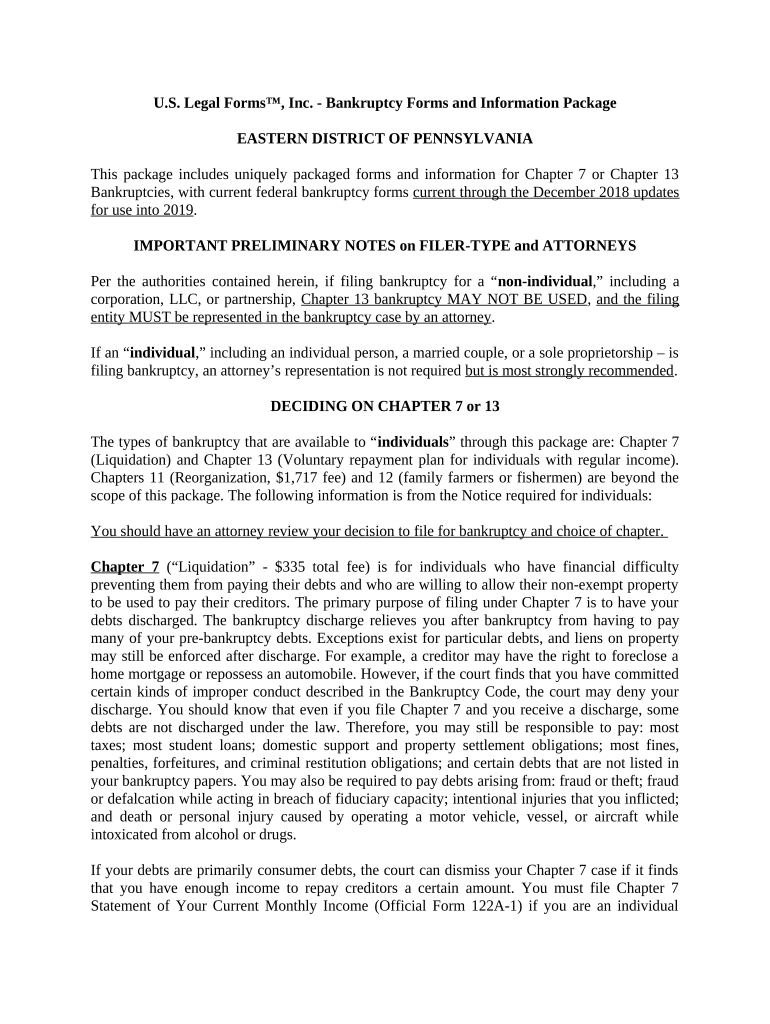
A Pennsylvania Bankruptcy Petition is the formal court document filed to open a consumer or business bankruptcy case in a federal bankruptcy court serving Pennsylvania. The petition identifies the debtor, states the chapter of relief sought (commonly Chapter 7 or Chapter 13), summarizes assets and liabilities, and attaches required schedules, statements of financial affairs, and supporting exhibits. Filing the petition triggers the automatic stay that halts most creditor collection activity and starts the court-managed process for asset distribution, discharge evaluation, or a court-approved repayment plan.

Why filing a correct Pennsylvania Bankruptcy Petition matters

A complete, accurate petition preserves legal protections like the automatic stay, reduces risk of case dismissal or trustee objections, and speeds resolution of debts under the Bankruptcy Code and local rules.

Why filing a correct Pennsylvania Bankruptcy Petition matters

Who typically prepares and files this petition

The petition is prepared by the debtor, often with a bankruptcy attorney, and is submitted to the appropriate U.S. Bankruptcy Court in Pennsylvania.

  • Individuals and households seeking discharge or reorganization
  • Small business owners filing business or personal bankruptcy
  • Bankruptcy attorneys and paralegals preparing court-ready filings

Core sections of a professional Pennsylvania Bankruptcy Petition

A professional petition groups required information into clear schedules and exhibits so the court, trustee, and creditors can assess assets, liabilities, income, expenses, and procedural requests.

Cover Sheet

Debtor name(s), SSN/Tax ID last four, case chapter selection, and jurisdictional statement; used by the court to open the docket.
Schedules

Schedule A–J listing real property, personal property, secured and unsecured creditors, and monthly income and expense details.

Statement of Affairs

Narrative disclosures about recent transfers, pending lawsuits, and financial transactions required for trustee and creditor review.

Means Test

Calculation of disposable income to determine Chapter 7 eligibility or need for Chapter 13 plan; includes standard deductions and local adjustments.

Creditor Matrix

Formatted mailing list of all creditors and parties in interest for court noticing and service; accuracy prevents notice failures.

Summary & Signature

Declaration under penalty of perjury by debtor(s) and signature block for attorney or pro se filer with date and contact details.

Step-by-step: completing and filing a Pennsylvania Bankruptcy Petition

Work through these sequential steps to prepare a petition that satisfies court intake requirements and trustee review.

  • 01
    Gather Documents: Collect pay stubs, tax returns, bank statements, deeds, and loan documents for schedules and means test.
  • 02
    Complete Schedules: Populate Schedules A–J with assets, liabilities, income, and expenses; prepare the statement of financial affairs.
  • 03
    Prepare Creditor Matrix: Compile an accurate mailing list of all creditors and parties in interest in the format required by the court.
  • 04
    File with Court: Submit the petition and schedules to the appropriate U.S. Bankruptcy Court for your district in Pennsylvania and pay filing fees or request fee waiver.

How to set up a digital filing workflow for the petition

Configure a repeatable workflow that combines document preparation, eSignature, and court-ready export to streamline multiple filings.

Field Configuration
Document Template Create reusable petition and schedule templates in PDF or DOCX to prefill common data.
Signature Routing Order signer roles for debtor(s) and attorney; enable required signature and date fields.
Authentication Choose email+SMS or Knowledge-Based Authentication for signer verification depending on court or creditor needs.
Export Settings Generate flattened, signed PDF/A when required by court rules for reliable archival and printing.

Where to file and how submissions are routed in Pennsylvania

Identify the correct federal bankruptcy court district and follow local rules for electronic filing, noticing, and fee payments.

  • District Selection: File in the U.S. Bankruptcy Court for the district covering your county (Western, Middle, or Eastern District of Pennsylvania).
  • CM/ECF Filing: Registered filers use the court’s CM/ECF system; pro se filers follow local pro se guidance and may need paper submission options.
  • Trustee Assignment: After filing, the case is assigned a trustee who reviews schedules and claims for asset distribution or plan feasibility.
  • Notice Distribution: The court issues the official notice of filing and meeting of creditors (341 meeting) and sends it to the creditor matrix.

Digital signing and technical requirements for e-submission

Confirm the court’s allowed file formats and the authentication level required for signatures before e-submitting the petition.

  • Accepted Formats: PDF, PDF/A and sometimes flattened signed PDF for archival
  • Authentication: Email verification plus optional SMS or KBA depending on sensitivity
  • Audit Trail: Timestamped record with IP address, signer email, and action log

Consequences of errors or omissions on the petition

Case Dismissal: Material omissions or failure to follow procedure can lead to dismissal or conversion to another chapter
Denial of Discharge: Concealing assets or transfers may result in denial of discharge or revocation of discharge later
Trustee Objections: Undisclosed assets or improper valuation can trigger trustee motions and clawbacks
Perjury Exposure: False statements on schedules expose the debtor to perjury or criminal charges
Fee Penalties: Late fee payments or missing fee waiver steps may incur additional costs or require installment plans
Creditor Motions: Creditors may file motions for relief from stay or to object to exemptions

Common mistakes to avoid when preparing the petition

  • Incomplete schedules leaving out small but reportable assets or accounts
  • Mismatched names, social security numbers, or addresses across documents
  • Failing to include recent transfers or settlements in the statement of affairs
  • Improperly formatted creditor matrix that causes notice failures

Key timing considerations and deadlines to watch

Certain dates are time-critical in bankruptcy practice; missing them can affect discharge, claims, and plan confirmation rights.

Filing Date:

Case official opening date; triggers the automatic stay and sets other deadlines

341 Meeting:

Meeting of creditors typically scheduled 20–40 days after filing; attendance is mandatory

Deadline to Object:

Creditors have set periods to object to discharge or exemptions; local rules determine exact timing

Plan Filing Deadlines:

Chapter 13 requires timely plan submission and confirmation hearings per local calendar

Document Retention:

Keep signed originals and audit trails for administrative and appeals timeframes

Milestone timeline from petition to discharge

This sequential milestone view outlines the typical stages and what to expect at each point in a consumer bankruptcy case.

01

File Petition

Case opens and automatic stay begins; trustee is assigned and notice issues

02

341 Meeting

Debtor testifies under oath and trustee reviews schedules and assets

03

Trustee Actions

Trustee may investigate, sell nonexempt assets, or recommend closure

04

Confirmation / Discharge

Plan confirmation in Chapter 13 or discharge in Chapter 7 if no disqualifying issues

eSignature pricing snapshot for petition workflows (comparison of common providers)

Selecting an eSignature provider affects cost, authentication options, and compliance features needed for court-ready petitions and supporting records.

signNow DocuSign Adobe Sign PandaDoc HelloSign
Starting Price $8/user/mo $15/user/mo $14/user/mo $19/user/mo $15/user/mo
Free Trial 7-day free trial Varies Varies Varies Varies
Bulk Send Yes Yes Yes Yes No
Audit Trail Yes Yes Yes Yes Yes
HIPAA Compliant Yes Yes Yes No No

Frequently asked questions about the Pennsylvania Bankruptcy Petition

Answers to typical questions that arise when preparing, signing, and submitting petitions in Pennsylvania federal bankruptcy courts.


Need help? Contact support

be ready to get more
Join over 28 million airSlate SignNow users