Establishing secure connection…Loading editor…Preparing document…

Price Reduction Request Letter

This template is fully customizable. Edit the text, fill out the fields, and send it for signature. Give it a try!
Price Reduction Request Letter

What a Price Reduction Request Letter Is

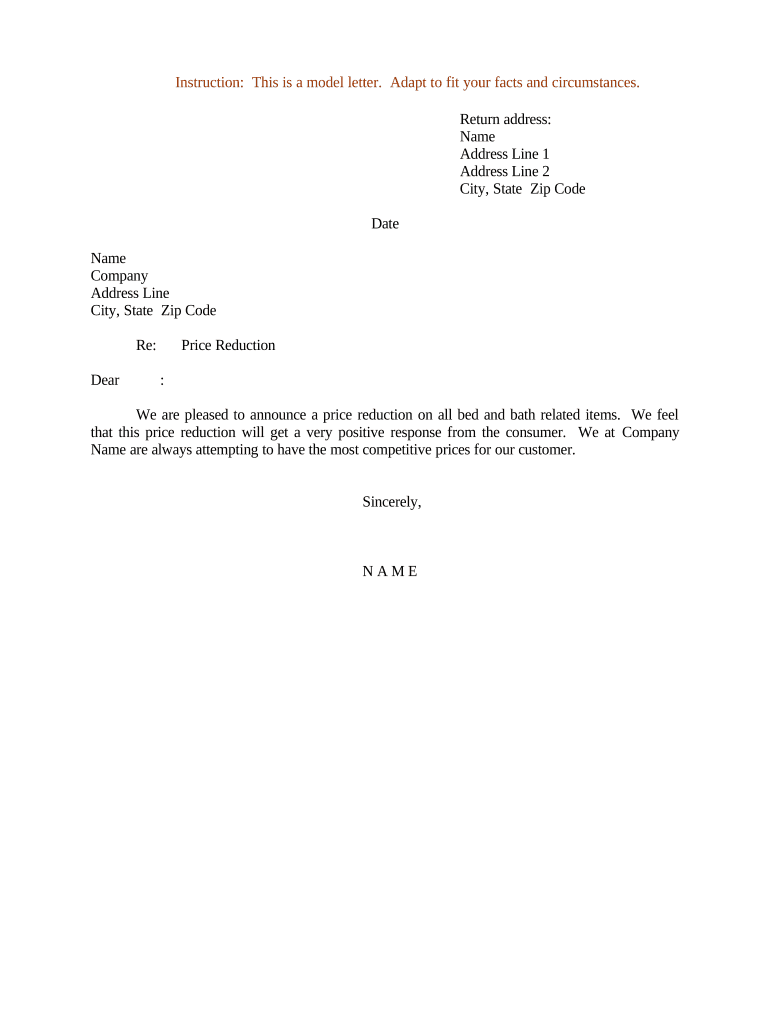
A Price Reduction Request Letter is a formal written communication from a buyer, lessee, or contractor asking a seller, vendor, landlord, or client to lower the agreed or proposed price for goods, services, or real property. It explains the reason for the request, proposes a new price or rate, and summarizes supporting facts or documentation such as competitor quotes, changed market conditions, defect findings, or budget constraints. The letter creates a record of the request and can be sent as a standalone document, attached to a contract amendment, or submitted electronically using an eSignature platform for acknowledgement and tracking.

Why a Clear Request Letter Matters

A concise, well-documented request increases the chance of a mutually acceptable adjustment, preserves negotiation records, and supports internal approval processes. It clarifies expectations and reduces later disputes over timing, scope, or agreed pricing.

Why a Clear Request Letter Matters

Who Typically Sends or Receives This Letter

Common senders include procurement managers, tenants, contractors, and purchasing agents seeking contract adjustments.

  • Procurement teams negotiating supplier pricing or volume discounts
  • Tenants requesting rent concessions or lease amendments
  • Contractors seeking cost relief for changed site conditions

Typical Signatories and Their Roles

Procurement Manager

A procurement manager or buyer typically drafts and signs the request on behalf of the purchasing organization, attaching supporting quotes and cost analyses to justify the reduction and requesting a written reply within a specified timeframe.

Authorized Signer

An authorized signer such as a CFO, property manager, or project lead may need to sign amendments accepting the new price; organizations should confirm internal signature authority before submitting or accepting adjustments.

Essential Elements to Include

A professional Price Reduction Request Letter follows a clear structure so recipients can evaluate and respond quickly.

Header

Date, sender name, receiver name, and contact details so the document is attributable and traceable.
Reference

Include contract number, invoice number, lease clause, or purchase order to tie the request to the underlying agreement.

Reason

Concise summary of why the reduction is requested, such as market changes, defects, or pricing errors, with supporting facts.

Proposed Terms

State the exact reduced price, effective date, duration, and any conditional items like volume commitments.

Supporting Evidence

Attach quotes, inspection reports, photos, or cost breakdowns that substantiate the requested reduction.

Response Deadline

Specify a clear date for a reply and the intended next steps if the request is accepted or rejected.

Step-by-Step: Preparing and Sending the Letter

Follow these steps to prepare a complete, review-ready Price Reduction Request Letter.

  • 01
    Draft the Letter: Explain reason, propose price, and cite references.
  • 02
    Collect Evidence: Attach quotes, photos, or inspection reports.
  • 03
    Confirm Authority: Ensure signer has internal approval to request changes.
  • 04
    Send and Track: Use email or eSignature platform and set a response deadline.

Where to Send and How It’s Processed

Identify routing options and expected handling so the recipient knows how to process the request.

  • Vendor Account: Send to the vendor account representative for contract review.
  • Legal or Contracts: Copy the legal or contracts team when changes affect terms.
  • Finance / Billing: Inform accounts payable for invoice adjustments and reconciliations.
  • Archive: Store the final letter with attachments in contract records.

How to Configure an Online Review Workflow

Set up an electronic workflow to route the request through legal, finance, and approvers for faster response.

Field Configuration
Routing Order Sender → Legal → Finance → Vendor (sequential review)
Authentication Email link or SMS code for signer verification
Attachments Required Make supporting evidence mandatory before submission
Response Tracking Enable audit trail and automated reminders

Delivery Options and Platform Essentials

Choose a delivery method that preserves proof of sending and receipt and supports signatures when needed.

  • Email: Simple and widely accepted
  • Certified Mail: Provides postal proof of delivery
  • eSignature: Tracks signature and audit trail

Typical Deadlines and Timelines to Specify

Including clear dates avoids ambiguity and speeds decision-making for both parties.

Response Period:

Request a written reply within 7–14 days to keep negotiations on schedule.

Effective Price Date:

Specify when the reduced price would begin to apply if accepted.

Billing Adjustment Window:

State the invoice period to which the change applies.

Fallback Steps:

Describe next steps if no response is received by the deadline.

Retention Reminder:

Note how long the request and response will be kept for audit.

Key Milestones in the Request Lifecycle

Track milestones from submission through final disposition to ensure compliance with internal controls.

01

Prepare Request

Draft letter and assemble attachments for submission.

02

Internal Approval

Obtain required sign-off before sending to vendor.

03

Vendor Review

Vendor evaluates request and supporting evidence.

04

Final Resolution

Acceptance, counteroffer, or formal denial documented in writing.

Common Mistakes to Avoid

  • Failing to reference the exact contract or invoice, which delays vendor processing and causes ambiguity.
  • Providing vague justifications such as 'budget constraints' without supporting documentation or comparative pricing.
  • Sending requests from unauthorized signers, resulting in rejection or the need for re-submission with proper authority.
  • Not specifying an effective date or response deadline, which creates uncertainty about billing and enforcement.

Risks and Potential Consequences

Contract Breach: Unilateral price changes without agreement risk breach claims.
Late Charges: Billing discrepancies may incur interest or late fees.
Dispute Escalation: Poor documentation increases litigation or arbitration chances.
Tax Implications: Price changes can affect reporting and withholding obligations.
Credit Impact: Repeated disputes may harm supplier relationships or credit terms.
Recordkeeping Risk: Insufficient records complicate audits or compliance reviews.

Security and Compliance Considerations

Encryption: TLS 1.2/1.3 in transit
Data at Rest: AES-256 encryption
Audit Trail: Comprehensive signing logs and timestamps
Regulatory Compliance: ESIGN and UETA compatibility
Healthcare Needs: HIPAA available with BAA
Standards: SOC 2 Type II and ISO 27001

eSignature Vendor Pricing and Feature Snapshot

Compare basic pricing and a few core features relevant when submitting or signing a Price Reduction Request Letter electronically; signNow is listed first.

signNow DocuSign Adobe Sign PandaDoc HelloSign
Starting Price $8/user/mo $15/user/mo $14/user/mo $19/user/mo $15/user/mo
Free Trial 7-day free trial Varies by plan Varies by plan Varies by plan Varies by plan
Bulk Send Yes (premium) Varies by plan Varies by plan Varies by plan Varies by plan
Audit Trail Yes Yes Yes Yes Yes
Envelope Cap No cap 100 envelopes/user/year Varies Varies Varies

Frequently Asked Questions About Price Reduction Request Letters

Answers to typical questions about use, enforceability, and electronic submission of a Price Reduction Request Letter.


Need help? Contact support

be ready to get more
Join over 28 million airSlate SignNow users