Establishing secure connection…Loading editor…Preparing document…

Reciprocal License Agreement

This template is fully customizable. Edit the text, fill out the fields, and send it for signature. Give it a try!
Reciprocal License Agreement

What a Reciprocal License Agreement Covers

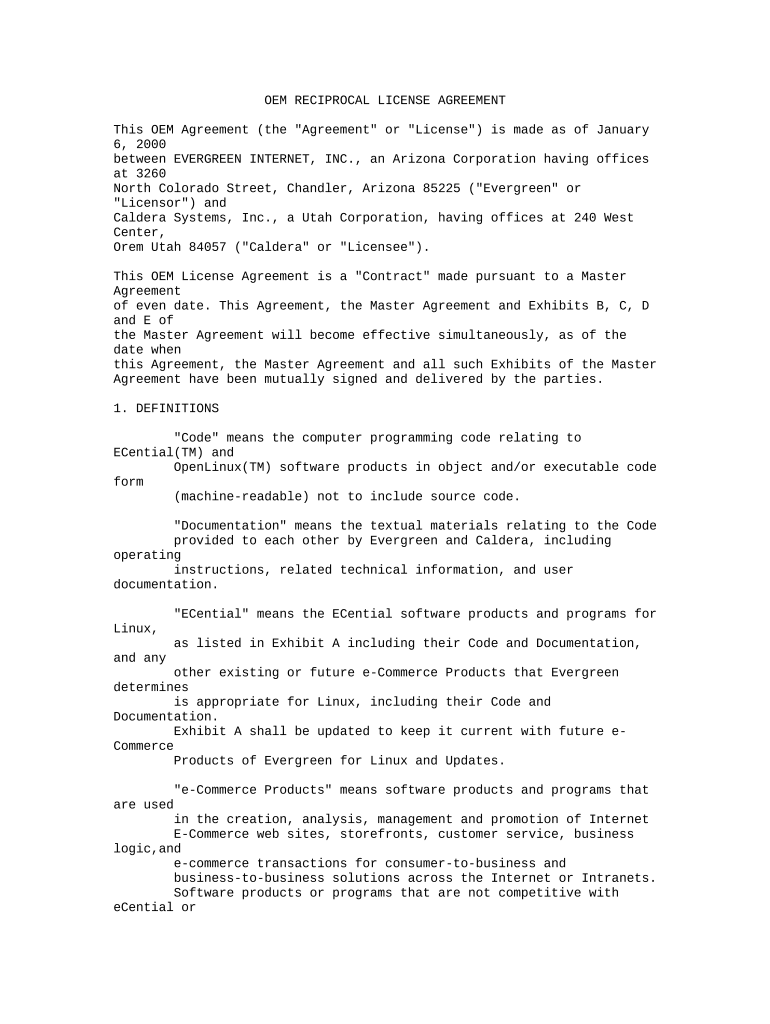
A Reciprocal License Agreement is a bilateral contract where two parties grant each other rights to use specified intellectual property or technology under agreed terms. Typical provisions define the licensed subject matter, permitted uses, geographic and temporal scope, payment or consideration, confidentiality, warranty disclaimers, and termination triggers. These agreements allocate risk, preserve ownership, and outline enforcement mechanisms for infringement, indemnity, and dispute resolution. They are used when both parties contribute complementary IP, components, or services and need a clear written framework to govern cross-use, sublicensing, and post-termination obligations.

Why a Reciprocal License Agreement Matters

A reciprocal license clarifies rights and limits, reduces litigation risk, and ensures both parties share benefits and responsibilities. A written agreement preserves business expectations and supports commercial planning.

Why a Reciprocal License Agreement Matters

Who Typically Prepares and Signs This Agreement

The document balances technical and commercial details; involve legal counsel for complex IP issues and include business stakeholders for operational clarity.

  • In-house legal teams and outside counsel negotiating terms and risk allocation for both parties.
  • Licensing or IP managers documenting scope, exclusivity, and royalty arrangements.
  • Commercial or business development managers coordinating operational and commercial implications.

Typical Signatories and Their Roles

Licensor — CEO

The company granting use rights; signatory often an officer with authority to license IP and bind the organization to indemnities, sublicensing limits, and confidentiality obligations.

Licensee — General Counsel

The party receiving rights; signatory commonly legal counsel or an authorized corporate officer who confirms compliance, payment terms, and operational reporting obligations.

Core Elements to Include in a Professional Agreement

Ensure the agreement is comprehensive and organized so rights and obligations are clear to both parties and enforceable in commercial disputes.

Grant

Specify the precise rights being granted (e.g., use, reproduce, modify, distribute) and whether the license is exclusive, non-exclusive, transferable, or sublicensable under defined conditions.
Scope

Define permitted fields of use, geographic limits, permitted channels, and technical boundaries such as versions, modules, or interfaces covered by the license.

Consideration

Document payment terms, royalties, milestone fees, barter arrangements, or other consideration; include invoicing, taxes, and withholding responsibilities.

Term and Termination

State the initial term, renewal mechanics, termination for cause or convenience, cure periods, and the effect of termination on surviving rights and post-termination use.

IP Ownership and Improvements

Clarify ownership of pre-existing IP and newly developed improvements, treatment of joint developments, and assignment rights for derivative works.

Warranties, Indemnities and Limits

Include representations about ownership and non-infringement, indemnity obligations for third-party claims, limitation of liability, and disclaimers appropriate to negotiated commercial risk.

Step-by-Step Execution Process

Follow a consistent sequence from drafting through signature to create a clear audit trail and reduce negotiation friction.

  • 01
    Draft: Prepare initial draft with exhibits and defined scope.
  • 02
    Review: Legal and technical teams review and mark up for clarity.
  • 03
    Negotiate: Exchange redlines, agree on commercial and IP terms.
  • 04
    Execute: Sign, date, and distribute final fully executed copies to all parties.

Configure an Online Signing Workflow

Set up eSignature fields and authentication to match the agreement's risk profile before sending for signature.

Field Configuration
Authentication Use email link or SMS code; enable stronger methods for high-risk deals.
Signature Type Use standard electronic signature or PKI digital signature if required for non-repudiation.
Routing Order Define sequential or parallel signing to match negotiation outcomes.
Reminders & Expiry Set automated reminders and link expiration to avoid unsigned documents lingering.

Digital Signing and File Format Considerations

Verify the chosen workflow records timestamps, signer attribution, and preserves a tamper-evident final file for audit purposes.

  • File Formats: PDF and DOCX are standard and preserve layout.
  • Integrations: Connect with CRM or contract repository (Salesforce, NetSuite).
  • Security: Enable TLS and AES encryption for transit and storage.

Where to Send and How to Distribute the Final Agreement

After execution, circulate copies to legal, finance, and the operational contact; store in a secure contract repository for access and audit.

  • To Parties: Send fully executed PDF to all signatories via email.
  • Internal Teams: Notify legal, finance, and operations with redlined and final copies.
  • Contract Repository: Upload signed agreement to central repository with metadata.
  • Record Retention: Retain audit trail and attachments in secure storage.

Typical Timeframes and Notice Periods to Track

Manage contractual dates proactively: effective date, renewal windows, notice periods, cure windows, and milestone payments.

Effective Date:

Date agreement takes effect; use MM/DD/YYYY format in the document.

Notice Period:

Standard 30–90 day notice for termination or non-renewal, as negotiated.

Cure Period:

Commonly 15–30 days to cure a breach before termination rights apply.

Renewal Window:

Specify automatic renewal timing or required renewal notice (60–90 days typical).

Payment Milestones:

State invoice due dates and late payment interest or suspension rights.

Essential Data Elements to Collect and Protect

Party Names: Full legal entity names
Effective Date: MM/DD/YYYY date
Licensed IP: Patents, code, or materials
Scope of Use: Permitted activities
Consideration: Payment and royalty terms
Termination: Cure and notice terms

Consequences of an Incorrect or Incomplete Agreement

Enforceability Risk: Ambiguous scope may render rights unenforceable
Infringement Liability: Improper grants can expose parties to third-party claims
Financial Exposure: Undisclosed royalties can trigger disputes
Operational Disruption: Undefined deliverables create service interruptions
Data Privacy Violations: PHI mishandling can breach HIPAA obligations
Contractual Penalties: Late payments and indemnity breaches may incur damages

Common Mistakes to Avoid When Preparing the Agreement

  • Using vague scope language that allows differing interpretations and later disputes.
  • Failing to attach exhibits or schedules that identify the exact assets being licensed.
  • Omitting a change control process for future improvements or derivative works.
  • Not confirming the signer's authority, which can invalidate the contract in court.

Typical eSignature Pricing and Feature Comparison

Platform pricing and features vary; signNow is listed first to allow direct comparison across common criteria without implying a recommendation.

signNow DocuSign Adobe Sign PandaDoc HelloSign
Starting Price $8/user/mo $15/user/mo $14/user/mo $19/user/mo $15/user/mo
Free Trial 7-day trial Varies Varies Varies Varies
Bulk Send Yes Yes Yes Yes No
Audit Trail Yes Yes Yes Yes Yes
HIPAA Compliant Yes Yes Yes No No

Real-World Examples of Reciprocal Licensing Use

These summaries illustrate how organizations apply reciprocal licensing to enable collaboration while protecting IP.

Optica Ventures LLC

A small technology firm needed a partner license to integrate components into a bundled offering.

  • The companies exchanged limited-use rights with defined support SLAs.
  • The streamlined reciprocal license allowed both parties to go to market quickly while preserving core IP and reducing back-and-forth negotiations.

Xerox (NetSuite Integration)

A large enterprise standardized cross-licenses to automate NetSuite integrations between product teams.

  • The legal team used template clauses for consistency.
  • Standard templates reduced review time, improved compliance, and let technical teams deploy integrations without repeated legal negotiation.

Key Milestones from Draft to Enforceability

Track milestones to ensure timely execution and minimize commercial exposure during negotiation and handover.

01

Drafting Complete

Final internal draft produced and approved by legal and product teams.

02

Counterparty Review

Counterparty returns redlines and commercial points for discussion.

03

Execution

Authorized signatories sign and date the agreement; signatures captured and archived.

04

Post-Execution Handover

Distribute executed copies, update repositories, and notify operational teams.

Frequently Asked Questions About Reciprocal License Agreements

Answers to common questions on enforceability, eSigning, amendments, and recordkeeping to help reduce risk.


Need help? Contact support

be ready to get more
Join over 28 million airSlate SignNow users