Establishing secure connection…Loading editor…Preparing document…

Recusal Form

This template is fully customizable. Edit the text, fill out the fields, and send it for signature. Give it a try!
Recusal Form

What a Recusal Form Is and When it’s Used

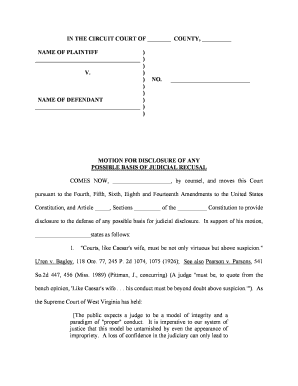
A Recusal Form is a formal written notice that an individual with decision-making authority discloses a conflict of interest and withdraws from participation in a specific matter. Common in courts, administrative proceedings, internal compliance reviews, and board or hiring decisions, the form documents the reason for recusal, identifies affected parties, and records the effective date. Properly completed, it creates an auditable record that helps organizations manage impartiality, meet procedural rules, and reduce later challenges alleging bias or improper influence.

Why a Proper Recusal Form Matters

A clear Recusal Form preserves procedural fairness, documents impartiality, and limits legal exposure by creating a dated record of withdrawal. It supports compliance with internal policies and external rules such as judicial ethics or agency conflict-of-interest regulations.

Why a Proper Recusal Form Matters

Who Typically Prepares or Receives a Recusal Form

The Recusal Form is used by individuals and officials who must remove themselves from decisions due to conflicts, and by the administrators who log and process those recusals.

  • Elected or appointed officials notifying clerks, ethics officers, or committee chairs of a conflict with pending matters.
  • Judges, magistrates, or hearing officers who must record disqualification from a case under applicable judicial rules.
  • Company officers, board members, or HR managers documenting recusal in procurement, hiring, or disciplinary matters.

Proper routing ensures the form becomes part of the official file and that substitution or reassignment follows organizational procedures.

Core Components of an Effective Recusal Form

A professional Recusal Form should be concise, clearly identify the decision or matter, explain the basis for recusal, and include space for dates and signatures. It must create a durable record for audit and review.

Matter Identification

Clear case, contract, or agenda item reference including docket number or internal file ID to avoid ambiguity.
Reason for Recusal

A brief, factual statement of the conflict (financial interest, familial relationship, prior involvement), avoiding unnecessary detail.

Effective Date

Date the recusal takes effect; this determines the limits of the person's participation and when duties transfer.

Alternatives and Delegation

Name of substitute decision-maker or process for reassignment, if required by policy or statute.

Signatures

Signature, printed name, title, and date from the person recusing and optional acceptance by an official receiving the form.

Audit Trail

Space for administrative receipt stamp, file location, or electronic audit metadata for retention and review.

Step-by-Step: Completing a Recusal Form

Follow these steps to complete and file a Recusal Form accurately and avoid procedural delays.

  • 01
    Identify the Matter: Locate docket or file ID and reference it exactly.
  • 02
    State the Conflict: Describe the specific reason for recusal in factual terms.
  • 03
    Provide Dates: Enter the effective recusal date in MM/DD/YYYY format.
  • 04
    Sign and Route: Sign, date, and submit per organizational routing instructions.

Where to File or Send the Completed Form

Different settings have distinct filing destinations; route the form to the official responsible for tracking recusals to ensure proper reassignment.

  • Court Filings: File with the court clerk or submit to the judge’s chambers per local rules.
  • Agency/Internal: Send to the ethics officer, general counsel, or designated compliance mailbox.
  • Board or Committee: Provide to the board secretary or meeting administrator before the agenda discussion.
  • HR or Procurement: Submit to HR for employment matters or procurement office for vendor-related recusals.

Configuring an Online Recusal Workflow

Set up an electronic workflow that captures signatures, timestamps, and routing to the correct administrative queue.

Field Configuration
Matter Reference Mandatory text field; validated against case or contract IDs
Conflict Category Drop-down (financial, familial, prior involvement, other)
Effective Date Date field with MM/DD/YYYY validation
Routing Auto-route to ethics officer or clerk upon signature

Digital Signing and eSubmission Considerations

Electronic submission requires a platform that preserves signatures, timestamps, and an audit trail consistent with ESIGN and UETA.

  • Authentication: Email or SMS-based signer verification; stronger methods for sensitive matters
  • Audit Trail: IP, timestamp, and action log retained for recordkeeping
  • Integrations: Connectors to case management, SharePoint, or document repositories

Use a solution that supports export to common formats (PDF/A, DOCX), secure storage, and legal defensibility under ESIGN/UETA.

Timelines and Processing Expectations

Timely completion affects whether the recusal takes effect before a decision or hearing; some venues require advance notice while others permit immediate oral recusal.

Immediate Recusal:

When conflict is discovered on the record, recusal should be declared at once

Advance Notice:

Administrative bodies may require notice before scheduled decisions

Filing Deadlines:

Court or agency rules may set specific filing windows

Processing Time:

Administrative acknowledgment typically within 1–5 business days

Retention Trigger:

Document retention begins on filing or administrative acceptance

Penalties and Risks of an Improper or Missing Recusal

Administrative Sanctions: Loss of assignment or internal disciplinary action
Vacatur Risk: Decisions may be vacated for failure to recuse when required
Ethics Complaints: Subject to professional disciplinary processes
Litigation Exposure: Increased risk of lawsuit alleging bias
Reputational Harm: Public disclosure can damage credibility
Delayed Proceedings: Late recusals can require rescheduling and additional costs

Common Mistakes to Avoid

  • Vague descriptions that fail to identify the specific matter and docket.
  • Entering incorrect dates or inconsistent effective dates across documents.
  • Omitting signature, route, or administrative receipt causing acceptance delays.
  • Failing to follow agency or court-specific recusal procedures and templates.

Tips for Accurate and Efficient Completion

Applying consistent formats and routing reduces administrative friction and preserves legal defensibility.

Use Exact Identifiers
Always cite docket or contract IDs to prevent ambiguity and ensure the recusal applies only to the intended matter.
Keep It Factual
State reasons briefly and factually; avoid speculation or extraneous commentary that could complicate review.
Follow Local Rules
Confirm court, agency, or corporate procedures for filing and public disclosure to ensure compliance.
Preserve the Record
Store the signed form and audit metadata in a secure, access-controlled repository for the applicable retention period.

Who Has Authority to Sign a Recusal Form

Individual Officer

The person with the conflict (judge, official, board member, manager) must sign the recusal to create an effective, attributable record; signatures from proxies are not acceptable unless authorized by policy.

Receiving Official

An ethics officer, court clerk, or secretary should acknowledge receipt and record the form into the official file using an admin signature or stamp for audit purposes.

Required Data Elements to Include

Name: Full legal name
Title: Official role
Matter: Docket or file ID
Conflict: Concise factual reason
Date: Effective date
Signature: Signed and dated block

Real-World Examples of Recusal Use

Sample scenarios illustrate practical drafting and routing decisions for a Recusal Form.

Judicial Recusal Example

A judge discloses a familial relationship to a counsel involved in the case

  • recusal declared on the record and filed
  • the clerk logs the form, a substitute judge is assigned, and the record notes the effective date and reassignment.

Procurement Recusal Example

A contracting officer notes a spouse’s employment with a bidding vendor

  • officer files recusal with procurement office
  • procurement assigns an alternate reviewer and records the recusal in contract files to prevent conflict claims.

Representative eSignature Pricing and Capabilities for Recusal Form Workflows

Compare common vendor starting prices and high-level capabilities relevant to secure signing, audit trails, and HIPAA or enterprise needs.

signNow DocuSign Adobe Sign PandaDoc HelloSign
Starting Price $8/user/mo $15/user/mo $14/user/mo $19/user/mo $15/user/mo
Free Trial 7-day free trial Varies by plan Varies by plan Varies by plan Varies by plan
Bulk Send Yes Yes Yes Yes No
Audit Trail Yes Yes Yes Yes Yes
HIPAA Compliant Yes Yes Yes No No
Envelope Cap No cap 100 envelopes/user/year Varies by plan Varies by plan Varies by plan

Recusal Form — Frequently Asked Questions

Answers to common questions about completing, filing, and validating a Recusal Form in U.S. administrative and judicial settings.


Need help? Contact support

be ready to get more
Join over 28 million airSlate SignNow users