Establishing secure connection…Loading editor…Preparing document…

Letter Requesting Waiver of Bank Fees

This template is fully customizable. Edit the text, fill out the fields, and send it for signature. Give it a try!
Letter Requesting Waiver of Bank Fees

What a Letter Requesting Waiver of Bank Fees Is and When to Use It

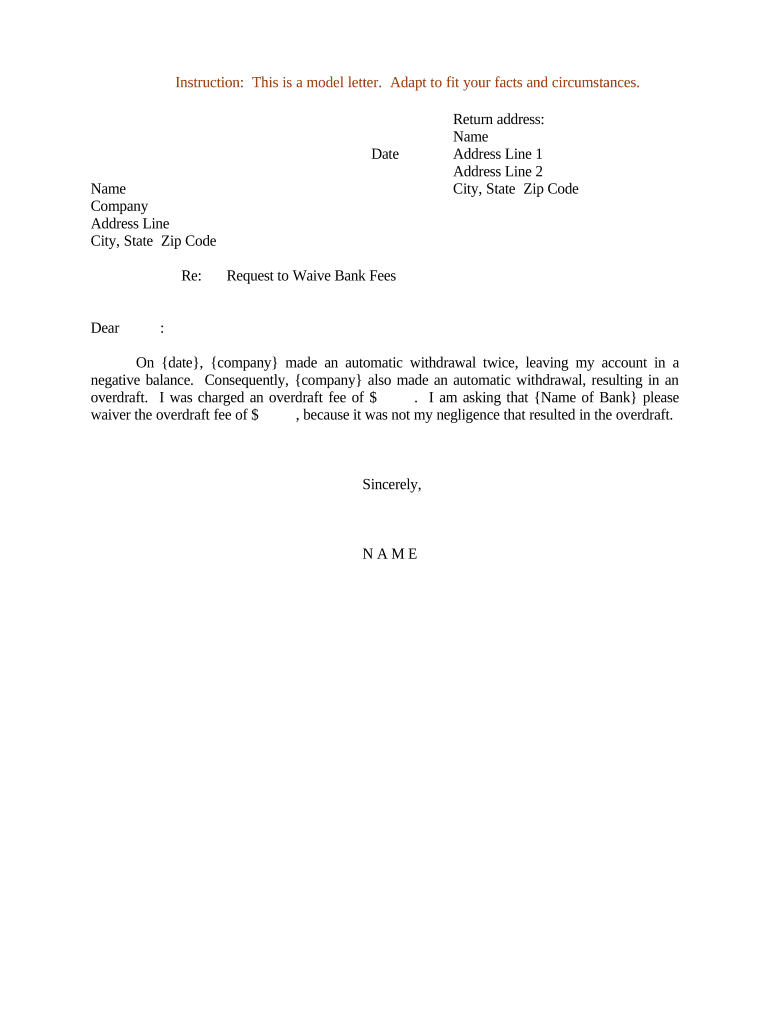
A Letter Requesting Waiver of Bank Fees is a written, often formal, statement addressed to a bank asking that assessed fees—such as overdraft charges, returned-item fees, or monthly account maintenance fees—be reversed or waived. The letter explains the account holder's reason for the request, provides supporting facts or documentation, and asks the bank to take a specific remedial action. Customers use it after billing errors, short-term cash flow problems, identity-theft events, or goodwill requests. A clear, factual letter increases the chance of a favorable review and provides a written record should escalation or regulatory complaints become necessary.

Why a Clear Waiver Request Matters

A concise waiver letter documents facts, states the relief sought, and creates a formal record for the bank to review. Clear letters reduce processing friction and support escalation if initial requests are denied.

Why a Clear Waiver Request Matters

Who Typically Prepares a Fee-Waiver Letter

Common users include individual account holders, small-business owners, and authorized signers seeking reversals or error corrections.

  • Individual consumers disputing one-off overdrafts or ATM fees.
  • Small businesses requesting reversals tied to processing errors.
  • Account representatives or attorneys acting on a client's behalf.

Tailor tone and supporting documentation to the user's role: individuals keep it brief, businesses include transaction logs, and representatives attach authorization.

Step-by-Step: How to Prepare a Waiver Letter

Follow these sequential steps to create a clear, actionable letter that the bank can evaluate quickly.

  • 01
    Identify the fee: Specify the fee type, amount, and transaction date.
  • 02
    State the reason: Explain circumstances and why the fee is incorrect or should be waived.
  • 03
    Attach evidence: Include bank statements, transaction receipts, or dispute IDs.
  • 04
    Request action: Ask for reversal and provide contact information for follow-up.

How to Customize and Submit the Letter Online

When using a digital form or eSignature platform, configure fields and authentication to match the letter's sensitivity and the bank's verification needs.

Field Configuration
Account Number Field Masked input; require numeric only
Attachment Upload Accept PDF/JPG; max 10 MB
Signature Enable electronic signature with audit trail
Authentication Email plus optional SMS code

Where to Send or File the Waiver Letter

Choose the most direct channel the bank provides for disputes or fee reversals to ensure timely handling.

  • Bank Branch: Deliver in person to a branch manager for immediate acknowledgement.
  • Customer Service: Use the bank's official dispute or secure message portal.
  • Mail: Send to the bank's billing disputes address with tracking.
  • Authorized Agent: Submit via an attorney or authorized representative with documentation.

Digital Submission and Authentication Considerations

For electronic submission, confirm the bank accepts emailed or uploaded letters and what authentication it requires.

  • File Types: PDF preferred; avoid editable formats
  • Signature: Electronic signature accepted by many banks
  • Authentication: ID or account verification usually required

Where available, use secure portals or documented channels to preserve an audit trail and reduce disputes over receipt.

Timelines and Typical Bank Processing Expectations

Processing times vary by bank; include clear expectations so you can plan follow-up actions if the request stalls.

Initial Acknowledgement:

Banks often acknowledge receipt within 3–7 business days.

Standard Review:

Resolution commonly occurs within 7–30 business days, depending on complexity.

Escalation Window:

If unresolved after 30 days, escalate to bank ombudsman or complaint department.

Regulatory Complaint:

If necessary, file with CFPB after bank remedies are exhausted.

Record Retention:

Keep copies at least until the matter is fully resolved.

Key Milestones From Submission to Resolution

Track these milestones so you can follow up at predictable intervals without duplicating efforts.

01

Prepare Letter

Draft, attach evidence, and date the request.

02

Submit to Bank

Use the bank's preferred channel and obtain confirmation.

03

Await Acknowledgement

Expect a receipt notice within business days.

04

Follow Up or Escalate

Contact bank if no resolution by the expected date.

Common Mistakes to Avoid When Preparing the Letter

  • Vague descriptions that omit dates or amounts make charge lookups slow and increase review time.
  • Submitting unsigned or undated letters often causes banks to treat requests as incomplete and return them.
  • Relying solely on verbal requests without a written record reduces evidence for escalation or regulatory complaints.
  • Attaching low-quality images of statements or partial screenshots may prevent staff from confirming the transaction.

Consequences of an Incorrect or Incomplete Request

Delayed Resolution: Incomplete data extends processing time.
Denial of Request: Banks may deny unclear or unauthorised submissions.
Account Action: Repeated disputes risk account restrictions.
Reinstated Fees: Fees may persist until formal escalation.
Credit Effects: Unresolved overdrafts could affect credit reporting.
Regulatory Limits: Formal complaints require prior good-faith efforts.

Required Information and Security Considerations

Identity Proof: Provide government ID when requested
Account Details: Full account number and branch identifier
Transaction Evidence: Statement excerpts or receipts
Authorization: Power of attorney if representative submits
Secure Channels: Use bank portals for sensitive data
Retention: Keep copies until issue resolved

Key Components of a Professional Letter Requesting Waiver of Bank Fees

A well-structured letter includes specific elements that help bank reviewers verify the claim and act. Include each of the following components to make the review efficient and complete.

Header

Date the letter and include the bank's branch name or billing disputes address at the top to ensure proper routing and to establish the start of the dispute timeline.
Account Reference

State the full account number, account type, and account holder name exactly as it appears on bank records so staff can locate records without additional follow-up.

Fee Description

List the fee name, exact amount, posting date, and associated transaction to allow bank personnel to match the charge to ledger entries quickly.

Factual Explanation

Provide a concise, factual account of why the fee is incorrect or should be waived, avoiding emotion and including any relevant policy references if known.

Supporting Documents

Attach clear copies of bank statements, receipts, or dispute confirmation numbers and label each attachment to make reviewer work straightforward.

Requested Remedy

State the specific outcome sought—full reversal, partial credit, or fee forgiveness—and include preferred contact details for confirmation and next steps.

Realistic Use Scenarios for a Fee Waiver Letter

These illustrative examples show how context and documentation affect the bank's review and likely response.

Small Business Billing Error

A merchant account processed a duplicate ACH payment

  • Business attached bank ledger and customer receipt
  • The bank reversed one fee after verifying duplicates and confirmed the reversal in writing, reducing reconciliation time and preserving the account relationship.

Consumer Overdraft Due to Hold

A consumer had an unexpected merchant hold that caused an overdraft fee

  • Consumer supplied merchant hold screenshot and transaction timeline
  • The bank granted a one-time courtesy reversal based on the documentation and the account's prior good history.

Typical eSignature Vendor Pricing for Letter Submissions (signNow First)

Platform cost varies by plan and volume; below are common pricing and capability comparisons for organizations that digitize waiver letters.

signNow DocuSign Adobe Sign PandaDoc HelloSign
Starting Price $8/user/mo $15/user/mo $14/user/mo $19/user/mo $15/user/mo
Free Trial 7-day free trial No No Yes, limited Yes, limited
Bulk Send Yes Yes Yes Yes No
Audit Trail Yes Yes Yes Yes Yes
Envelope Cap No cap 100 envelopes/user/year Varies by plan Varies by plan Varies by plan

FAQs — Common Questions About Fee Waiver Letters

Below are answers to frequent questions about letter content, legal validity, and next steps if a bank denies a waiver request.


Need help? Contact support

be ready to get more
Join over 28 million airSlate SignNow users