Establishing secure connection…Loading editor…Preparing document…

Mississippi Defendant's Response to Request for Admissions

This template is fully customizable. Edit the text, fill out the fields, and send it for signature. Give it a try!
Mississippi Defendant's Response to Request for Admissions

What this Mississippi defendant response is and when it applies

A Mississippi Defendant's Response to Request for Admissions is a written pleading filed by a defendant in civil litigation that answers each request for admission served by the plaintiff. The response must admit, deny, or state lack of sufficient information for each numbered request, and it often includes explanations, qualified denials, or objections where permitted. Properly drafted responses preserve defenses, limit contested facts at trial, and create a record for motion practice. Local rules and Mississippi Rules of Civil Procedure control timing, format, and service; confirm county-specific e-filing and service requirements before filing.

Why a focused, accurate response matters

A clear, timely response narrows issues, avoids unintended admissions, and reduces litigation risk by preserving objections and creating an evidentiary record for the court.

Why a focused, accurate response matters

Who typically prepares and files these responses

Defense counsel prepares most responses, with in-house or retained attorneys completing review and signature.

  • Private law firms representing defendants in civil suits, ensuring procedural compliance and strategic admissions.
  • In-house legal teams handling discovery responses for corporate defendants across disputes and regulatory matters.
  • Self-represented (pro se) defendants who must follow court rules and format requirements without attorney assistance.

Core parts of a professional response document

A complete response organizes answers by request number, includes specific admissions or denials, states objections, and attaches supporting explanations or documents when appropriate.

Caption

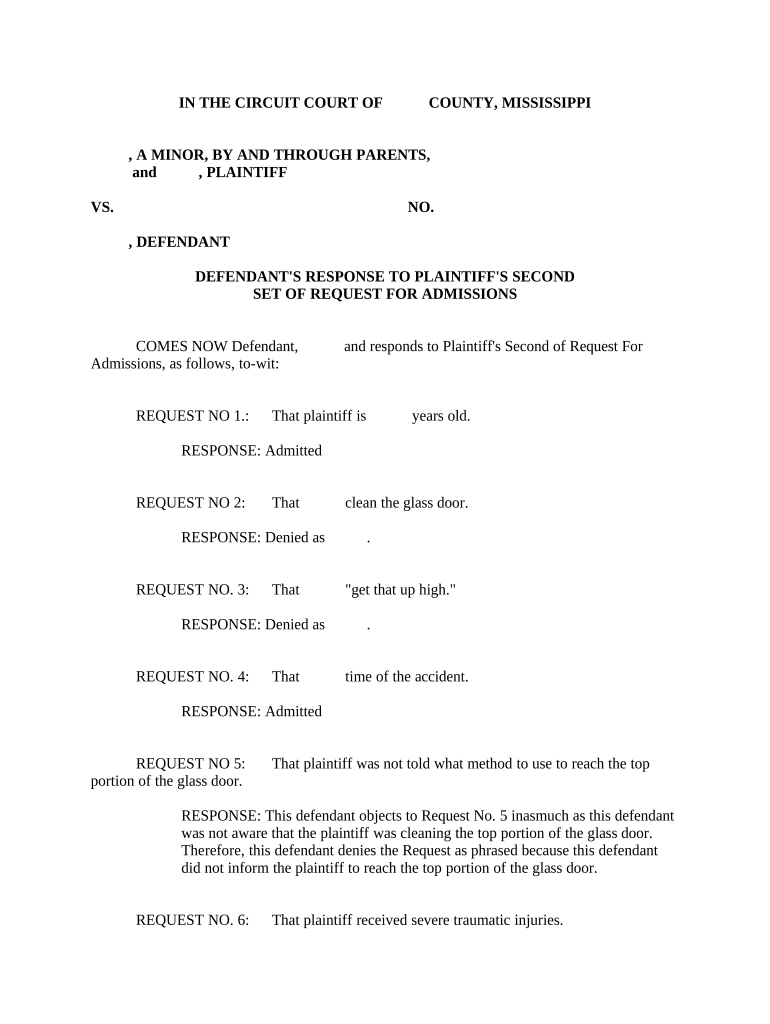
Court name, case number, party names, and title identifying the document as Defendant's Response to Request for Admissions; keeps the filing organized for the clerk and opposing counsel.
Introductory statement

A short opening paragraph that identifies the responding party, the date of service of the requests, and any general objections or reservations preserved for later.

Responses by number

A numbered list matching each plaintiff request exactly; each item must state 'Admit', 'Deny', 'Lack knowledge', or a specific qualified response with reasons.

Objections

Timely, narrowly tailored objections (privilege, vagueness, relevance, overbroad) stated with legal basis and scope limitations rather than blanket refusals.

Verification

Signature block with attorney or defendant signature and date; include verification or affidavit language if required by local rule to authenticate answers.

Certificate of service

A short statement showing how and when the responses were served on opposing counsel and the court, with method of service and recipient details.

Step-by-step: preparing and filing a response

Follow a clear sequence to review the requests, verify facts, prepare objections, sign, and serve the document to meet procedural deadlines.

  • 01
    Review requests: Match each request to case documents and determine admissibility.
  • 02
    Gather evidence: Collect supporting records and confirm facts before answering.
  • 03
    Draft answers: State admits, denies, or insufficient knowledge with concise explanations.
  • 04
    Sign and serve: Sign, date, include certificate of service, and file per local e-filing rules.

Setting up an electronic workflow for drafting and e-filing

Configure document fields, signer roles, and authentication before sending or filing to ensure a defensible electronic record.

Field Configuration
Authentication method Email link, SMS code, or multi-factor
Signature type Typed name, drawn signature, or digital certificate
Attach exhibits PDF attachments with file names and descriptions
Archive location Secure cloud folder or matter management system

Where to send and how to file the response

Determine local filing rules and serve opposing counsel using the court-approved methods; filing may be electronic or paper depending on the jurisdiction.

  • File with clerk: Submit to the county circuit clerk or e-filing portal as required.
  • Serve counsel: Provide opposing counsel a copy via agreed service method.
  • E-file options: Use court e-filing where available; follow file format rules.
  • Retain copies: Keep signed and stamped copies for the case file.

Technical considerations for e-signing and e-submission

Use PDF or DOCX formats accepted by the court and ensure the e-signature flow captures an audit trail.

  • Accepted file types: PDF or DOCX preferred
  • Audit data: IP, timestamp, and signer email
  • Integrations: Connect to case management systems

Typical deadlines and timing expectations

Timing for responding to requests for admission is time-sensitive; extensions may be available by agreement or court order but should be documented in writing.

Standard response period:

30 days from service is typical

Agreed extensions:

Parties can extend by written agreement

Court-ordered changes:

Court may shorten or lengthen deadlines

Late filing consequences:

Late answers risk default admissions

Electronic filing windows:

Follow local clerk e-filing hours

Common drafting mistakes to avoid

  • Failing to respond within the deadline, which can result in deemed admissions and limited trial defenses.
  • Using blanket objections without specific grounds, which courts often find insufficient and may overrule.
  • Making ambiguous or qualified denials that permit opposing counsel to argue admission by implication.
  • Omitting a signed verification or certificate of service, causing clerical rejection or evidentiary challenges.

Consequences of incorrect or missing responses

Deemed admissions: Court treats unanswered requests as admitted
Sanctions: Possible costs or sanctions imposed
Evidentiary preclusion: Unable to contest admitted facts
Default risk: Severe cases may lead to default judgment
Perjury exposure: False sworn statements risk criminal penalties
Delay costs: Additional fees and litigation expense

Practical examples of how responses shape a case

Two illustrative scenarios show common uses: limiting trial issues and leveraging admissions to streamline motions and settlement discussions.

Civil Contract Dispute

A defendant admits liability on a narrow factual point

  • Admission narrows trial scope
  • The parties used the admission to focus motions and reached a limited settlement with reduced discovery costs.

Medical Records Litigation

A provider denies specific causation requests

  • Denials require supporting affidavits
  • Well-supported denials preserved defenses and led to a successful motion narrowing expert testimony scope.

eSignature vendor comparison for executing and storing responses

Key pricing and capability differences among common eSignature providers. signNow appears first; verify plan details with each vendor before purchasing.

signNow DocuSign Adobe Sign PandaDoc HelloSign
Starting Price $8/user/mo $15/user/mo $14/user/mo $19/user/mo $15/user/mo
Free Trial 7-day free trial No No Yes, limited Yes, limited
Bulk Send Yes Yes Yes Yes No
Audit Trail Yes Yes Yes Yes Yes
HIPAA Compliant Yes Yes Yes No No
Envelope Cap No cap 100 envelopes/user/year Varies by plan Varies by plan Varies by plan

Frequently asked questions about responding to requests for admissions

Answers to common concerns about timing, format, electronic signatures, amendments, and what happens if a response is defective or late.


Need help? Contact support

be ready to get more
Join over 28 million airSlate SignNow users