Opening
Start with a concise statement identifying the issue and the date or incident; keep tone factual and avoid legalistic language that could be misinterpreted.
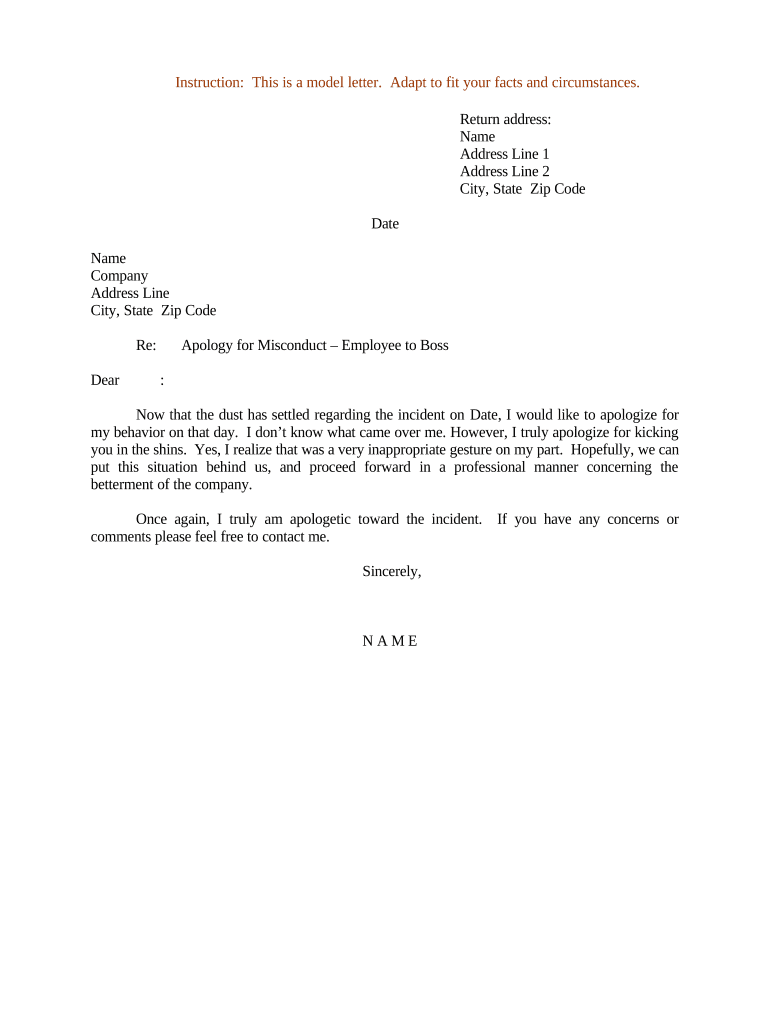
A well‑crafted apology letter reduces confusion, demonstrates accountability, and documents the sender's intent to remedy harm. It can lower reputational and legal risk by setting expectations for corrective action and creating a written record of communication.

Use the letter format that matches the situation, and include signatures and dates where authority or accountability must be recorded.
Start with a concise statement identifying the issue and the date or incident; keep tone factual and avoid legalistic language that could be misinterpreted.
State responsibility or acknowledge an error directly if appropriate; avoid speculative statements about fault when legal exposure is possible.
Provide a brief factual explanation of what happened, focusing on circumstances rather than assigning blame to third parties or making excuses.
Describe concrete corrective actions being taken, proposed timelines, and any compensation or corrective measures to resolve the issue.
Outline steps to prevent recurrence, such as policy changes, training, or process updates, with realistic timelines and responsible parties.
End with a clear signer name, title, contact information, and date; include a signature block and note if a follow‑up communication will occur.
A retailer notifies a customer of a delayed order and offers a refund
A clinic informs a patient of an administrative error in records and proposes correction
Ensure your chosen eSignature provider can produce a reproducible record and meets any industry compliance needs relevant to the apology.
| signNow | DocuSign | Adobe Sign | PandaDoc | HelloSign | |
|---|---|---|---|---|---|
| Starting Price | $8/user/mo | $15/user/mo | $14/user/mo | $19/user/mo | $15/user/mo |
| Free Trial | 7-day free trial | Varies by promotion | Varies by promotion | Varies by plan | Varies by plan |
| Bulk Send | Yes | Yes | Yes | Yes | Varies by plan |
| Audit Trail | Yes | Yes | Yes | Yes | Yes |
| HIPAA Compliant | Yes | Yes | Yes | No | No |
Within 24–72 hours of recognizing the issue
Complete internal draft within 3–5 business days
Allow 3–7 business days if counsel is required
Send after approvals, ideally within 7–14 days
Confirm remediation results within agreed timeframe