Establishing secure connection…Loading editor…Preparing document…

Sample Letter of Apology

This template is fully customizable. Edit the text, fill out the fields, and send it for signature. Give it a try!
Sample Letter of Apology

What a Sample Letter of Apology Is and When to Use It

A Sample Letter of Apology is a concise, written communication used to acknowledge an error, express regret, and describe steps taken to remedy a situation. It provides a clear record of the sender's acknowledgement and the remedy offered, which can defuse disputes, restore trust, and document corrective actions. These letters are used in personal, commercial, and institutional contexts when an error, missed commitment, or harm has occurred and a professional, measured response is required. The letter should be factual, avoid unnecessary admissions of legal liability, and include a dated signature and contact details for follow up.

Why a Clear, Professional Apology Letter Matters

A precise apology letter clarifies facts, records remediation steps, and reduces the chance of escalation or litigation by demonstrating prompt attention and accountability.

Why a Clear, Professional Apology Letter Matters

Who Typically Uses a Sample Letter of Apology

Individuals and organizations use apology letters to acknowledge mistakes, document corrective steps, and preserve a record of communication before disputes escalate.

  • Consumers and clients who experienced a service failure and seek clear remediation or credits.
  • Managers, HR, and compliance teams documenting internal incidents or employee-related errors.
  • Small businesses and vendors responding quickly to billing, product, or delivery mistakes.

Essential Sections to Include in Your Apology Letter

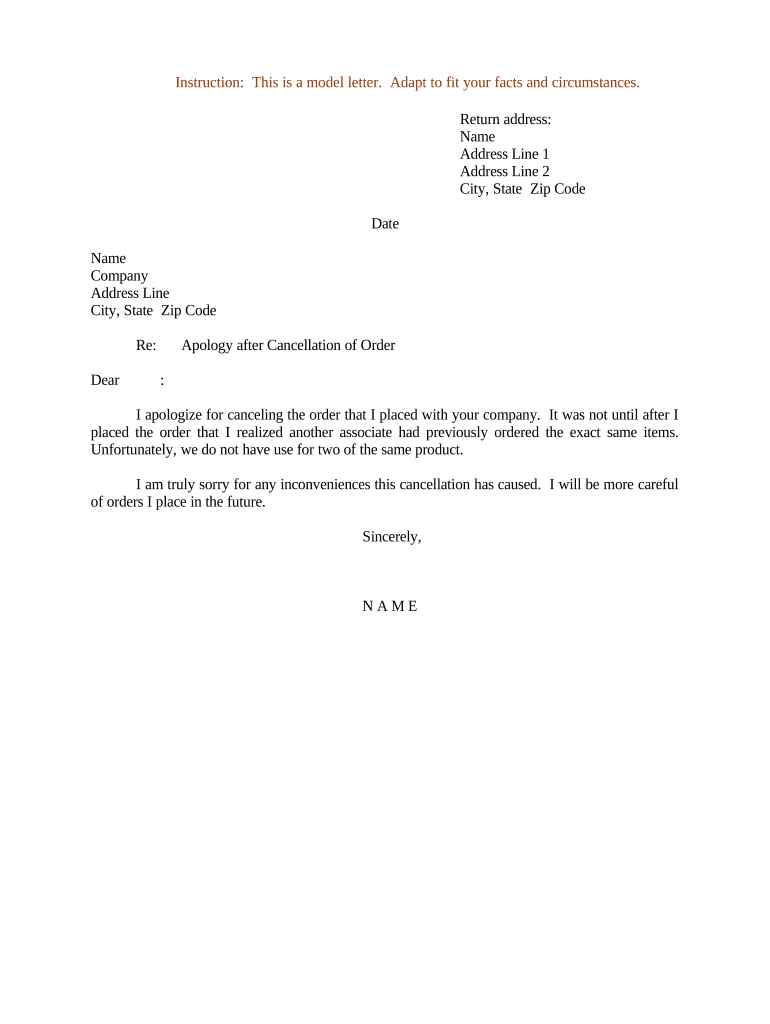
A professional Sample Letter of Apology follows a predictable structure: a clear opening, factual acknowledgement, acceptance of responsibility without legal overreach, a concrete remediation plan, a timeline for resolution, and a dated signature block with contact details.

Opening

Brief greeting and immediate statement of purpose: state you are writing to apologize and name the incident in one or two sentences.
Acknowledgement

Describe the facts succinctly and objectively. Avoid speculation and preserve details that accurately reflect what occurred and when.

Responsibility

Accept appropriate responsibility without admitting legal liability unnecessarily; use language that rectifies rather than inflames the situation.

Remediation

Describe specific actions being taken to correct the problem, including timelines, reimbursements, or next steps that the recipient can expect.

Timeline

Provide clear dates or deadlines for remedial actions and a contact for questions; this sets expectations and supports accountability.

Signature

Include a typed name, title (if applicable), printed contact information, and a dated signature—electronic signatures are acceptable under U.S. e-signature law.

Required Fields and Key Data Elements

Sender name: Full legal name
Recipient name: Full legal or business name
Incident date: MM/DD/YYYY
Description: Concise factual summary
Remedy offered: Action or compensation
Signature: Typed or e-signature

Step-by-Step: Drafting and Sending Your Apology Letter

Follow these sequential steps to prepare, review, and deliver a clear, professional apology while preserving necessary records.

  • 01
    Draft: Write a concise factual summary and proposed remedy.
  • 02
    Review: Check tone, remove admissions, and confirm timelines.
  • 03
    Sign: Apply a dated signature or legally compliant e-signature.
  • 04
    Send and Archive: Deliver via chosen method and retain a copy for records.

Typical Digital Workflow for Completing an Apology Letter

A straightforward eSubmission workflow reduces friction and provides an audit trail; these four steps reflect common practice for electronic letters.

  • Upload: Prepare the letter as PDF or DOCX and upload to the platform.
  • Place Fields: Add signature, date, and contact fields where required.
  • Authenticate: Choose email, SMS, or stronger signer authentication as needed.
  • Complete: Signer reviews, signs, and receives a completed copy with audit trail.

Delivery Options and Technical Considerations

Decide how you will deliver the letter (email, certified mail, or e-sign) and which authentication level is appropriate for the recipient.

  • File formats: PDF, DOCX accepted
  • Authentication: Email or SMS code options
  • Integrations: Google Workspace, Microsoft 365, NetSuite

Typical Field Configuration for an Online Apology Letter

Use consistent field names and basic authentication to simplify recipient completion and retention of the signed record.

Field Configuration
Signature Required | Email or SMS verification
Date Auto-fill MM/DD/YYYY
Recipient email Required | validated address
Attachment Include supporting documents as PDF

Recommended Timelines and Processing Expectations

Sending a timely apology and documenting follow-up builds credibility; use these general timing guidelines when responding to an incident.

Immediate Response:

Send acknowledgement within 24–72 hours of becoming aware.

Detailed Reply:

Provide full remediation details within 5–10 business days.

Follow-up Confirmation:

Confirm completion of remedial actions on agreed dates.

Retention Reminder:

Retain the signed record per retention policy.

Escalation Window:

Allow for recipient questions for 10–30 days after remedy.

Common Mistakes to Avoid When Preparing an Apology Letter

  • Using vague language that fails to describe what happened and when, which undermines credibility and clarity.
  • Making broad legal admissions of fault or liability that invite litigation risk instead of focusing on remediation.
  • Failing to include a clear remediation plan or timetable, leaving the recipient uncertain about next steps.
  • Sending to the wrong recipient or via an insecure channel, which compromises privacy and weakens the record.

Risks and Legal Considerations to Keep in Mind

Admissions Risk: May be used in litigation
Privacy Exposure: Avoid sharing protected health data
Regulatory Notices: Certain sectors require formal notices
Contract Impact: Watch contractual representations
Preservation Duty: Avoid destroying related records
Timing Risk: Delayed replies can worsen claims

Select eSignature Providers for Sending and Signing Apology Letters

Compare basic pricing and capabilities across common eSignature vendors; signNow is listed first per comparison format and each vendor column shows a high-level feature snapshot.

signNow DocuSign Adobe Sign PandaDoc HelloSign
Starting Price $8/user/mo $15/user/mo $14/user/mo $19/user/mo $15/user/mo
Free Trial 7-day trial Varies Varies Varies Varies
Bulk Send Yes Yes Yes Yes No
Audit Trail Yes Yes Yes Yes Yes
HIPAA Compliant Yes Yes Yes No No
Envelope Cap No cap 100 envelopes/user/year Varies Varies Varies

Realistic Use Cases Showing How an Apology Letter Works

Two concise examples illustrate common scenarios where a Sample Letter of Apology resolves issues and records remediation.

Service Delay Response

A vendor missed a scheduled installation and sent a written apology describing the cause and a new appointment date.

  • The vendor offered a partial refund.
  • The documented remedy and timeline reduced follow-up calls and created a clear record for billing adjustments.

Billing Error Resolution

A company discovered an overcharge and issued an apology letter explaining the error, refund amount, and expected refund date.

  • The recipient accepted the remedy.
  • Retaining the signed letter provided proof for accounting and resolved the issue without escalation.

Frequently Asked Questions About Using a Sample Letter of Apology

Answers to common concerns cover legal effect, e-signature use, privacy, and best practices when preparing an apology letter.


Need help? Contact support

be ready to get more
Join over 28 million airSlate SignNow users