Establishing secure connection…Loading editor…Preparing document…

Sample Letter Attorney

This template is fully customizable. Edit the text, fill out the fields, and send it for signature. Give it a try!
Sample Letter Attorney

What the Sample Letter Attorney Is and When It Applies

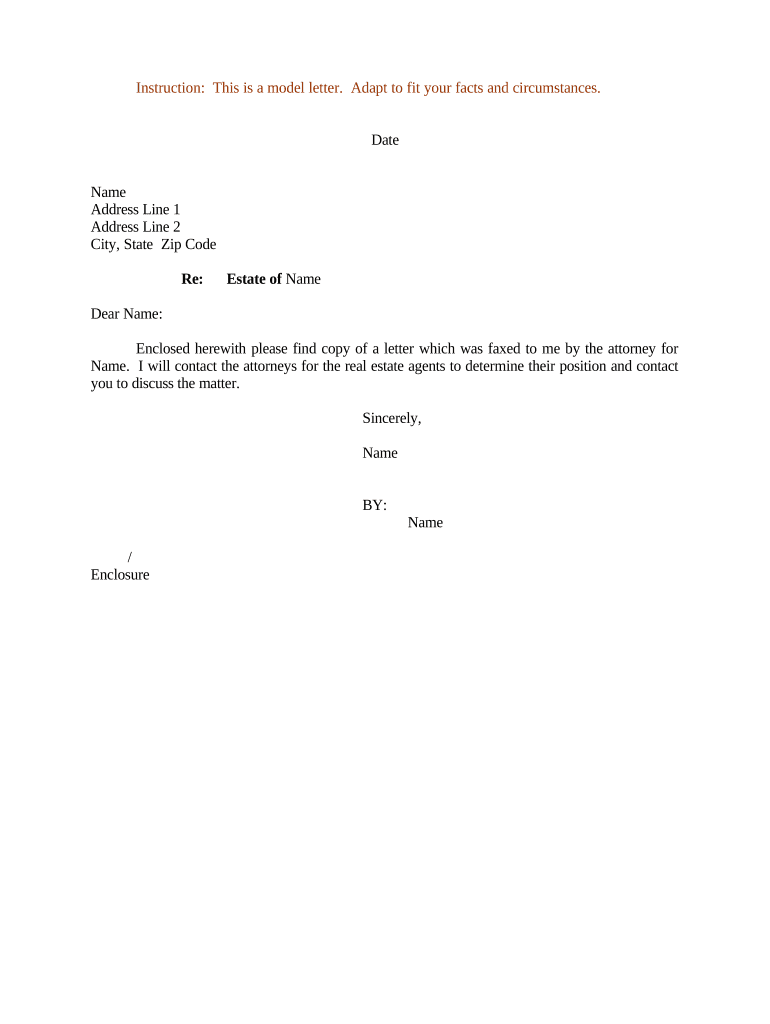
A Sample Letter Attorney is a standardized letter drafted by or for an attorney to communicate a client's position, request action, or document facts in a legal matter. Typical uses include demand letters, confirmation of representation, authorization to release records, or notices to opposing counsel. The template sets out recipient details, factual background, legal basis, requested remedy, a deadline, and a signature block so recipients and third parties clearly understand the sender's authority and the client's expectations. Use the template as a reproducible starting point, then customize facts and law to the specific case.

Why a Carefully Prepared Sample Letter Attorney Matters

A well-prepared sample letter clarifies the client’s position, preserves evidence of notice, and preserves procedural rights while creating a record suitable for later use in litigation or negotiation.

Why a Carefully Prepared Sample Letter Attorney Matters

Who Typically Prepares and Uses This Letter

The Sample Letter Attorney is used by attorneys, paralegals, in-house counsel, and administrative staff to produce consistent, compliant correspondence.

  • Private practitioners and law firms preparing demand or preservation letters for clients.
  • In-house legal departments issuing contract notices or record-release authorizations.
  • Paralegals and legal assistants who prepare standardized drafts for attorney review.

Use the template as a starting draft; always have an attorney review final language to confirm legal sufficiency and client authorization.

Typical Roles Involved

Attorney

An attorney signs, approves, or supervises the letter and ensures the language reflects privilege assertions, deadlines, and applicable law. The attorney is responsible for client authorization and for verifying factual accuracy before sending.

Paralegal

A paralegal often populates template fields, attaches supporting exhibits, and prepares the envelope for delivery under attorney supervision. They ensure completeness of contact and case reference details and handle administrative filing.

Essential Parts of a Professional Sample Letter Attorney

A professional sample letter combines legal clarity, factual support, and precise delivery instructions so recipients, regulators, and courts can rely on the record.

Letterhead

Include firm name, address, telephone, email, and bar number where required; consistent letterhead establishes source and responsibility for the communication.
Recipient Block

Full recipient name, title, organization, and address ensure proper notice and minimize service disputes about who received the correspondence.

Statement of Authority

A short sentence explaining the sender’s representation and authorization to act on the client's behalf clarifies standing and privilege.

Facts & Basis

Concise factual recitation and legal citations supporting the request reduce ambiguity and frame the issue for the recipient.

Requested Action

Specify the remedy or action sought, any deadlines, and the consequences of noncompliance to set clear expectations.

Signature Block

Attorney signature, printed name, title, date, and if required, client authorization or reference to a signed power of attorney.

Step-by-Step: Complete a Sample Letter Attorney

Follow these sequential steps to prepare, review, sign, and deliver a legally defensible letter.

  • 01
    Draft: Populate template fields with case-specific facts and citations.
  • 02
    Review: Attorney reviews for legal sufficiency and privilege considerations.
  • 03
    Authorize: Obtain client authorization and confirm signature method.
  • 04
    Deliver: Send via tracked mail, email with read receipt, or authorized eSignature flow.

How Online Completion and Delivery Typically Works

An electronic workflow reduces turnaround and preserves an audit trail while meeting legal requirements for intent and retention.

  • Upload: Sender uploads the letter template to the eSignature platform.
  • Place Fields: Add signature, date, and conditional fields as needed.
  • Authenticate: Choose signer authentication (email, SMS code, or stronger methods).
  • Record: Signed document and audit trail are retained for evidentiary use.

Online Configuration Checklist for Digital Completion

Configure the eSignature workflow to match authentication, retention, and evidence needs before sending.

Field Configuration
Template Save a vetted template for consistent use.
Authentication Select email or SMS code; use KBA for higher assurance.
Conditional Fields Set conditional text where content depends on answers.
Attachments Attach exhibits or PDF invoices as separate files.

Platform Needs for Secure eSigning and Delivery

Choose a platform that supports required authentication, audit trails, and secure storage.

  • Integrations: Salesforce, NetSuite, or document storage connectors.
  • Formats: PDF and DOCX support with preserved formatting.
  • Security: TLS in transit and AES-256 at rest.

Confirm the platform meets industry-specific rules such as HIPAA BAA or 21 CFR Part 11 if applicable to the letter’s content.

eSignature Pricing and Feature Comparison for Letter Workflows

Basic pricing and key features shape vendor choice for routine attorney letters; signNow is shown first for comparison alignment.

signNow DocuSign Adobe Sign PandaDoc HelloSign
Starting Price $8/user/mo $15/user/mo $14/user/mo $19/user/mo $15/user/mo
Free Trial 7-day free trial Varied by offer Varied by offer Varied by offer Varied by offer
Bulk Send Yes Yes Yes Yes No
Audit Trail Yes Yes Yes Yes Yes
HIPAA Compliant Yes Yes Yes No No
Envelope Cap No envelope cap 100 envelopes/user/year Varies by plan Varies by plan Varies by plan

Security and Compliance Essentials for Attorney Letters

Encryption: TLS 1.2/1.3 in transit; AES-256 at rest
Audit Trail: Comprehensive timestamp, IP, and action logs
HIPAA BAA: BAA required for protected health information
Regulatory Compliance: ESIGN and UETA legal frameworks supported
Certifications: SOC 2 Type II and ISO 27001 available
Accessibility: WCAG 2.0 Level AA conformance options

Key Risks and Penalties for Errors

Late Tax Notices: 1099/W-2 timing errors risk IRC §6721 penalties
I-9 Violations: I-9 paperwork fines can apply per 8 CFR §274a.2
Privilege Loss: Incorrect wording can waive attorney-client privilege
Invalid Service: Wrong address or recipient may invalidate notice
Notarization Defect: Missing notary or witness can void document effect
Intent Issues: Poor signature attribution undermines enforceability

Common Preparation Mistakes to Avoid

  • Using vague deadlines or undefined remedies that allow the recipient to claim ambiguity and resist compliance.
  • Failing to confirm client authorization or signature authority before sending, which can invalidate the communication.
  • Omitting precise recipient contact details, causing service disputes and delaying responsive actions.
  • Relying on image-only signatures without a preserved audit trail or clear attribution of intent.

Real-World Examples of Template Use

These examples show how organizations used standardized attorney letters to accelerate response and preserve records.

Optica Ventures (Brian Fitzgibbons)

Optica used a standardized attorney letter to notify counterparties of contractual breaches and request remediation within a fixed period

  • The interface simplified distribution and tracking across multiple recipients
  • By using a repeatable template and audit trail they reduced follow-up time and created defensible proof of notice for later proceedings.

Martin Properties (Tim Martin)

A property management firm used attorney letters to collect unpaid rents and delivery of notices to tenants

  • The standardized form ensured consistent deadlines and evidence of service
  • Consistent templates reduced administrative errors, accelerated resolution, and preserved records for potential eviction filings.

Common Deadlines and Timing Rules to Track

Certain tax and employment notices have fixed deadlines; accurate dating and prompt delivery are essential to avoid penalties.

W-9 Delivery:

Provide upon payer request; no fixed federal deadline

1099-NEC:

Issue to recipient and IRS by Jan 31

W-2 to Employee:

Provide employee copies by Jan 31

1099-MISC Paper to IRS:

Paper filings due Feb 28

1099-MISC Electronic to IRS:

Electronic filings due Mar 31

Key Processing Milestones for a Letter Workflow

Track milestones from drafting through final retention to maintain compliance and evidentiary integrity.

01

Draft Completed

Template populated and exhibits attached for review

02

Attorney Review

Legal sufficiency and privilege checks completed

03

Signature and Authentication

Document signed and signer identity verified

04

Delivery and Retention

Document delivered via chosen method and archived

Frequently Asked Questions About Using the Sample Letter Attorney

Answers to common questions about enforceability, eSigning, notarization, and correcting errors when using this template.


Need help? Contact support

be ready to get more
Join over 28 million airSlate SignNow users