Establishing secure connection…Loading editor…Preparing document…

Sample Letter to Business Partner

This template is fully customizable. Edit the text, fill out the fields, and send it for signature. Give it a try!
Sample Letter to Business Partner

What the Sample Letter to Business Partner Is

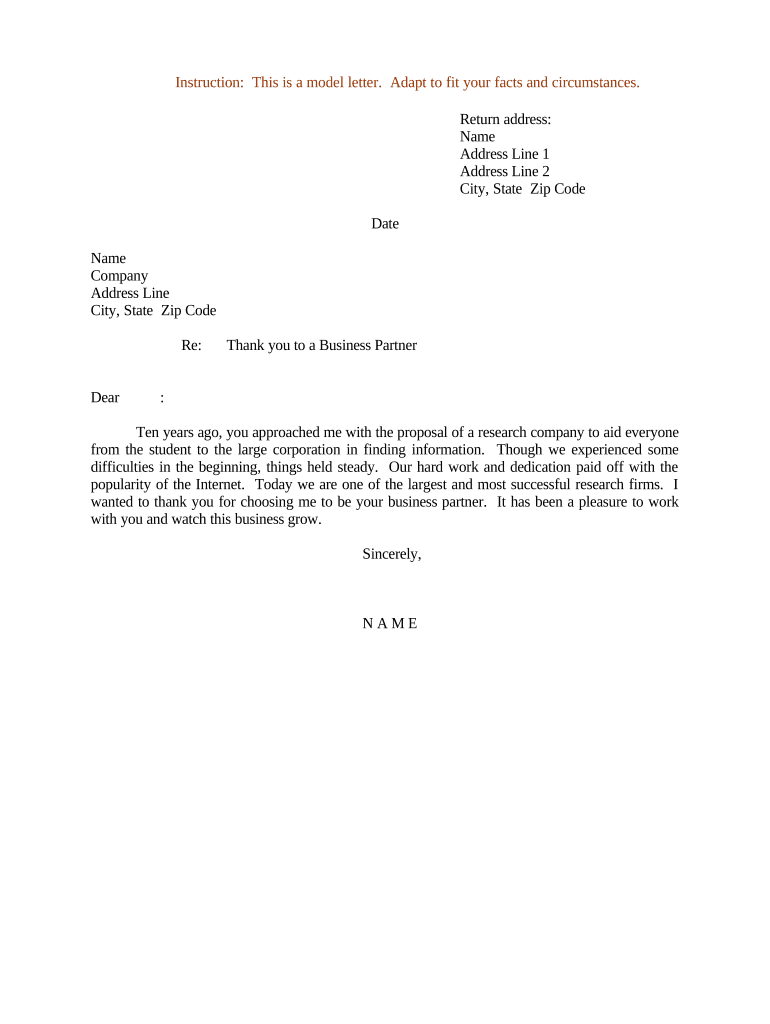
A Sample Letter to Business Partner is a written template used to document a specific business communication between two commercial parties, such as a proposal, change in terms, notice of intent, or request for collaboration. The letter clarifies identities, the reason for contact, core terms or proposals, any requested actions or deadlines, and the signatures that indicate agreement or acknowledgement. It is not a full contract by itself unless it includes offer, acceptance, and consideration language; instead, it often precedes or supplements a formal agreement by creating a clear record of the parties' positions.

Why Use a Standardized Sample Letter

Using a clear, consistent template reduces misunderstandings, creates an auditable record of communications, and speeds follow-up. A concise letter provides the essential facts—who, when, why, and what—so parties can act promptly and preserve evidence of intent.

Why Use a Standardized Sample Letter

Who Typically Uses This Letter

The Sample Letter to Business Partner is used by people who need a short, formal record of a business action or request before or alongside a formal contract.

The template fits a wide range of situations where clarity and a dated record are important, while remaining simpler than a comprehensive agreement.

Step-by-Step: Completing a Sample Letter

Follow these basic steps in order to prepare a clear, usable letter that documents intent without overreaching into full contract language.

  • 01
    Draft the Letter: Populate sender, recipient, date, and concise purpose paragraph.
  • 02
    Spell Out Key Terms: List deliverables, deadlines, payment, and any conditional language.
  • 03
    Review Authority: Confirm the signer has authority to bind the entity involved.
  • 04
    Sign and Date: Obtain signatures and record the signed copy for both parties.

Typical Routing for a Partner Letter

A straightforward workflow ensures all parties review, approve, sign, and retain the final document in a controlled location.

  • Prepare Document: Create the letter using the template and attach supporting exhibits.
  • Send for Review: Share with internal stakeholders and legal counsel for approval.
  • Collect Signatures: Use a secure signing method and capture signer identity and timestamp.
  • Store Final Copy: Save the signed PDF and notify recipients about retention location.

Essential Parts of a Professional Letter to a Business Partner

Include these structural elements to make the letter clear, reliable, and useful as a business record while keeping it concise and focused on the subject matter.

Header & Date

Start with the sender's letterhead or name and the full date. A clear header aids later retrieval and helps establish timing of the communication.
Recipient Details

List the recipient's name, title, company, and mailing address so the intended recipient and point of contact are unambiguous.

Purpose Paragraph

Open with one concise paragraph stating the reason for the letter, referencing prior agreements or conversations when applicable.

Specific Requests

Clearly itemize actions requested, deadlines, and any conditions that must be satisfied for the matter to proceed.

Consideration & Terms

If the letter includes commercial terms, state amounts, payment timing, and any conditions for payment or performance in plain language.

Signature & Authority

Conclude with a signature block that includes printed name, title, company, and date; note who has signing authority for legal certainty.

Required Core Information at a Glance

Full Legal Names: Exact entity or person names
Complete Addresses: Street, city, state, ZIP
Effective Date: MM/DD/YYYY format
Specific Terms: Deliverables and deadlines
Payment Details: Amounts and due dates
Authorized Signatures: Printed name and title

Key Risks and Consequences of Errors

Ambiguous Language: Enforceability issues
Improper Signatory: Contract may be void
Incorrect Dates: Misaligned obligations
Missing Attachments: Incomplete terms record
Tax Misreporting: Backup withholding risk
Confidentiality Lapses: Data breach exposure

Common Mistakes to Avoid

  • Using vague terms like 'as agreed' without attaching the referenced agreement or defining key points makes enforcement difficult.
  • Having an employee sign without corporate authority can render the letter non-binding or trigger internal disputes about ratification.
  • Forgetting to attach referenced exhibits (scope, pricing) leads to confusion and prevents the letter from reflecting the full agreement.
  • Inconsistent dates between letter and attachments can create disputes over deadlines and commencement of obligations.

Recommended Digital Workflow Settings

Set up a simple, auditable workflow that captures signer identity, timestamp, and a secure copy for records.

Field Configuration
Sender Info Legal name + verified email
Template Use standardized template with key fields
Signature Type Electronic signature with audit trail
Authentication Email link or SMS code

How a Sample Letter Compares with a Formal Agreement

This table highlights the practical differences so you can decide whether a letter suffices or a contract is needed.

Criteria Sample Letter Formal Agreement
Formality lower higher
Attachments optional commonly required
Enforceability yes, with elements yes, stronger evidence
Typical Use record/notice binding obligations

Representative eSignature Platform Pricing and Capabilities

Common capability and pricing dimensions for eSignature vendors. Contact vendors for plan details and billing options.

signNow DocuSign Adobe Sign PandaDoc HelloSign
Starting Price $8/user/mo $15/user/mo $14/user/mo $19/user/mo $15/user/mo
Free Trial 7-day trial Varies by plan Varies by plan Varies by plan Varies by plan
Bulk Send Yes Varies by plan Varies by plan Varies by plan Varies by plan
Audit Trail Yes Yes Yes Yes Yes
Envelope Cap No cap 100 envelopes/user/year Varies Varies Varies

Common Deadlines and Timing Expectations

These typical timing elements help you set realistic response and performance windows in the letter.

Response Deadline:

Set a clear reply date, commonly 14 calendar days from receipt

Effective Date:

Use a specific MM/DD/YYYY effective date to avoid ambiguity

Termination Notice:

State required notice period, commonly 30 days

Payment Terms:

Specify net days (for example, Net 30) and due date

Record Retention:

Indicate where signed copies will be stored and for how long

Real-World Examples of Partner Letters in Use

Below are brief, real customer contexts showing how a short partner letter supported a commercial outcome.

Martin Properties

Tim Martin used an online partner letter to confirm lease amendment terms and deadlines.

  • The sample letter clarified payment dates and responsibilities.
  • He reported that executing the letter online kept the transaction on schedule and preserved a clear, dated record for both parties.

Optica Ventures

Brian Fitzgibbons relied on a formal confirmation letter to document a change in milestone deliverables.

  • The letter recorded agreed scope adjustments and delivery dates.
  • That written record reduced follow-up disputes and provided a concise history for later contract drafting.

Frequently Asked Questions

Answers to common questions about using and validating a Sample Letter to Business Partner, including signature, notarization, and retention concerns.


Need help? Contact support

be ready to get more
Join over 28 million airSlate SignNow users