Establishing secure connection…Loading editor…Preparing document…

Letter Inviting Membership to Executive Board

This template is fully customizable. Edit the text, fill out the fields, and send it for signature. Give it a try!
Letter Inviting Membership to Executive Board

What the Letter Inviting Membership to Executive Board Is

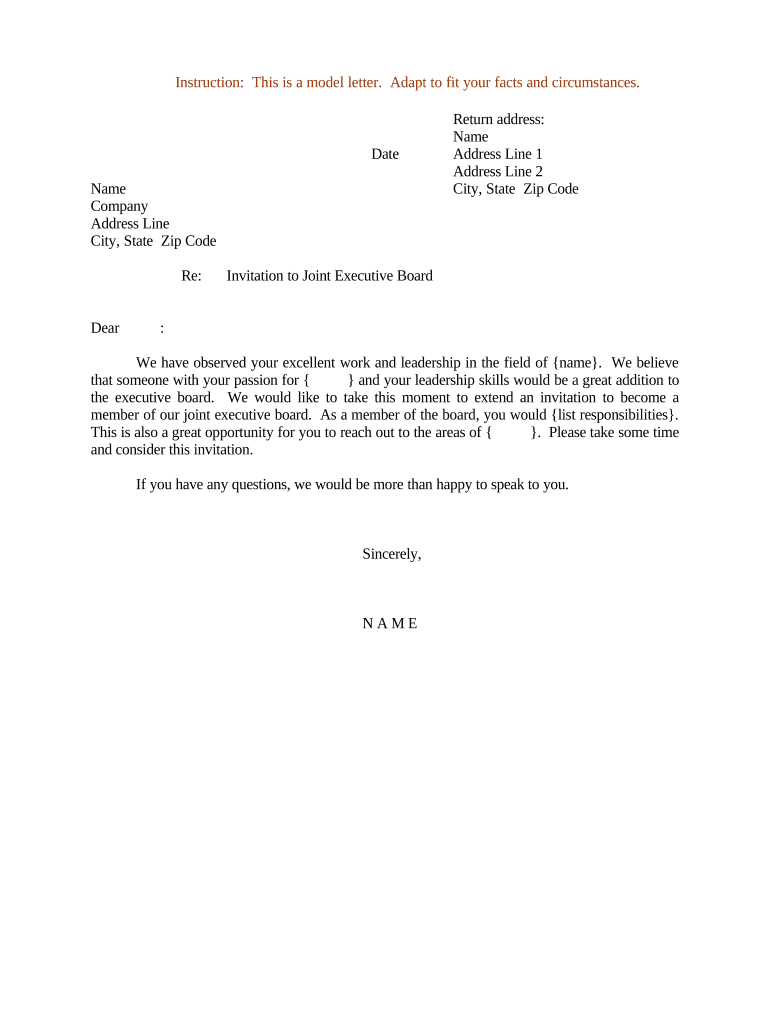
A Letter Inviting Membership to Executive Board is a formal written invitation from an organization’s leadership asking a candidate to join its executive board. The letter outlines the board role, expected time commitment, term length, fiduciary responsibilities, conflicts-of-interest policies, meeting cadence, and any compensation or expense reimbursement. It also states the requested response deadline and instructions for acceptance or questions. Organizations use this letter to create a clear record of the invitation, set expectations, and document consent before onboarding and background checks.

Why a Clear Invitation Letter Matters

Use this formal invitation to clarify role expectations, document acceptance, and reduce onboarding ambiguity. A clear letter helps prospective board members evaluate commitment, protects the organization by recording consent and conflicts disclosures, and establishes a date-stamped starting point for governance processes.

Why a Clear Invitation Letter Matters

Who Prepares and Receives This Letter

Typical senders and recipients for this letter include organizational executives, nominating committees, and invited candidates.

  • Board chair or CEO initiates invitations and outlines expectations for governance service.
  • Nominating committee drafts text reflecting bylaws, term length, and any fees.
  • Invited candidate reviews terms, may consult counsel, and responds in writing by deadline.

Who Signs and Who Responds

Board Chair

The Board Chair or CEO typically signs and sends the invitation, coordinates acceptance logistics, and informs governance or nominating committee. They must ensure the letter aligns with bylaws, indicates authority to appoint, and records the date for governance timelines and filings.

Invited Member

An invited member reviews responsibilities, term length, and any compensation or reimbursement. They should disclose conflicts, confirm availability for meetings, and return a signed acceptance by the stated deadline to complete onboarding and permit record retention.

Security and Compliance Considerations

Encryption: TLS 1.2/1.3 in transit, AES-256 at rest
Certifications: SOC 2 Type II and ISO 27001
HIPAA: HIPAA compliant with BAA option
ESIGN/UETA: Compliant with ESIGN and UETA
Audit Trail: Detailed audit trail with timestamps
Access Controls: Role-based access and two-factor authentication

Key Risks and Potential Consequences

Invalid Acceptance: Could void appointment
Missing Signature: No enforceable consent
Undisclosed Conflicts: Legal and reputational risk
Incorrect Dates: Confuses term start/end
Bylaws Conflict: Board action subject to reversal
Data Privacy Exposure: HIPAA or FERPA issues for records

Two Practical Examples of Use

Two real-world examples show how organizations use a Letter Inviting Membership to Executive Board in practical onboarding scenarios.

Nonprofit Board

A mid-size nonprofit invited a community leader to join its executive board to expand fundraising expertise and donor relationships.

  • Candidate accepted pending schedule confirmation.
  • The letter specified a three-year term, expected monthly meeting attendance, conflict disclosure requirements, and a two-week deadline for written acceptance; this clarity accelerated onboarding and allowed timely background screening and committee assignments.

Corporate Vacancy

A public company used the letter to invite an external executive to fill a sudden vacancy while meeting SEC disclosure timing obligations.

  • Offer contingent on board approval.
  • The invitation documented compensation terms, independent director status, and the effective date for SEC reporting; it also prompted counsel to prepare any required public disclosures and confirm independence assessments.

Step-by-Step: Drafting and Sending the Invitation

Follow these sequential steps to draft, approve, and deliver a Letter Inviting Membership to Executive Board with clear acceptance instructions.

  • 01
    Draft: State role, term, duties, and response deadline.
  • 02
    Review: Check bylaws, conflicts, and approval authority.
  • 03
    Approve: Obtain signature from authorized officer.
  • 04
    Deliver: Send via secure email or eSignature platform.

How Delivery and Acceptance Typically Flow

Routing and submission steps describe how to share the invitation, capture acceptance, and preserve records for governance.

  • Compose: Prepare letter body and attachment materials.
  • Select Recipients: Include nominating committee and candidate contact details.
  • Send: Use tracked email or eSignature to send.
  • Record: Archive signed copy and audit trail.

Essential Elements to Include in the Letter

A professional Letter Inviting Membership to Executive Board includes several standard elements that set expectations, document consent, and facilitate onboarding and governance compliance.

Role Summary

Describe the board position, committee assignments, scope of authority, and how the role supports organizational strategy. Be specific about fiduciary duties and whether the seat is employee-based, independent, or ex officio.
Term & Dates

State the start date, expected term length, renewal or rotation rules, and any probationary periods. Specify the deadline for acceptance and how the effective date affects reporting and records.

Duties & Time Commitment

List anticipated meeting frequency, preparation expectations, committee time, travel requirements, estimated annual hours, and any additional responsibilities such as fundraising, stewardship, or advisory work duties.

Compensation/Expenses

Note whether the position is voluntary, salaried, or provides stipends; disclose reimbursement policy for travel and other expenses; explain any equity, honoraria, or insurance coverage provided to board members.

Acceptance Instructions

Provide clear steps to accept: sign and return the letter, confirm contact information, complete any required background check or disclosures, and state the deadline and acceptable delivery methods.

Confidentiality & Conflicts

Include confidentiality clauses, conflict-of-interest disclosure requirements, post-termination confidentiality expectations, and any required filings; reference where to submit disclosures and who reviews them, procedures for remediation.

Practical Tips to Improve Clarity and Speed

Practical tips can improve clarity, reduce errors, and speed acceptance when sending a Letter Inviting Membership to Executive Board.

Use clear, unambiguous language and dates
Avoid legalese. Describe duties and meeting cadence in plain terms, include exact dates and deadlines, and reference the relevant bylaw provisions. Clear instructions reduce back-and-forth and ensure consistent recordkeeping for governance and regulatory compliance.
Confirm authority and bylaw compliance
Verify the inviter has authority to appoint or recommend board members under current bylaws and corporate governance policies. If necessary, obtain committee or board approval before sending the letter to avoid later challenges.
Include confidentiality and disclosure steps
Spell out conflict-of-interest disclosure procedures, whom to contact with questions, and any required forms. This protects the organization and helps the candidate make an informed decision while maintaining candidate privacy during the selection process.
Use secure delivery and retain records
Send the letter using tracked email or an eSignature platform with an audit trail. Keep signed copies, logs, and correspondence per record retention policies to demonstrate compliance and facilitate board onboarding and reporting.

Milestones and Expected Timeframes

Key milestones show drafting, approval, delivery, and confirmation steps with expected time windows for each stage.

01

Draft Letter

Complete initial draft within 3–7 business days.

02

Committee Review

Allow 5 business days for nominating or governance review.

03

Authorized Signature

Obtain signature within 2 business days after approval.

04

Candidate Response

Request written acceptance within 14 days or earlier.

Typical Deadlines to Include in the Invitation

Common timeframes and statutory deadlines to include in the invitation help set expectations and satisfy reporting or governance requirements.

Recommended acceptance deadline and response method:

Specify a clear date or number of days (e.g., 14 days) for written acceptance.

Background Check and Onboarding Steps:

Indicate whether background checks are required and expected timeline.

Effective Date for Service and Reporting:

State the effective date used for governance records and regulatory filings.

Bylaw or Board Approval Deadline:

Note if appointment is contingent on board vote and any meeting dates.

Record Retention Trigger:

Clarify when retention clocks start—upon acceptance or effective date.

How This Invitation Differs from Related Documents

Compare the Letter Inviting Membership to Executive Board with related documents to choose the correct instrument for appointment and recordkeeping.

Criteria Invitation Letter Offer Letter Board Resolution
Formality / Purpose invite role employment offer formal board action
Requires Board Vote? typically no typically no
Legal Effect documents intent employment contract binding corporate act
Record Location governance file hr file board minutes

Delivery Methods and Platform Requirements

Delivery and platform requirements determine how to send the invitation and preserve a verifiable record such as audit trails and signed PDFs.

  • File Formats: PDF, DOCX, and plain text
  • Authentication: Email link, SMS code, or KBA
  • Integrations: Google Workspace, Microsoft 365, NetSuite

Suggested eSignature Workflow Settings

Configure an eSignature workflow to collect acceptance, manage approvals, and archive executed letters for governance records.

Field Configuration
Signer Authentication Email verification; SMS or KBA optional
Signature Field Signature, printed name, and date required
Deadline Automation Auto-reminders and final expiry actions
Notifications Notify nominating committee and corporate secretary

eSignature Pricing and Feature Snapshot

Pricing and feature comparison helps choose an eSignature provider when sending and tracking invitations for executive board membership.

signNow DocuSign Adobe Sign PandaDoc HelloSign
Starting Price $8/user/mo $15/user/mo $14/user/mo $19/user/mo $15/user/mo
Free Trial 7-day trial Varies Varies Free limited Varies
Bulk Send Yes Yes Yes Yes No
Audit Trail Yes Yes Yes Yes Yes
HIPAA Compliant Yes Yes Yes No No
Envelope Cap No cap 100 envelopes/user/year Varies by plan Varies by plan Varies by plan

Frequently Asked Questions and Troubleshooting

Answers to common questions about preparing, delivering, and validating a Letter Inviting Membership to Executive Board, including eSignature and recordkeeping considerations.


Need help? Contact support

be ready to get more
Join over 28 million airSlate SignNow users