Establishing secure connection…Loading editor…Preparing document…

Sample Letter Release Order

This template is fully customizable. Edit the text, fill out the fields, and send it for signature. Give it a try!
Sample Letter Release Order

What a Sample Letter Release Order Is

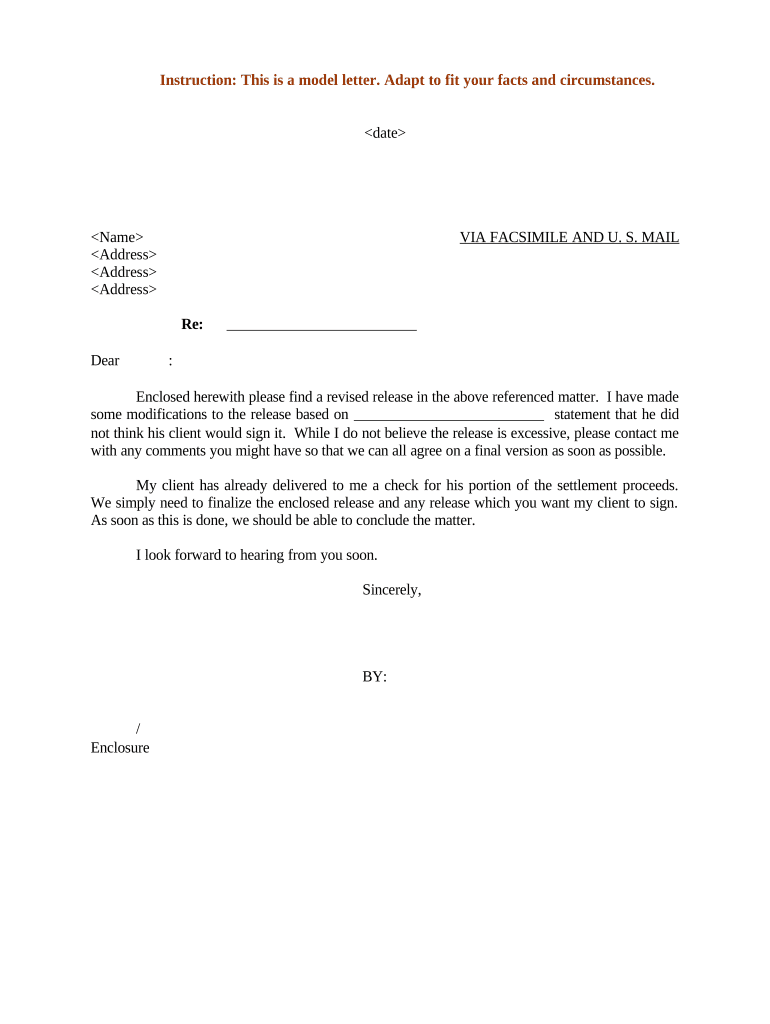
A Sample Letter Release Order is a written authorization that directs a party to release property, records, funds, or claims held under lien, hold, or administrative control. It serves as a formal record documenting who authorizes the release, what is to be released, the effective date, and any conditions. Organizations use this template to standardize language, reduce disputes, and create an auditable transaction history suitable for filing, notarization, or electronic signature under U.S. law such as the ESIGN Act and state UETA statutes.

Why a Clear Release Order Matters

A concise Sample Letter Release Order clarifies authority, sets the release scope and timing, reduces operational delays, and establishes a defensible paper trail for audits or disputes while supporting electronic execution under ESIGN and applicable state law.

Why a Clear Release Order Matters

Who Typically Uses a Release Order

Several roles rely on a Sample Letter Release Order to authorize and document releases reliably.

  • Real estate closing agents and title companies coordinating lien releases and deeds.
  • Lenders or servicers authorizing release of collateral, payoff confirmations, or account holds.
  • Records custodians and healthcare release coordinators processing patient record transfers under HIPAA.

Use by these groups helps ensure consistent procedures and a clear audit trail for internal controls and regulatory compliance.

Key Signer Profiles

Title Officer

A title officer reviews encumbrance records, confirms payoffs, and issues the release order. They must verify authority, confirm lien satisfaction, and attach supporting payoff statements to avoid recording errors or rescission.

Borrower Representative

A borrower or authorized representative signs to confirm acceptance of release terms. Accurate identity and matching legal names prevent payment delays, backup withholding triggers, or future disputes over ownership.

Security and Compliance Essentials

Encryption: TLS 1.2/1.3 in transit; AES-256 at rest
Audit Trail: Timestamp, IP, and action log
Access Controls: Role-based signer and viewer rights
HIPAA BAA: Business Associate Agreement available
Authentication: Email, SMS, KBA, or SSO options
Tamper Evidence: Document integrity and version history

Core Elements to Include in the Release Order

A professional Sample Letter Release Order contains clearly labeled sections for parties, the release description, effective date, consideration if any, signatures, and supporting exhibits to avoid ambiguity.

Parties

Identify full legal names and roles (releasor, releasee). Use the exact business entity or individual name as shown on government-issued ID or formation documents to avoid mismatched party disputes.
Release Description

Describe precisely what is released (specific liens, account numbers, records, or goods), including any identifying numbers to prevent overbroad or incomplete releases.

Effective Date

State the effective date in MM/DD/YYYY format and note whether the release is conditional, contingent on payoff confirmation, or automatic on receipt of funds.

Consideration

If applicable, specify payment amounts, account credits, or other consideration. Record whether consideration is nominal or full satisfaction to support enforceability.

Signature Block

Provide printed name, title, organization, signature line, and signature date for each signing party. Include witness or notary spaces when required.

Attachments

List exhibits such as payoff statements, release forms, or identification documents and attach them to make the release self-contained and verifiable.

Step-by-Step: Creating and Executing the Release Order

Follow these four practical steps to produce a valid, enforceable Sample Letter Release Order and minimize follow-up tasks.

  • 01
    Draft the Letter: Assemble parties, release details, and attachments.
  • 02
    Verify Authority: Confirm signer authority and identification.
  • 03
    Sign and Notarize: Execute signatures and obtain notary/witness if required.
  • 04
    Distribute and Archive: Send executed copies to parties and store securely.

Typical eSubmission Workflow

When you complete the release order digitally, a common four-step workflow ensures proper routing, authentication, and recordkeeping.

  • Upload Document: Import PDF or DOCX into the signing platform.
  • Place Fields: Add signature, date, and initial fields where required.
  • Send to Signers: Route in order or send parallel signing links.
  • Archive Record: Save signed PDF and audit trail for retention.

Recommended Digital Workflow Settings

Configure these settings to reduce signer friction and ensure compliance when using an eSignature platform.

Field Configuration
Authentication Level Email + SMS code or KBA for higher assurance
Signature Type Electronic signature with audit trail or PKI if required
Retention Period Store signed record and audit trail for required term
Routing Order Set sequential or parallel signer order as needed

Delivering the Release Order Electronically

Choose a platform that supports the document formats, signer authentication, and retention controls you need.

  • File Formats: PDF and DOCX supported
  • Integrations: CRM, document storage, and ERP connections
  • Authentication: Email, SMS, KBA, SSO options

Ensure the selected platform offers a detailed audit trail, configurable retention, and any industry-specific compliance (for example, HIPAA BAA for healthcare). Verify integration compatibility with systems such as Salesforce, NetSuite, or Google Workspace before finalizing the workflow.

Timing, Deadlines, and Processing Expectations

Track key dates and allow time for verification, notary scheduling, and processing to avoid delays in recording or funds release.

Execution Date:

Date signatures are completed and effective

Response Window:

Allow 5–15 business days for verification and recording

Notary Session:

Schedule within 30 days of execution if state requires notarization

Recordation Timing:

County recording may take 1–4 weeks depending on workload

Retention Trigger:

Retention period begins on the execution date

Key Processing Milestones

These sequential milestones represent the typical lifecycle from draft to archived release order.

01

Drafting

Compose release text and attach supporting documents.

02

Internal Approval

Obtain sign-off from authorized officer or legal counsel.

03

Execution

Signatures collected and notarization completed if needed.

04

Final Archival

Store executed copy and audit trail in records system.

Common Mistakes to Avoid

  • Leaving the release description vague which can cause unintended releases or disputes over scope.
  • Using informal or incomplete signer titles that fail to establish legal authority for the release.
  • Failing to attach payoff statements or supporting exhibits required by recorders or counter-parties.
  • Skipping notarization or witness steps when state law or the counter-party contract requires them.

Potential Risks and Consequences

Invalid Release: May be voidable
Regulatory Fines: Possible for recordkeeping failures
Fraud Risk: Unauthorized signatures enable disputes
Tax Withholding: Incorrect payee info can trigger backup withholding
Recording Delay: Missing notarization delays title clearance
Contract Breach: Releasing encumbrances prematurely creates liability

Comparing eSignature Solutions for Release Orders

Choose an eSignature provider that meets authentication, audit trail, and HIPAA requirements; below is a concise pricing and capability comparison with signNow first.

signNow DocuSign Adobe Sign PandaDoc HelloSign
Starting Price $8/user/mo $15/user/mo $14/user/mo $19/user/mo $15/user/mo
Free Trial 7-day free trial Varies by plan Varies by plan Varies by plan Varies by plan
Bulk Send Yes Yes Yes Yes No
Audit Trail Yes Yes Yes Yes Yes
HIPAA Compliant Yes Yes Yes No No

Real-World Examples

These brief examples show how organizations use a Sample Letter Release Order in everyday workflows.

Property Closing Example

A title company prepares a release to remove a mortgage lien prior to closing.

  • The release cites the mortgage document and payoff amount.
  • The completed release, with attached payoff statement and notarization, cleared county recording and enabled prompt funds disbursement, minimizing post-closing title issues.

Healthcare Records Example

A clinic uses a release order to transfer records to a specialist following patient consent.

  • It references the patient authorization and specific date ranges.
  • Because the release included HIPAA language and an audit trail of electronic consent, the clinic documented lawful disclosure and expedited continuity of care.

Frequently Asked Questions

Answers to common questions about validity, notarization, e-signature, and corrective steps for Sample Letter Release Orders.


Need help? Contact support

be ready to get more
Join over 28 million airSlate SignNow users