Clear Party Identification
Use full legal names and, when applicable, business entity types and state of organization; ambiguous party names complicate enforcement and may require extrinsic evidence to connect the waiver to the right entity.
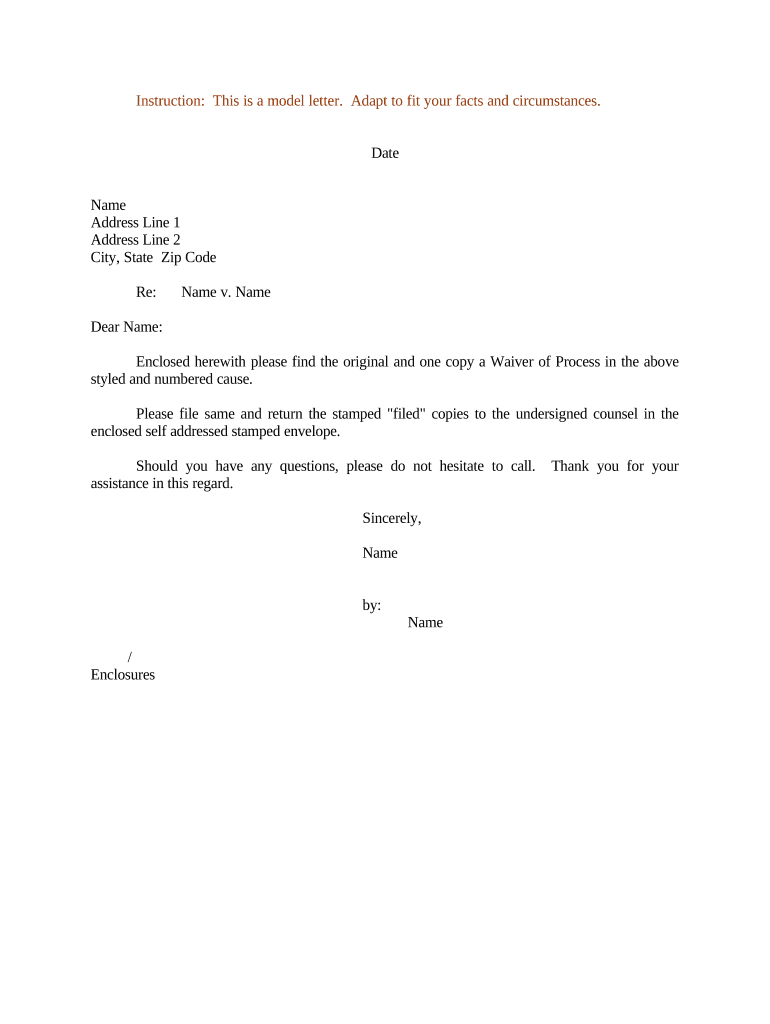
A concise waiver clarifies expectations, reduces litigation risk, and creates an evidentiary record of consent. Well-drafted waivers limit ambiguity about what is surrendered, who is bound, and when the waiver takes effect, which protects both grantor and recipient during later disputes.

Common creators and recipients of waivers range from individuals to corporate legal teams; use depends on the underlying right being waived.
A natural person signing in their own capacity must be the party granting the waiver; identity verification and matching government ID reduce disputes about attribution.
A signatory claiming corporate authority (officer or agent) should have written delegation or board resolution; improper authority can void the waiver or expose the organization to liability.
Use full legal names and, when applicable, business entity types and state of organization; ambiguous party names complicate enforcement and may require extrinsic evidence to connect the waiver to the right entity.
State exactly which right, claim, or obligation is being waived and any relevant exceptions; avoid vague phrases like 'any and all claims' without clear context to prevent unintended broad relinquishments.
Specify the date the waiver becomes effective and whether the waiver is one-time, conditional, or ongoing; duration affects statute of limitations calculations and future obligations.
Document any consideration (monetary payment, settlement terms, or mutual promises) supporting the waiver; courts often require consideration for contract modifications or releases.
Include printed name, title, capacity (e.g., 'CEO, on behalf of XYZ, Inc.'), and date; if an agent signs, attach evidence of authorization to avoid challenges to the signatory's capacity.
Define geographic, temporal, and subject-matter limits to the waiver, and note any retained rights; narrowing scope reduces the risk of overbroad surrender and unintended legal consequences.
| Field | Configuration |
|---|---|
| Signature | Required field; signer must enter name and sign. |
| Date | Auto-fill with signer date; editable if necessary. |
| Capacity | Optional dropdown: 'Individual', 'Agent', 'Officer'. |
| ID Verification | Enable when high-risk or third-party verification required. |
Ensure the chosen platform supports audit trails, secure storage, and appropriate authentication for the waiver's risk level.
Meet any contract-specified signing deadline to preserve intended effects.
Affects when waived claims may otherwise be litigated; check state law.
Document consideration for tax treatment in the relevant tax period.
Complete notarization components before final distribution if required.
Retain executed waivers per applicable retention rules.
Save executed waivers as PDF/A or searchable PDF to preserve layout and text; include embedded metadata to track version and signer.
Attach evidence of authority (board resolution, power of attorney), proof of consideration (settlement check, invoice), and identification when needed for verification.
Export signed records with an audit certificate showing timestamps, IP addresses, and signer email to support chain-of-custody and attribution.
Store in encrypted repositories with access controls and retention policies to meet regulatory or corporate records requirements.
| signNow | DocuSign | Adobe Sign | PandaDoc | HelloSign | |
|---|---|---|---|---|---|
| Starting Price | $8/user/mo | $15/user/mo | $14/user/mo | $19/user/mo | $15/user/mo |
| Free Trial | 7-day free trial | Varies by plan | Varies by plan | Varies by plan | Varies by plan |
| Bulk Send | Yes | Yes | Yes | Yes | No |
| Audit Trail | Yes | Yes | Yes | Yes | Yes |
| HIPAA Compliant | Yes | Yes | Yes | No | No |