Letter Regarding Conservatorship Documents
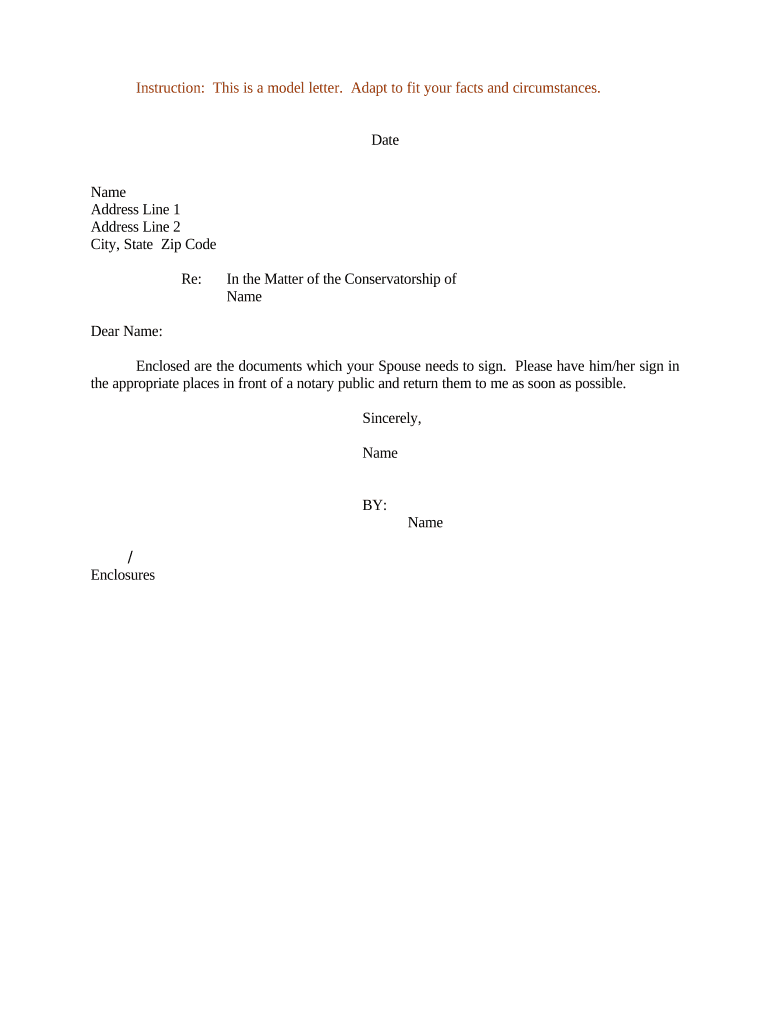
What a Letter Regarding Conservatorship Documents Is
Why a Clear Letter Matters for Conservatorship Processes
A concise, properly completed letter reduces delays when third parties verify conservator authority, ensures recipients have the precise documents needed, and creates a written record that supports lawful decision making under ESIGN (15 U.S.C. ch. 96) and UETA where electronic transmission is used.

Who Prepares and Receives These Letters
Typical senders and recipients vary by role and purpose; identify who needs and who produces the letter before drafting.
- Conservators or their attorneys sending proof of appointment to banks, insurers, or medical providers.
- Financial institutions and title companies verifying authority to manage accounts or transfer assets.
- Healthcare providers and payors confirming authority to access medical records or make treatment decisions.
Step-by-Step: Preparing the Letter Regarding Conservatorship Documents
-
01Confirm Authority: Verify the conservator’s appointment and case number with the probate court.
-
02Gather Documents: Attach certified or court-stamped copies of letters of appointment and orders.
-
03Compose Letter: State identities, authority scope, attached documents, and the action requested.
-
04Sign and Deliver: Sign (wet or compliant e-signature) and send via the recipient’s preferred method.
How to Customize and Complete the Letter Online
| Field | Configuration |
|---|---|
| Conservator Name Field | Required; auto-fill from profile to avoid typos. |
| Court Case Number Field | Required; validate format before sending. |
| Attachment Widget | Attach PDFs; mark official copies as certified when available. |
| Signature Method | Select e-sign or wet-sign per recipient rules and ESIGN compliance. |
Digital Signing and eSubmission Considerations
Maintain proof of delivery and an unalterable audit trail; for health records ensure HIPAA compliance and for financial matters confirm bank acceptance of e-copies.
- Authentication: Use multi-factor or recipient-specified verification.
- Document Format: Provide PDFs for reliable rendering.
- Record Retention: Ensure exportable audit trail is preserved.
Where to Send or File the Letter
-
Financial Institutions: Send to compliance or fiduciary relations with attached letters of appointment.
-
Healthcare Providers: Provide to medical records with conservator authorization and HIPAA release if required.
-
Government Agencies: Send to benefit administrators or social services with court proof.
-
Third-Party Vendors: Provide to insurers, title companies, or custodians as required.
Timelines and Processing Expectations
Bank and Title Responses:
Allow 7–30 business days for verification and account changes.
Medical Record Requests:
HIPAA allows up to 30 days to respond, sometimes with a 30-day extension.
Court Filings:
Comply with local probate rules for filing original documents and certified copies.
Benefit Administrations:
Agency processing often ranges 30–60 days for eligibility updates.
Urgent Requests:
Flag as urgent and provide court orders to expedite institutional review.
Common Mistakes to Avoid
- Submitting unsigned or partially completed letters that institutions will not accept without verification.
- Failing to include the court case number or attaching unofficial photocopies instead of certified copies.
- Using inconsistent names for the conservator or protected person, causing identity mismatches.
- Assuming all recipients accept unsworn electronic copies without confirming specific institutional requirements.
Risks and Consequences of Incorrect Letters
eSignature Pricing Comparison for Conservatorship Document Workflows
| signNow | DocuSign | Adobe Sign | PandaDoc | HelloSign | |
|---|---|---|---|---|---|
| Starting Price | $8/user/mo | $15/user/mo | $14/user/mo | $19/user/mo | $15/user/mo |
| Free Trial | 7-day free trial | No | No | Yes, limited | Yes, limited |
| Bulk Send | Yes | Yes | Yes | Yes | No |
| Audit Trail | Yes | Yes | Yes | Yes | Yes |
| HIPAA Compliant | Yes | Yes | Yes | No | No |
FAQs: Common Questions About Letters Regarding Conservatorship Documents
-
Can a conservatorship letter be signed electronically?
Yes, if the recipient accepts electronic records and the e-signature meets ESIGN criteria: intent, consent, attribution, and reliable record retention (15 U.S.C. ch. 96). Confirm recipient policy before e-signing.
-
Do courts accept electronic copies of appointment papers?
Many courts accept certified electronic copies, but some probate courts require original or court-certified copies; check local court rules and filing requirements before submission.
-
Is notarization always needed for the letter?
Notarization requirements vary by recipient and state; institutions like banks often request notarized copies, while some agencies accept court-certified documents without additional notarization.
-
What attachments should accompany the letter?
Attach the letters of conservatorship, order appointing conservator, bond (if applicable), and photo ID as requested; list each attachment in the letter for clarity.
-
How should I store executed letters securely?
Keep originals in a secure physical location and maintain encrypted digital copies with an immutable audit trail; follow HIPAA or financial retention rules where applicable.
-
What if a bank refuses the letter?
Request the bank’s specific acceptance criteria in writing, provide certified court documents, and if necessary seek a court order clarifying authority to compel compliance.