Establishing secure connection… Loading editor… Preparing document…
Navigation

Fill and Sign the Sample Term Sheetthe Startup Garage Form
Fill and Sign the Sample Term Sheetthe Startup Garage Form

How it works

Open the document and fill out all its fields.
Apply your legally-binding eSignature.
Save and invite other recipients to sign it.

Rate template

4.8
34 votes
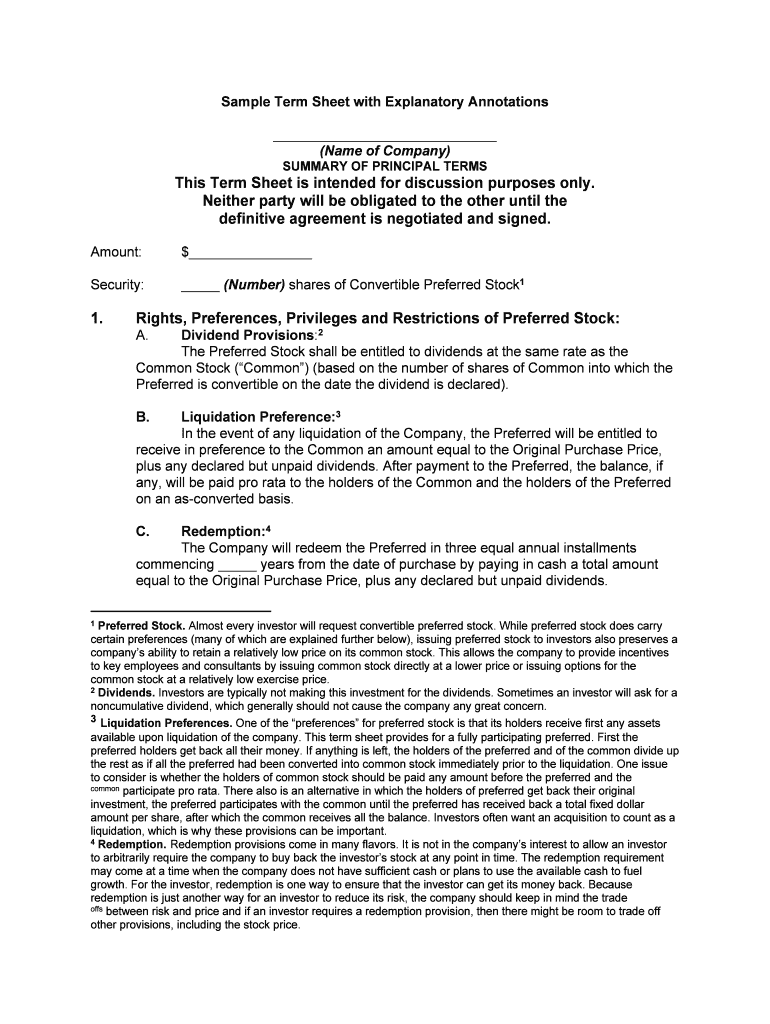
Sample Term Sheet with Explanatory Annotations_____________________________(Name of Company) SUMMARY OF PRINCIPAL TERMS This Term Sheet is intended for discussion purposes only. Neither party will be obligated to the other until thedefinitive agreement is negotiated and signed. Amount: $________________ Security: _____ (Number) shares of Convertible Preferred Stock 1 1. Rights, Preferences, Privileges and Restrictions of Preferred Stock: A.Dividend Provisions :2 The Preferred Stock shall be entitled to dividends at the same rate as the Common Stock (“Common”) (based on the number of shares of Common into which the Preferred is convertible on the date the dividend is declared). B. Liquidation Preference: 3 In the event of any liquidation of the Company, the Preferred will be entitled to receive in preference to the Common an amount equal to the Original Purchase Price, plus any declared but unpaid dividends. After payment to the Preferred, the balance, if any, will be paid pro rata to the holders of the Common and the holders of the Preferred on an as-converted basis. C. Redemption: 4 The Company will redeem the Preferred in three equal annual installments commencing _____ years from the date of purchase by paying in cash a total amount equal to the Original Purchase Price, plus any declared but unpaid dividends. 1 Preferred Stock. Almost every investor will request convertible preferred stock. While preferred stock does carry certain preferences (many of which are explained further below), issuing preferred stock to investors also preserves a company’s ability to retain a relatively low price on its common stock. This allows the company to provide incentives to key employees and consultants by issuing common stock directly at a lower price or issuing options for the common stock at a relatively low exercise price. 2 Dividends. Investors are typically not making this investment for the dividends. Sometimes an investor will ask for a noncumulative dividend, which generally should not cause the company any great concern. 3 Liquidation Preferences. One of the “preferences” for preferred stock is that its holders receive first any assets available upon liquidation of the company. This term sheet provides for a fully participating preferred. First the preferred holders get back all their money. If anything is left, the holders of the preferred and of the common divide up the rest as if all the preferred had been converted into common stock immediately prior to the liquidation. One issue to consider is whether the holders of common stock should be paid any amount before the preferred and the common participate pro rata. There also is an alternative in which the holders of preferred get back their original investment, the preferred participates with the common until the preferred has received back a total fixed dollar amount per share, after which the common receives all the balance. Investors often want an acquisition to count as a liquidation, which is why these provisions can be important. 4 Redemption. Redemption provisions come in many flavors. It is not in the company’s interest to allow an investor to arbitrarily require the company to buy back the investor’s stock at any point in time. The redemption requirement may come at a time when the company does not have sufficient cash or plans to use the available cash to fuel growth. For the investor, redemption is one way to ensure that the investor can get its money back. Because redemption is just another way for an investor to reduce its risk, the company should keep in mind the trade offs between risk and price and if an investor requires a redemption provision, then there might be room to trade off other provisions, including the stock price. D. Conversion:5 The Preferred will be convertible at any time, at the option of the holder, into shares of Common at an initial conversion price equal to the Original Purchase Price. Initially each share of Preferred is convertible into one share of Common. The conversion price will be subject to adjustment as provided in Paragraph E below. E. Anti-dilution Provisions: 6 The conversion price of the Preferred will be subject to adjustment to prevent dilution in the event that the Company issues additional shares (other than the Reserved Employee Shares described under “Reserved Employee Shares” below) at a purchase price less than the applicable conversion price. The conversion price will be subject to adjustment on a weighted basis which takes into account issuances of additional shares at prices below the applicable conversion price. F. Pay to Play :7 If any holder of Preferred fails to participate in the preemptive right described below on a pro rata basis, then such holder will lose its antidilution protection for all prior and future financings on all Preferred that it owns and will have the Preferred it owns converted to Common (and lose its preemptive right to participate in future financings and the right of first refusal described below, as well as any informational, inspection, visitation and registration rights, but will remain subject to applicable lock- up requirements). If such holder participates in its preemptive right but not to the full extent of its pro rata share, then only a percentage of its Preferred will be converted into Common (under the same terms as in the preceding sentence). 5 Automatic Conversion. It is important for a company to have all outstanding preferred converted to common at the time of an initial public offering (“IPO”). Investors typically want to ensure that the IPO is sufficiently large before they are obligated to convert. A typical provision will state that the IPO has to be for a per share price of at least some multiple of the original stock purchase price and for an aggregate offering amount of some agreed-upon dollar amount. It is easier to meet the aggregate offering amount, so try to eliminate the minimum per share price. It also is important that if a certain percentage of the preferred has already converted or agreed to convert, the company have the ability to cause the rest of the preferred to convert. A simple majority is most favorable to the company; investors sometimes request higher percentages. 6 Antidilution. An antidilution provision is intended to preserve the economic value of an investor’s investment if the company sells stock at a lower price than was paid by the investor. There are several flavors of antidilution protection; the weighted average described in this term sheet is the most common and the fairest. The mechanics are that the conversion price is adjusted so that upon conversion of the preferred, the investor receives additional shares of common stock. The other type of antidilution protection sometimes seen is “full ratchet.” A “full ratchet” tends to be overly generous to an investor and if an investor seeks a “full ratchet” antidilution clause, the company should either seek to eliminate it or limit it to a short period of time after the original preferred investment, after which the antidilution reverts to weighted average. 7 Pay to Play. The “pay to play” provision requires investors to stick with the company in order to maintain many of the investor’s preferences. This term sheet says that the investor must participate pro rata in future financings or else lose its antidilution protection and face mandatory conversion and loss of certain other rights. The specifics of any “pay to play” provision can be negotiated, but the concept is that the company and the investor should consider the relationship to be a long-term one and that continuing support for the company is one of the conditions for retaining all the investor’s preferences. G. Voting Rights:8 Except with respect to election of directors, the holder of a share of Preferred will have the right to that number of votes equal to the number of shares of Common issuable upon conversion of the Preferred at the time the record for the vote is taken. Election of Directors will be as described under “Board Representation” below. H. Protective Provisions: 9 Provided at least _________ shares of Preferred are outstanding, consent of the holders of at least a majority of the Preferred will be required for any sale by the Company of a substantial portion of its assets, any merger of the Company with another entity, each amendment of the Company’s articles of incorporation, and for any action which (i) alters or changes the rights, preferences or privileges of the Preferred materially and adversely, (ii) increases the authorized number of shares of Preferred Stock, (iii) creates any new class of shares having preference over or being on a parity with the Preferred. 2. Information Rights: The Company will timely furnish the investors with annual, quarterly and monthly financial statements. Representatives of the investors will have the right to inspect the books and records of the Company. 3. Registration Rights 10 : A. Demand Rights: Beginning the earlier of five years after the Closing Date and 12 months after the Company’s initial public offering, if investors holding at least 50 percent of the Preferred (or Common issued upon conversion of the Preferred) request that the Company file a Registration Statement covering at least 20 percent of the Common issuable upon conversion of the Preferred with an anticipated aggregate offering price of at least $10,000,000, the Company will use its best efforts to cause such shares to be registered. The Company will not be obligated to affect more than two registrations under these demand right provisions. 8 Protective Provisions . Another preference for preferred stock is the right to special class voting under applicable corporate law. It is unusual for an investor to immediately obtain a majority position in any company. Therefore, the investor is concerned that actions not be taken if those actions might impair the value of the investment. The key things to keep in mind for this provision are: (a) the percentage of preferred required for the approval (from the company’s perspective, a lower percentage is better), (b) the specific items that require the special consent (again, fewer things are better than more things), and (c) this special voting privilege only continues so long as there is at least some reasonable amount of shares of preferred outstanding. 9 Protective Provisions. Another preference for preferred stock is the right to special class voting under applicable corporate law. It is unusual for an investor to immediately obtain a majority position in any company. Therefore, the investor is concerned that actions not be taken if those actions might impair the value of the investment. The key things to keep in mind for this provision are: (a) the percentage of preferred required for the approval (from the company’s perspective, a lower percentage is better), (b) the specific items that require the special consent (again, fewer things are better than more things), and (c) this special voting privilege only continues so long as there is at least some reasonable amount of shares of preferred outstanding 10 Registration Rights. Registration rights often take up a substantial portion of any preferred stock purchase documentation and are rarely invoked. The principal purpose for registration rights is to ensure that the investor has a path to liquidity if the company conducts an IPO. The provisions outlined in this term sheet are fairly standard. The issues to keep in mind are: (a) time limits for both the start and the termination of the registration rights, (b) the demand rights are for a significantly sized offering so that the company avoids having to comply with this request for insignificant offerings, and (c) asking the investors to allow founders or other key employees to also participate in the registration rights. B. Registrations on Form S-3: Holders of ____ percent or more of the Preferred (or Common issued upon conversion of the Preferred) will have the right to require the Company to file an unlimited number of Registration Statements on Form S-3 (but no more than two per year). C. Piggy-Back Registration: The investors will be entitled to “piggy-back” registration rights on all registrations of the Company. D. Registration Expenses: All registration expenses (exclusive of underwriting discounts and commissions or special counsel fees of a selling shareholder) shall be borne by the Company. E. Lock-Up Provision: Upon request by the underwriter, the holders of all registerable securities shall enter into agreements not to transfer any shares beginning upon the date of the Company’s initial public offering and continuing for such period thereafter up to 180 days as determined by the board of directors upon advice of underwriters; provided each officer and director of the Company and all other holders of at least 10 percent of the Company’s Common shall agree to execute a similar agreement. F. Termination: All registration rights terminate five years after the Company’s initial public offering. G. Transfer: Registration rights are transferable only with the transfer of all of a holder’s registerable securities or to a majority-owned subsidiary of a holder or a constituent partner of a holder. H. Certain Employee Rights: Certain key employees to be named by the board of directors shall have piggyback registration rights on any investor demand registrations, subject to underwriter’s cutback and subordinate to the investors, and on Company initiated registrations, subject to underwriter’s cutback and pro rata with investors. 4. Board Representation: The Board will consist of _______ members. The holders of the Preferred will have the right to designate _____ directors, the holders of the Common (exclusive of the Investors) will have the right to designate _______ directors, and the remaining _____ directors will be unaffiliated persons elected by the Common and the Preferred voting as a single class. 5. Key Man Insurance: As determined by the Board of Directors. 6. Preemptive Right to Purchase New Securities: 11 If the Company proposes to offer additional shares (other than Reserved Employee Shares or shares issued in the initial public offering or the acquisition of another company or shares issued upon conversion or exercise of 11 Preemptive Rights. Investors often ask for the first right to buy any new shares issued by the company. From the company’s perspective, this is necessary if you have a “pay to play” provision and is often desirable. It is easier to put together a deal with people you already know and love rather than having to start all over again with strangers. However, unless there are appropriate procedures in the final documentation that put time limits on how long an investor an take to make up its mind, a preemptive right provision may impair the company’s ability to obtain new financing from third parties. It is important to be sure that the preemptive right does not apply to shares reserved for incentive purposes, the IPO or for issuance of shares upon conversion or exercise of currently outstanding securities. outstanding securities), the Company will first offer all such shares to the investors on a pro rata basis. This preemptive right will terminate upon an underwritten public offering of shares of the Company. 7. Stock Restriction and Rights of First Refusal and Co-Sale:12 All present holders of the Common Stock of the Company who are employees of the Company will execute a Stock Restriction Agreement with the Company pursuant to which the Company will have an option to buy back at cost a portion of the shares of Common Stock held by such person in the event that such shareholder’s employment with the Company is terminated prior to the expiration of ____ months from the date of employment. _______ percent of the shares will be released each year from the repurchase option based upon continued employment by the Company. In addition, the Company and the Investors will have a right of first refusal with respect to any employee’s shares proposed to be resold, or alternatively, the right to participate in the sale of any such shares to a third party, which rights will terminate upon a public offering. 8. Reserved Employee Shares: 13 The Company may reserve up to _______ shares of Common Stock for issuance to employees, directors and consultants of the Company (the “Reserved Employee Shares”). The Reserved Employee Shares will be issued from time to time under such arrangements, contracts or plans as recommended by management and approved by the Board. 9. Non-Competition, Proprietary Information and Inventions Agreement: Each officer and key employee of the Company designated by the Investors will enter into a non-competition proprietary information and inventions agreement in a form reasonably acceptable to the Investors. 10. The Purchase Agreement: The purchase of the Preferred will be made pursuant to a Stock Purchase Agreement drafted by counsel to the Investors and reasonably acceptable to the Company and the Investors, which agreement shall contain, among other things, appropriate representations and warranties of the Company, covenants of the Company reflecting the provisions set forth herein, and appropriate conditions of closing. 12 Stock Restriction. Investors often require that stock owned by employees be subject to some sort of vesting agreement which states that the company can buy back the stock at the price paid by the employee if the employee is no longer employed after a certain period of time. As time passes, the company’s right to buy lapses according to an agreed- upon formula. In addition, investors almost always require that the company (and sometimes the investors) have a right of first refusal on any employee’s stock that is sold. Both of these provisions are in the company’s interest and ordinarily should have been put in place at formation. The only change that usually is required upon investment is adding the investor to the right of first refusal and adding the co-sale provision. 13 Reserved Employee Shares. It is in everybody’s best interest for the company to have an adequate amount of shares reserved to provide incentives to employees, directors and consultants. The specific number of shares will often be negotiated. The company should consider how many shares it thinks it will need to attract and retain the number of employees it thinks it will have to hire over the year or two after the investment and be prepared to justify that number to the investors. 11. Expenses: The Company will bear the legal fees and other out-of-pocket expenses of the investors with respect to the transaction.

Valuable tips for preparing your ‘Sample Term Sheetthe Startup Garage’ online

Are you fed up with the annoyance of handling paperwork? Look no further than airSlate SignNow, the top eSignature solution for individuals and small to medium-sized businesses. Bid farewell to the tedious task of printing and scanning documents. With airSlate SignNow, you can effortlessly finalize and sign documents online. Utilize the extensive tools included in this user-friendly and cost-effective platform to transform your paperwork management approach. Whether you need to sign forms or collect eSignatures, airSlate SignNow simplifies the process with just a few clicks.

Follow these detailed instructions:

  1. Sign into your account or create a free trial with our service.
  2. Click +Create to upload a file from your device, cloud storage, or our form collection.
  3. Open your ‘Sample Term Sheetthe Startup Garage’ in the editor.
  4. Click Me (Fill Out Now) to finalize the document on your end.
  5. Add and designate fillable fields for others (if needed).
  6. Continue with the Send Invite options to solicit eSignatures from others.
  7. Save, print your version, or convert it into a reusable template.

No need to worry if you need to work with your colleagues on your Sample Term Sheetthe Startup Garage or send it for notarization—our platform provides all the necessary tools to accomplish these tasks. Sign up with airSlate SignNow today and enhance your document management experience to new levels!

Here is a list of the most common customer questions. If you can’t find an answer to your question, please don’t hesitate to reach out to us.

Need help? Contact Support

The best way to complete and sign your sample term sheetthe startup garage form
Save time on document management with airSlate SignNow and get your sample term sheetthe startup garage form eSigned quickly from anywhere with our fully compliant eSignature tool.
How to Sign a PDF Online How to Sign a PDF Online

How to fill out and sign forms online

In the past, coping with paperwork required pretty much time and effort. But with airSlate SignNow, document management is quick and simple. Our powerful and user-friendly eSignature solution lets you easily complete and electronically sign your sample term sheetthe startup garage form online from any internet-connected device.

Follow the step-by-step guide to eSign your sample term sheetthe startup garage form template online:

  • 1.Register for a free trial with airSlate SignNow or log in to your account with password credentials or SSO authentication.
  • 2.Click Upload or Create and add a file for eSigning from your device, the cloud, or our form catalogue.
  • 3.Click on the document name to open it in the editor and utilize the left-side menu to fill out all the empty areas accordingly.
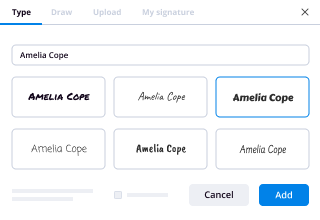
  • 4.Put the My Signature field where you need to approve your form. Type your name, draw, or import a picture of your regular signature.
  • 5.Click Save and Close to finish editing your completed form.

Once your sample term sheetthe startup garage form template is ready, download it to your device, export it to the cloud, or invite other individuals to electronically sign it. With airSlate SignNow, the eSigning process only takes several clicks. Use our robust eSignature solution wherever you are to handle your paperwork efficiently!
How to Sign a PDF Using Google Chrome How to Sign a PDF Using Google Chrome

How to fill out and sign documents in Google Chrome

Completing and signing paperwork is easy with the airSlate SignNow extension for Google Chrome. Adding it to your browser is a quick and efficient way to manage your paperwork online. Sign your sample term sheetthe startup garage form sample with a legally-binding eSignature in a couple of clicks without switching between programs and tabs.

Follow the step-by-step guidelines to eSign your sample term sheetthe startup garage form in Google Chrome:

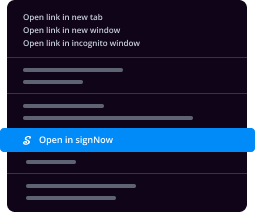
  • 1.Navigate to the Chrome Web Store, locate the airSlate SignNow extension for Chrome, and add it to your browser.
  • 2.Right-click on the link to a form you need to approve and choose Open in airSlate SignNow.
  • 3.Log in to your account using your password or Google/Facebook sign-in option. If you don’t have one, you can start a free trial.
  • 4.Utilize the Edit & Sign toolbar on the left to fill out your template, then drag and drop the My Signature field.
  • 5.Upload an image of your handwritten signature, draw it, or simply enter your full name to eSign.
  • 6.Verify all data is correct and click Save and Close to finish editing your paperwork.

Now, you can save your sample term sheetthe startup garage form sample to your device or cloud storage, send the copy to other individuals, or invite them to electronically sign your document via an email request or a secure Signing Link. The airSlate SignNow extension for Google Chrome improves your document workflows with minimum effort and time. Try airSlate SignNow today!
How to Sign a PDF in Gmail How to Sign a PDF in Gmail How to Sign a PDF in Gmail

How to complete and sign forms in Gmail

Every time you get an email with the sample term sheetthe startup garage form for approval, there’s no need to print and scan a file or download and re-upload it to another program. There’s a better solution if you use Gmail. Try the airSlate SignNow add-on to promptly eSign any documents right from your inbox.

Follow the step-by-step guide to eSign your sample term sheetthe startup garage form in Gmail:

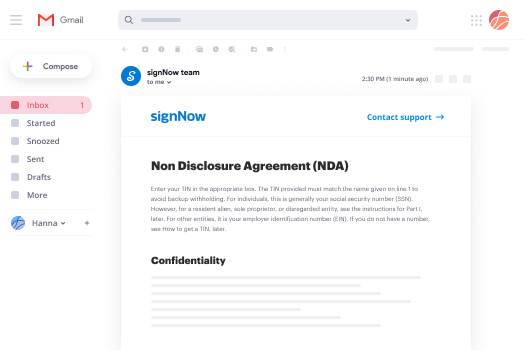
  • 1.Navigate to the Google Workplace Marketplace and look for a airSlate SignNow add-on for Gmail.
  • 2.Set up the tool with a corresponding button and grant the tool access to your Google account.
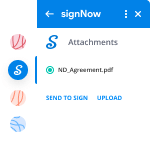
  • 3.Open an email containing an attachment that needs approval and use the S symbol on the right sidebar to launch the add-on.
  • 4.Log in to your airSlate SignNow account. Select Send to Sign to forward the file to other people for approval or click Upload to open it in the editor.
  • 5.Put the My Signature field where you need to eSign: type, draw, or import your signature.

This eSigning process saves efforts and only takes a couple of clicks. Take advantage of the airSlate SignNow add-on for Gmail to adjust your sample term sheetthe startup garage form with fillable fields, sign documents legally, and invite other parties to eSign them al without leaving your inbox. Improve your signature workflows now!
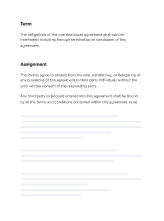
How to Sign a PDF on a Mobile Device How to Sign a PDF on a Mobile Device How to Sign a PDF on a Mobile Device

How to complete and sign paperwork in a mobile browser

Need to rapidly fill out and sign your sample term sheetthe startup garage form on a mobile phone while working on the go? airSlate SignNow can help without needing to install extra software apps. Open our airSlate SignNow solution from any browser on your mobile device and add legally-binding electronic signatures on the go, 24/7.

Follow the step-by-step guidelines to eSign your sample term sheetthe startup garage form in a browser:

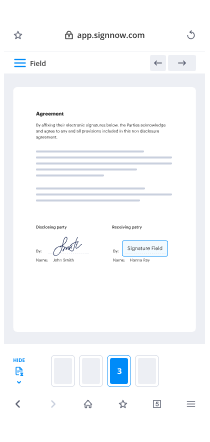
  • 1.Open any browser on your device and go to the www.signnow.com
  • 2.Register for an account with a free trial or log in with your password credentials or SSO option.
  • 3.Click Upload or Create and import a file that needs to be completed from a cloud, your device, or our form library with ready-to go templates.
  • 4.Open the form and fill out the blank fields with tools from Edit & Sign menu on the left.
  • 5.Add the My Signature field to the form, then type in your name, draw, or upload your signature.

In a few simple clicks, your sample term sheetthe startup garage form is completed from wherever you are. Once you're finished editing, you can save the file on your device, build a reusable template for it, email it to other people, or invite them eSign it. Make your documents on the go prompt and productive with airSlate SignNow!


How to Sign a PDF on iPhone How to Sign a PDF on iPhone

How to fill out and sign documents on iOS

In today’s business community, tasks must be accomplished rapidly even when you’re away from your computer. Using the airSlate SignNow mobile app, you can organize your paperwork and approve your sample term sheetthe startup garage form with a legally-binding eSignature right on your iPhone or iPad. Install it on your device to conclude agreements and manage forms from anyplace 24/7.

Follow the step-by-step guide to eSign your sample term sheetthe startup garage form on iOS devices:

  • 1.Open the App Store, find the airSlate SignNow app by airSlate, and install it on your device.
  • 2.Launch the application, tap Create to import a template, and select Myself.
  • 3.Choose Signature at the bottom toolbar and simply draw your autograph with a finger or stylus to eSign the sample.
  • 4.Tap Done -> Save after signing the sample.
  • 5.Tap Save or utilize the Make Template option to re-use this paperwork later on.

This method is so easy your sample term sheetthe startup garage form is completed and signed in just a couple of taps. The airSlate SignNow app works in the cloud so all the forms on your mobile device remain in your account and are available any time you need them. Use airSlate SignNow for iOS to improve your document management and eSignature workflows!
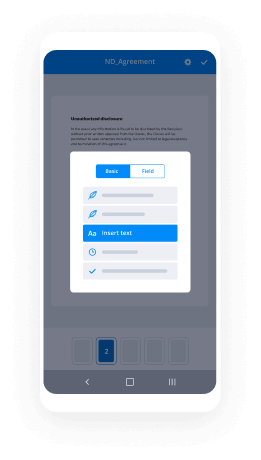
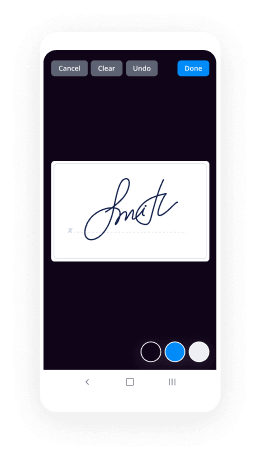
How to Sign a PDF on Android How to Sign a PDF on Android

How to complete and sign forms on Android

With airSlate SignNow, it’s simple to sign your sample term sheetthe startup garage form on the go. Set up its mobile application for Android OS on your device and start enhancing eSignature workflows right on your smartphone or tablet.

Follow the step-by-step guide to eSign your sample term sheetthe startup garage form on Android:

  • 1.Open Google Play, search for the airSlate SignNow application from airSlate, and install it on your device.
  • 2.Log in to your account or create it with a free trial, then import a file with a ➕ key on the bottom of you screen.
  • 3.Tap on the uploaded document and select Open in Editor from the dropdown menu.
  • 4.Tap on Tools tab -> Signature, then draw or type your name to eSign the sample. Fill out blank fields with other tools on the bottom if necessary.
  • 5.Use the ✔ button, then tap on the Save option to end up with editing.

With an intuitive interface and total compliance with main eSignature requirements, the airSlate SignNow application is the best tool for signing your sample term sheetthe startup garage form. It even operates without internet and updates all record adjustments when your internet connection is restored and the tool is synced. Fill out and eSign documents, send them for approval, and create re-usable templates whenever you need and from anyplace with airSlate SignNow.

Sign up and try Sample term sheetthe startup garage form
  • Close deals faster
  • Improve productivity
  • Delight customers
  • Increase revenue
  • Save time & money
  • Reduce payment cycles