Establishing secure connection…Loading editor…Preparing document…

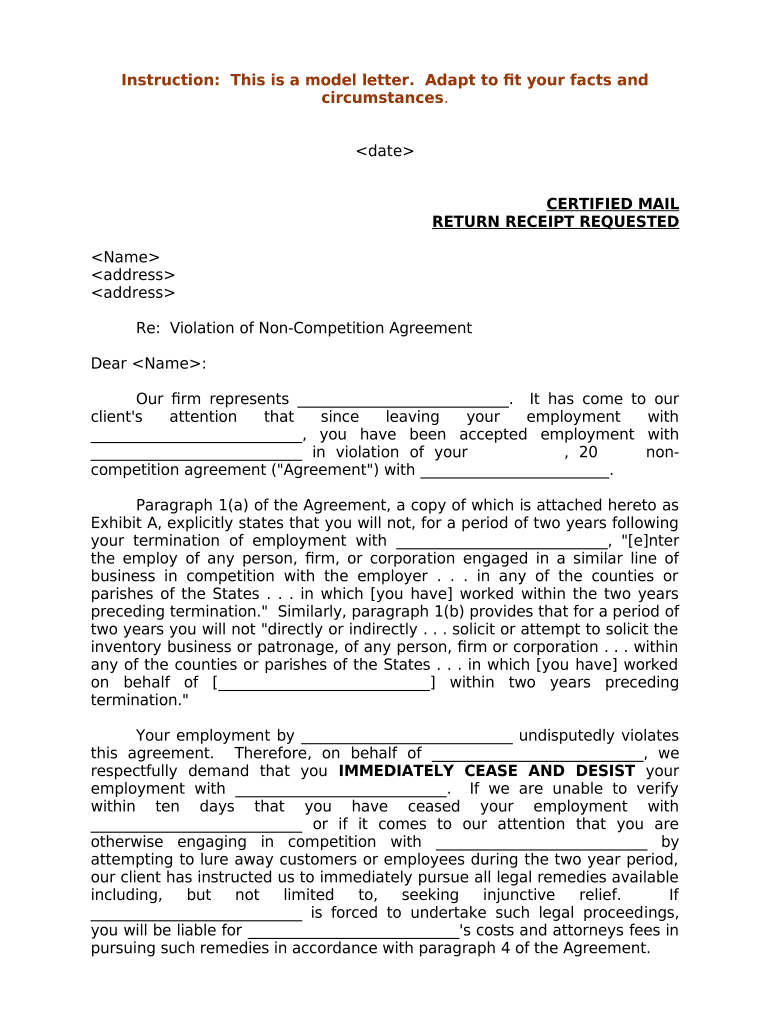
Sample Violation Letter

This template is fully customizable. Edit the text, fill out the fields, and send it for signature. Give it a try!
Sample Violation Letter

What a Sample Violation Letter Is and When It’s Used

The Sample Violation Letter is a formal, written notice used by organizations to document and communicate an alleged breach of contract, policy, or regulatory requirement. It outlines the specific conduct at issue, references relevant clauses or laws, states required corrective actions or remedies, and sets a deadline for compliance. Organizations use this template to ensure consistent wording, preserve evidence, and provide clear notice before pursuing enforcement or escalation. The letter is adaptable across industries and may accompany supporting documentation such as inspection reports or photographs.

Why Standardizing Your Notice Matters

A Sample Violation Letter standardizes notice procedures, reduces legal ambiguity, and documents steps taken to obtain compliance. It helps safeguard an organization’s position by creating a clear, dated record that may be used in administrative proceedings, insurance claims, or litigation if escalation becomes necessary.

Why Standardizing Your Notice Matters

Which Roles Commonly Prepare and Send These Letters

Organizations across compliance, property management, HR, and regulatory teams commonly use this template to centralize and standardize violation notices.

  • Property managers issuing lease violation notices after inspections or tenant complaints.
  • HR or compliance officers documenting workplace policy breaches and corrective action timelines.
  • Regulatory staff providing formal notice before fines, license actions, or administrative hearings.

Representative Roles and Practical Use

Brian Fitzgibbons, COO

As COO overseeing property operations, he uses standardized violation letters to document incidents, set remediation deadlines, and preserve a clear administrative record for tenant communications, escalation decisions, and potential legal follow-up.

Kodi-Marie Evans, Director

In operations and systems roles, she integrates templates with enterprise workflows to ensure notices are generated consistently, routed to appropriate approvers, and stored with audit trails for compliance and reporting.

Essential Elements Every Sample Violation Letter Should Include

Core elements of a professional Sample Violation Letter ensure clarity, legal defensibility, and a documented cure process for the recipient.

Header

Include sender name, title, organization, mailing address, and the letter date. Accurate header information accurately establishes the origin and helps prove delivery and notice timing.
Violation Details

Describe the specific conduct, reference contract paragraphs or policy sections, provide dates and locations, and explain how the conduct deviates from required standards or obligations.

Evidence

Attach or summarize supporting evidence such as inspection reports, photographs, timestamps, correspondence, or test results. Clearly label exhibits and reference them in the narrative for ease of review.

Remedy

State specific corrective actions required, measurable outcomes expected, and any deadlines. If monetary payment is required, state the amount, due date, and payment instructions explicitly.

Consequences

Explain potential consequences for noncompliance such as fines, contract suspension, termination, or referral to regulatory authorities. Tie consequences to specific contractual or statutory provisions when possible.

Contact

Provide a named contact, phone number, email address, and preferred method for responding. State available hours and any documentation the recipient should include with their response.

Step-by-Step: Drafting and Delivering a Violation Notice

Follow these steps to complete and deliver a Sample Violation Letter correctly and consistently today.

  • 01
    Draft: Identify facts, cite policies, and draft clear allegations.
  • 02
    Attach evidence: Collect reports, photos, and correspondence as exhibits.
  • 03
    Review: Legal or manager review for accuracy and tone.
  • 04
    Send: Deliver via certified mail or secure e-delivery with receipt.

Configure a Review and Approval Workflow

Configure a standardized workflow so letters are reviewed, approved, and archived consistently across teams and systems.

Field Configuration
Approval order Manager then legal
Notification method Certified mail or eDelivery
Retention folder Centralized records repository
Sign-off field Signature, date, title required

Technical Requirements for Secure Delivery and Proof

Choose delivery and signing platforms that support secure eDelivery, proof of receipt, and auditability for legal defensibility.

  • Formats: PDF, DOCX supported
  • Integrations: Connects with CRM and storage
  • Authentication: Email, SMS, or KBA

Delivery Options and How Recipients Acknowledge Receipt

Routing and notification options determine how recipients receive and acknowledge a violation letter securely online.

  • Postal: Certified mail provides return receipt and proof of delivery.
  • Email: Encrypted email with read receipt and attached exhibits.
  • eSignature: Secure eDelivery with audit trail and signature capture.
  • Hand delivery: In-person delivery with signed acknowledgment or witness.

Typical Timelines and Response Windows

Common timelines associated with issuing and resolving a violation notice depend on contractual cure periods and regulatory requirements.

Initial notice date:

Date the letter is sent; starts cure period.

Response deadline:

Recipient typically given 7–30 days to respond.

Cure period:

Specified time to correct violation before escalation.

Escalation action:

Enforcement, fines, or contract termination as stated.

Record retention:

Keep dated copies and delivery receipts indefinitely per policy.

Key Milestones from Draft to Resolution

Key processing milestones guide the lifecycle from draft to final enforcement so all stakeholders know next steps and timing.

01

Draft Issued

Prepare and review the letter internally before approval.

02

Notice Sent

Deliver by chosen method and record proof of service.

03

Recipient Response

Receive reply, documents, or proposed corrective plan.

04

Closure or Escalation

Verify cure actions or proceed with enforcement steps.

Common Mistakes to Avoid When Preparing a Violation Letter

  • Using vague language that fails to identify the exact clause or action alleged, which can weaken enforcement and invite disputes over interpretation.
  • Missing or incorrect dates, deadlines, or contact details that prevent recipients from responding within required cure periods or from receiving the notice.
  • Failing to attach supporting documentation such as inspection reports or photos, making it harder to substantiate the alleged violation in hearings.
  • Using overly aggressive or legally incorrect remedies in the first notification, which may provoke counterclaims or procedural challenges.

Risks and Consequences of an Inaccurate Notice

Loss of remedy: Waived right to cure
Regulatory fines: Potential fines and sanctions
Evidence gaps: Incomplete record for litigation
Escalation costs: Higher legal and enforcement costs
Contract breach: Triggers termination rights
Reputational harm: Public complaints or adverse outcomes

Practical Best Practices for Strong, Defensible Notices

Adopt these practical best practices to improve clarity, reduce disputes, and strengthen the enforceability of Sample Violation Letters.

Be specific and factual at all times
Describe events with dates, times, and observable details; avoid opinions. Link each assertion to a numbered exhibit and include copies of supporting documents so reviewers and decision-makers can verify facts without additional requests.
Use measurable deadlines with clear consequences
Specify cure actions, exact due dates in MM/DD/YYYY, and what constitutes acceptable remediation. Clarify follow-up steps and tie consequences to specific contract sections to limit ambiguity during enforcement or hearings.
Preserve evidence and delivery proof
Keep originals, copies, and digital exhibits with timestamps. Use certified mail return receipts or eSignature audit trails that log IP addresses and timestamps. Store records in a secure, centralized repository for at least the retention period.
Consult counsel for high risk cases
Have legal counsel review notices that involve potential statutory violations, contract termination, or substantial damages. Counsel can confirm appropriate statutory citations, service methods, and advise on escalation strategies to mitigate litigation risk.

Real-World Examples of How Notices Are Used

Practical examples show how organizations use a Sample Violation Letter to resolve noncompliance while preserving evidence for escalation.

Martin Properties

Martin Properties used a standardized violation letter to notify tenants of code violations after on-site inspections, enabling a consistent remediation approach.

  • Response rates improved within days.
  • The company preserved inspection photos and dated delivery receipts, which reduced disputes at hearing and allowed for efficient follow-up; counsel reviewed each notice to ensure compliance with local landlord-tenant statutes.

Optica Ventures

Optica Ventures standardized violation letters across property portfolios to centralize incident records and reduce drafting inconsistencies between managers.

  • Audit trails supported enforcement in hearings.
  • Having consistent templates ensured each notice included specific evidence references and a clear cure timeline, which shortened resolution cycles and helped maintain organized records for potential administrative proceedings.

Baseline Pricing and Key Feature Comparison for Common eSignature Vendors

Compare baseline pricing and key plan features for common eSignature vendors when sending Sample Violation Letters.

signNow DocuSign Adobe Sign PandaDoc HelloSign
Starting Price $8/user/mo $15/user/mo $14/user/mo $19/user/mo $15/user/mo
Free Trial 7-day free trial Varies by vendor Varies by vendor Varies by vendor Varies by vendor
Bulk Send Yes Yes Yes Yes Varies
HIPAA Compliant Yes Yes Yes No No
Envelope Cap No cap 100 envelopes/user/year Varies Varies Varies

Security and Compliance Considerations for Digital Delivery

Encryption: TLS 1.2/1.3 in transit; AES-256 at rest
Certifications: SOC 2 Type II; ISO 27001; PCI DSS
HIPAA: BAA required; supports protected health data
ESIGN/UETA: Compliant with ESIGN and UETA
21 CFR Part 11: Supports FDA-regulated electronic records
Access Controls: Two-factor, role-based permissions

Frequently Asked Questions About Using a Sample Violation Letter

Answers to common questions about completing, serving, and validating a Sample Violation Letter in U.S. jurisdictions.


Need help? Contact support

be ready to get more
Join over 28 million airSlate SignNow users