Establishing secure connection…Loading editor…Preparing document…

Settlement Agreement

This template is fully customizable. Edit the text, fill out the fields, and send it for signature. Give it a try!
Settlement Agreement

What a Settlement Agreement Is and when it’s used

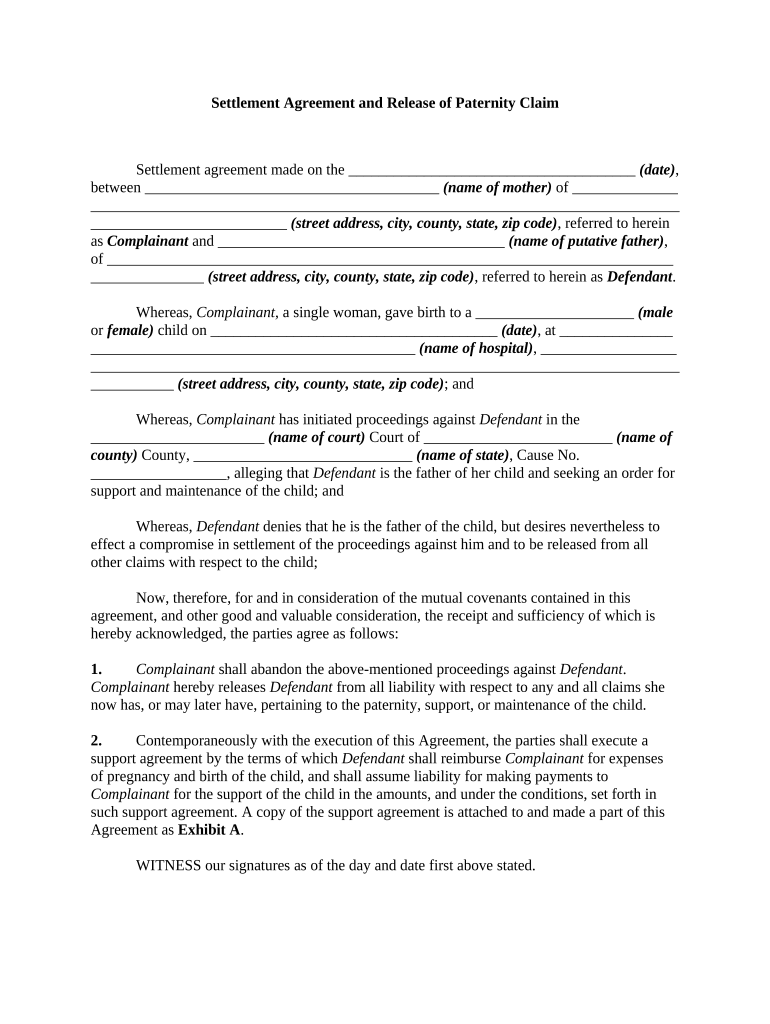
A Settlement Agreement is a legally binding contract that resolves a dispute or outlines terms for resolving potential claims between parties without further litigation. It typically identifies the parties, the claims being released, the consideration exchanged (payments or other obligations), confidentiality terms, and procedures for performance and enforcement. Settlement Agreements can be used for civil disputes, employment separations, commercial contract breaches, or liability releases. Because these documents waive rights, they must clearly express mutual assent, consideration, and signatures from authorized parties to be enforceable under U.S. contract law and applicable electronic signature statutes.

Why a clear Settlement Agreement matters

A well-drafted Settlement Agreement reduces litigation risk, allocates responsibilities, and documents the precise remedies and release language that courts will review. It preserves enforceability by specifying consideration, timelines, governing law, and signature authority, and by addressing confidentiality and tax consequences explicitly.

Why a clear Settlement Agreement matters

Who typically prepares and signs Settlement Agreements

Settlement Agreements are used by a mix of parties depending on context; legal counsel often prepares them while business or individual signatories execute them.

  • Plaintiffs and defendants in civil disputes who prefer an out-of-court resolution and want enforceable release language.
  • Employers and departing employees to document severance, confidentiality, and release of employment claims.
  • Businesses and vendors to resolve contract breaches, payment disputes, or indemnity issues without further litigation.

Accurate party identification, authorized signatories, and clear payment and release clauses help avoid post-execution challenges to enforceability.

Typical signers and their roles

Plaintiff Attorney

Represents the claimant, negotiates release language and consideration, and confirms that signatures and dates reflect client consent and full knowledge of waived claims before execution.

Corporate Counsel

Reviews internal authority to bind the company, ensures indemnities and confidentiality align with corporate policy, and confirms record retention and tax reporting responsibilities after settlement.

Essential parts of a professional Settlement Agreement

A complete Settlement Agreement organizes obligations, releases, timelines, and dispute-resolution mechanics so each party’s rights and duties are clear and enforceable.

Parties

Full legal names and entity types for each party, including state of formation for companies and authorized signer titles to establish authority and attribution.
Recitals

Concise factual background describing the dispute or relationship being resolved so the scope of the release is anchored to specific claims and timeframes.

Release

Clear mutual release clause defining the claims released, any reservations, and the effective date so courts can interpret waiver scope without ambiguity.

Consideration

Specific payment amounts, in-kind obligations, or performance milestones with deadlines and consequences for missed payments or defaults.

Confidentiality

If included, precise confidentiality limits, permitted disclosures (e.g., tax or legal advisors), and carve-outs for regulatory obligations.

Governing Law

State law that will control interpretation and enforcement and any agreed forum or dispute resolution mechanism such as arbitration or court venue.

Step-by-step: putting a Settlement Agreement in order

Follow a consistent sequence to reduce risk and speed execution when drafting, reviewing, and signing a Settlement Agreement.

  • 01
    Draft terms: Assemble recitals, release, consideration, and timelines.
  • 02
    Legal review: Have counsel confirm enforceability and tax treatment.
  • 03
    Execute signatures: Sign and date with authorized representatives.
  • 04
    Distribute copies: Provide executed copies to all parties and retain originals.

How to configure an online signing workflow

Set up fields, authentication, and storage so electronic execution satisfies legal and business requirements for settlement documents.

Field | Configuration Type | Value
Template Save a reusable Settlement Agreement template for consistency
Authentication Choose email link, SMS code, or advanced signer verification
Conditional Fields Use conditional logic for payment schedules or mutual releases
Storage Archive signed PDF/A copies with audit trail

Typical routing and delivery steps

A predictable routing sequence reduces signer friction and preserves the audit trail required for enforceability under ESIGN and state law.

  • Upload document: Add the finalized Settlement Agreement PDF
  • Place fields: Add signature, date, and initial fields
  • Send to signers: Email or shared signing link to parties
  • Capture audit trail: Record timestamps, IP, and actions for proof

Platform and format considerations for electronic execution

Ensure your platform supports secure storage, audit trails, and the file formats required by recipients or courts.

  • Integrations: Salesforce, NetSuite, Google Workspace supported
  • File formats: PDF, DOCX, and PDF/A for archival
  • Authentication: Email, SMS, or advanced signer verification

Confirm the chosen solution preserves tamper-evident signed PDFs, offers audit logs, and meets any industry-specific compliance requirements such as HIPAA or 21 CFR Part 11 when applicable.

Key dates and timing to include

List and calendar the dates that trigger obligations and rights under the Settlement Agreement to prevent missed deadlines or disputes.

Effective Date:

Date when releases and obligations commence

Payment Due Dates:

Specific dates and installment schedule for consideration

Confidentiality Term:

Duration of confidentiality obligations

Performance Milestones:

Deadlines for specific promised actions

Enforcement Window:

Timeline to seek relief or damages under the agreement

Common drafting and execution mistakes to avoid

  • Using vague release language that fails to specify the claims, time periods, or parties being released, which invites litigation over interpretation.
  • Failing to confirm the signer’s authority for entities, leaving the agreement voidable if the signatory lacked power to bind the organization.
  • Omitting precise payment mechanics or deadlines, producing disputes over when consideration was due and whether a breach occurred.
  • Overlooking tax and reporting consequences of settlement consideration, resulting in unexpected withholding or information returns like 1099 reporting.

Potential legal and financial consequences of errors

Enforcement Delay: Court may refuse immediate enforcement
Invalid Release: Release may be unenforceable
Tax Liability: Unexpected reporting or withholding
Confidentiality Breach: Damages or injunctive relief
Fee Exposure: Attorney fees in disputed enforcement
Ineffective Signature: E-signature rejected by counterparty

Comparing eSignature pricing and capabilities for Settlement Agreements

Basic pricing and key capabilities vary by vendor; consider starting price, eSignature compliance, bulk send, and envelope or usage limits when choosing a provider.

signNow DocuSign Adobe Sign PandaDoc HelloSign
Starting Price $8/user/mo $15/user/mo $14/user/mo $19/user/mo $15/user/mo
Free Trial 7-day free trial Varies by vendor Varies by vendor Varies by vendor Varies by vendor
Bulk Send Yes Yes Yes Yes Varies
Audit Trail Yes Yes Yes Yes Yes
HIPAA Compliant Yes Yes Yes No No

Real-world examples of how Settlement Agreements are used

Examples show typical contexts where settlement terms, releases, and execution methods differ.

Employment Separation

A departing employee negotiated severance and confidentiality

  • Payment in two installments
  • The employer used a written release with a tax reporting appendix and retained executed copies for five years.

Commercial Contract Dispute

Two vendors settled a billing dispute with mutual releases

  • A single lump-sum payment
  • The agreement required proof of payment within 30 days and included an indemnity carve-out for third-party claims.

Practical tips for accurate, enforceable Settlement Agreements

Follow these drafting and execution best practices to reduce ambiguity and support future enforcement.

Use precise language
Define terms, identify claims precisely, and avoid ambiguous adjectives that could expand release scope.
Verify authority
Confirm signers have corporate or agency authority, and document that authority in board minutes or power of attorney.
Address taxes
Allocate tax responsibility and consider issuing Form 1099 when settlement includes reportable compensation.
Keep records
Retain signed executed copies, audit trails, and supporting proof of payment for the recommended retention period.

Frequently asked questions and answers

Answers address common legal, technical, and procedural questions about creating, signing, and enforcing Settlement Agreements.


Need help? Contact support

be ready to get more
Join over 28 million airSlate SignNow users