Establishing secure connection…Loading editor…Preparing document…

Settlement Offer

This template is fully customizable. Edit the text, fill out the fields, and send it for signature. Give it a try!
Settlement Offer

What a Settlement Offer Is and when it's used

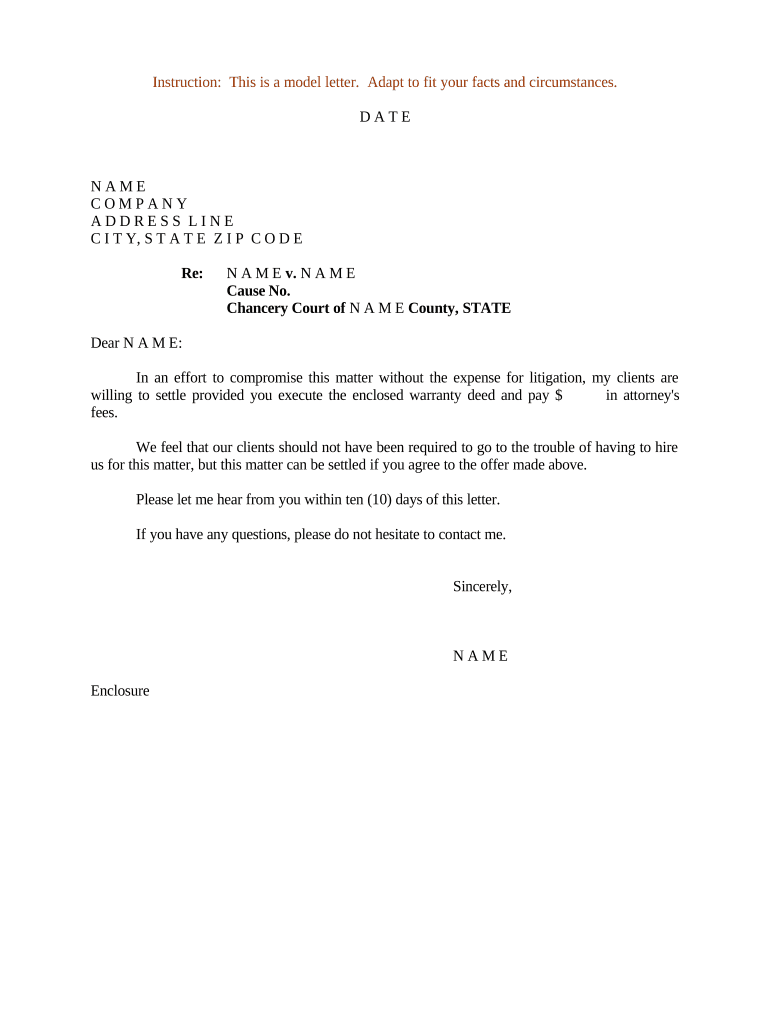
A Settlement Offer is a written proposal to resolve a dispute, claim, or potential litigation by defining the payment, obligations, and release terms between parties. It typically identifies the claimant and respondent, summarizes the claim, states the settlement amount or actions, and sets a response deadline. Settlement offers can be negotiated, accepted in full, countered, or rejected; once signed and supported by required consideration and release language, they form a binding contract under state contract law and applicable federal electronic-signature rules when executed electronically.

Why a clear Settlement Offer matters and its legal basis

A precise Settlement Offer reduces dispute friction, clarifies obligations, and limits litigation exposure; it also documents mutual intent to settle. Electronic execution of a Settlement Offer is generally enforceable under the ESIGN Act (15 U.S.C. ch. 96) and state UETA frameworks, provided intent, consent, attribution, and retention requirements are met.

Why a clear Settlement Offer matters and its legal basis

Who prepares or signs a Settlement Offer

Settlement Offers are used by individuals and organizations that want to resolve disputes without court adjudication.

  • Plaintiffs and claimants seeking defined recovery and release language to avoid litigation.
  • Defendants, insurers, or employers offering defined payments, non-monetary actions, or confidentiality provisions.
  • Attorneys and claims administrators who draft, review, and authenticate settlement terms and releases.

Parties should confirm signatory authority, authorization to bind entities, and whether additional approvals (insurer, board, or trustee) are required before signing.

Essential parts of a professional Settlement Offer

A professional Settlement Offer is concise but complete: identify parties, describe the dispute, state terms, and include a release plus clear signature blocks and deadlines.

Parties

Full legal names and capacity (individual, corporate officer, trustee) for each party to ensure enforceability and clear attribution.
Claim Summary

Brief description of facts, dates, and the legal basis for the claim so the offer ties to the dispute being resolved.

Payment Terms

Exact dollar amount, payment schedule, method, and any contingencies such as escrow, check, wire, or ACH instructions.

Release Scope

Clear release language describing claims waived, time period covered, and any reservation of rights or carve-outs.

Confidentiality

If included, specific nondisclosure obligations, permissible disclosures, and duration of confidentiality obligations.

Signature Block

Printed name, title, date, and witness/notary fields where required; identify the signer’s authority to bind an entity.

Required information fields at a glance

Party Names: Full legal names
Case Number: Court or claim number
Settlement Amount: Specified dollars
Payment Terms: Timing/method details
Release Language: Scope of waived claims
Signature Details: Signer name, title, date

Step-by-step: preparing and issuing a Settlement Offer

Follow these sequential steps to prepare a clear, enforceable Settlement Offer and reduce downstream disputes.

  • 01
    Draft terms: Describe dispute, amount, and release language precisely.
  • 02
    Confirm authority: Verify signer can bind the party or obtain necessary approvals.
  • 03
    Set deadline: Specify a clear expiration or response date for the offer.
  • 04
    Execute: Sign with required witnesses or notarization and retain executed copy.

How to customize and complete a Settlement Offer online

Configure an online workflow that enforces required fields, routes reviewers, and captures a timestamped audit trail.

Field Configuration
Required Fields Enable party names, amount, and signature as required inputs
Conditional Logic Show witness or notary fields only if jurisdiction or clause requires them
Reviewer Routing Add sequential approval steps for counsel or claims manager
Audit Capture Record IP, timestamp, and authentication method for each signer

Where to send a completed Settlement Offer

Choose the delivery and record locations based on whether the offer is a pre-litigation resolution or part of court proceedings.

  • Opposing Counsel: Send signed copies to the other party’s attorney for their file.
  • Claims Administrator: Route to insurer or claims administrator when applicable.
  • Court Filing: File approved settlement documents with the court when required.
  • Internal Records: Store executed agreements in the contract or claims repository.

Digital signing and distribution considerations

Ensure the e-sign platform supports legal standards, strong authentication, and an auditable trail before electronic execution.

  • Authentication: Email tokens, SMS codes, or stronger KBA as appropriate
  • Audit Trail: Timestamps, IP addresses, and action history
  • Document Formats: PDF or DOCX with a tamper-evident completed file

Platforms that meet ESIGN/UETA and retain reproducible records simplify enforceability; choose one that aligns with your compliance and document-retention policies.

Typical timelines and response expectations

Settlement Offers should state a firm response deadline and account for internal approval and payment-processing lead times.

Response Deadline:

Specify a date for acceptance or counteroffer

Internal Review:

Allow 3–10 business days for counsel or insurer approvals

Payment Period:

State payment timing (e.g., within 30 days of execution)

Escrow Timing:

If escrow used, define funding and release milestones

Court Deadlines:

If filed, follow court order and local rules

Common preparation mistakes to avoid

  • Vague release language that fails to specify which claims, parties, or time periods are covered, leading to post‑settlement disputes or litigation.
  • Failing to verify signer authority or corporate approval, which can render a settlement unenforceable against the entity if challenged.
  • Omitting clear payment mechanics and deadlines, which causes ambiguity on when obligations are satisfied and can trigger default claims.
  • Incorrect execution formalities—missing witness or notary where required by local law—resulting in delays or rejection by the other party.

Legal and practical risks of an incorrect Settlement Offer

Unenforceability: Offer may be void if material terms are missing
Rescission Risk: Incorrect execution can allow rescission
Confidentiality Breach: Improper clauses can trigger disclosure obligations
Tax Consequences: Payments may trigger reporting requirements
Fee Exposure: Costs for re-drafting or litigation can increase
Delayed Recovery: Payment or approval delays reduce value

Pricing snapshot for common e-sign providers used with Settlement Offers

Compare starting price and key features across vendors; signNow is listed first for ease of comparison.

signNow DocuSign Adobe Sign PandaDoc HelloSign
Starting Price $8/user/mo $15/user/mo $14/user/mo $19/user/mo $15/user/mo
Free Trial 7-day free trial Varies Varies Varies Varies
Bulk Send Yes Yes Yes Yes No
Audit Trail Yes Yes Yes Yes Yes
HIPAA Compliant Yes Yes Yes No No

Real-world examples of document workflow improvements

Organizations commonly use electronic signing to close settlements faster while preserving compliance and an audit trail.

Optica Ventures — COO

The interface is simple and easy-to-use for our team; more importantly, it is just as easy for our customers.

  • Streamlined external signature collection reduced turnaround time.
  • The company integrated the signed Settlement Offer into its contract repository and significantly reduced follow-up queries by ensuring clear fields and audit data.

Martin Properties — Founder

I can process and execute all of these documents online with 100% compliance and built-in security.

  • Mobile signing enabled on-site agreement execution.
  • The team reported fewer delays and a clearer trail linking the signed Settlement Offer to payment milestones documented in their accounting system.

Practical tips for accurate and efficient Settlement Offers

Apply these practices to reduce ambiguity and speed acceptance while protecting legal interests.

Use plain, precise language
Avoid legalese where possible; define terms, state exact amounts and dates, and provide cross-references to attachments or exhibits for clarity and enforcement.
Include execution mechanics
Specify how signatures are delivered, whether notarization or witnesses are required, and how documents will be delivered upon execution to avoid disputes.
Preserve audit data
Retain signed copies with time stamps, IP logs, and signer authentication evidence to support enforceability under ESIGN/UETA.
Coordinate approvals early
Obtain insurer, corporate, or trustee approvals before sending the offer to prevent later rescission or delay.

Who typically has authority to sign

Claimant / Individual

An individual claimant who is party to the dispute may sign a settlement offer and release when they are of legal capacity; counsel should confirm any minors, guardians, or conservator requirements.

Authorized Representative

For corporations or insured parties, an officer, claims adjuster, or other authorized representative may sign if they have documented authority, which should be clearly indicated in the signature block or by attaching corporate authorization.

Key milestones from offer to final performance

Track these sequential milestones to manage acceptance, funding, and performance obligations without missing required actions.

01

Offer Issued

Sender transmits the written Settlement Offer to recipient with clear terms and deadline.

02

Response Period

Recipient reviews, negotiates, or accepts by the stated deadline; failure to respond may cause lapse.

03

Execution

All required parties sign, and notary/witness steps are completed if needed.

04

Payment & Release

Payment is made per terms and executed release is delivered, closing the claim.

Frequently asked questions about Settlement Offers

Answers to common legal and practical questions about drafting, signing, and enforcing Settlement Offers.


Need help? Contact support

be ready to get more
Join over 28 million airSlate SignNow users