Establishing secure connection…Loading editor…Preparing document…

Standstill Agreement

This template is fully customizable. Edit the text, fill out the fields, and send it for signature. Give it a try!
Standstill Agreement

What a Standstill Agreement Is and when it's used

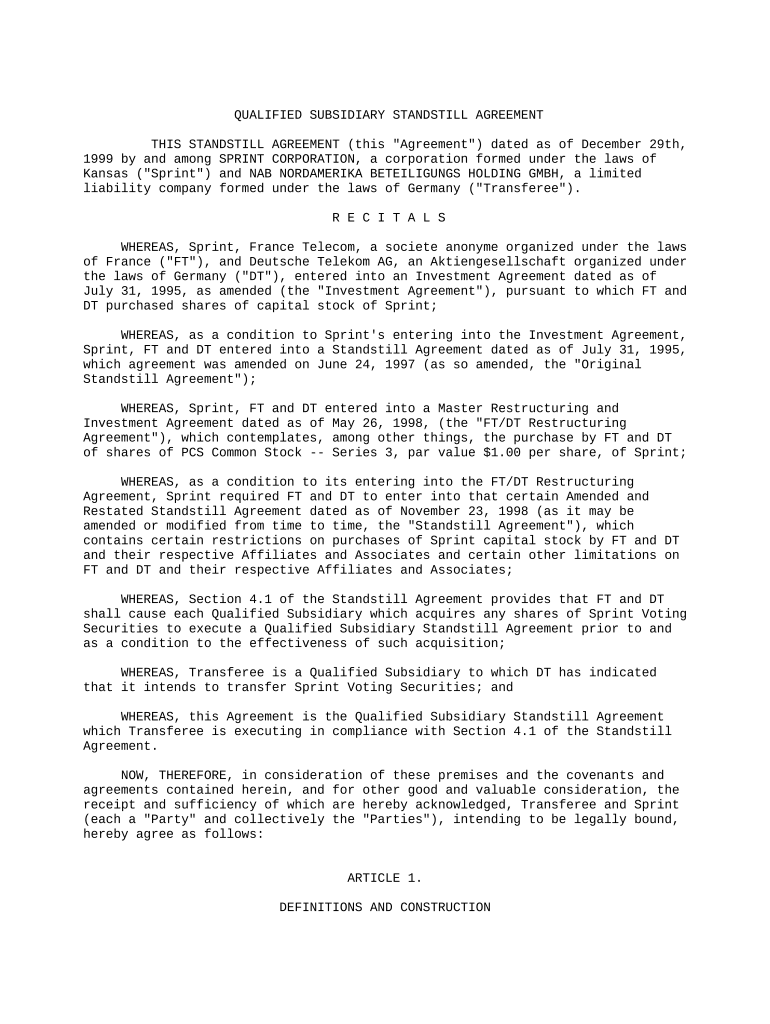
A Standstill Agreement is a contractual arrangement in which one or more parties agree to suspend specified rights or actions for a defined period to preserve the status quo while negotiations, due diligence, or restructuring proceed. Commonly used in corporate dealmaking, creditor negotiations, and merger contexts, a standstill limits permitted remedies, bidding activity, or enforcement steps so counterparties can evaluate options without race-to-the-courtroom outcomes. The agreement typically identifies the parties, scope of suspended actions, duration, notice and cure provisions, confidentiality obligations, and termination mechanics. Proper execution and signatures determine enforceability across jurisdictions.

Why parties choose a Standstill Agreement

A Standstill Agreement reduces immediate litigation or enforcement risk, buys time for negotiation or restructuring, and clarifies permitted conduct between parties. It creates a defined window for due diligence and settlement efforts while preserving each side’s legal positions.

Why parties choose a Standstill Agreement

Who commonly drafts, signs, or relies on a Standstill Agreement

Standstill Agreements are used by negotiating parties who need a temporary pause in enforcement or competitive actions while they resolve a dispute or explore a transaction.

  • Corporate buyers and sellers negotiating exclusivity, merger terms, or bid processes.
  • Creditors and debtors coordinating workouts, forbearance, or restructuring discussions.
  • Legal counsel and trustees managing dispute resolution while preserving claims.

Core parts of a professional Standstill Agreement

A clear Standstill Agreement separates operative obligations from preserved rights and sets measurable timelines. Well-constructed documents reduce ambiguity and support enforceability if disputes arise.

Parties

Identify each contracting entity with full legal names, business form, jurisdiction of organization, and representative contact information to avoid later identity disputes or misdelivery of notices.
Scope

Describe precisely which rights are suspended (litigation, bidding, lien enforcement, asset transfers) and which activities remain permitted, using specific examples or exceptions to avoid interpretive gaps.

Term

State the start date, expiration date, and any extension triggers or automatic renewal mechanics; include a clear effective date format to prevent timing disputes.

Obligations

Set affirmative duties such as maintaining confidentiality, sharing diligence materials, refraining from solicitations, and any interim reporting requirements between the parties.

Termination

List events that terminate the standstill (material breach, bankruptcy, mutual written agreement) and the required notice and cure periods for termination to be effective.

Remedies

Describe available remedies for breach (injunctions, damages, specific performance) and whether parties will pursue emergency relief despite the standstill restrictions.

Step-by-step: complete and execute a Standstill Agreement

Follow these sequential steps to prepare, review, and finalize a Standstill Agreement so parties clearly understand obligations and timing.

  • 01
    Draft terms: Outline scope, term, and notice mechanics.
  • 02
    Legal review: Have counsel confirm enforceability and risks.
  • 03
    Finalize details: Insert full names, dates, and addresses.
  • 04
    Execute: Obtain authorized signatures and retain copies.

Where to send, file, and keep executed copies

After execution, route signed copies to defined recipients and preserve original records according to retention rules and party obligations.

  • Counterparty: Provide a fully executed copy to the opposing party or their counsel immediately.
  • Internal Records: Deliver an executed copy to each party's legal and compliance files.
  • Escrow or Agent: If an escrow agent holds documents, deliver executed originals per escrow instructions.
  • Court Filings: Do not file the agreement with a court unless required or ordered.

Configure a digital signing workflow for a Standstill Agreement

Use a defined workflow to assign roles, authentication methods, and retention settings before sending the document for signature.

Field Configuration
Signature Order Sequential or parallel signing depending on party preference
Authentication Email link with optional SMS code or KBA for higher assurance
Retention Set document retention term per company policy
Notifications Enable signer and admin alerts for outstanding actions

Digital signing and technical considerations

Choose a signing platform that supports secure authentication, audit trails, and preserves a tamper-evident signed copy.

  • File Types: PDF and DOCX accepted by most platforms
  • Integrations: Common integrations include CRM and cloud storage
  • Authentication: Options range from email link to multi-factor

Security, compliance, and evidence for e-signed Standstill Agreements

Transport Encryption: TLS 1.2/1.3
Data at Rest: AES-256 encryption
Audit Trail: Detailed signer events and timestamps
Legal Compliance: ESIGN and UETA accepted
HIPAA: BAA required for PHI
Certifications: SOC 2 Type II and ISO 27001

Common legal and commercial risks if the agreement is incorrect

Breach Exposure: Damages or injunctive relief may follow
Unenforceability: Ambiguous terms can be voided
Timing Errors: Incorrect dates can negate protections
Authority Issues: Unauthorized signatory may invalidate agreement
Notice Failures: Missed cure periods accelerate remedies
Confidentiality Breaches: Unauthorized disclosures harm negotiations

Frequent drafting and execution mistakes to avoid

  • Using vague scope language that does not specify which remedies or actions are suspended, creating later disputes over interpretation.
  • Failing to require authorized signatory names, which can permit counterclaims that signatures were unauthorized or lacking authority.
  • Omitting clear notice and cure mechanics, so a party cannot determine how or when a termination or breach becomes effective.
  • Relying on informal exchange without executed counterparts, leaving no single, authenticated master agreement for enforcement.

Key timeframes to include in a Standstill Agreement

Define clear calendar-based deadlines, notice periods, and cure windows; using fixed dates and explicit day counts reduces interpretation disputes.

Effective Date:

MM/DD/YYYY start date for suspension of rights

Initial Term:

Commonly 30, 60, or 90 days as specified

Notice Period:

Typically 10–30 days for breach notices

Cure Period:

Specify number of days to remedy a breach

Extension Window:

Conditions and duration for automatic or consent extensions

Milestones from negotiation to enforcement

Track the sequence of actions so each party knows milestones, deadlines, and consequences if milestones are missed.

01

Negotiation

Agree on scope, term, and exceptions before drafting the final text

02

Execution

Obtain signatures from authorized representatives and distribute signed copies

03

Monitoring

Parties observe compliance and share required updates or reports

04

Enforcement

If breach occurs, follow notice, cure, and remedy steps

eSignature vendor comparison for executing a Standstill Agreement

Compare platforms on price, bulk send, audit trail, HIPAA support, and envelope limits when selecting a provider for executing Standstill Agreements.

signNow DocuSign Adobe Sign PandaDoc HelloSign
Starting Price $8/user/mo $15/user/mo $14/user/mo $19/user/mo $15/user/mo
Free Trial 7-day free trial Varies Varies Varies Varies
Bulk Send Yes Yes Yes Yes No
Audit Trail Yes Yes Yes Yes Yes
HIPAA Compliant Yes Yes Yes No No

Frequently asked questions about Standstill Agreements

Practical answers to common legal and execution questions about standstill agreements, enforceability, and electronic signing practices.


Need help? Contact support

be ready to get more
Join over 28 million airSlate SignNow users