Establishing secure connection…Loading editor…Preparing document…

Stock Purchase Agreement

This template is fully customizable. Edit the text, fill out the fields, and send it for signature. Give it a try!
Stock Purchase Agreement

What a Stock Purchase Agreement Is and when it matters

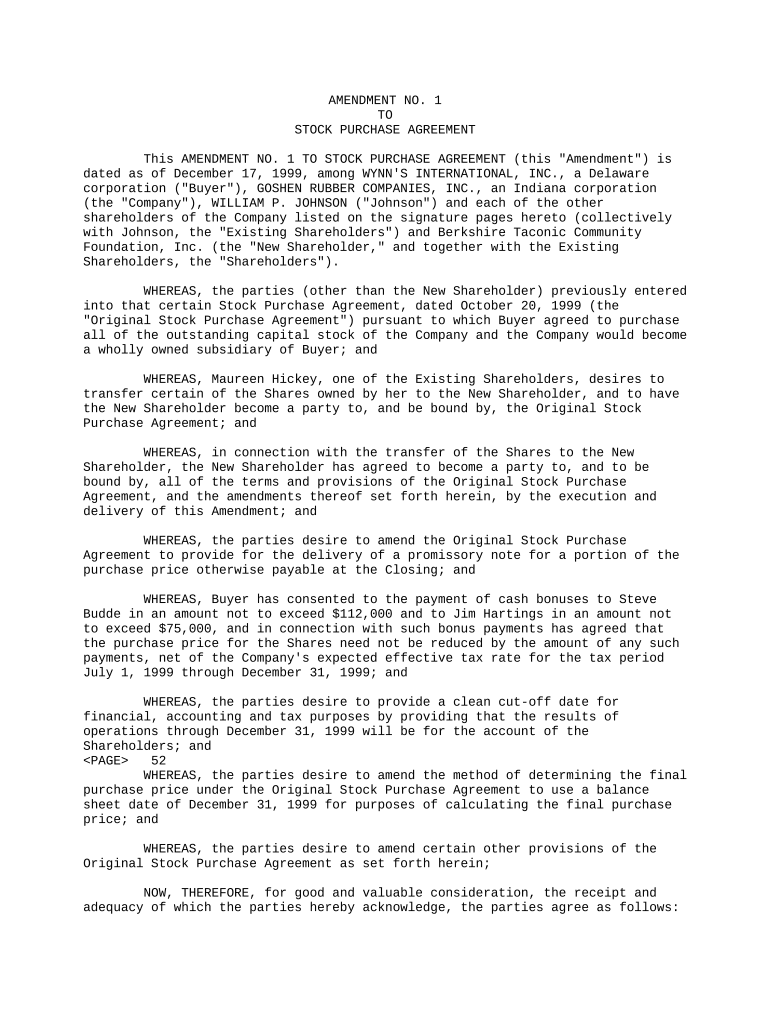
A Stock Purchase Agreement (SPA) is a legally binding contract that documents the sale and transfer of corporate shares from a seller to a buyer. It defines the number and class of shares, purchase price and payment terms, representations and warranties, closing conditions, indemnities, escrow or holdback arrangements, transfer mechanics, and the governing law that will interpret the transaction. SPAs allocate risk between parties, set post-closing obligations, and establish remedies for breach. Parties typically attach schedules, exhibits, and signature blocks to complete the transfer and permit regulatory or corporate approvals prior to closing.

Why a clear Stock Purchase Agreement matters

A well-drafted SPA clarifies price and payment, allocates liabilities, establishes closing conditions, and preserves enforcement remedies. It reduces ambiguity that can lead to disputes and helps parties meet regulatory, tax, and corporate approval requirements.

Why a clear Stock Purchase Agreement matters

Who typically prepares and signs a Stock Purchase Agreement

Each participant has distinct responsibilities: sellers provide disclosures and certificates; buyers fund the purchase and obtain approvals.

  • Founders and selling shareholders who need to document terms and receive payment for shares.
  • Acquirers, private equity firms, and strategic buyers arranging purchase price, closing conditions, and indemnities.
  • Legal counsel and finance teams who prepare schedules, due diligence disclosures, and closing deliverables.

Typical signatories and their roles

Seller Representative

CEO or authorized officer signs on behalf of the selling shareholder or corporation, certifying corporate authority, accuracy of disclosures, and delivering required corporate approvals and share certificates.

Buyer Representative

Acquirer’s CFO or authorized signatory signs to accept purchase obligations, confirm funding arrangements, and acknowledge receipt of buyer-side closing conditions and indemnity protections.

Core elements every professional Stock Purchase Agreement should include

A complete SPA covers deal economics, the conditions that trigger closing, legal statements about the business, and protections for both parties.

Purchase Price

Specify total consideration, per-share price, currency, payment schedule, wire instructions, escrow amounts, and any earnout formula.
Closing Conditions

List required approvals, consents, no-material-adverse-change covenants, and deliverables that must be satisfied before funds and shares exchange.

Reps & Warranties

Seller and buyer statements on ownership, authority, financials, and compliance; include disclosure schedules for exceptions and known liabilities.

Indemnification

Describe indemnity scope, survival period, caps, baskets, and procedures for claims, defense, and settlement.

Escrow / Holdback

Define escrow agent, release schedule, claims process, and conditions that permit escrow disbursement or retention.

Governing Law

Specify the state law that governs interpretation and dispute resolution and any agreed forum or arbitration provisions.

Essential data fields to include

Buyer Name: Full legal entity name
Seller Name: Full legal entity name
Number of Shares: Total shares transferred
Price per Share: Monetary amount
Effective Date: MM/DD/YYYY
Signatures: Authorized signer names

Step-by-step: completing a Stock Purchase Agreement

Follow these basic steps to populate and execute an SPA in sequence, ensuring approvals and evidence are attached.

  • 01
    Assemble parties: Confirm full legal names and authority documents.
  • 02
    Enter economics: Record shares, price, and payment method.
  • 03
    Attach disclosures: Include schedules, certificates, and due diligence exhibits.
  • 04
    Sign and close: Obtain signatures, fund consideration, and deliver share instruments.

Configuring an online SPA workflow

Key workflow settings ensure proper routing, authentication, and record retention for a secure e-execution process.

Field Configuration
Signature Type E-signature image or digital PKI
Authentication Email link, SMS code, or KBA
Conditional Fields Show obligations only when triggered
Notifications Automatic email reminders

Technical considerations for eSigning and storage

Confirm retention, access controls, and encryption standards are in place to meet corporate policy and regulatory obligations.

  • File formats: PDF, DOCX supported
  • Integrations: Salesforce, NetSuite, Google Workspace
  • Compliance: ESIGN, UETA support

Typical online signing flow for a Stock Purchase Agreement

A standard eSigning workflow sequences preparation, recipient authentication, signing, and archival while capturing a complete audit trail.

  • Upload document: Prepare final SPA PDF with exhibits.
  • Place fields: Add signature, date, and initials fields.
  • Authenticate signer: Use email, SMS, or stronger methods.
  • Execute & archive: Capture timestamps and store signed record.

Key dates and timing considerations

Track the SPA lifecycle dates carefully: effective date, closing date, certificate delivery, and tax or corporate filings to avoid penalties.

Effective Date:

When obligations commence; use MM/DD/YYYY format.

Closing Date:

Date funds transfer and shares deliver.

Share Delivery:

Physical or book-entry delivery of certificates.

Corporate Filings:

File amendments or transfers per corporate bylaws.

Tax Reporting:

Provide W-9 when requested; follow IRS timing.

Transaction milestones through closing

A sequential milestone list helps coordinate approvals, funding, and transfer of title to complete the SPA.

01

Due Diligence

Buyer completes review of financials, contracts, and liabilities.

02

Negotiation & Signing

Parties agree terms and execute the SPA.

03

Conditions Clearance

Obtain required third-party consents and approvals.

04

Funding & Transfer

Buyer sends consideration; seller transfers shares.

Common legal and commercial risks to watch

Breach Exposure: Monetary damages and injunctive relief
Tax Consequences: Unintended tax liabilities or reporting errors
Transfer Restrictions: Violation of buy-sell or shareholder agreements
Securities Issues: Noncompliance with securities laws
Undisclosed Liabilities: Post-closing indemnity claims
Invalid Signatures: Execution defect may void transfer

Frequent preparation mistakes to avoid

  • Using informal or shortened legal names that differ from formation documents, causing title transfer and bank acceptance delays.
  • Leaving disclosure schedules blank or vague, which creates disputes about what matters were known before closing.
  • Failing to specify currency and payment mechanism, leading to delays when funds are routed internationally.
  • Overlooking regulatory consents and third-party approvals, which can prevent lawful transfer of shares at closing.

Stock Purchase Agreement versus similar transaction documents

Compare common attributes so you can pick the right transaction structure for a deal: stock sale, asset sale, or merger.

Criteria Stock Purchase Agreement Asset Purchase Agreement
Transfer Scope shares transfer ownership specific assets transfer
Complexity moderate high
Liability Allocation buyer inherits liabilities seller typically retains liabilities
Typical Use Cases private company sale business unit sale

eSignature vendor comparison for executing Stock Purchase Agreements

Compare baseline pricing and key features across common eSignature providers to assess fit for SPA execution and compliance needs.

signNow DocuSign Adobe Sign PandaDoc HelloSign
Starting Price $8/user/mo $15/user/mo $14/user/mo $19/user/mo $15/user/mo
Free Trial 7-day free trial Varies by vendor Varies by vendor Varies by vendor Varies by vendor
Bulk Send Yes Available on plans Available on plans Available on plans Available on plans
Audit Trail Yes Yes Yes Yes Yes
HIPAA Compliant Yes Yes Yes No No
Envelope Cap No cap 100 envelopes/user/year Varies by plan Varies by plan Varies by plan

How organizations use Stock Purchase Agreements in practice

Real-world examples show how SPAs are adapted for deal size, complexity, and compliance demands.

Mid-market acquisition

A private buyer used an SPA to acquire a target company

  • buyer required holdback for working capital adjustments
  • post-closing disputes were limited by detailed representation schedules and a defined indemnity procedure.

Founder exit

A founder sold shares to a strategic investor

  • purchase included escrow for indemnity claims
  • clarity in the SPA helped secure lender consent and complete the transaction on schedule.

Practical tips for accurate and efficient SPA completion

Adopt consistent practices to reduce errors and preserve enforceability across the transaction lifecycle.

Use full legal names
Confirm entity names against formation documents and government IDs to avoid acceptance or title transfer issues.
Attach schedules
Include complete disclosure schedules and label exhibits clearly so exceptions are unambiguous.
Specify currencies
State currency, conversion, and payment timing for cross-border transactions to mitigate exchange risk.
Document authority
Include corporate resolutions or officer certificates proving signatory authority to bind parties.

Frequently asked questions about Stock Purchase Agreements

Answers to common legal, signing, and process questions to help avoid execution pitfalls.


Need help? Contact support

be ready to get more
Join over 28 million airSlate SignNow users