Establishing secure connection…Loading editor…Preparing document…

Return of Organization Exempt From Income Tax

This template is fully customizable. Edit the text, fill out the fields, and send it for signature. Give it a try!
Return of Organization Exempt From Income Tax

What the Return of Organization Exempt From Income Tax Is

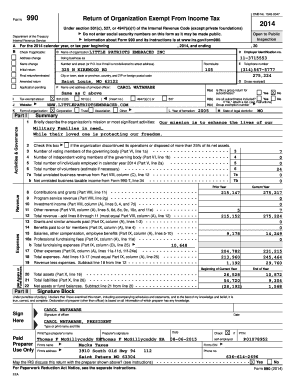
The Return of Organization Exempt From Income Tax—commonly filed as IRS Form 990 (including Form 990-EZ and 990-PF variants)—is the annual information return used by tax-exempt organizations to report governance, program activities, and financial data to the IRS. The form helps the IRS monitor compliance with tax-exempt rules, provides public transparency for donors and stakeholders, and supports state charity oversight. Completing the return accurately requires aggregated revenue and expense figures, details on program services, compensation disclosures, and any required schedules for related-party transactions or unrelated business income.

Why Completing this Return Matters

Filing Form 990 correctly preserves tax-exempt status, maintains public trust through disclosure, and satisfies federal and state reporting obligations related to charitable and other exempt organizations.

Why Completing this Return Matters

Who Prepares and Uses the Return

Proper preparation reduces audit risk, supports grant applications, and helps maintain eligibility for charitable deductions.

  • Tax-exempt organizations and their boards preparing annual disclosures for IRS compliance and donor accountability.
  • Certified public accountants and tax advisers who assemble financials, complete schedules, and certify accuracy to the organization.
  • State charity regulators, grantors, and prospective donors reviewing an organization’s financial health and governance practices.

Core Components of a Professional Return of Organization Exempt From Income Tax

A complete Form 990 submission organizes governance, programmatic, and financial information so reviewers can assess compliance, public benefit, and fiscal stewardship.

Part I — Summary

One-page overview of mission, gross receipts, assets, and a brief snapshot of program accomplishments and financial position for quick review.
Governance

Questions on governance, board composition, conflict-of-interest policies and officer compensation that demonstrate oversight and internal controls.

Program Service

Narrative descriptions and financial results for primary program activities, showing how the organization advances its exempt purpose and uses resources.

Statements of Revenue

Detailed revenue reporting by source (contributions, grants, program service revenue, investment income) and classification of unrestricted versus restricted funds.

Schedules

Required attachments (Schedules A, B, D, R, etc.) that disclose public support, contributor information, related organizations, and other specialized items.

Public Disclosure

Signed return, IRS acknowledgment (if e-filed), and the organization’s requirement to make the Form 990 available to the public upon request.

Required Information and Key Fields at a Glance

EIN: Employer identification number
Organization Name: Legal name on file
Tax Year: Fiscal year end date
Address: Primary mailing address
Total Revenue: Gross receipts total
Officer Compensation: Total reportable pay

Step-by-Step: Completing the Return

Follow a staged approach: gather documents, complete core parts, attach required schedules, and choose the correct filing method.

  • 01
    Gather Documents: Compile financial statements, payroll records, grant agreements, and board minutes.
  • 02
    Complete Parts: Fill Part I summary, governance questions, program narratives, and revenue lines.
  • 03
    Attach Schedules: Add Schedule A/B/D/R as required by specific disclosures.
  • 04
    Review & File: Verify figures, obtain required signatures, and submit via approved filing method.

How to Configure an Online Filing Workflow

Set up an e-filing workflow that enforces required fields, captures signatures, and retains a tamper-evident audit trail.

Field Configuration
Authentication Email + SMS code or stronger signer verification
Conditional Fields Show schedules only when criteria are met
Attachments Require source documents before submission
Audit Trail Record IP, timestamp, and signer actions

Where to File and How Submission Works

Choose the correct IRS channel for filing and confirm whether state charity reporting is required alongside the federal return.

  • IRS e-File: Submit electronically through authorized transmitters or software providers.
  • State Filings: File additional registrations or annual reports as required by state charity regulator.
  • Retain Copies: Keep signed PDFs and source records for required retention periods.
  • Public Availability: Provide Form 990 to requestors or post as required for transparency.

Digital Submission and File Format Considerations

Ensure the platform you use supports required file formats, signer authentication, and an auditable records trail before e-submitting.

  • File Formats: PDF and DOCX supported
  • Authentication: Email, SMS, or stronger options
  • Audit Trail: IP, timestamp, and action log

Key Deadlines and Filing Timing

Be aware of federal filing deadlines, extension procedures, and state-specific dates that can affect timely submission and compliance.

Regular Due Date:

15th day of the 5th month after fiscal year end

Extension Option:

File Form 8868 to request an automatic extension (up to six months)

Electronic Requirements:

Large organizations may be required to e-file per IRS guidance

State Deadlines:

Charity registration deadlines vary by state and may differ from federal due date

Late Filing Consequence:

Late returns can trigger penalties and public disclosure of noncompliance

Penalties and Risks of Incorrect or Late Returns

Late-Filing Penalty: Monetary fines possible
Automatic Revocation: Loss of exempt status after repeated nonfiling
IRS Examination: Increased audit risk
State Sanctions: State fines or registration suspension
Donor Confidence: Public trust and funding impact
Reputational Risk: Negative public disclosure

Common Preparation Mistakes to Avoid

  • Omitting required schedules (for example, Schedule A or Schedule B) which leads to IRS follow-up and potential processing delays.
  • Reporting unrelated business income incorrectly or failing to separate restricted and unrestricted fund classifications on financial lines.
  • Using an incorrect EIN or mismatched organization name, which can cause rejections or duplicate account records at the IRS.
  • Failing to disclose officer compensation, related-party transactions, or grant restrictions, which increases audit risk.

Real-World Use Cases and Typical Workflows

These examples show how organizations structure preparation, approvals, and filing to meet disclosure and compliance requirements.

Nonprofit Small Office

A small charity consolidated receipts and expense reports into a draft Form 990 for board review.

  • Board members approved via secure e-signatures.
  • The organization filed electronically, retained a signed PDF and audit trail, and posted the return for public access.

Large Institution

A university foundation coordinated multiple program units to collect fund activity for Schedule A inclusion.

  • Finance consolidated sub-ledgers into reconciled totals.
  • The final e-file included required schedules and supporting schedules, reducing IRS queries during initial processing.

Comparing eSignature Options for Filing and Signing

Vendor pricing and capabilities differ by plan; signNow is shown first for comparison across common criteria relevant to return preparation and signature collection.

signNow DocuSign Adobe Sign PandaDoc HelloSign
Starting Price $8/user/mo $15/user/mo $14/user/mo $19/user/mo $15/user/mo
Free Trial Yes, 7-day trial Yes, trial available Yes, trial available Yes, trial available Yes, trial available
Bulk Send Yes Yes Yes Yes No
Audit Trail Yes Yes Yes Yes Yes
HIPAA Compliant Yes Yes Yes No No
Envelope Cap No cap 100 envelopes/user/year Varies Varies Varies

Frequently Asked Questions About the Return of Organization Exempt From Income Tax

Answers to frequent questions about filing, signatures, deadlines, and recordkeeping for Form 990.


Need help? Contact support

be ready to get more
Join over 28 million airSlate SignNow users