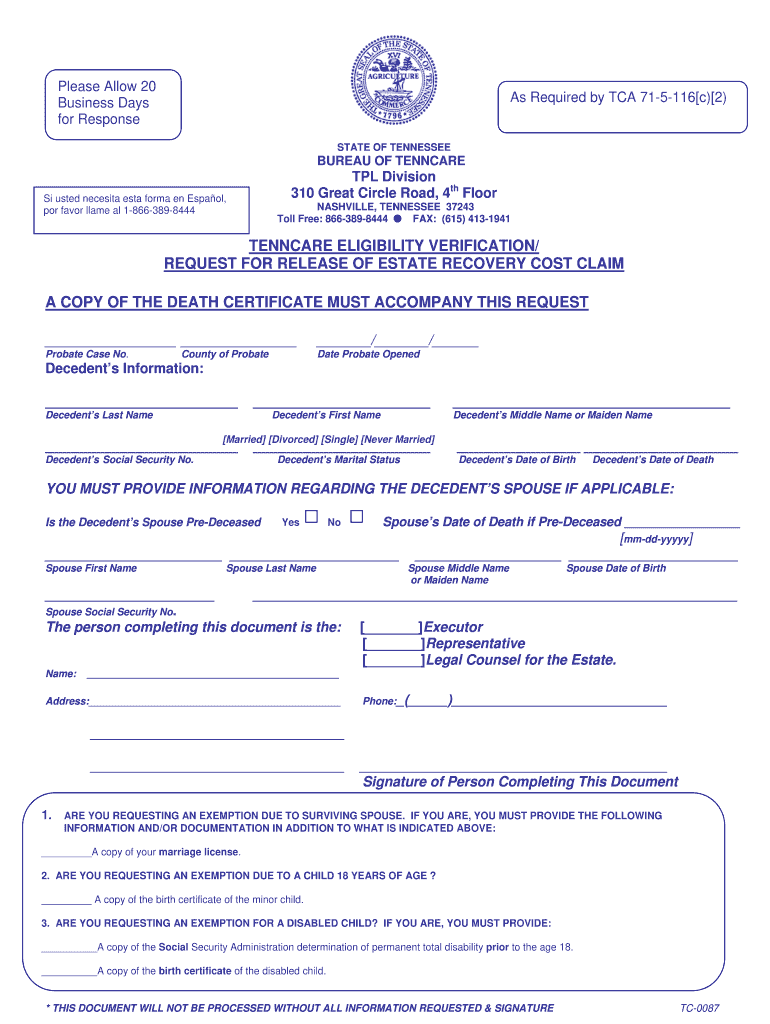
Tennessee Release Form
What the Tennessee Release Form Is and When it Applies
Why a Clear Release Form Matters
A properly drafted Tennessee Release Form reduces future disputes by defining the rights being surrendered, documents consideration and timing, and records signatures and authentication. Clarity helps insurers, courts, and counterparties confirm settlement terms and reduces the risk that the release will be challenged for ambiguity or invalid execution.
Who Typically Completes a Tennessee Release Form
Organizations and individuals use release forms to settle disputes, transfer claims, or record waivers in everyday transactions.
- Real estate professionals and buyers: use releases after property repairs, escrow closeouts, or contractor claims.
- Healthcare providers and patients: document consent or settlement releases involving treatment-related claims.
- Event organizers and vendors: collect participant waivers for physical activities or one-time events.
Parties should confirm signatory authority and consider notary or witness requirements when state law or third-party contracts demand formal authentication.
Step-by-step: Filling Out a Tennessee Release Form
-
01Identify parties: Enter full legal names of releasor and releasee, matching government ID.
-
02Describe scope: Specify claims, dates, and events included or excluded from the release.
-
03Record consideration: State payment amounts or other consideration in clear dollars or terms.
-
04Sign and date: All parties sign and date; include witness/notary blocks when required.
How to Configure an Online Tennessee Release Form Workflow
| Field | Configuration |
|---|---|
| Authentication method | Email link or SMS code; use stronger KBA for high-risk matters |
| Routing order | Sequential signer order to ensure correct execution sequence |
| Expiration policy | Set link expiry (e.g., 30 days) to limit stale access |
| Attachments | Allow supporting files like invoices, photos, or exhibits |
Digital Signing: Platform and Format Considerations
Choose platforms and formats that preserve the signed record, audit trail, and required security controls.
- Formats: PDF and DOCX retain text and signature fields reliably
- Integrations: Connect to cloud storage and CRM for automated filing
- Authentication: Support email, SMS, KBA, or advanced signer verification
Ensure the chosen platform supports audit trails, tamper-evident signed PDFs, and the level of signer authentication required by the transaction.
Where to Send, File, and Share a Completed Release
-
Primary recipient: Send executed copy to the opposing party and their counsel if involved
-
Insurer: Provide insurer with the release if claim recovery or subrogation applies
-
Internal records: Store an executed copy in the relevant business or case file
-
Court filing: File with the court only when settlement requires dismissal or entry
Timing and Submission Deadlines to Watch
Execute before payment:
Complete the release before or concurrent with settlement payment to document consideration.
Respond to requests:
Provide countersigned copies within 7–14 days to avoid disputes over timing.
Insurance reporting:
Submit signed releases to insurers per policy deadlines to preserve coverage rights.
Revocation window:
If the release allows withdrawal, observe any short statutory or contractual revocation period.
Record retention start:
Retention runs from execution date unless statute or contract specifies otherwise.
Consequences of an Incorrect or Incomplete Release
Common Pitfalls to Avoid When Preparing a Release
- Using vague language like 'all claims' without specifying timeframes or categories leads to ambiguity and litigation risk.
- Failing to verify signer authority — corporate signers require authorized signatories and often a corporate resolution.
- Neglecting tax reporting obligations when consideration is paid can create IRS penalties and backup withholding liabilities.
- Skipping witness or notary authentication when required by contract or statute may render the release unenforceable.
Who Can Legally Sign a Release
Releasor — Individual
The individual claiming to release rights must sign personally or through a lawful guardian or authorized agent; the narrative should confirm capacity, authority, and any representative relationship in clear terms.
Releasee — Organization Rep
An organization should sign through an authorized officer or agent; include printed name, title, and a corporate authorization statement if required by internal governance or contract.
Practical Tips for Accurate, Efficient Completion
Real-world Scenarios Where a Tennessee Release Form Is Used
Real Estate Settlement
A buyer and contractor settle a repair dispute with a written release stating the repaired items and payment
- The release specifies liability for related claims through the repair completion date
- The executed release is attached to escrow records and provided to the insurer to close the claim and prevent future contractor claims.
Medical Treatment Release
A patient signs a release to settle a malpractice claim for a defined condition and treatment period
- The agreement lists consideration, released claims, and an effective date
- The provider retains a signed copy in the medical record and follows HIPAA retention rules for associated documentation.
Comparison of eSignature Pricing and Capabilities for Executing Releases
| signNow | DocuSign | Adobe Sign | PandaDoc | HelloSign | |
|---|---|---|---|---|---|
| Starting Price | $8/user/mo | $15/user/mo | $14/user/mo | $19/user/mo | $15/user/mo |
| Free Trial | 7-day free trial | Varies by vendor | Varies by vendor | Varies by vendor | Varies by vendor |
| Bulk Send | Yes | Yes | Yes | Yes | No |
| Audit Trail | Yes | Yes | Yes | Yes | Yes |
| HIPAA Compliant | Yes | Yes | Yes | No | No |
Frequently Asked Questions About Tennessee Release Forms
-
Is a Tennessee release legally binding?
Yes, generally, if parties have capacity, there is consideration, and signatures demonstrate intent. Electronic signatures are recognized under the ESIGN Act (15 U.S.C. §7001) and UETA where applicable, but certain exceptions may apply.
-
Can I sign a release electronically?
Electronic signing is permitted for most releases if intent and consent are documented. For consumer-facing transactions, provide an ESIGN disclosure and ensure the record is reproducible for later review.
-
Do I need a notary or witnesses?
Not usually required for standard liability releases in Tennessee, but contractual, insurer, or industry requirements may demand notarization or witnesses; confirm contract terms and local practice.
-
How can a release be revoked?
Revocation depends on contract language and law; a mutual rescission must be agreed in writing. Some releases include limited revocation windows—follow the contract terms closely.
-
How long should I keep executed releases?
Retain executed releases at least three years for tax purposes and six years for HIPAA-regulated matters; longer retention may be prudent for high-value claims.
-
What if a signer is a minor or lacks capacity?
Minors generally lack capacity to enter binding releases; a parent, guardian, or court-approved representative may need to sign. For capacity concerns, obtain legal advice before relying on the release.