Establishing secure connection…Loading editor…Preparing document…

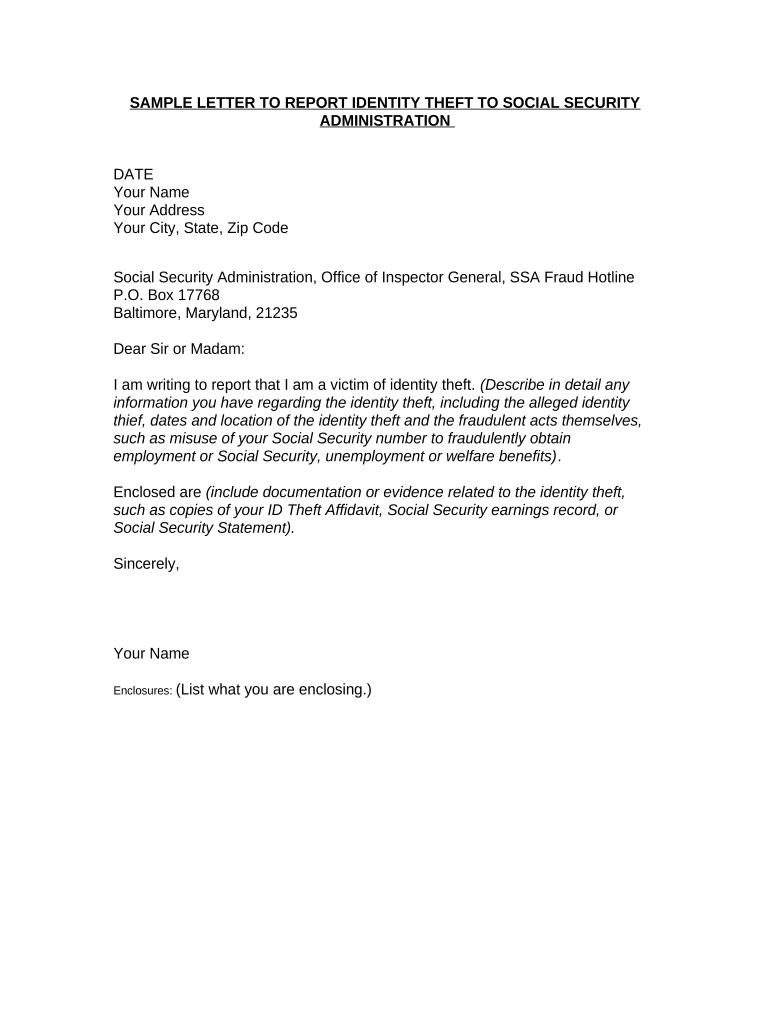
Sample Letter to Report Identity Theft

This template is fully customizable. Edit the text, fill out the fields, and send it for signature. Give it a try!
Sample Letter to Report Identity Theft

What the Sample Letter to Report Identity Theft Is

A Sample Letter to Report Identity Theft is a written communication template used to notify creditors, credit bureaus, financial institutions, or government agencies that your personal information was used without authorization. The letter summarizes the unauthorized activity, identifies affected accounts, requests investigation or account closure, and asks for correction or fraud alerts on credit files. It typically accompanies supporting documents such as police reports, identity theft affidavits, government ID copies, and proof of address to speed resolution and create a documented trail for disputes and recovery.

Why a Clear, Complete Letter Matters

A carefully prepared letter creates an official record, triggers investigations, and helps creditors and bureaus take corrective action. It reduces back-and-forth, supports dispute rights, and documents your efforts to mitigate harm.

Why a Clear, Complete Letter Matters

Who Typically Sends This Letter

Individuals who discover fraudulent accounts or suspicious activity, identity theft victims working with creditors, and designated representatives such as attorneys or guardians commonly use this letter.

  • Primary consumer victims notifying banks, credit card issuers, or collection agencies about fraud and requesting account freezes.
  • Authorized representatives or legal counsel submitting disputes and documentation on behalf of incapacitated or minor account holders.
  • Consumers sending formal records to credit bureaus (Equifax, Experian, TransUnion) to request fraud alerts and file disputes.

Tailor the letter to the recipient, include supporting documentation, and retain copies for your records to support future disputes or legal steps.

Step-by-Step: Completing and Sending the Letter

Follow these steps to prepare an accurate, evidence-backed letter and ensure it reaches the correct recipient promptly.

  • 01
    Gather evidence: Collect police report, ID copy, account statements.
  • 02
    Fill letter fields: Complete name, date, account details, and fraud summary.
  • 03
    Attach documents: Include copies only; never send originals unless requested.
  • 04
    Send and track: Use certified mail or secure eSubmission and keep delivery proof.

Essential Parts of an Effective Identity Theft Letter

A professional letter balances clarity, supporting evidence, and explicit requests so recipients can take defined actions—investigate, close accounts, reverse charges, or place fraud alerts.

Header

Include your contact information, the recipient’s name and address, and the date to create a clear point of origin and recipient routing for the dispute.
Subject line

Use a concise subject such as 'Report of Identity Theft — Account [last four digits]' so the recipient can route the letter to the fraud unit quickly.

Statement of identity theft

Open with a brief declarative statement that your identity was used without authorization and you are requesting investigation and remediation.

Detailed account list

Provide account numbers, transaction dates, amounts, and descriptions of unauthorized activity so the recipient can target their review to specific records.

Requested remedies

State clear requests such as account closure, charge reversals, fraud alert placement, and correction of credit reports to define expected outcomes.

Attachments list

Enumerate attached supporting documents and indicate whether you will provide originals upon request to prevent evidence gaps during follow-up.

Required Information to Include

Full name: As on ID
Contact details: Phone and mailing address
Account identifiers: Last four digits or full number
Incident dates: When discovered
Police report: Report number if filed
Signatures: Signed and dated

Where to Send the Letter and What Happens Next

Send the letter to the party most directly affected or responsible for the disputed account; include copies to credit bureaus when seeking credit-file corrections.

  • Creditor: Addresses fraud unit or dispute department.
  • Credit bureaus: Request fraud alert and report investigation.
  • Financial institutions: Request account freeze or closure.
  • Government agencies: Include police or FTC if required.

Digital Submission and Authentication Options

Electronic transmission can speed delivery; choose secure channels that preserve an audit trail and attachments.

  • Email: Use secure email for attachments; retain sent-folder copy.
  • Certified mail: Proof of delivery via return receipt.
  • eSubmission portals: Use creditor or bureau upload portals where available.

Preserve proof of submission and any confirmation numbers; when using eSubmission, ensure the platform records timestamps and stores attachments.

Timing: Expected Response Windows and Deadlines

Understanding typical response timelines helps you track progress and escalate if deadlines are missed.

Credit bureau investigation:

Typically 30 days to investigate and respond.

Creditor investigation:

Often 30–45 days depending on internal policies.

Dispute escalation:

Follow up within 30 days if no response.

FTC reporting:

No statutory deadline; file immediately for record.

Preserve records:

Retain copies until matter resolves, typically 1+ years.

Common Mistakes to Avoid

  • Omitting account numbers or transaction details, which slows verification and leads to follow-up requests from recipients.
  • Failing to attach the police report or identity affidavit, causing creditors to treat the submission as incomplete.
  • Using inconsistent names or addresses between documents, which can prevent identity verification and delay remediation.
  • Sending originals instead of copies; originals may be lost or delayed and are rarely required for initial disputes.

Risks of Incomplete or Incorrect Letters

Delayed resolution: Longer dispute timelines
Account holds: Temporary freezes affecting credit access
Collection activity: Continued collections if not properly documented
Credit report errors: Ongoing inaccuracies on file
Legal exposure: Potential need for litigation
Identity fraud persistence: Repeat misuse without full remediation

How This Letter Differs from Other Identity-Theft Documents

Compare the sample letter to commonly used identity-theft documents to choose the right form for your situation.

Document Type Letter FTC Affidavit
Primary Use notify creditor report identity theft
Formality less formal formal sworn statement
Notarization optional often required
Distribution multiple recipients file with ftc and bureaus

eSignature Pricing Comparison for Sending and Signing the Letter

Select an eSignature provider that meets your compliance and volume needs; pricing models and HIPAA options differ across vendors.

signNow DocuSign Adobe Sign PandaDoc HelloSign
Starting Price $8/user/mo $15/user/mo $14/user/mo $19/user/mo $15/user/mo
Free Trial 7-day free trial Free trial available Free trial available Free trial available Free trial available
Bulk Send Yes Yes Yes Yes No
Audit Trail Yes Yes Yes Yes Yes
HIPAA Compliant Yes Yes Yes No No

Frequently Asked Questions About the Sample Letter

Answers to common questions about preparing, signing, and submitting the letter to report identity theft.


Need help? Contact support

be ready to get more
Join over 28 million airSlate SignNow users