Establishing secure connection…Loading editor…Preparing document…

Towing Contract

This template is fully customizable. Edit the text, fill out the fields, and send it for signature. Give it a try!
Towing Contract

What a Towing Contract Covers

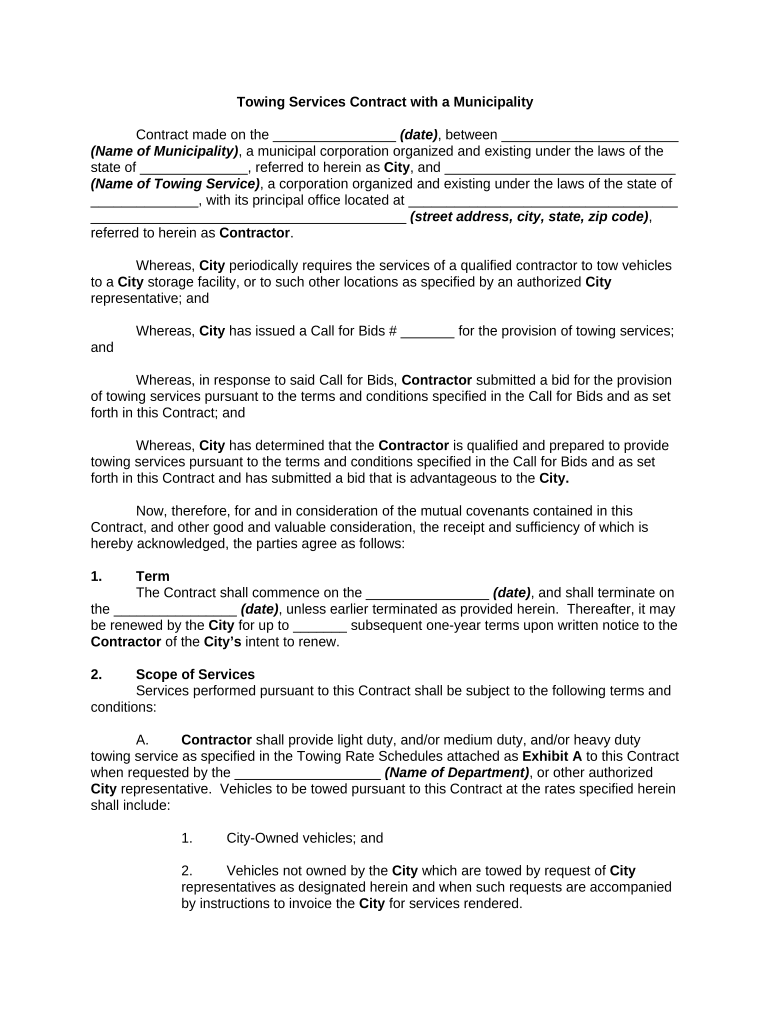
A Towing Contract is a written agreement that sets the terms between a vehicle owner or property manager and a towing operator for removal, transport, storage, and release of a vehicle. It records the parties, vehicle details, authorized fees for tow and storage, conditions for release, lien and sale rights, and indemnities. The document creates clear expectations about payment, liability, and timelines and supports enforcement in disputes. Properly executed towing contracts help manage risk, document chain of custody, and provide evidence of consent for towing and subsequent actions.

Why a Clear Towing Contract Matters

A comprehensive Towing Contract clarifies responsibilities, reduces dispute risk, and documents authorization for towing, storage, and lien actions. It helps protect both the towing operator and vehicle owner by recording fees, release conditions, and notice requirements.

Why a Clear Towing Contract Matters

Who Typically Uses a Towing Contract

Organizations and individuals who rely on consistent vehicle removal and storage processes use towing contracts to reduce disputes and document authorization.

  • Tow companies and operators who need written authorization, fee schedules, and lien rights to recover costs.
  • Property managers and landlords who require removal of unauthorized vehicles from private lots under set terms.
  • Law enforcement or municipal parking authorities when coordinating tows involving public safety or code enforcement.

Use the contract to evidence consent, document timelines for notice and sale, and support any later legal or administrative actions.

Primary Signers

Tow Operator — Owner/Manager

The towing company representative who signs accepts responsibility for conducting the tow, maintaining custody of the vehicle, following notice requirements, and invoicing for fees. Their signature binds the operator to the contract terms and any applicable local towing regulations.

Vehicle Owner / Registrant

The titled vehicle owner or authorized agent signs to acknowledge consent or acceptance of towing, storage fees, and release conditions. Accurate owner identification on the contract prevents later disputes and supports enforcement of lien remedies.

Essential Elements to Include

A professional Towing Contract should be concise but include specific sections so rights and obligations are clear to all parties and enforceable under applicable law.

Parties

Full legal names and contact information for the towing company, vehicle owner, and any property owner or authorizing agent, so each party is clearly identified for notices and enforcement.
Vehicle Details

Make, model, year, color, VIN, license plate, and location at time of tow to prevent mistaken identity and to document chain of custody during removal, transport, and storage.

Fees and Rates

Itemized tow, hookup, mileage, storage, and administrative fees, plus payment terms and any late-payment or release conditions to reduce billing disputes and support collection.

Storage and Release

Conditions for vehicle release, required identification, proof of ownership, payment method, and any hold periods before release to manage liability and access control.

Lien and Sale Rights

Clear statement of statutory lien rights, required notice procedures, and timeline for sale of unclaimed vehicles in accordance with relevant state law.

Liability & Indemnity

Limitations of liability, indemnification for property damage or third-party claims, and dispute resolution provisions to allocate risk between parties.

Required Contract Identifiers and Security Notes

Company ID: Business name
Signer Name: Full legal name
Vehicle ID: VIN / plate
Dates: MM/DD/YYYY
Signature: Signer authentication
Record Audit: Timestamp/IP

Step-by-Step: Completing a Towing Contract

Follow these sequential steps to prepare, execute, and store the contract correctly.

  • 01
    Prepare Document: Populate parties, vehicle data, fees, and lien language.
  • 02
    Review Legal Terms: Confirm compliance with state towing and lien statutes.
  • 03
    Obtain Signatures: Collect signatures from owner or authorized agent and company representative.
  • 04
    Store Record: Save a dated copy and maintain audit trail for retention period.

Typical Contract Flow from Authorization to Release

A standard process shows who does what and when — useful for operations and dispute resolution.

  • Authorization: Property manager or law authority authorizes tow in writing.
  • Tow Execution: Operator documents vehicle and completes the contract fields.
  • Owner Notification: Operator follows statutory notice procedures to owner/registrant.
  • Release / Sale: Vehicle released upon payment or sold after statutory notices lapse.

Configuring an Online Towing Contract Workflow

Set up a template that automates signature routing, authentication, and storage to reduce manual steps.

Field Configuration
Signature Order Tow operator → Vehicle owner or agent
Authentication Email link plus optional SMS code
Conditional Fields Show lien notice only if storage exceeds threshold
Reminders Auto-notify signers after 3 days

Sharing and Technical Requirements

Choose platforms and file types that preserve the signed record and audit trail for future enforcement.

  • File Formats: PDF, DOCX accepted
  • Integrations: Salesforce, NetSuite
  • Authentication: Email, SMS, KBA

Digital platforms should capture timestamps, signer IPs, and an immutable audit trail to meet ESIGN/UETA record retention and evidentiary needs.

Comparison of eSignature Vendors for Towing Contracts

Basic vendor pricing and feature differences can affect cost and compliance when deploying eSignatures for towing and lien workflows.

signNow DocuSign Adobe Sign PandaDoc HelloSign
Starting Price $8/user/mo $15/user/mo $14/user/mo $19/user/mo $15/user/mo
Free Trial 7-day free trial No No Yes, limited Yes, limited
Bulk Send Yes Yes Yes Yes No
Audit Trail Yes Yes Yes Yes Yes
HIPAA Compliant Yes Yes Yes No No

Common Legal Risks and Potential Penalties

Unauthorized Tow: Civil liability exposure
Improper Notice: Administrative fines
Storage Fee Disputes: Claims and contested sales
Recordkeeping Failures: Evidentiary issues in court
Statutory Violations: License revocation risk
Contract Errors: Void or unenforceable provisions

Mistakes to Avoid When Preparing a Towing Contract

  • Leaving vehicle identification incomplete, which increases the risk of misidentification and disputes over custody.
  • Failing to document owner authorization or the property owner's consent when required by local ordinance or property rules.
  • Using vague fee language such as 'reasonable charges' instead of itemized dollar amounts that support collection and lien actions.
  • Neglecting to follow state-specific notice or sale procedures for unclaimed vehicles, which can invalidate a lien sale.

Real-World Examples of Towing Contract Use

These brief cases show how businesses and property managers use written towing contracts to manage risk and operations.

Optica Ventures

A commercial property manager standardized towing authorizations across its portfolio to reduce disputes and improve turnaround time.

  • The standardized form captured authorization, vehicle data, and storage fees in one contract.
  • As a result, Optica cut dispute resolution time and provided evidence supporting lien sales when owners failed to claim vehicles, reducing administrative cost.

Martin Properties

A small property management firm used templated contracts for on-site enforcement of parking rules.

  • The template included clear release conditions and payment terms.
  • This allowed staff to document tows consistently, notify owners promptly, and return vehicles faster once fees were paid, improving tenant relations.

Key Dates and Deadlines to Track

Track effective dates, notice deadlines, storage intervals, and record retention milestones to comply with statutes and contract terms.

Contract Effective Date:

Document as MM/DD/YYYY when obligations begin

Owner Notice Deadline:

Send notice per state law within required timeframe

Storage Period Before Sale:

State-specific period before initiating lien sale

Payment on Release:

Fees due prior to vehicle release unless otherwise agreed

Record Retention:

Maintain signed records per retention guidance

Milestone Timeline for a Typical Tow

A sequential overview of the main stages from authorization through disposition of an unclaimed vehicle.

01

Preparation

Complete the contract and confirm authorization before tow.

02

Execution

Tow vehicle, photograph condition, and record chain-of-custody.

03

Notifications

Send owner and relevant agencies required notices per statute.

04

Disposition

Release upon payment or follow lien-sale procedures if unclaimed.

Practical Tips for Accurate and Efficient Contracts

Adopt these procedures to minimize disputes and administrative effort while maintaining legal defensibility.

Use a Standard Template
Create a single vetted template that includes vehicle details, itemized fees, statutory lien language, and owner notification steps to ensure consistency across every tow.
Capture Evidence at Tow
Photograph vehicle condition and location, timestamp records, and attach photos to the contract to support custody and damage defenses.
Confirm Signer Authority
Verify the signer's relationship to the vehicle or property and document agent authority to avoid later challenges to consent or authorization.
Preserve the Audit Trail
Retain signed copies, timestamps, and signer IP addresses. For electronic workflows, ensure the system stores exports and completion certificates for retention periods.

Supporting Documents and Storage Options

Include accompanying materials and choose durable storage formats to preserve evidentiary value.

Supporting Documents

Attach title proof, registration, tow authorization, photos, and invoices to corroborate ownership, authorization, condition, and charges in disputes.

Export Formats

Save executed contracts as PDF/A or standard PDF and retain the platform's completion certificate to document timestamps and signer metadata.

Digital Backups

Store signed files in a secure cloud repository with versioning and access controls to meet retention and e-discovery needs.

Change Log

Maintain amendment history when terms are updated; retain signed confirmations of any post-execution changes.

Frequently Asked Questions About Towing Contracts

Answers to common issues encountered during drafting, signing, and enforcing towing contracts.


Need help? Contact support

be ready to get more
Join over 28 million airSlate SignNow users