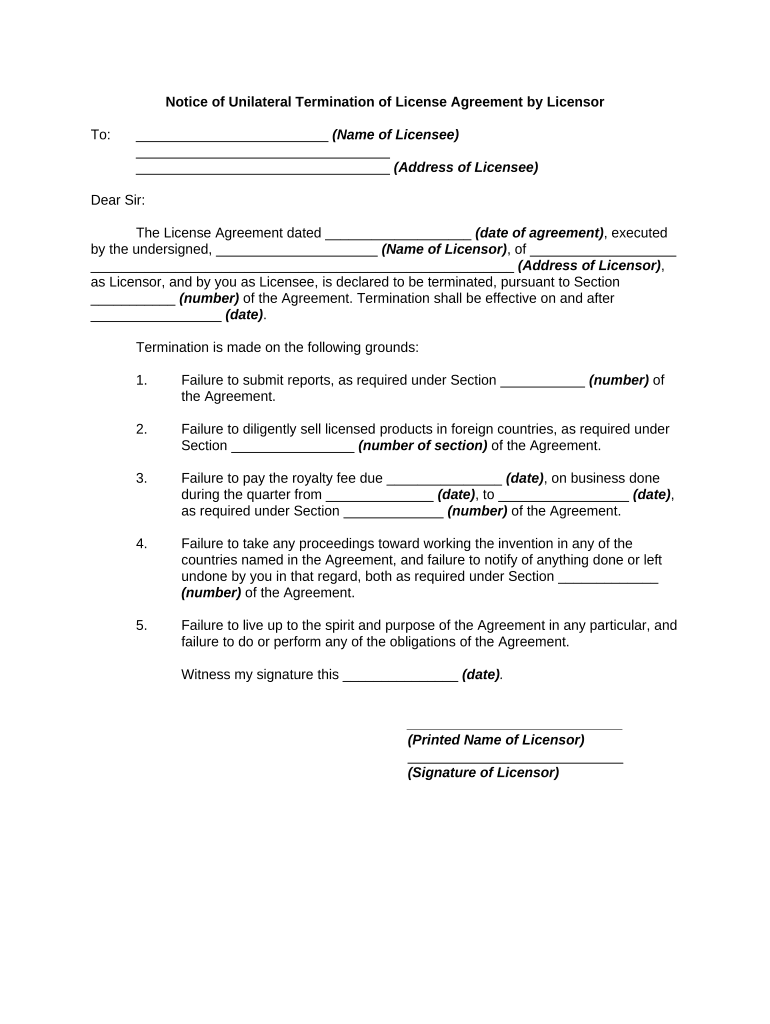
Unilateral Agreement
What a Unilateral Agreement Is and When It Applies
Why a Clear Unilateral Agreement Matters
A precise unilateral agreement reduces ambiguity about obligations, enables enforceability, and documents the conditions under which the promise is actionable. It helps manage risk and provides evidence of intent and terms if performance or dispute arises.
Who Typically Drafts or Signs a Unilateral Agreement
Organizations and individuals use unilateral agreements when only one party is making enforceable commitments or when an offer must remain unilateral until acceptance.
- Employers and HR teams using one-sided promises for bonuses, relocation offers, or contingent payments.
- Vendors or manufacturers offering reward or warranty promises to consumers or the public.
- Property owners or lenders issuing one-sided covenants, lien waivers, or indemnities.
Typical Signers and Responsible Parties
Company Executive
A C-level officer or authorized manager usually signs on behalf of a corporation. The signer must have actual authority under corporate bylaws or an executed delegation; otherwise the promise may be unenforceable against the company without ratification.
Individual Promisor
When a person makes the unilateral promise, that individual should sign using their full legal name and include contact details; identity clarity reduces later disputes over attribution and intent.
Legal Risks and Common Consequences
Common Preparation Mistakes to Avoid
- Using vague obligations such as 'reasonable efforts' without measurable benchmarks, which invites disputes over performance standards.
- Failing to state whether the unilateral promise is revocable and, if so, the method and notice required to revoke it.
- Allowing unsigned or improperly executed copies to circulate; unsigned documents often lack the attribution evidence needed for electronic signature tests.
- Not checking signer authority when a business is the promisor; an unauthorized signer can render the obligation unenforceable against the entity.
Real-World Use Cases
Reward Offer
A company posts a reward for locating lost equipment and describes the reward conditions.
- Public response by a finder accepts by performance.
- Documenting the offer and keeping dated evidence simplifies payout and defends against competing claims while proving the company’s intent.
One-Sided Indemnity
A contractor issues an indemnity covering specific third-party claims for a subcontractor’s work.
- The subcontractor performs work under that assurance.
- Attaching clear scope, limits, and signature authority reduces ambiguity and lowers litigation risk when claims arise.
How to Complete a Unilateral Agreement
-
01Identify Parties: Enter full legal names and roles for promisor and beneficiary.
-
02Define Performance: Describe exact action, timeline, and deliverables.
-
03State Revocation Rules: Specify whether and how the promise can be revoked.
-
04Sign and Date: Include signer name, title, and signature method.
Typical Workflow from Promise to Performance
-
Publish Offer: Issue the written promise to the intended audience or beneficiary list.
-
Evidence Reliance: Capture actions taken by beneficiary in response to the offer.
-
Verify Completion: Document that the beneficiary has performed required actions.
-
Record Payout: Log fulfillment and maintain archival copies.
Core Clauses to Include in a Professional Unilateral Agreement
Scope of Promise
Precisely describe what the promisor will do, how success is measured, and any conditions precedent. Avoid open-ended language and give measurable benchmarks or sample milestones.
Duration
State the effective date and expiration or termination triggers. If revocable, explain notice method and effective date of revocation to prevent uncertainty in acceptance timing.
Limitations
Set monetary caps, excluded liabilities, and any geographic or temporal limits. Clear limits protect the promisor from open-ended exposure while clarifying beneficiary expectations.
Signature and Authority
Include the legal name, title, and authority statement for the signer. For organizations, reference specific bylaws or delegated authority to validate corporate acceptance.
Practical Tips for Drafting and Managing the Agreement
Key Processing Milestones
Draft Completion
Finalize terms and internal approvals before publication.
Offer Publication
Date when the unilateral promise is communicated or posted.
Performance Deadline
When the beneficiary must complete qualifying acts for acceptance.
Record Retention Start
Begin retention counting from execution or last effective date.
Timing and Deadline Considerations
Effective Date:
Set using MM/DD/YYYY format; governs when obligations begin.
Acceptance Window:
State any time limit for beneficiary performance to claim the promise.
Revocation Notice Period:
Specify notice method and how many days before revocation becomes effective.
Record Retention Trigger:
Define which event starts retention counting for legal holds.
Audit Review Schedule:
Establish periodic reviews to confirm compliance with retention and performance terms.
Digital Workflow Settings to Capture Evidence
| Field | Configuration |
|---|---|
| Signature Field | Required; include printed name and date fields. |
| Authentication | Email + SMS code or higher for attribution. |
| Audit Trail | Enable IP, timestamp, and action logging. |
| Attachment Rules | Allow supporting evidence uploads (photos, receipts). |
Unilateral Agreement vs Bilateral Agreement — Key Differences
| Criteria | Unilateral Agreement | Bilateral Agreement |
|---|---|---|
| Mutual Obligations | ||
| Acceptance by Performance | usually contract signing | |
| Typical Use Cases | rewards, one-sided indemnities | sales, services, reciprocal exchanges |
| Revocation Complexity | high if public | lower with mutual assent |
Typical eSignature Vendor Pricing and Feature Snapshot
| signNow | DocuSign | Adobe Sign | PandaDoc | HelloSign | |
|---|---|---|---|---|---|
| Starting Price | $8/user/mo | $15/user/mo | $14/user/mo | $19/user/mo | $15/user/mo |
| Free Trial | 7-day free trial | Varies by vendor | Varies by vendor | Varies by vendor | Varies by vendor |
| Bulk Send | Yes | Yes | Yes | Yes | No |
| Audit Trail | Yes | Yes | Yes | Yes | Yes |
| HIPAA Compliant | Yes | Yes | Yes | No | No |
Frequently Asked Questions About Unilateral Agreements
-
Is an electronic signature valid?
Yes—an electronic signature can create a binding unilateral agreement if it meets ESIGN and UETA requirements: intent to sign, consent to electronic transactions, signer attribution, and durable record retention (15 U.S.C. §7001). Ensure your workflow captures attribution evidence.
-
Can the promisor revoke the offer?
Revocation rules depend on the terms provided in the agreement and applicable law. If the offer specifies it is irrevocable for a period or upon performance, the promisor may be restricted from revoking once the beneficiary reasonably relies on the offer.
-
Do I need a notary or witnesses?
Most ordinary unilateral agreements do not require notarization, but deeds, powers of attorney, and certain statutory forms do. Check state-specific requirements for notarization and witness counts before finalizing.
-
Who must sign for a company?
A corporate officer or authorized agent with delegated authority should sign, and signing should reference the capacity and authority; absence of authority can render the agreement unenforceable against the company.
-
How should I store executed copies?
Store signed copies with metadata (who signed, when, and how) in a secure system. Retain per applicable retention timelines and ensure the record is reproducible for legal or regulatory review.
-
What happens if details change after signing?
Material changes require an amendment or a new agreement signed by the promisor. Minor clerical corrections should be documented and initialed by the promisor to avoid disputes over terms.