Establishing secure connection…Loading editor…Preparing document…

Utah Findings of Fact and Conclusions of Law

This template is fully customizable. Edit the text, fill out the fields, and send it for signature. Give it a try!
Utah Findings of Fact and Conclusions of Law

What the Utah Findings of Fact and Conclusions of Law Are

A Utah Findings of Fact and Conclusions of Law is a court document where the judge records factual findings and the legal reasons supporting the decision. It typically follows a bench trial or hearing and becomes part of the case record used for final judgment, appeals, and enforcement.

Why a Clear Set of Findings Matters

Well-drafted findings and conclusions reduce ambiguity on the record, support enforceable judgments, and preserve issues for appeal by linking facts to legal standards.

Why a Clear Set of Findings Matters

Who Prepares and Relies on These Documents

Parties, counsel, and judges use findings and conclusions to document how law and evidence led to a decision.

  • Trial judges and clerks who enter the official version into the court record.
  • Litigation attorneys preparing proposed findings or preserving issues for appeal.
  • Parties and compliance teams who require a clear statement of rights, obligations, and remedies.

Accurate drafting helps avoid remand, clarifies remedies, and shortens post-trial briefing and enforcement steps.

Typical Roles Involved

Trial Judge

The trial judge authors, signs, or adopts findings and conclusions when required; their explicit linkage of evidence to legal standards is key to a defensible judgment and reduces the risk of reversal on appeal.

Litigation Attorney

Counsel drafts proposed findings or objections, files them per local rules, and uses the final document to advise clients on enforcement, settlement valuation, or appellate strategy; accuracy preserves issues for review.

Security and Compliance Elements to Track

Encryption: AES-256 at rest
Transport: TLS 1.2/1.3
Audit Trail: Detailed signer logs
Access Controls: Role-based permissions
Certifications: SOC 2 Type II
Healthcare BAA: HIPAA BAA available

Step-by-Step: Preparing and Submitting Findings in Utah

Follow a consistent sequence to prepare, file, and finalize findings so the document is accepted and preserved for appeal or enforcement.

  • 01
    Draft Findings: Draft linked factual findings and legal conclusions.
  • 02
    Serve Opposing Parties: Provide copy per local rules for objections.
  • 03
    File with Court: File the signed or court-entered version.
  • 04
    Confirm Entry: Check clerk's entry and obtain stamped copy.

Typical Workflow for Electronic Preparation and Filing

A reliable workflow reduces friction between drafting, circulating for review, and final filing with the court clerk.

  • Prepare Document: Create editable draft in DOCX or PDF.
  • Review and Markup: Exchange tracked changes with counsel.
  • Sign and Certify: Judge or clerk signs the final version.
  • E-file: Submit to the court e-filing system.

Key Digital Workflow Settings to Configure

Configure document and signer settings to preserve chain of custody and meet court e-filing requirements.

Field Configuration
File Format Use PDF/A or court-accepted PDF
Signature Type Electronic signature with audit trail
Authentication Email link or stronger MFA
Retention Keep audit log and signed PDF

Platform and File Requirements for eSubmission

Confirm your court's accepted file formats and allowable electronic signature methods before filing.

  • File Types: PDF, DOCX accepted by many courts
  • Signature Records: Audit trail and signer attribution required
  • Integrations: Common integrations: document storage and case management

Use a secure service that retains tamper-evident signed PDFs and an audit trail compatible with court clerk review.

Typical Timing and Filing Expectations

Timing for submission and objections varies by court; confirm local rules in the applicable Utah district or county before setting deadlines.

Proposed Findings Deadline:

Local rules determine timing; often requested at close of trial

Objection Period:

Opposing party typically has a window to object

Clerk Entry:

Court enters the official version on docket

Appeal Timing:

Appeal deadlines run from entry of judgment

Record Requests:

Order transcripts promptly to preserve appellate record

Key Milestones After a Bench Trial

A typical sequence lists post-trial steps that lead to final judgment and potential appeal.

01

Close of Trial

Evidence concluded and parties rest

02

Proposed Findings Filed

Parties may submit proposed findings

03

Court Issues Findings

Judge signs or adopts findings of fact

04

Judgment Entered

Final judgment is docketed

Common Mistakes to Avoid

  • Failing to tie factual findings directly to legal standards creates an incomplete record for appeal.
  • Submitting unsigned or improperly attributed versions can delay clerk acceptance or lead to rejection.
  • Using inconsistent party names or incorrect docket numbers can cause misfiling or prevent matching to the right case.
  • Neglecting to retain audit logs and timestamped copies weakens evidentiary support for electronic signatures.

Risks of Inaccurate or Late Findings

Appeal Reversal Risk: Inadequate linkage of facts to law may result in reversal
Enforcement Delay: Unclear findings can slow judgment enforcement
Clerk Rejection: Noncompliant filings may be rejected
Evidence Gap: Lost audit trails weaken signature proof
Cost Increase: Remand or corrections increase legal fees
Waived Issues: Untimely objections can forfeit appellate issues

Essential Components of Professional Findings and Conclusions

A complete document presents facts, legal standards, analysis, and a clear conclusion that supports the resulting judgment and any awarded relief.

Title and Caption

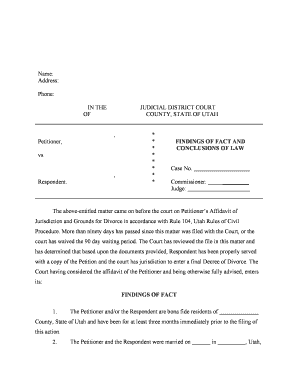
Clear title and accurate case caption ensure clerks and appellate courts can identify the document immediately and match it to the docket and parties without ambiguity.
Statement of Facts

A concise, numbered recital of material facts found by the court that are supported in the record and organized to show relevance to legal claims or defenses.

Legal Conclusions

Precise discussion of the controlling legal standards and how the court applies them to the facts, enabling reviewers to follow the reasoning to the judgment.

Remedies and Orders

Explicit statement of relief granted, monetary awards, injunctive language, or continuing obligations so the judgment is immediately enforceable and clear.

Signatures and Dates

Judge's signature block, date of entry, and any certification of service or clerk stamp that convert findings into an enforceable part of the case file.

Attachments and Citations

Incorporated exhibits, transcript references, and legal citations that support findings and provide a roadmap for appellate review or enforcement action.

eSignature Vendor Comparison for Filing Court Documents

Compare common capabilities and starting prices for general-purpose eSignature platforms commonly used for legal documents; confirm platform acceptance with your court clerk.

signNow DocuSign Adobe Sign PandaDoc HelloSign
Starting Price $8/user/mo $15/user/mo $14/user/mo $19/user/mo $15/user/mo
Free Trial 7-day free trial No No No No
Bulk Send Yes Yes Yes Yes No
Audit Trail Yes Yes Yes Yes Yes

Frequently Asked Questions About Utah Findings of Fact and Conclusions of Law

Answers address common practical and electronic-signature questions when preparing findings for filing and recordkeeping in Utah.


Need help? Contact support

be ready to get more
Join over 28 million airSlate SignNow users