Establishing secure connection…Loading editor…Preparing document…

Virginia Garnishment

This template is fully customizable. Edit the text, fill out the fields, and send it for signature. Give it a try!
Virginia Garnishment

What a Virginia Garnishment Document Is and When It Applies

A Virginia garnishment is a court-authorized legal instrument used to collect a judgment by directing a third party — typically an employer or financial institution — to withhold and remit a debtor's wages or funds. It follows entry of a judgment and specific procedural steps under Virginia practice rules; the writ identifies parties, the judgment amount, withholding limits, service instructions, and any statutory exemptions that protect portions of a debtor's income or accounts. Employers, banks, and clerks rely on the garnishment to apply the court order; errors in identity, amounts, or service method can delay enforcement or create liability for the garnishing party.

Why a Proper Virginia Garnishment Matters

A correctly prepared garnishment enforces judgments efficiently while minimizing risk of dismissal, creditor liability, or debtor hardship. Accurate forms protect due process, preserve exempt income, and document chain of service for enforcement and appeals.

Why a Proper Virginia Garnishment Matters

Who Prepares and Responds to Garnishment Papers

The following parties commonly prepare, serve, or respond to Virginia garnishment documents; roles determine required fields and authority.

  • Judgment Creditor or Attorney — Creditor or counsel drafts and files the writ to collect a court judgment, ensures correct case numbers and amounts.
  • Garnishee (Employer or Bank) — The garnishee reviews service, calculates withholding per order and statutory exemptions, then remits funds to the court or creditor.
  • Court Clerk and Sheriff's Office — Clerks process filings and the sheriff or marshal executes service; accurate filing details avoid service rejection.

Each party must follow statutory procedures exactly; improper service, mistaken identity, or incorrect withholding amounts are frequent sources of dispute.

Step-by-Step: From Judgment to Collected Funds

Follow these sequential steps to file, serve, and collect under a Virginia garnishment; missing steps cause delays or legal exposure.

  • 01
    Obtain Judgment: Confirm a final monetary judgment exists before pursuing garnishment.
  • 02
    Prepare Writ: Complete the garnishment writ with accurate names, amounts, and case number.
  • 03
    File and Serve: File with the clerk and arrange service on the garnishee as required.
  • 04
    Collect Remittance: Garnishee withholds per order, submits payments to court or creditor.

Essential Components of a Professional Virginia Garnishment

A complete garnishment document is structured to support enforcement, show judicial authority, and protect all parties; include these elements to reduce objections and processing delays.

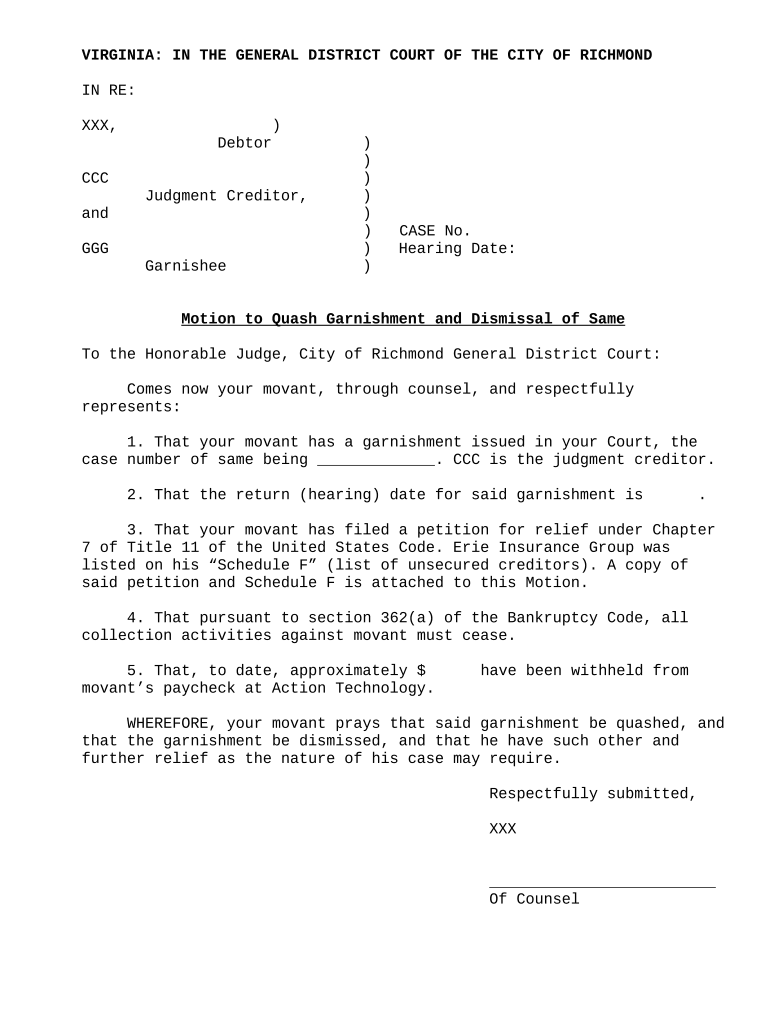
Court Caption

Include the court name, jurisdiction, and full caption exactly as on the judgment so clerks associate the writ with the underlying judgment and case file.
Parties Identified

Clearly state the judgment creditor, judgment debtor, and garnishee with legal names and addresses to prevent misidentification and improper service.

Judgment Details

Reference the judgment date, docket number, and total amount owed including interest and allowable costs so the enforced amount is clear.

Scope of Garnishment

Specify whether the writ applies to wages, bank accounts, or other property, and include the calculation method for withholding or levy amounts.

Exemption Notice

State statutory exemptions or procedures for claiming exemptions so debtors and garnishees understand protected funds and objection timelines.

Service and Return

Provide precise service instructions, required return deadlines for the garnishee, and where remittances should be sent to ensure proper processing.

Required Data Elements at a Glance

Debtor Name: Exact legal name
Debtor Identifier: SSN/TIN or DOB
Creditor Info: Name and contact
Garnishee Details: Employer or bank name
Amount Claimed: Dollar amount or percent
Court Reference: Case number and court

Consequences of Errors or Improper Garnishment

Dismissal Risk: Court may quash or dismiss enforcement
Creditor Liability: Creditor liable for improper withholding
Contempt Exposure: Failure to follow order risks contempt
Return Delays: Incorrect service causes processing delays
Exemption Violations: Withholding protected funds triggers claims
Additional Costs: Fees, interest, and attorney costs

Common Preparation and Enforcement Pitfalls to Avoid

  • Using an incomplete or incorrect case number leads clerks to reject filings and delays enforcement for weeks.
  • Mismatching debtor names or omitting identifiers like SSN causes garnishee confusion and may stop property seizures.
  • Failing to include exemption language or notice procedures often triggers debtor objections and additional court hearings.
  • Serving the wrong address or an incorrect garnishee contact often results in improper service and potential liability for the creditor.

How Garnishment Enforcement Typically Progresses

This high-level flow shows how a garnishment moves from filing to remittance; adapt timing and service to local court rules.

  • File Writ: Clerk files writ tied to judgment docket.
  • Serve Garnishee: Sheriff or process server delivers the writ.
  • Calculate Withholding: Garnishee computes amounts per order and exemptions.
  • Remit Funds: Garnishee sends withheld funds to court or creditor.

Digital Workflow Settings for Online Completion

Configure fields and routing before sending to reduce signer friction and ensure legal sufficiency.

Field Configuration
Signature Block Require signer name, signature, and date fields
Authentication Use email + SMS code or ID verification
Routing Order Set creditor, clerk, then garnishee sequence
Retention Enable PDF certificate and secure storage

eFiling and eSignature Considerations

Choose a platform that supports PDF, Word, and secure audit trails plus integrations with court or case management systems.

  • Formats Supported: PDF, DOCX, HTML
  • Integrations: NetSuite, Salesforce, Google Workspace
  • Security: AES‑256 at rest, TLS 1.2/1.3

Confirm the chosen solution provides tamper-evident signed PDFs, audit trails, and any industry-required BAAs or compliance attestations for sensitive data.

Key Timing and Processing Expectations

Timing varies by county and court; allow processing and service lead time when planning enforcement actions.

Filing Window:

File after judgment becomes final per court rules

Service Timing:

Serve garnishee promptly; sheriff schedules service

Withholding Start:

Garnishee begins withholding upon valid service

Return of Service:

Clerk requires return within statutorily prescribed days

Duration:

Garnishment runs until judgment satisfied or modified

eSignature Platform Pricing and Feature Snapshot for Garnishment Workflows

Compare starting price and core capabilities for common eSignature vendors used to complete and store garnishment documents securely.

signNow DocuSign Adobe Sign PandaDoc HelloSign
Starting Price $8/user/mo $15/user/mo $14/user/mo $19/user/mo $15/user/mo
Free Trial 7-day free trial, no card Varies Varies Yes, limited Yes, limited
Bulk Send Yes (Business Premium) Yes Yes Yes No
Audit Trail Yes Yes Yes Yes Yes
HIPAA Compliant Yes (BAA available) Yes Yes No No
Envelope Cap No cap 100 envelopes/user/year Varies by plan Varies by plan Varies by plan

Frequently Asked Questions About Virginia Garnishment

Answers to common questions about preparation, electronic completion, service, exemptions, and stopping garnishment.


Need help? Contact support

be ready to get more
Join over 28 million airSlate SignNow users