Establishing secure connection…Loading editor…Preparing document…

Proof of Service (Small Claims)

This template is fully customizable. Edit the text, fill out the fields, and send it for signature. Give it a try!
Proof of Service (Small Claims)

What the Proof of Service (Small Claims) documents and why it matters

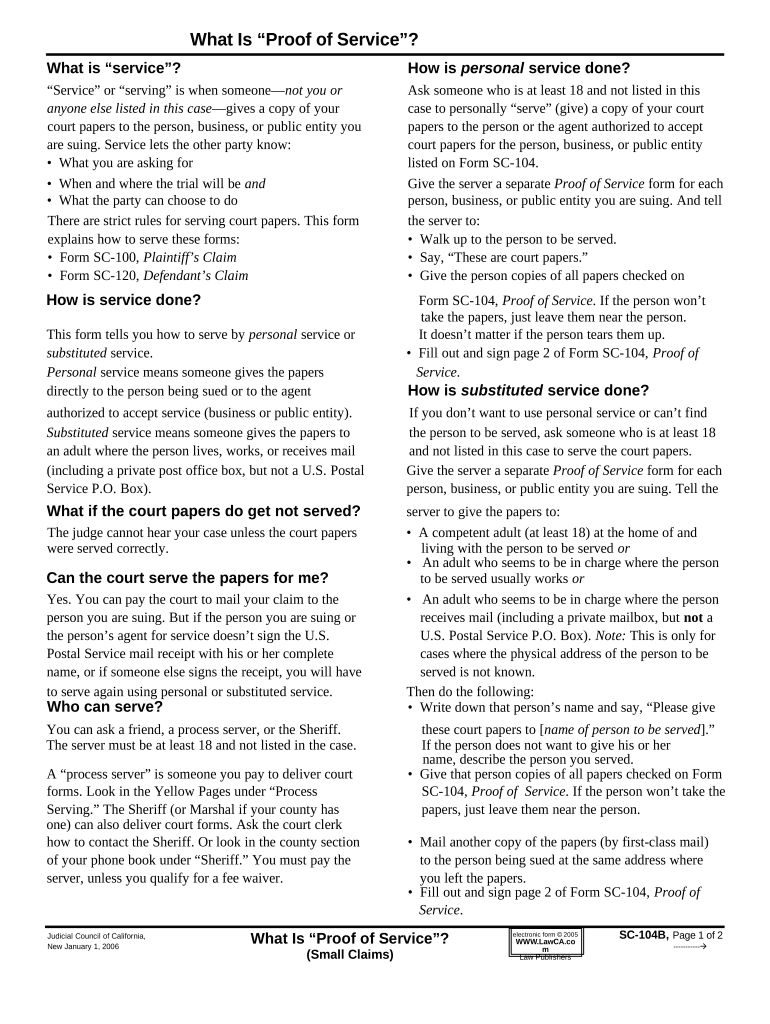
A Proof of Service (Small Claims) is a sworn statement or court form that documents how and when a respondent was served with small claims paperwork. It records the method of service (personal delivery, substituted service, posting and mailing, or certified mail), the server's identity, the date, and location. Courts use it to verify that parties received proper notice before a hearing. Accurate Proofs of Service prevent delays, preserve default judgment options, and create an evidentiary record that the court can rely on during case management and final disposition.

Why an accurate Proof of Service matters for your case

A correct Proof of Service establishes that the court’s jurisdictional notice requirements were met and supports procedural deadlines. It reduces the risk of hearings being continued or judgments being vacated.

Why an accurate Proof of Service matters for your case

Typical users who complete a Proof of Service (Small Claims)

Parties to small claims actions, process servers, landlords, business owners, and court clerks commonly complete or file Proofs of Service when a complaint or summons is delivered.

  • Plaintiffs and their representatives prepare and file the form after service is completed.
  • Professional process servers and sheriff’s deputies complete sworn affidavits of service when they effect personal delivery.
  • Court clerks receive and docket the Proof; attorneys or paralegals often review for completeness before filing.

Whoever fills the form must follow local court rules precisely, since format and filing procedures vary by jurisdiction.

Step-by-step: completing a Proof of Service (Small Claims)

Follow these steps in order to prepare and file a valid Proof of Service with the court or clerk’s office.

  • 01
    Prepare form: Use the court’s approved Proof of Service form or template.
  • 02
    Complete details: Enter case number, parties, method, date, time, and server information.
  • 03
    Sign or notarize: Have the server sign under oath and notarize if required by local rule.
  • 04
    File with clerk: Submit the original to the court and retain copies for records.

How the service-to-filing workflow typically proceeds

The Proof of Service links the act of delivering papers to the court’s official record; follow this flow to avoid gaps in the process.

  • Serve defendant: Deliver the summons and complaint using an approved method.
  • Document service: Server completes affidavit or form stating facts of service.
  • Notarize if needed: Obtain notary acknowledgment or affirmation when local rules demand it.
  • File proof: File the Proof of Service with the clerk and obtain filing stamp or receipt.

How to configure an online Proof of Service workflow

Set up a repeatable template and authentication rules when using an eSignature or document platform to collect and file service affidavits.

Field Configuration
Template Create a court-format PDF template with fixed fields.
Signer Authentication Require email plus SMS or ID verification for server identity.
Notary/ROE Enable remote notarization or in-person notarization step if applicable.
Filing Delivery Automatically send PDF to court clerk and parties after completion.

Technical considerations for eSigning and submitting Proofs of Service

Choose a platform that supports court-ready PDFs, strong signer attribution, and audit trails when you eSign or eSubmit Proofs of Service.

  • File formats: PDF and DOCX supported for court-ready exports.
  • Integrations: Connectors for Google Workspace, Microsoft 365, and NetSuite facilitate storage and routing.
  • Authentication: Options for SMS, email, and advanced ID verification are recommended.

Ensure your chosen system preserves a tamper-evident signed PDF and retains audit details for judicial review and appeals.

Timing: filing and deadline expectations

Deadlines for filing a Proof of Service vary by court; local rules can set short time windows after service. File promptly to avoid procedural issues.

File promptly:

Submit the Proof as soon as service is completed and notarized when required.

Local rule windows:

Many courts require filing within a set period, commonly 7–30 days after service.

Before hearings:

File prior to scheduled hearings to ensure notice is documented on record.

Extending time:

Request extensions from the court if unavoidable delays occur.

Clerk confirmation:

Obtain a stamped copy or electronic receipt when the court accepts the Proof.

Common mistakes to avoid on a Proof of Service

  • Incomplete server information: leaving out address or contact details undermines verification and may prompt court rejection.
  • Incorrect case number or court name: even small typos can cause the form to be misfiled or returned by the clerk.
  • Wrong method selected: claiming personal service when substituted or mailed service occurred can invalidate the Proof and delay proceedings.
  • Missing notarization or affirmation: failing to notarize where required eliminates the sworn effect and can lead to contested service.

Consequences of an incorrect or missing Proof of Service

Case delays: Hearings postponed; additional filing required.
Default risks: Default judgments may be vacated for defective service.
Monetary sanctions: Court may assess fines for bad-faith filings.
Perjury exposure: False service statements can trigger perjury investigations.
Enforcement hurdles: Writs and collection actions may be delayed.
Additional costs: Extra process-server and attorney fees to cure defects.

Practical examples of Proofs of Service in small claims contexts

These short case vignettes illustrate how Proofs of Service are completed and used in common small claims scenarios.

Landlord-Tenant Claim

A landlord serves a tenant with a rent claim using substituted service at the rental unit and mail.

  • The server documents the steps and dates precisely.
  • The landlord files the Proof of Service with the small claims court before the first hearing; the judge accepts the affidavit and schedules a hearing.

Business Debt Collection

A small business uses a professional process server for a customer owed funds and elects certified mail return receipt.

  • The server attaches postal receipts to the affidavit.
  • The business files the Proof of Service and supporting tracking receipts so the court can verify delivery and set a trial date without dispute.

Essential elements that make a Proof of Service court-ready

A professional Proof of Service includes standardized headings, clear server statements, and attachments that corroborate the method and date of service.

Caption

Court name, party names, and case number exactly matching the complaint to ensure proper docketing and identification.
Server affidavit

A concise sworn statement describing who served, their capacity, the recipient’s identity, and how service was effected under governing rules.

Method detail

Clear notation of the specific method used (personal, substituted, posting, certified mail) and any statutory citations if required.

Date and location

Precise MM/DD/YYYY date and physical location of service to demonstrate jurisdictional timeliness and place of service.

Supporting attachments

Include delivery receipts, signed return receipts, photographs, or process-server logs that corroborate the affidavit.

Notary block

Where required, an acknowledgment or jurat showing oath/affirmation and the notary’s seal and signature for evidentiary weight.

Comparing eSignature providers for preparing and filing Proofs of Service

Vendor pricing and core features differ; signNow appears first to show starting price and common capability comparisons for small-claims document workflows.

signNow DocuSign Adobe Sign PandaDoc HelloSign
Starting Price $8/user/mo $15/user/mo $14/user/mo $19/user/mo $15/user/mo
Free Trial 7-day free trial No No Yes, limited Yes, limited
Bulk Send Yes Yes Yes Yes No
Audit Trail Yes Yes Yes Yes Yes
HIPAA Compliant Yes Yes Yes No No

Frequently asked questions about Proofs of Service (Small Claims)

Answers to common questions about filing, signatures, notarization, eSubmission, and how to correct mistakes in a Proof of Service.


Need help? Contact support

be ready to get more
Join over 28 million airSlate SignNow users