Establishing secure connection…Loading editor…Preparing document…

Wisconsin Affidavit

This template is fully customizable. Edit the text, fill out the fields, and send it for signature. Give it a try!
Wisconsin Affidavit

What a Wisconsin Affidavit Is and when it’s used

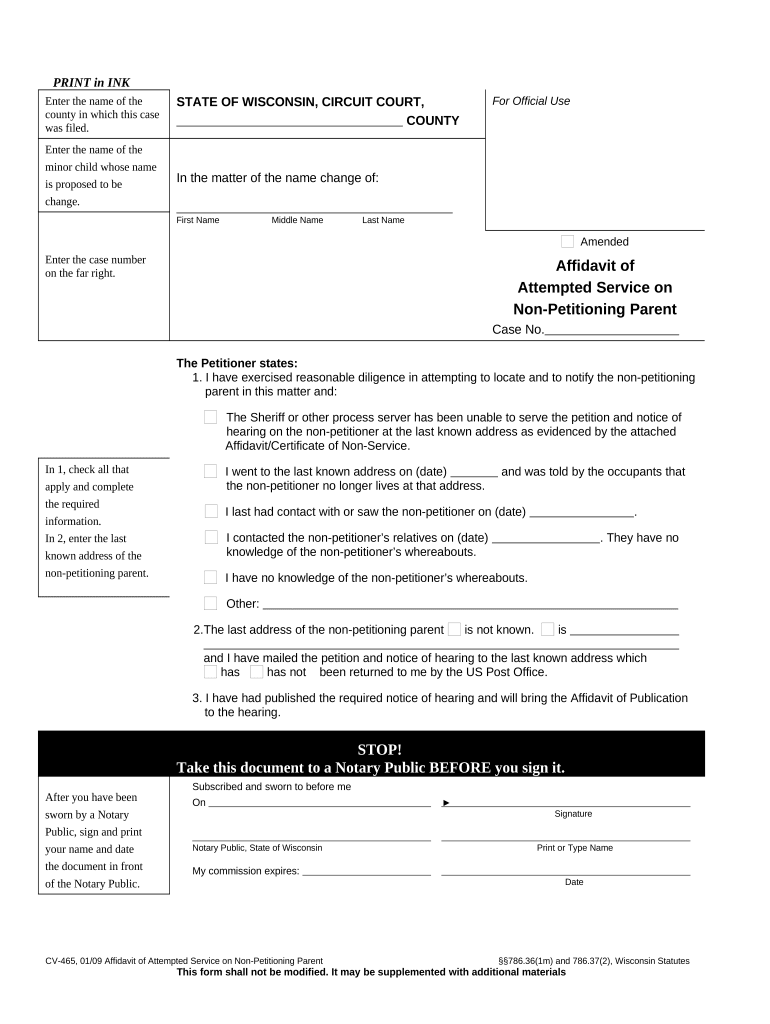
A Wisconsin Affidavit is a sworn written statement made by an individual (the affiant) to present facts under oath for legal, administrative, or transactional purposes in Wisconsin. It typically includes the affiant’s full legal name, a clear factual narrative, a signature, date and location, and a notary public’s acknowledgment. Affidavits are submitted to courts, government agencies, title companies, and private parties to support claims, verify identity or events, or declare loss or status when contemporaneous records are unavailable.

Why a properly prepared Wisconsin Affidavit matters

A correctly completed affidavit provides sworn evidence that courts and agencies treat as reliable. It reduces disputes by documenting facts under penalty of perjury and, when notarized, supplies official authentication for use in hearings, closings, and administrative reviews.

Why a properly prepared Wisconsin Affidavit matters

Who commonly prepares and relies on Wisconsin Affidavits

Wisconsin Affidavits are used by a range of people and organizations that need validated factual statements for legal or administrative purposes.

  • Real estate professionals and title agents preparing closing-related affidavits and property ownership confirmations.
  • Attorneys and paralegals submitting sworn evidence for court filings, probate matters, or administrative hearings.
  • Private individuals declaring lost documents, identity facts, or proof of events for business or government processes.

Stepwise process to complete and notarize the affidavit

Follow these sequential steps to complete, notarize, and file a Wisconsin Affidavit accurately, reducing rejection risk.

  • 01
    Prepare Document: Draft clear factual paragraphs and list exhibits.
  • 02
    Complete Affiant Info: Enter full name, contact, and identification details.
  • 03
    Sign in Presence: Do not sign until the notary directs you to sign.
  • 04
    Notary Acknowledgment: Notary completes acknowledgment and records the act per state rules.

How affidavits move from draft to accepted record

Affidavits follow a simple flow from preparation to authentication and then delivery to the receiving party or court.

  • Draft: Author prepares factual statement and attaches documents.
  • Authenticate: Affiant signs and notary completes acknowledgment.
  • Deliver: Submit to court, agency, or party per their procedures.
  • Archive: Retain a notarized copy and digital backup for required retention.

Core parts every professional Wisconsin Affidavit should include

A complete affidavit combines identity, sworn facts, authentication, and attachments so it can be used reliably by courts and agencies.

Affiant Identity

Full legal name and contact information for the person swearing the affidavit; include any relevant identifiers such as DOB or last four of SSN only when necessary to verify identity.
Statement of Facts

A numbered, first-person list of factual assertions presented clearly, with dates and locations where events occurred and concise, verifiable descriptions of actions or observations.

Exhibits

Attach labeled exhibits referenced in the narrative; each exhibit should be a copy with an exhibit label inside the affidavit to maintain clear evidentiary linkage.

Sworn Oath

A clause stating the oath or affirmation language under penalty of perjury, indicating the affiant understands legal consequences of false statements.

Notary Block

Area reserved for the notary public to complete: date, jurisdiction, signature, seal, and any remote notarization session identifiers when used.

Signature and Date

Signature of the affiant and date of signing; do not pre-sign the affidavit before notarization unless the receiving authority permits it for remote processes.

Export options and supporting documents to keep with the affidavit

Store notarized affidavits in formats that preserve the notary block and make exhibits accessible for reviewers and courts.

PDF Export

Save a flattened PDF/A copy that preserves the notary block, maintains an embedded copy of exhibits, and supports long-term archival and court submission standards.

Word Copy

Keep an editable DOCX working copy for revisions and redrafts; do not use the DOCX as evidence unless explicitly accepted by the receiving authority.

Encrypted Archive

Store a password-protected or encrypted archive of signed documents and exhibits to protect sensitive personal information from unauthorized access.

Supporting Attachments

Include scanned IDs, related correspondence, or originals when required for review; label each attachment and reference it by exhibit letter inside the affidavit.

Security and compliance considerations for affidavit records

Encryption: TLS in transit, AES-256 at rest
Audit Trail: Timestamped signer actions and IP address
HIPAA Readiness: BAA available when PHI present
Access Controls: Role-based permissions and SSO
Data Residency: Selectable storage regions where applicable
Authentication: SMS, email, or advanced verification

Consequences of errors or improper affidavit completion

Perjury: Criminal penalties possible
Rejection: Court or agency may refuse document
Delay: Processing or closing can be postponed
Financial Loss: Remediation or legal defense costs
Invalid Evidence: Affidavit may lack probative value
Notary Issues: Improper notarization can void affidavit

Common preparation mistakes to avoid

  • Signing before notarization or using electronic copies without required authentication risks rejection and may void the affidavit for court use.
  • Failing to attach or properly reference supporting exhibits can make factual claims unverifiable and invite evidentiary objections.
  • Using unclear, opinion-based language rather than concrete factual statements reduces the affidavit’s credibility and usefulness in disputes.
  • Mismatched names or incorrect dates compared to IDs or filings can trigger identity verification delays or require supplemental sworn statements.

Real-world situations where a Wisconsin Affidavit is used

Below are two representative scenarios showing how affidavits support legal and transactional processes in Wisconsin.

Real Estate Closing

A closing agent uses an affidavit to confirm seller identity and occupancy status.

  • The affidavit attaches utility bills as exhibits for proof.
  • When notarized and included in closing files, the affidavit helps clear title issues and satisfy lender or title insurer requirements for missing documents.

Lost Document Declaration

An individual declares a lost original deed or title.

  • The affidavit summarizes circumstances and includes a copy of available evidence.
  • Courts and agencies often accept a notarized lost-document affidavit as a basis to issue replacements or permit alternative proof of ownership.

Configuring an eSubmission workflow for an affidavit

Set up fields, authentication, notarization flags, and routing to match the receiving authority’s requirements before sending.

Field Configuration
Affiant Name Field Required, exact-match with ID
Date and Location MM/DD/YYYY and city/county
Notary Block Leave blank for notary completion
Routing Order Affiant → Notary → Receiving Party

Digital signing and integration requirements

Choose a platform that supports authenticated signatures, notarization workflows, and secure storage for affidavit records.

  • Integration: Salesforce, NetSuite, Google Workspace
  • Formats: PDF, DOCX preservation options
  • Notary Support: In-person and RON workflows

How a Wisconsin Affidavit compares with similar sworn statements

Quick distinctions between an affidavit and a written declaration to help choose the correct document type for your use.

Criteria Affidavit Declaration
Sworn under oath usually signed under penalty
Notary required typically yes often no
Typical use state filings, courts federal filings, admin
Legal formality higher formality lower formality

Timing considerations and when to file or present an affidavit

Deadlines depend on the receiving body; plan ahead to notarize and submit before hearings, closings, or administrative deadlines.

Upon Request:

Provide immediately when an agency or party requests sworn facts.

Before Hearing Date:

Serve or file affidavits per court scheduling rules.

Before Closing:

Supply required affidavits to title companies prior to closing.

When Replacing Documents:

File a lost-document affidavit when originals cannot be located.

For Administrative Filings:

Follow the agency’s submission window and authentication rules.

Key milestones from preparation to retention

Sequence the affidavit lifecycle into clear milestones so responsibilities and timing are unambiguous.

01

Draft and Review

Prepare facts, list exhibits, and proofread for clarity.

02

Authentication

Sign in front of a notary or complete an approved RON session.

03

Submission

Deliver the notarized affidavit to the court, agency, or party.

04

Retention

Archive notarized copy and backups per retention rules.

Practical tips for accurate, defensible affidavit preparation

Follow these practices to reduce disputes, ease verification, and ensure the affidavit meets acceptance standards.

Write clear, first-person factual statements
Use numbered paragraphs and neutral language. Avoid speculation and legal conclusions; state dates and locations precisely to make verification straightforward.
Attach labeled, referenced exhibits
Include concise exhibit labels (Exhibit A, B) and ensure each referenced exhibit is attached as a separate file or page for easy review.
Confirm notary or RON requirements
Check whether the receiving authority accepts remote notarization and follow the notary’s instructions about signing in their presence or during a recorded session.
Keep originals and secure backups
Retain the original notarized affidavit and maintain encrypted digital copies with access controls to preserve evidentiary integrity and comply with retention rules.

eSignature vendor comparison for affidavit workflows

Comparison of typical plan attributes and compliance features across leading eSignature vendors; signNow is listed first per vendor ordering rules.

signNow DocuSign Adobe Sign PandaDoc HelloSign
Starting Price $8/user/mo $15/user/mo $14/user/mo $19/user/mo $15/user/mo
Free Trial 7-day free trial Varies by vendor Varies by vendor Varies by vendor Varies by vendor
Bulk Send Yes Yes Yes Yes No
Audit Trail Yes Yes Yes Yes Yes
HIPAA Compliant Yes Yes Yes No No
Envelope Cap No envelope cap 100 envelopes/user/year Varies by plan Varies by plan Varies by plan

Frequently asked questions about Wisconsin Affidavits

Answers to common questions on validity, notarization, electronic signing, retention, and correcting errors in affidavits.


Need help? Contact support

be ready to get more
Join over 28 million airSlate SignNow users