What is a promissory note? Legal requirements, common types, and how it works

A promissory note is a signed, written promise. One party agrees to pay a specific sum to another, on demand or by a set date. It differs from a casual IOU. A note spells out the amount, the repayment terms, and the consequences of default. That detail is what makes it enforceable if a borrower stops paying. An informal IOU between family members usually skips these terms. Without them, it offers little legal recourse if the loan goes unpaid.
A well-drafted promissory note outlines the key details of borrowing money: the loan amount, interest rate, payment schedule, and maturity date. It documents the money borrowed and the borrower’s legal promise to repay, helping both the borrower and lender understand their financial obligations. In other words, the note is a written promise to pay, and the agreed upon terms should reflect what the borrower and lender agree to.
TL;DR
- A promissory note is a signed promise to repay a specific amount, with terms for how and when.
- Four elements make it valid: identified parties, a stated amount, an unconditional promise to pay, and the borrower’s signature.
- Common types include secured, unsecured, demand, installment, balloon, and master notes.
- Notes that qualify as negotiable instruments under UCC Article 3 can be transferred to a new holder.
- A note signed electronically carries the same legal weight as a paper one under the ESIGN Act and UETA.
- A note can be voided by a missing signature, unclear terms, a usury-violating interest rate, or a lost original.
- Enforcement generally has to happen within about six years of the due date under UCC 3-118, though this varies by state.
What makes a promissory note legally valid
A promissory note needs four elements to be valid. It must name the parties, state a specific amount, make an unconditional promise to pay, and carry the borrower’s signature.
The parties section names the borrower (maker) and the lender (payee), usually with addresses. The note must state a principal amount. The promise to repay it has to be unconditional, not tied to some future event. It also needs a repayment structure: a maturity date, a specified future date, or terms for payment on demand. Without the borrower’s signature, none of the rest matters. A signature is what turns the document into an enforceable promise.
Beyond these four required elements, several terms are common but not universal. An interest rate, a collateral description, and an acceleration clause all appear often. An acceleration clause lets the lender demand full repayment after a missed payment. State rules on which terms are required still vary. Notarization works the same way: it is not a nationwide requirement for validity, though it strengthens the note as evidence in court. Because promissory note requirements by state differ, confirm local rules before finalizing a note tied to real estate or a large loan amount. The underlying legal concept, a note as a written promise to pay, is defined under UCC Article 3. That same section sets out when a note becomes a negotiable instrument.
A promissory note includes the core loan details, but the governing law determines which additional clauses are permitted or required. The loan terms must comply with applicable state or federal laws, including relevant federal laws for certain regulated lending. Key fields commonly cover the repayment schedule, interest rate, late fees, and any default waivers or other agreed remedies. Depending on the transaction, both parties sign, although the borrower’s signature is the essential promise in a typical note.
Types of promissory notes
Promissory notes fall into several types. The split is based on collateral, repayment schedule, and use case. The most common are secured, unsecured, demand, installment, balloon, and master notes.
| Type | How it works | Typical use |
| Secured | Backed by collateral the lender can seize on default | Auto loans, real estate financing |
| Unsecured | No collateral; relies on the borrower’s promise alone | Personal loans, family lending |
| Demand | Payable whenever the lender requests, often with notice | Informal or short-term lending |
| Installment | Fixed periodic payments over a set schedule | Equipment financing, business loans |
| Balloon | Small payments followed by one large final payment | Small-business financing |
| Master | Governs multiple draws under one agreement | Federal student loans |
Secured promissory notes
Secured notes give a lender recourse beyond the borrower’s word. That is why lenders drafting one often start from a SignNow promissory note template instead of a blank document, so the collateral and default terms stay consistent. Unsecured notes carry more risk for the lender, since recovery depends entirely on the borrower’s ability to pay.
Unsecured promissory notes
Unsecured promissory notes are commonly used for a personal loan or smaller loans when no collateral is pledged. A secured promissory note can support real estate transactions or equipment financing by identifying the pledged asset. In real estate, the mortgage or deed of trust—not usually the original promissory note—is recorded in county land records, subject to local rules.
Demand promissory notes
A demand note lets the lender demand payment under the notice terms in the document. An open ended promissory note, also called an open ended note, may allow additional advances up to an agreed limit, while a simple note may require one lump sum on a specified date. Promissory notes are commonly used in business transactions that involve repaying personal or commercial debt. Corporate promissory notes can document business loans, including an operating or other loan, while installment notes suit a borrower making regular payments under a repayment plan.
Master promissory notes
Master notes work differently from the rest. Instead of covering a single loan, they set the terms for multiple loans or draws over time. The best-known example is the federal student aid master promissory note. These student loan promissory notes let federal student loan borrowers receive eligible federal student loans across several academic years under one signed agreement, rather than signing a new note for every disbursement. Installment and balloon notes both work well as reusable SignNow templates for lenders who issue the same type of note repeatedly. The repayment schedule and default terms then stay consistent across borrowers.
Borrowers reviewing their first promissory notes should compare the payment schedule, interest rate, and fees with the lender’s disclosures. The payment schedule interest rate calculation should match the figures stated elsewhere in the note. International bills of exchange and promissory notes follow different legal frameworks; the United Nations Treaty Collection lists a 1988 convention addressing international instruments, but its application depends on jurisdiction and treaty status.
Is a promissory note legally binding?
Yes. A promissory note is legally binding once the borrower signs it and it meets the basic elements of a valid contract. That holds whether it is signed on paper or electronically.
Enforceability rests on three things, per LegalClarity’s breakdown of note enforceability: a valid signature, consideration (usually the loan itself), and delivery of the signed document to the lender. Miss any of the three, and a court may treat the note as unenforceable.
Electronic signatures do not weaken this. The federal ESIGN Act and the state-level Uniform Electronic Transactions Act, adopted by 49 states, cover this ground. An electronically signed promissory note carries the same legal force as one signed in ink. The requirements are clear signer intent, a tamper-evident record, and accessibility for later reference. That is the basis for SignNow electronic signature legality pages that walk through country-by-country rules. The underlying ESIGN Act and UETA framework is US federal and state law, not a platform-specific policy.
Record integrity matters here, since it is what courts and counterparties actually check. SignNow is GDPR compliant and certified for 21 CFR Part 11, PCI DSS, and SOC 2 Type II. That is the kind of SignNow security and compliance control that helps a signed record stand up to later scrutiny.
How enforceable is a promissory note?
A promissory note that qualifies as a negotiable instrument under UCC Article 3 is highly enforceable. It can be transferred to a new holder. A holder in due course can often collect even if the original borrower has a dispute with the original lender.
Holder in due course protections exist because negotiable instruments are designed to move like cash. A bank that buys a note in good faith, without knowledge of a dispute, can generally still enforce it against the borrower. That is what lets notes function as an asset lenders can sell, not just a private agreement. Lawyers who draft these notes for clients often rely on SignNow legal services solutions. It routes a note through borrower, guarantor, and co-signer in a fixed order.
What happens when a borrower defaults?
If a borrower defaults, a lender’s remedies depend on the note type. Common options include late fees, acceleration of the full balance, and a lawsuit for the amount owed. For secured notes, foreclosure or repossession of the pledged collateral is also on the table. Timing matters too. Under UCC 3-118, promissory note statute of limitations rules generally give a lender around six years from the due date to sue. The exact period still varies by state and by note type. Business lending activity itself has slowed. Nonfinancial business credit outstanding reached $21.553 trillion in the fourth quarter of 2024, up 2.5% year over year, per the Federal Reserve’s Financial Stability Report. The share of small businesses borrowing regularly fell to its lowest level since May 2022.
When the borrower defaults or otherwise fails to meet the repayment terms, the lender may have a legal claim for the unpaid debt. If the borrower fails to cure the default, the remedies depend on the note, the collateral, and the governing law. If the lender holds the original promissory note or a legally sufficient electronic record, traditional financial institutions and private lenders may use it when enforcing the borrower’s promise, subject to applicable law.
When a note becomes a security
Some promissory notes are regulated as securities, not just private debt. The Supreme Court’s Reves v. Ernst & Young decision set a four-factor “family resemblance test.” It weighs the motivation of the buyer and seller, and the issuer’s plan of distribution. It also asks whether the public would expect the instrument to be a security. A fourth factor is whether another regulatory scheme already protects investors. Notes issued to raise general business capital, sold to a broad group of investors expecting a return, are more likely to fall under this test. A one-off personal loan between two people who know each other usually is not.
What voids a promissory note?
A promissory note can be voided by a missing signature, unclear terms, or an interest rate above the state’s usury limit. Losing the signed original without a valid copy can void it, too. These are the invalidating factors LawDistrict’s review of the topic highlights most often.
- No borrower signature. A note the borrower never signed is not an enforceable promise, regardless of how detailed the terms are.
- Vague or contradictory clauses. Language that cannot be pinned to a specific amount, date, or condition gives a court room to find the note unenforceable.
- Usury-violating interest rates. A rate above the state’s legal cap can invalidate the note, or at least the interest portion of it.
- Lost original with no valid copy. Without the signed original or an acceptable copy, a lender may struggle to prove the note’s exact terms.
- Unauthorized alteration after signing. Changes made to a signed note without both parties’ consent can void it.
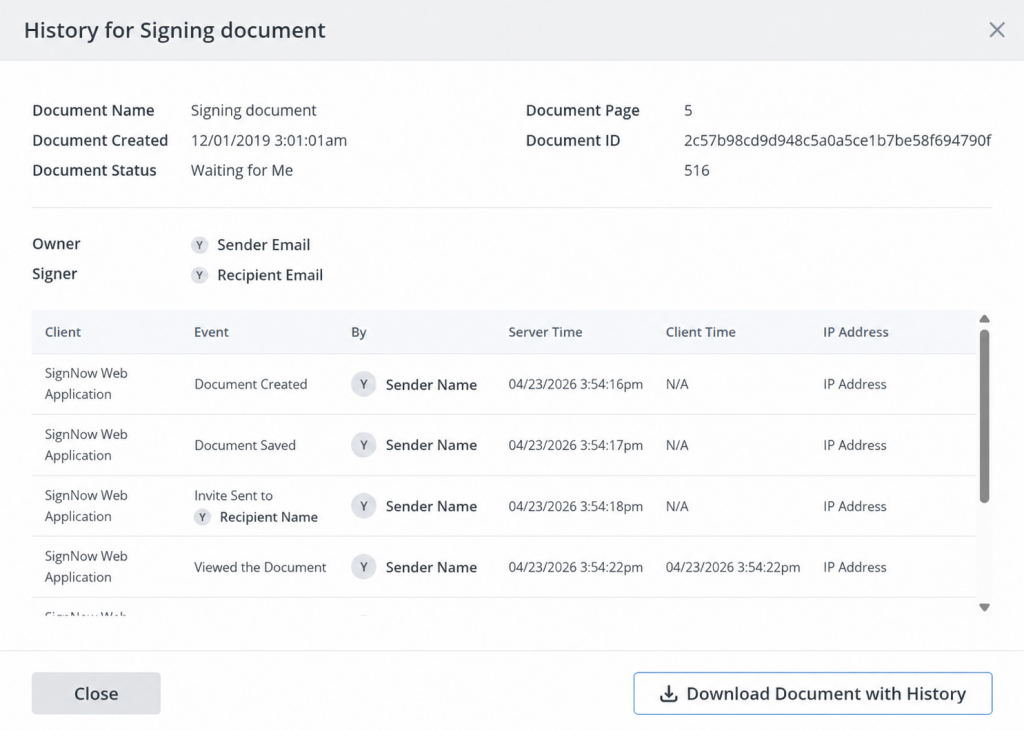
Keeping a signed digital copy with a timestamped SignNow audit trail avoids the “lost original” problem outright. The signed document and the record of who signed it, when, and from where, stay attached to each other. Neither depends on a single paper copy staying in a filing cabinet. In our blog post about eSignature audit trails, you can learn more about the importance of maintaining a detailed record of signer activity and document events.
How to create and sign a promissory note
Creating an enforceable promissory note takes five steps. Draft the terms, add fillable fields, and set the signing order. Then send it for signature and keep the signed copy with its audit trail.
Before you begin, confirm the parties, the loan amount, and the repayment terms. Decide whether the note needs collateral, an interest rate, and a maturity date or demand terms before you start filling anything in.
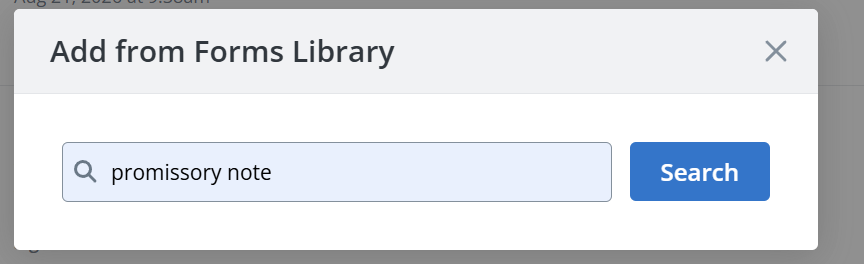
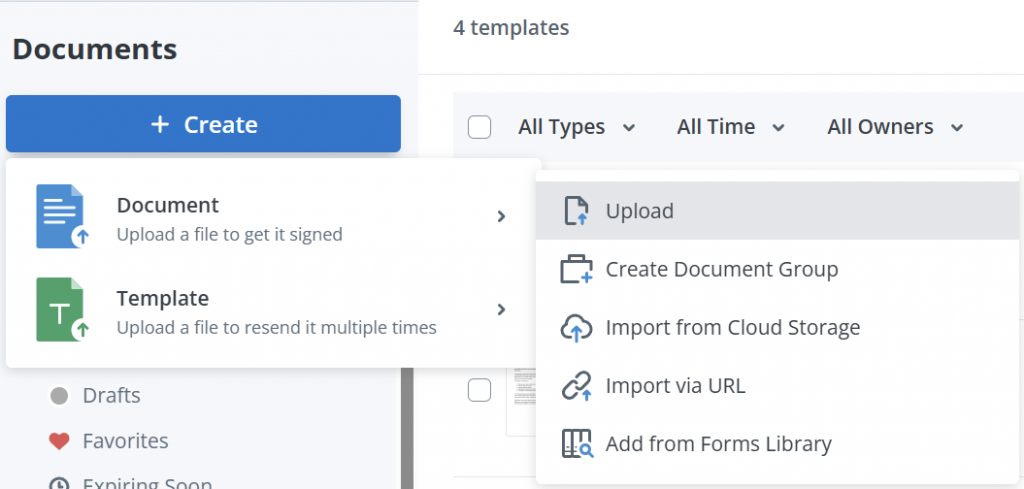
- Start from a template or upload the note. In SignNow, begin from a SignNow promissory note template in the template library. On the dashboard, click Create > Add from Forms Library and type promissory note in the search field.
Or upload an existing loan contract, PDF, or Word document.
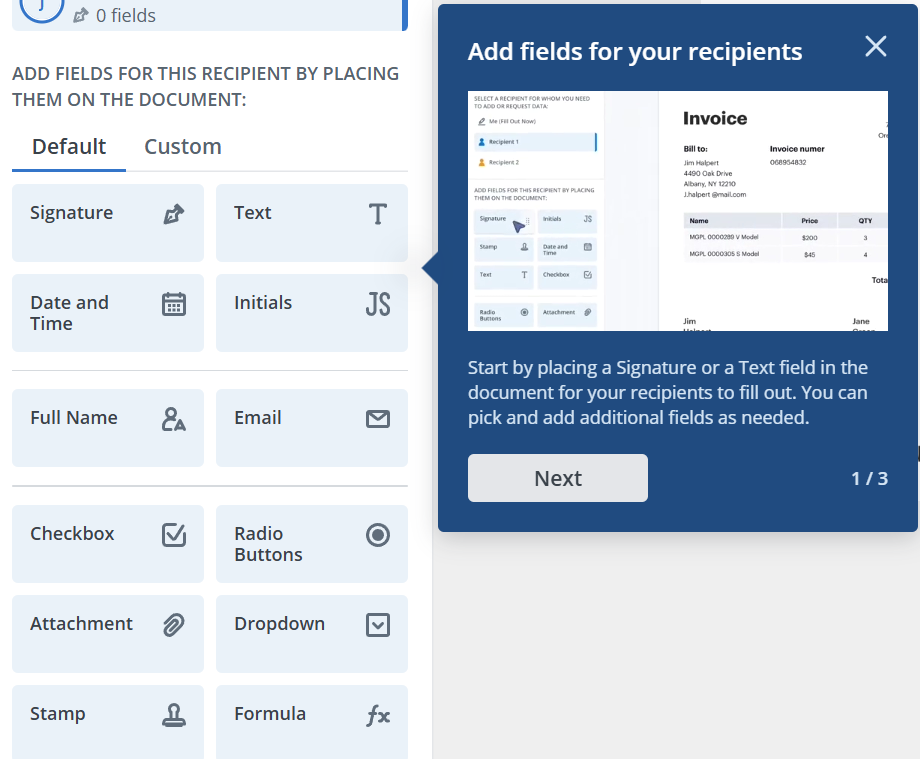
2. Add fillable fields. Use SignNow’s field editor to add fields for the principal amount, interest rate, and payment schedule. Each signer then completes their portion in the right place.
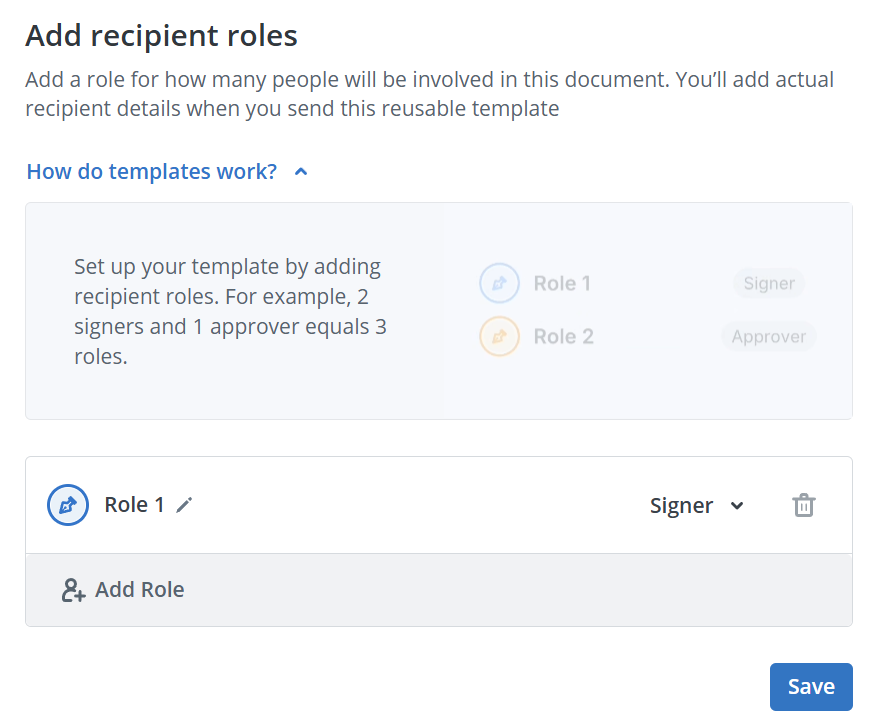
3. Set recipient roles and the signing order. If borrower, lender, and any co-signer need to sign in sequence, set a custom signing order and roles. The document then routes to each party in turn.
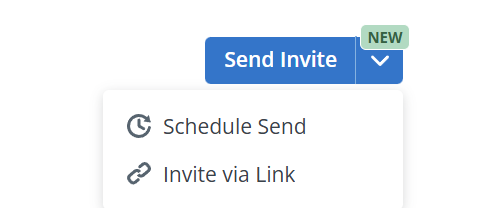
4. Send it for signature. Send the document for eSignature to each party by email, or generate a signing link for in-person signing when both parties are together.
5. Confirm the signed copy and audit trail. Once every party signs, the completed note and its audit trail are stored together. The trail covers signer identity, IP address, and timestamp. That record is what supports enforceability under the ESIGN Act if the note is ever disputed.
A landlord collecting a security deposit repayment note from a tenant can fill in the deposit amount and move-out date as fields on a reusable template. That saves retyping them each time. It is the same kind of document workflow SignNow real estate solutions cover for real estate paperwork generally. A small-business lender extending a short-term loan to a supplier can use the same signing-order step. A guarantor then signs only after the primary borrower. That use case is covered by SignNow financial services solutions.
Fillable fields, custom signing orders, and audit trail logging are available on SignNow’s paid plans. Check current plan details before assuming a specific field type is included in a given tier.
SignNow’s automatic field detection can also scan an uploaded promissory note. It suggests where the amount, date, and signature lines likely belong, which cuts down the manual work in step 2 for a standard layout. It still leaves the final placement and field type to the person preparing the document. A misread field on a legal document is a real cost.
Promissory note vs. loan agreement vs. IOU
A promissory note, loan agreements, and IOUs all record a debt. A promissory note or loan agreement may be enforceable when it meets applicable legal requirements, while an informal IOU often lacks essential repayment terms.
| Document | Enforceability | Typical use |
| Promissory note | Enforceable if signed with required elements | Single-lender loans, business or personal debt |
| Loan agreement | Enforceable; typically more detailed than a note | Larger loans, multiple covenants or conditions |
| IOU | Weak; usually lacks repayment terms | Casual, informal debt tracking |
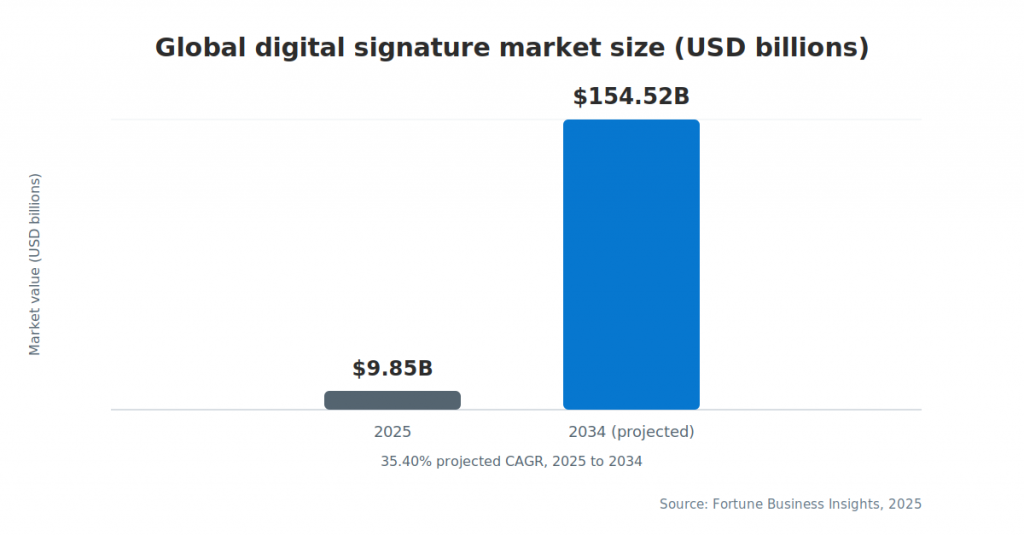
A loan agreement generally covers the same ground as a promissory note but adds more detail, such as representations, covenants, and default conditions. That is why lenders drafting one for a larger deal often start from SignNow loan agreement templates rather than a note template. An IOU, by contrast, is often just an acknowledgment that a debt exists, without the repayment terms that make a note enforceable. More of these documents are signed electronically each year. The digital signature market growth is significant and expected to grow in the near future.
Interest, taxes, and state limits to know
Two rules catch most first-time lenders off guard: usury laws that cap interest rates, and IRS rules that can impute interest on below-market loans.
Usury laws set a maximum interest rate a promissory note can charge, and the cap varies by state. A rate above that limit can make the interest provision, or in some cases the whole note, unenforceable. That is a separate risk from the drafting errors covered earlier under what voids a note.
On the tax side, under IRC Section 7872, a below-market loan can trigger imputed interest for tax purposes. This includes many private and family notes if the stated rate sits below the IRS Applicable Federal Rate. A de minimis exception generally applies to loans under $10,000. That is why many small family loans skip a stated interest rate without tax consequences, while larger ones usually should not.
Neither rule is optional based on how the note is signed. A promissory note signed electronically is still subject to the same state usury cap. It also gets the same IRS imputed-interest treatment as one signed on paper. The signing method changes how the note is executed, not what it promises to pay.
Final thoughts
A well-drafted promissory note gives borrowers and lenders a clear record of the loan amount, repayment terms, and responsibilities. With SignNow, you can prepare the document, add fillable fields, collect eSignatures, and retain the completed note with its audit trail.
Start your SignNow free trial today to create, send, and eSign promissory notes in one streamlined workflow.
Key terms
Acceleration clause: A contract clause letting the lender demand the full remaining balance right after a missed payment, instead of waiting out the original schedule.
ESIGN Act: The federal Electronic Signatures in Global and National Commerce Act. It gives electronic signatures and records the same legal standing as their paper equivalents when specific conditions are met.
Holder in due course: A person or institution that acquires a negotiable instrument in good faith, for value, without notice of a dispute. It generally takes the note free of most defenses the original parties might raise.
Maker: The party who signs a promissory note and promises to repay the amount stated.
Negotiable instrument: A signed document, such as a note meeting UCC Article 3 requirements, that promises payment and can be transferred to another holder.
Payee: The party named in a promissory note to receive payment.
UCC Article 3: The section of the Uniform Commercial Code that governs negotiable instruments, including promissory notes and drafts.
Usury: Charging interest above the maximum rate a state’s law allows, which can make a loan’s interest provision unenforceable.
Frequently asked questions
What is a promissory note in simple terms?
It is a signed, written promise to repay a specific amount of money, either by a set date or on demand from the lender. It differs from a verbal or informal debt because the terms are documented and signed.
Is a promissory note the same as a loan agreement?
No. A loan agreement usually covers more ground, including covenants and default conditions. It is common for larger or more complex loans. A promissory note is typically shorter and focuses on the repayment promise itself.
Does a promissory note have to be notarized?
Not universally. A borrower’s signature is the requirement that applies everywhere. Notarization is optional in most cases but can strengthen the note as evidence in court. When both parties are in the same room, SignNow in-person signing captures a signature on a shared device, without a separate notarization step. State and lender requirements vary.
What makes a promissory note legally binding?
A valid signature, consideration—the value exchanged, usually the loan itself—and delivery of the signed document to the lender. Meet those three, along with the note’s basic required elements, and the note is enforceable.
What voids a promissory note?
A missing signature, unclear or contradictory terms, or an interest rate above the state’s usury limit. A lost original with no valid copy, or an unauthorized change made after signing, can also void it.
How powerful is a promissory note once it is signed?
If it qualifies as a negotiable instrument under UCC Article 3, it can be transferred to a new holder. A holder in due course can often still collect, even if the borrower has an unrelated dispute with the original lender. Enforcement is generally limited to about six years from the due date under UCC 3-118, subject to state variation.
Can a promissory note be signed electronically?
Yes. Under the ESIGN Act and UETA, an electronically signed promissory note carries the same legal weight as one signed on paper. Signer intent, record integrity, and accessibility all still have to be met. A SignNow electronic signature workflow adds fillable fields, a signing order, and an audit trail on top of the signature itself.
Sources
- Cornell Law School Legal Information Institute, “note”
- LegalClarity, “What Are Promissory Notes and How Do They Work?”
- LawDistrict, “What Makes a Promissory Note Invalid?”
- Fortune Business Insights, “Digital Signature Market Report”
- Board of Governors of the Federal Reserve System, “Financial Stability Report”
- Gowling WLG, “Family resemblance: When is a promissory note not a security?”
- Internal Revenue Service, Applicable Federal Rates
- Federal Student Aid, Master Promissory Note
- TL;DR
- What makes a promissory note legally valid
- Types of promissory notes
- Is a promissory note legally binding?
- How enforceable is a promissory note?
- What voids a promissory note?
- Promissory note vs. loan agreement vs. IOU
- Interest, taxes, and state limits to know
- Final thoughts
- Key terms
- Frequently asked questions