











We spread the word about digital transformation
signNow empowers users across every industry to embrace seamless and error-free eSignature workflows for better business outcomes.
completion rate of sent documents
average for a sent to signed document
out-of-the-box integrations
average number of signature invites sent in a week
users in Education industry
clicks minimum to sign a document
API calls a week

Free 7-day trial. Choose the plan you need and try it risk-free.

Honest pricing for full-featured plans. airSlate SignNow offers subscription plans with no overages or hidden fees at renewal.

Enterprise-grade security. airSlate SignNow helps you comply with global security standards.
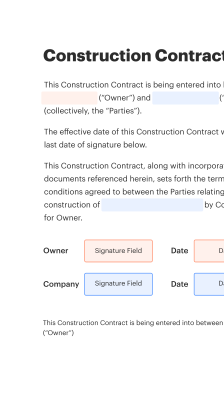

Place electronic signatures and send records in moments instead of hours. Our eSignatures have the identical legal power as wet-ink ones.

Take advantage of the signature tips function and improve your files without any concerns about the safety of your information.

Modify existing forms and save changes, and airSlate SignNow will immediately inform your entire crew that there are updated templates.

Place fillable areas, create or collect electronic signatures, get supplementary documents and payments, and discover different ways to boost your workflows.

Use airSlate SignNow API, the easiest way to create and collect eSignatures. Do so within your CRM systems, on your website, or even in specific apps.

Generate a public link for your template and collect signatures while not having to directly send your document to specific consumer email addresses.
Hoy en día, lo más probable es que no encuentres una organización que no utilice tecnología contemporánea para automatizar el flujo de trabajo. La firma digital ya no es el futuro, sino el presente. Las empresas actuales que utilizan su facturación simplemente no pueden permitirse dejar de lado el software basado en la web que proporciona herramientas superiores de automatización de procesamiento de archivos, como la opción de firma digital vs electrónica.
Cómo manejar la función de firma digital vs electrónica de airSlate SignNow:
-
Después de llegar a nuestro sitio web, inicia sesión o crea tu cuenta si no tienes una, te tomará unos segundos.
-
Subir el documento apropiado o seleccionar uno de tus carpetas de catálogo: Documentos, Archivo, Plantillas.
-
compatibilidad con almacenamiento en la nube, puedes subir rápidamente el documento apropiado desde las nubes preferidas con prácticamente cualquier dispositivo.
-
Tu documento de datos se abrirá en el Editor PDF avanzado donde puedes agregar cambios antes de continuar.
-
Escribe texto, coloca imágenes, incluye anotaciones o campos rellenables para completar más adelante.
-
Usa el botón Mi Firma para firmar tú mismo o incluye Campos de Firma para enviar la solicitud de firma a uno o varios usuarios.
-
Aplica el botón HECHO cuando termines para continuar con la función de firma digital vs electrónica.
La plataforma web de airSlate SignNow es necesaria para aumentar la efectividad y la producción de todos los procesos de trabajo. La firma digital vs electrónica es una de las capacidades que puede ayudar. Usar una aplicación basada en la web hoy en día es realmente una necesidad, no una ventaja competitiva. ¡Pruébalo ahora!
How it works


What is the digital versus electronic
The terms “digital” and “electronic” often create confusion, yet they serve distinct purposes in the context of documents and signatures. A digital document is one that exists in a digital format, typically created and manipulated using software. Electronic documents, on the other hand, refer to any document that is created, stored, or transmitted electronically, which can include digital documents as well as scanned paper documents. Understanding this distinction is crucial when navigating the eSignature process, as it affects how documents are prepared and signed.
How to use the digital versus electronic
Using digital and electronic documents involves specific processes for completion and signing. Digital documents can be filled out directly using software like airSlate SignNow, allowing users to input information, add signatures, and submit forms seamlessly. Electronic documents may require scanning or uploading before they can be signed. With airSlate SignNow, users can easily convert paper documents into electronic formats, enabling them to send, sign, and store documents securely online.
Steps to complete the digital versus electronic
Completing a digital or electronic document involves several straightforward steps:
- Upload or create the document using airSlate SignNow.
- Fill in the required fields, ensuring all information is accurate.
- Add your eSignature by selecting the signature option and placing it in the designated area.
- Review the document for completeness.
- Send the document for signature to other parties, if necessary.
- Once all signatures are obtained, download or store the completed document securely.
Legal use of the digital versus electronic
Both digital and electronic documents hold legal validity in the United States, provided they meet specific criteria outlined in the Electronic Signatures in Global and National Commerce (ESIGN) Act. This legislation ensures that electronic signatures are recognized as legally binding, similar to traditional handwritten signatures. It is essential for users to ensure compliance with state-specific laws and regulations regarding electronic signatures to maintain the enforceability of their documents.
Security & Compliance Guidelines
When handling digital and electronic documents, security and compliance are paramount. Users should ensure that their eSignature platform, such as airSlate SignNow, employs robust encryption and security measures to protect sensitive information. Compliance with regulations such as the General Data Protection Regulation (GDPR) and the Health Insurance Portability and Accountability Act (HIPAA) is also crucial, particularly when dealing with personal or health-related information. Regular audits and updates to security protocols help maintain the integrity of the signing process.
Documents You Can Sign
With airSlate SignNow, users can sign a wide variety of documents electronically. Common examples include contracts, agreements, tax forms, and HR documents. The flexibility of digital and electronic formats allows users to streamline their workflows, reducing the time and effort required to obtain signatures. This capability is particularly beneficial for businesses that rely on quick turnaround times for essential documents.
Sending & Signing Methods (Web / Mobile / App)
airSlate SignNow offers multiple methods for sending and signing documents, accommodating various user preferences. Users can access the platform via web browsers, mobile devices, or dedicated applications. This versatility ensures that documents can be signed anytime and anywhere, making it easier to manage workflows efficiently. Whether on a desktop or mobile device, the process remains user-friendly, allowing for seamless document management.
 Best ROI. Our customers achieve an average 7x ROI within the first six months.
 Scales with your use cases. From SMBs to mid-market, airSlate SignNow delivers results for businesses of all sizes.
 Intuitive UI and API. Sign and send documents from your apps in minutes.
Here is a list of the most common customer questions. If you can't find an answer to your question, please don't hesitate to reach out to us.
Digital signatures use cryptographic techniques to provide a higher level of security and authenticity, while electronic signatures are a broader category that includes any electronic indication of agreement. Understanding the difference between digital versus electronic signatures is crucial for businesses looking to ensure compliance and security in their document processes.
airSlate SignNow offers competitive pricing for both digital and electronic signature solutions, making it accessible for businesses of all sizes. By choosing airSlate SignNow, you can benefit from a cost-effective solution that meets your needs without compromising on features or security, regardless of whether you prefer digital versus electronic signatures.
airSlate SignNow includes a variety of features for both digital and electronic signatures, such as customizable templates, real-time tracking, and secure storage. These features ensure that you can efficiently manage your document signing process, whether you are using digital versus electronic signatures.
Using airSlate SignNow for digital versus electronic signatures streamlines your workflow, reduces turnaround time, and enhances security. The platform's user-friendly interface and robust features make it easy for businesses to adopt and integrate into their existing processes, ultimately improving productivity.
Yes, airSlate SignNow offers seamless integrations with various software applications, enhancing its functionality for both digital and electronic signatures. This allows businesses to connect their existing tools and systems, ensuring a smooth transition and improved efficiency in document management.
Absolutely! airSlate SignNow complies with major legal standards, including the ESIGN Act and UETA, ensuring that both digital and electronic signatures are legally binding. This compliance gives businesses peace of mind when using airSlate SignNow for their document signing needs.
airSlate SignNow prioritizes security for both digital and electronic signatures by employing advanced encryption and authentication methods. This ensures that your documents are protected against unauthorized access, making it a reliable choice for businesses concerned about security.




airSlate SignNow is committed to protecting your sensitive information by complying with global industry-specific.

Todo su negocio gana con software de firma electrónica. Genere una firma electrónica única e impulse los flujos de trabajo de sus documentos.


Cómo completar y firmar un archivo en línea
¿Entonces, necesitas firmar un documento en línea? Impulsa tu proceso con airSlate SignNow, una solución perfecta para el tiempo perdido, la seguridad arriesgada y los procesos ineficientes. Genera tus firmas en línea de tres maneras posibles: dibujar, escribir o subir una imagen de una firma manuscrita. firma digital vs electrónica con facilidad.
Sigue las pautas paso a paso para la firma digital vs electrónica en línea:
- Sube un documento.
- Una vez que se haya subido, se abrirá en el editor en línea.
- Selecciona Mi firma.
- Elige una de las tres opciones para generar una firma: dibujar, escribir o subir una imagen de una manuscrita.
- Una vez que crees una firma, haz clic en Ok.
- Termina el proceso haciendo clic en Hecho.
airSlate SignNow admite casi todos los formatos: PDF, Word, etc. Además de firmar un documento, puedes completarlo agregando una variedad de campos: texto, fecha, desplegable. Envía un documento para firmar por correo electrónico, SMS o con un enlace público. Configura Bots que recordarán a un firmante verificar el archivo y notificarán a un remitente tan pronto como esté validado. firma digital vs electrónica de manera efectiva de inmediato.
Solución confiable de eSignature
Explore cómo la plataforma signNow eSignature ayuda a las empresas a tener éxito. Escuche a usuarios reales y lo que más les gusta de la firma electrónica.


Find everything you need to know about electronic signatures. We've collected all the best tips and step-by-step instructions for working with eSignatures in a single place.

Descubre por qué la verificación de firmas electrónicas es tan importante y aprende cómo hacerlo con software especializado.

Aprende cómo acelerar las operaciones inmobiliarias, concluir acuerdos en unos minutos desde cualquier lugar y en cualquier dispositivo.

Ahorra tiempo a tus destinatarios con la opción de autocompletar de airSlate SignNow para campos similares. Aprende cómo configurar fácilmente la finalización automática de datos en documento
Dec 11, 2020 — Digital signature – An electronic signature based upon cryptographic methods of originator authentication, computed by using a set of rules ...
May 8, 2020 — A digital signature is an electronic signature captured through an eSignature software using special encryption. This cryptographic operation ...
Feb 1, 2021 — Digital signatures create a virtual fingerprint that is unique to a person or entity and are used to identify users and protect information in ...
