Añadir botones de opción a su documento con signNow es sencillo y seguro. Esta solución de firma electrónica cumple con las normativas y es accesible para todos.
Qué significa añadir botones de opción a un documento
Añadir botones de opción a un documento permite integrar campos mutuamente excluyentes que obligan al firmante a elegir una sola opción entre varias. En el contexto de firmas electrónicas, estos controles facilitan la captura de preferencias, consentimientos y respuestas estructuradas dentro del flujo de firma, manteniendo la integridad del formulario. La función suele incluir agrupado por nombre, propiedades de visualización y opciones predeterminadas, y se registra en la auditoría para validación posterior en procesos regulatorios y de control interno.
Por qué usar botones de opción en formularios electrónicos
Los botones de opción reducen errores de datos y garantizan respuestas únicas cuando se requieren decisiones exclusivas, mejorando la calidad de la información capturada.
Retos comunes al implementar botones de opción
Diseño incorrecto del grupo puede permitir selecciones múltiples o valores inconsistentes en distintos dispositivos.
Falta de etiquetado claro confunde al firmante y genera respuestas erróneas o no válidas.
Sin validación previa, los formularios pueden enviarse incompletos o con valores por defecto inapropiados.
Integración con exportación de datos mal configurada provoca mapeo erróneo en sistemas downstream.
Perfiles de usuario que interactúan con botones de opción
Administrador
El administrador diseña plantillas, configura grupos de botones y define propiedades predeterminadas. Supervisa permisos y revisa la auditoría para garantizar conformidad con políticas internas y requisitos legales en transacciones electrónicas.
Firmante
El firmante selecciona exactamente una opción por grupo durante el proceso de firma. Su interacción queda registrada con sello de tiempo y metadatos para validación futura en auditorías o reclamaciones legales.
Quién utiliza botones de opción en documentos
Organizaciones que requieren respuestas exclusivas y auditablemente vinculadas a firmas emplean botones de opción en plantillas y flujos.
Departamentos de recursos humanos para acuerdos y selección única de beneficios.
Equipos de cumplimiento que registran consentimientos específicos por política.
Ventas y operaciones para elegir una sola opción de paquete o servicio.
Estos casos de uso muestran cómo los botones de opción fomentan la coherencia de los datos y simplifican el procesamiento posterior.
prepárese para obtener más ventajas
Elija una solución mejor
Integraciones clave y plantillas para botones de opción
Funciones y compatibilidades que facilitan el uso de botones de opción en flujos documentales y sistemas conectados.
Integración con Google Docs
Permite convertir un documento de Google en plantilla con campos de botón de opción definidos, conservando agrupaciones y etiquetas para mantener consistencia al generar peticiones de firma.
Conexión CRM
Sincroniza respuestas únicas con campos de CRM, mapeando selecciones a propiedades de cliente para automatizar procesos comerciales y evitar entrada manual.
Sincronización Dropbox
Guarda copias finales y metadatos en carpetas designadas, incluyendo valores seleccionados por botones de opción para auditoría y archivado.
Plantillas reutilizables
Crear plantillas con grupos predefinidos de botones de opción acelera envíos recurrentes y reduce errores en la configuración de campos.
Cómo funcionan los botones de opción en el flujo de firma
Descripción del comportamiento de los botones de opción desde el diseño hasta el registro en la auditoría del documento.
Diseño: Definir opciones y etiquetas claras.
Asignación: Vincular campo a destinatario cuando aplique.
Interacción: Usuario selecciona una opción por grupo.
Registro: Selección queda en el registro de auditoría.
Recoge firmas
24x
más rápido
Reduce los costos en
$30
por documento
Ahorra hasta
40h
por empleado / mes
Guía rápida: insertar botones de opción en tu documento
Pasos esenciales para añadir y configurar botones de opción dentro de una plantilla o documento antes del envío.
01
Abrir documento: Cargar o seleccionar plantilla existente.
02
Seleccionar campo: Elegir control 'Radio' o 'Botón de opción'.
03
Configurar grupo: Asignar nombre de grupo coherente.
04
Validar: Probar selección en vista previa.
prepárese para obtener más ventajas
Por qué elegir airSlate SignNow
Versión de prueba gratuita de 7 días. Elija el plan que necesita y pruébelo sin riesgos.
Precios honestos para planes completos. airSlate SignNow ofrece planes de suscripción sin sobrecargos ni comisiones ocultas al renovar.
Seguridad de grado empresarial. airSlate SignNow le ayuda a cumplir con los estándares de seguridad globales.
Configuración típica de flujo para botones de opción
Valores de configuración recomendados para automatizar y gestionar formularios que utilizan botones de opción en procesos repetitivos.
Setting Name
Configuration
Nombre de grupo estándar
policy_choice
Validación requerida
Sí
Recordatorio automático
48 horas
Exportación de respuestas
CSV/JSON
Requisitos por plataforma para usar botones de opción
Verifique compatibilidad del navegador o aplicación móvil y la versión mínima necesaria antes de diseñar formularios con botones de opción.
Navegadores:Chrome, Edge, Safari
Sistemas operativos:Windows, macOS, iOS
Aplicaciones móviles:iOS y Android
Para implementaciones empresariales, confirme integraciones con sistemas de gestión documental y APIs, y realice pruebas en entornos de staging para validar comportamiento en distintos clientes.
Controles de seguridad relevantes
Cifrado en tránsito:TLS 1.2+
Cifrado en reposo:AES-256
Acceso basado en roles:MFA opcional
Registro de auditoría:Sello de hora
Integridad de campos:Hash firmado
Protección de datos:Controles DLP
Casos de uso reales para botones de opción
Ejemplos prácticos muestran cómo los botones de opción simplifican decisiones únicas y crean registros auditablemente fiables.
Selección de plan de beneficios
Un departamento de recursos humanos distribuye un formulario de inscripción anual con botones de opción agrupados para plan médico y dental, asegurando que cada empleado seleccione solo una alternativa
Opciones agrupadas por tipo de beneficio
Facilita la exportación a sistemas de nómina
Resultando en datos consistentes para la administración de beneficios y reducción de llamadas al soporte.
Consentimiento informado clínico
Una clínica envía formularios de consentimiento con preguntas de sí/no y opciones mutuamente excluyentes antes de una intervención, permitiendo al paciente aceptar o rechazar procedimientos específicos
Campos validados antes de envío
Integración con el expediente electrónico
Resultando en trazabilidad completa y cumplimiento con requisitos de auditoría clínica.
Buenas prácticas para configurar botones de opción
Recomendaciones concretas para asegurar precisión, cumplimiento y usabilidad al usar botones de opción en documentos digitales.
Etiquetas claras y concisas
Use texto simple y descriptivo para cada opción; evite abreviaturas ambiguas y asegure que el significado sea evidente sin contexto adicional, lo que reduce consultas y correcciones posteriores.
Agrupamiento coherente por nombre
Asigne un nombre lógico a cada grupo de botones de opción para garantizar que solo se acepte una selección por conjunto y que la exportación de datos reconozca correctamente la relación.
Validación y pruebas antes del envío
Verifique en la vista previa y con destinatarios de prueba que las selecciones se registran y se muestran correctamente en diferentes dispositivos y navegadores para evitar fallos en producción.
Incluir instrucciones breves
Añada una línea explicativa sobre cómo seleccionar opciones cuando el contexto podría ser confuso; esto mejora la tasa de respuestas válidas y reduce rechazos.
Asegúrese de que todos los botones que deben ser mutuamente excluyentes compartan el mismo nombre de grupo. Revise la propiedad de 'group name' en el editor y vuelva a publicar la plantilla para que la agrupación se aplique a los destinatarios.
Compruebe la configuración de exportación y el mapeo de campos; confirme que cada botón tiene un valor asignado y que la opción está marcada como exportable en la plantilla para incluirla en CSV o JSON.
Verifique compatibilidad del navegador móvil y actualice la aplicación si corresponde. Pruebe el formulario en iOS y Android y ajuste el tamaño de campo y las etiquetas para mejorar la visualización en pantallas pequeñas.
Use reglas de condicionalidad en la plantilla que muestren u oculten campos basados en la selección del botón. Configure la lógica en el editor y valide con escenarios de prueba antes de enviar.
Revise el registro de auditoría asociado al documento; la plataforma registra la elección, el usuario y el sello de tiempo. Use la exportación de historial para revisiones internas o soporte legal.
No configure opciones predeterminadas para grupos donde se requiera una decisión explícita. Si se usan predeterminados, indique claramente al firmante y valide la selección al enviar.
Comparativa: soporte de botones de opción entre proveedores
Comparación de disponibilidad y capacidades básicas de campos de botón de opción en plataformas de firma electrónica populares.
Comparativa de precios y niveles para funciones de formulario
Resumen de planes iniciales y presencia de funciones relevantes para formularios con botones de opción en proveedores reconocidos.
Criteria
signNow (Recommended)
DocuSign
Adobe Sign
HelloSign
PandaDoc
Plan mensual inicial
Desde $8
Desde $10
Desde $9
Desde $15
Desde $19
Campos de formulario avanzados
Incluido
Incluido
Incluido
Incluido
Incluido
Integración CRM
Salesforce, HubSpot
Salesforce
Salesforce
HubSpot
Salesforce
API accesible
Sí
Sí
Sí
Sí
Sí
Soporte empresarial
Opcional
Incluido
Opcional
Opcional
Incluido
Cómo agregar botones de opción a un documento con airSlate SignNow
Crea formularios rellenables con preguntas de opción múltiple y permite a los destinatarios seleccionar una opción de una lista usando grupos de botones de opción.
Agrega un grupo de botones de opción en un clic
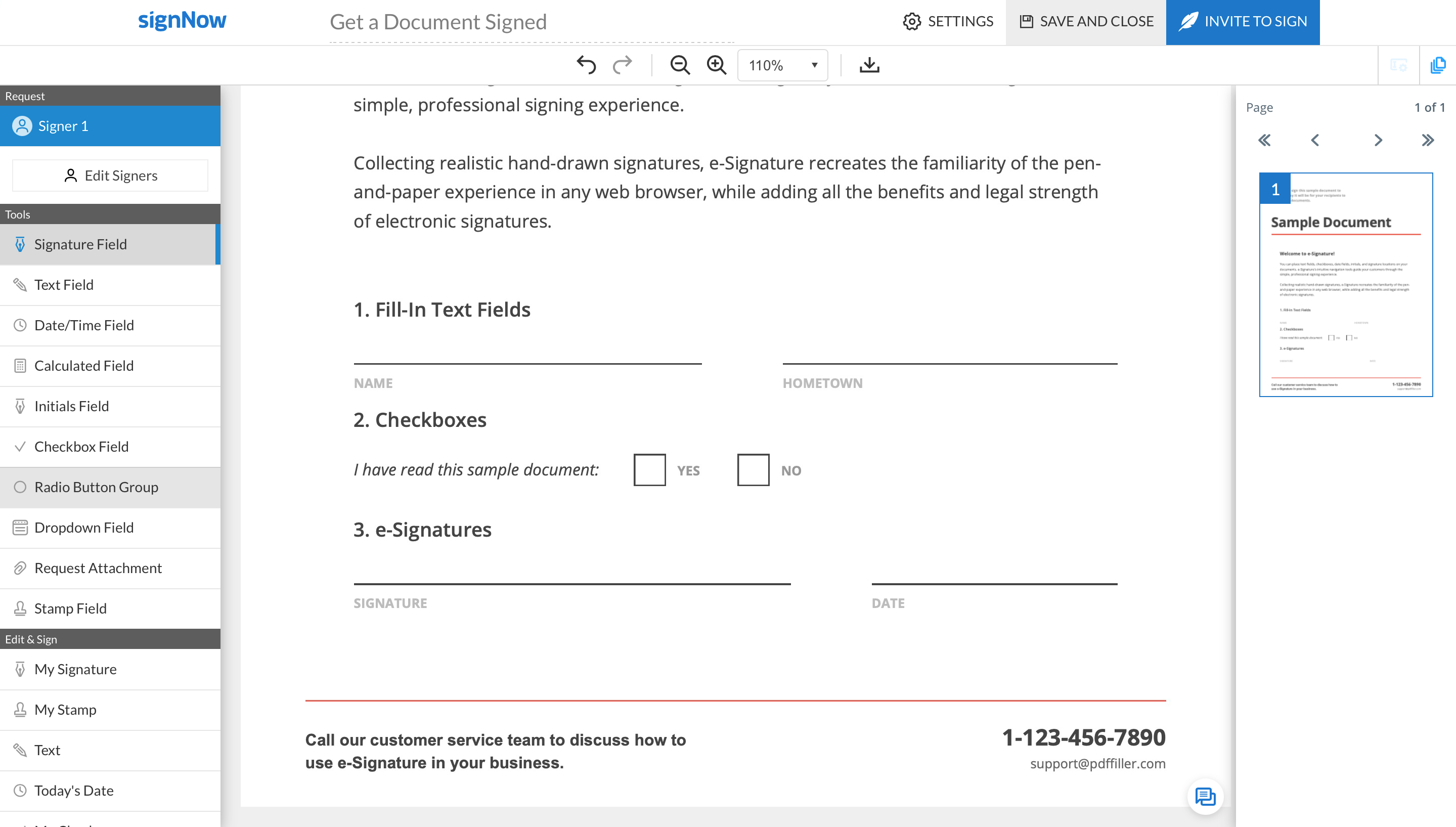
Abre un documento en el editor, selecciona Grupo de botones de opción en la barra de herramientas a la izquierda y haz clic en cualquier parte del documento.
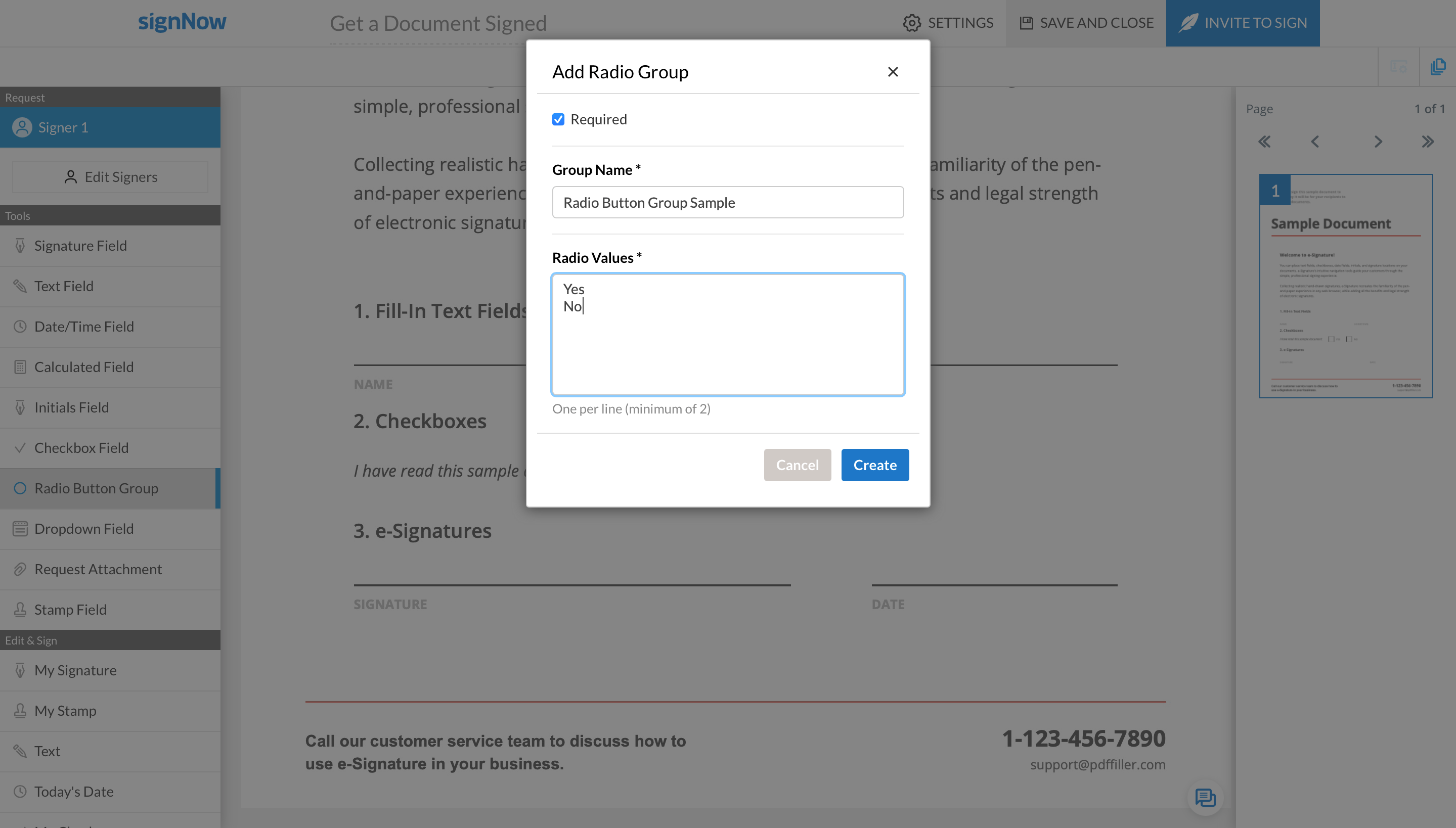
En la nueva ventana emergente, ingresa el nombre de tu grupo de botones de opción y proporciona los valores requeridos en el cuadro a continuación. Luego, haz clic en Crear.
Luego, agrega campos rellenables estándar al documento. Enviar invitaciones en masa requiere que tus documentos tengan al menos un campo rellenables. Haz clic en Listo una vez terminado.
Ajusta los botones de opción al contenido del documento
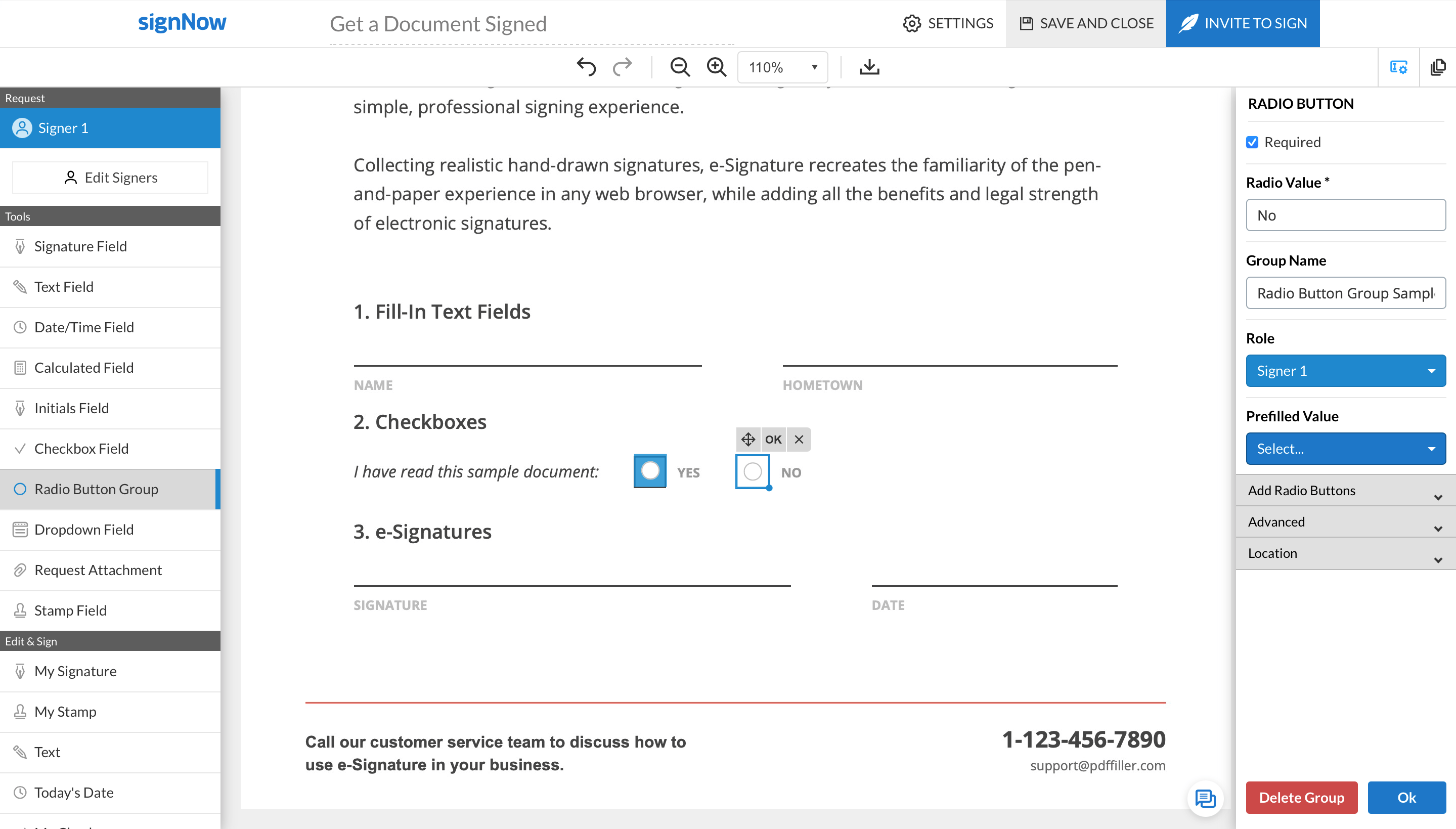
Una vez que los botones de opción aparecen en tu documento, puedes ajustar su tamaño y posición. Para mover un botón de opción por la página, arrástralo y suéltalo en la ubicación deseada. Para cambiar el tamaño, arrastra el punto de anclaje de un botón de opción.
También puedes configurar los grupos de botones de opción (por ejemplo, cambiar valores, establecer valores prellenados, asignar roles de firmantes) usando el menú a la derecha.
Utilizamos cookies para mejorar la seguridad, personalizar la experiencia del usuario, potenciar nuestras actividades de marketing (incluida la colaboración con socios terceros o 3rd\u00a0party) y para otros usos comerciales. Haz clic\u00a0aquí\u00a0para leer nuestra Política\u00a0de cookies. Al hacer clic en “Aceptar“ aceptas el uso de cookies. ... Leer másLeer menos