Rellena Rápidamente Documentos Usando Campos De Texto Prellenados

Prellenar automáticamente copias de documentos al enviar invitaciones de firma en masa desde una sola plantilla o compartir enlaces de invitación con tus firmantes.

Solución de firma electrónica galardonada

What it means to add smart fields to your template

Adding smart fields to your template means embedding interactive elements that automatically collect, validate, and route data during an electronic signing process. Smart fields include text inputs with validation rules, date pickers, checkboxes, dropdowns, calculated fields, and conditional logic that show or hide content based on prior responses. In a template context, these fields persist across uses so every new document prepopulates required locations, reduces manual edits, and enforces consistent data capture. Implemented correctly, smart fields reduce errors, speed completion, and integrate with downstream systems through exports or API calls.

Why add smart fields to your template

Smart fields standardize data capture, reduce manual entry, and improve form accuracy across repeated templates.

Why add smart fields to your template

Common implementation challenges

  • Incorrect field types reduce validation effectiveness and require manual corrections after signing.
  • Overcomplicated conditional logic can confuse signers and increase abandonment rates on mobile devices.
  • Inconsistent naming or mapping of fields prevents reliable data export and CRM synchronization.
  • Failure to test templates across platforms leads to layout shifts and misaligned fields during signing.

Roles involved with template smart fields

Template Administrator

A Template Administrator designs and maintains templates, defines field types and validation rules, and manages template versions across teams. They coordinate with compliance and IT to ensure fields meet data capture and export requirements and that templates align with privacy controls.

End Signer

An End Signer interacts with smart fields to provide required inputs, selections, and signatures. Their experience depends on clear labeling, accessible field formats, and mobile-friendly layouts to minimize friction during completion.

Who typically uses smart fields in templates

Organizations across legal, HR, sales, and healthcare routinely use smart fields to capture structured data reliably.

  • Sales teams use smart fields for quotes, pricing, and auto-calculated totals to speed deals.
  • HR departments capture candidate details, signatures, and auto-validated dates for onboarding forms.
  • Healthcare and benefits admins collect patient or enrollee data while preserving conditional privacy fields.

Proper role alignment and training ensure templates remain accurate, auditable, and compliant with recordkeeping policies.

Advanced smart field capabilities to consider

Advanced capabilities extend field functionality, enable stronger validation, and support integrations with enterprise systems.

Dynamic lists

Populate dropdown values dynamically from external data sources or API calls so signers select from current product, policy, or pricing lists without manual template edits.

Server-side calculations

Perform complex calculations on the server to ensure consistent results and prevent client-side manipulation when computing financial totals or scores.

Field mapping

Map captured field values to CRM or ERP fields to maintain data integrity and simplify downstream processing without manual copy-paste steps.

Pre-validation hooks

Invoke validation checks against external services, such as identity or policy databases, before allowing final submission to reduce invalid records.

Conditional attachments

Require file uploads only when certain options are selected, ensuring necessary documentation is captured only where applicable.

Role-based editing

Limit which roles can edit or override field values to preserve auditability and reduce unauthorized template changes.

prepárate para obtener más

Elige una mejor solución

Key tools for effective smart field templates

These core tools simplify building templates that collect accurate data, enforce rules, and integrate with back-end systems.

Field validation

Define character limits, numeric ranges, date formats, and regular expressions to prevent invalid entries and ensure exported data conforms to downstream system requirements for imports or API consumption.

Conditional logic

Show or hide fields based on signer responses so templates adapt to each signer’s context, reducing clutter and preventing irrelevant questions from appearing during completion.

Calculated fields

Use arithmetic and lookup functions to compute totals, taxes, or custom values automatically, removing manual calculations and ensuring consistency across repeated transactions.

Pre-fill and auto-fill

Populate fields from CRM records, user profiles, or prior responses to reduce signer effort and lower data entry errors while preserving an editable option when appropriate.

How smart fields function during signing

This outlines the runtime behavior of smart fields from sender setup to signer completion and data export.

  • Template preparation: Sender places and names fields with rules.
  • Signer interaction: Signers complete validated fields on any device.
  • Conditional display: Fields appear based on prior inputs.
  • Data export: Captured values export to CSV or API.
Recoger firmas
24x
más rápido
Reduce los costos en
$30
por documento
Guardar hasta
40h
por empleado / mes

Quick setup: add smart fields to your template

Follow these practical steps to add smart fields to an existing template and verify functionality before deployment.

  • 01
    Open template: Select the template in the document library.
  • 02
    Add fields: Drag and drop text, date, and checkbox fields.
  • 03
    Configure rules: Set validation, required status, and conditional logic.
  • 04
    Test: Preview the signer flow and export results.

Detailed steps to test smart fields in a template

Use this checklist to validate field behavior, data exports, and signer experience before broad distribution.

01

Preview mode:

Simulate signer view and interactions.
02

Negative testing:

Enter invalid data to confirm validations.
03

Conditional flow check:

Verify show/hide triggers for all branches.
04

Export validation:

Export fields to confirm correct mapping.
05

Mobile validation:

Test on iOS and Android devices.
06

Accessibility check:

Confirm keyboard and screen reader use.
prepárate para obtener más

Por qué elegir airSlate SignNow

  • Prueba gratuita de 7 días. Elige el plan que necesitas y pruébalo sin riesgos.
  • Precios honestos para planes completos. airSlate SignNow ofrece planes de suscripción sin cargos adicionales ni tarifas ocultas al renovar.
  • Seguridad de nivel empresarial. airSlate SignNow te ayuda a cumplir con los estándares de seguridad globales.
illustrations signature

Typical workflow settings for smart field templates

Recommended configuration values for common workflow settings when deploying smart field templates.

Setting Name Configuration
Reminder Frequency 48 hours
Field Detection Automatic
Auto-fill Rules User profile
Routing Order Sequential
Retention Period 7 years

Supported platforms and access considerations

Ensure the platform and devices you plan to use support interactive form fields and the required authentication methods.

  • Desktop browsers: Chrome, Edge, Safari
  • Mobile apps: iOS and Android
  • APIs and SDKs: REST API access

Confirm browser versions and app updates, and validate API credentials with IT before deploying templates at scale to avoid compatibility or access issues.

Security and compliance elements for smart fields

Data encryption: TLS in transit
At-rest protection: AES-256 encryption
Access controls: Role-based access
Audit logging: Immutable trail
Authentication options: Multi-factor support
Privacy adherence: HIPAA and FERPA options

Industry examples using smart fields

Two concise case examples show how smart fields improve accuracy and processing speed in common workflows.

Sales quote template

A regional sales team standardizes quotes using calculated price fields and dropdowns for product options

  • Auto-calculation of taxes and discounts
  • Faster approvals and fewer pricing errors

Resulting in shorter sales cycles and cleaner CRM records through direct field mapping and automated exports

Patient intake form

A medical clinic creates a patient intake template with conditional insurance and consent fields

  • Data validation for dates and policy numbers
  • Conditional privacy fields hide sensitive sections when not applicable

Leading to compliant data capture, reduced intake time, and consistent records for billing and audit

Best practices when you add smart fields to your template

Follow these practices to improve reliability, signer experience, and integration outcomes for templates with smart fields.

Use clear field labels and helper text
Provide concise labels and brief helper text where necessary to explain expected input formats and examples. Clear labeling reduces signer errors and support requests while maintaining accessibility for all users.
Limit required fields to essentials
Mark only truly necessary fields as required to reduce friction. Excessive required fields increase abandonment, so balance compliance needs with user experience to preserve completion rates.
Test across devices and browsers
Validate templates on desktop, tablet, and mobile to confirm field alignment, responsive behavior, and conditional logic. Testing prevents layout issues and ensures consistent data capture across platforms.
Version and document templates
Maintain version history for templates and communicate changes to teams. Versioning supports audits, rollbacks, and traceability for compliance and operational continuity.

FAQs About adding smart fields to your template

Common questions about setup, behavior, and integration for smart fields and practical answers for troubleshooting and policy alignment.

Feature availability: smart fields comparison

A concise availability comparison for core smart field capabilities across two common eSignature providers.

Feature signNow (Recommended) DocuSign
Smart field auto-detection
Conditional logic support
Server-side calculations Limited
HIPAA-compliant option
prepárate para obtener más

¡Obtenga firmas legalmente vinculantes ahora!

Timing and retention considerations for smart field templates

Set clear rules for response deadlines, reminders, and document retention to align with business SLAs and records management policies.

Response deadline window:

7–30 days typical

Reminder cadence:

48 hours then weekly

Signature completion threshold:

Auto-expire after 90 days

Retention schedule:

Retention per policy

Archive review interval:

Annual verification

Risks of poorly configured smart fields

Data loss: Corrupted exports
Noncompliance: Regulatory fines
Legal disputes: Signature challenges
Operational delays: Rework needed
Security exposure: Unauthorized access
User frustration: Abandoned forms

Pricing and plan comparison for smart field capabilities

High-level plan and capability comparison across five vendors to help understand baseline costs and included features related to templates and smart fields.

Plan / Metric signNow (Recommended) DocuSign Adobe Sign Dropbox Sign PandaDoc
Starting Price From $8/mo From $10/mo From $9.99/mo From $15/mo From $19/mo
Free Trial Yes Yes Yes Yes Yes
API Included Yes Yes Yes Yes Yes
HIPAA Option Available Available Available Available Available
Template Fields Unlimited Tiered Tiered Tiered Tiered
Bulk Send Limit Per plan Per plan Per plan Per plan Per plan

Cómo prellenar instantáneamente lotes de documentos con campos de texto prellenados

Ahorra tiempo y minimiza errores de entrada de datos al enviar invitaciones de firma en masa importando automáticamente datos desde un archivo CSV en los campos rellenables de una plantilla. También puedes prellenar campos añadiendo parámetros específicos a un enlace de invitación.

Agregar campos de texto prellenados a una plantilla

Crea una plantilla y ábrela en el editor. En la barra de herramientas superior, selecciona Campos de texto prellenados y colócalos en cualquier parte del documento.
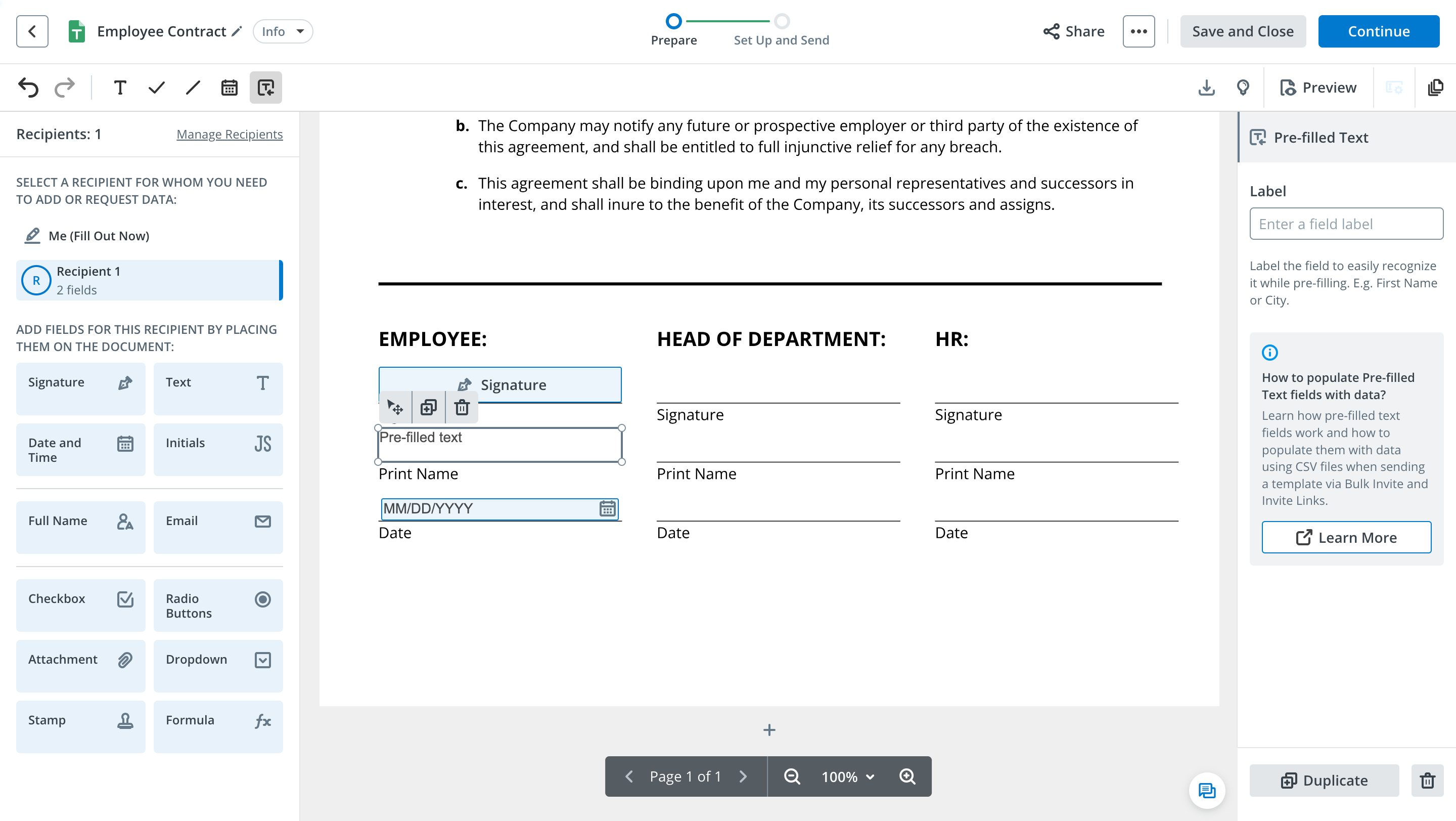
ilustración-guía-llenado

Crear un archivo CSV

Prepara un archivo CSV del cual exportar datos. Asegúrate de que contenga una columna con las direcciones de correo electrónico de tus firmantes y otra columna con la información que deseas exportar (por ejemplo, “Nombre del empleado”).

ilustración-guía-llenado

Etiquetar correctamente los campos de texto prellenados

Ingresa una etiqueta de campo en la barra lateral derecha, que aparece una vez que seleccionas cualquier campo de texto prellenado. Asegúrate de que tu etiqueta coincida con el nombre de la columna correspondiente en tu archivo CSV. Luego, guarda y cierra tu plantilla.
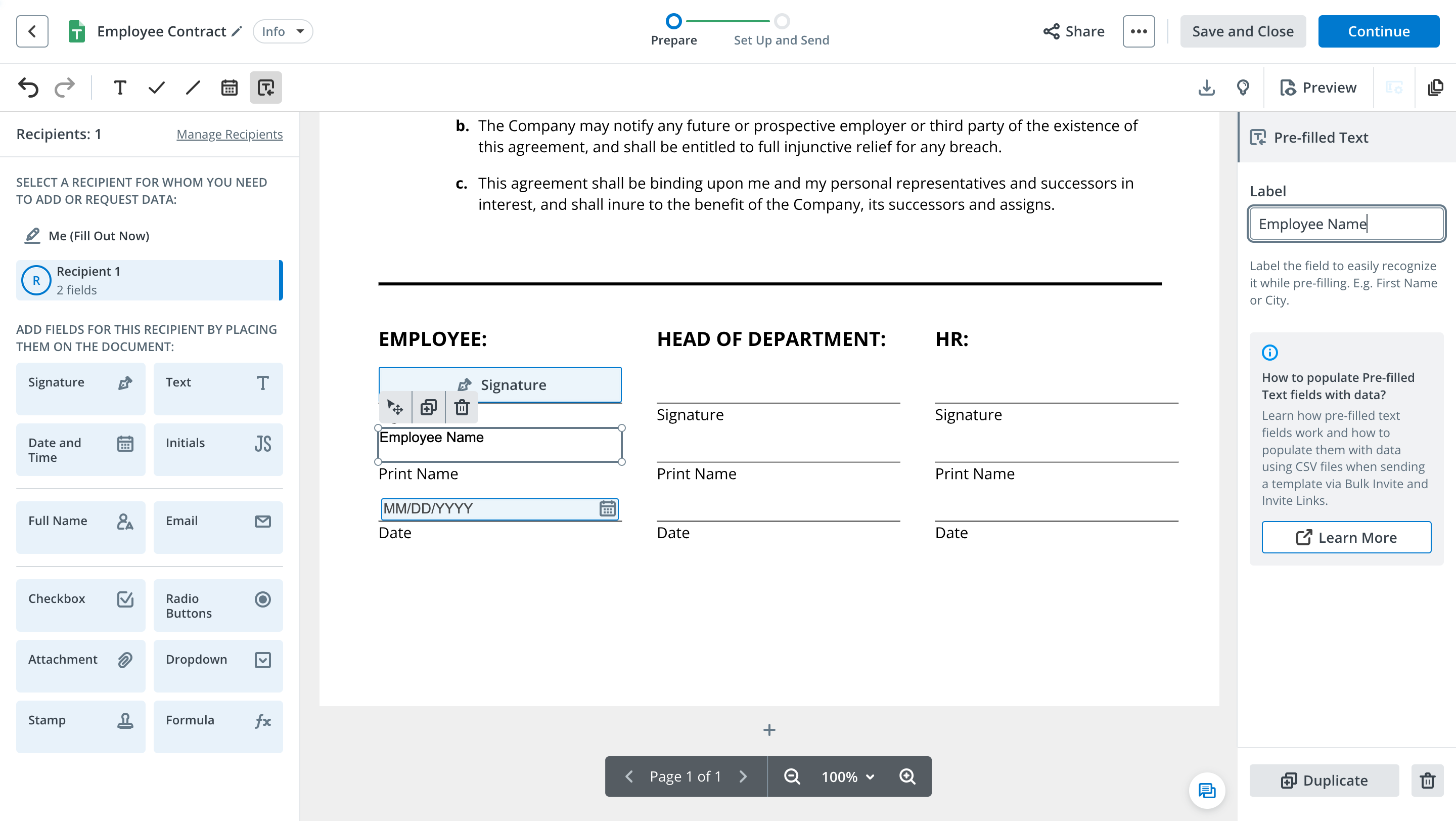
ilustración-guía-llenado

Preparar una invitación de firma en masa

Regresa a la carpeta Plantillas, haz clic en Más junto a tu plantilla y selecciona Invitación en masa en el menú desplegable.
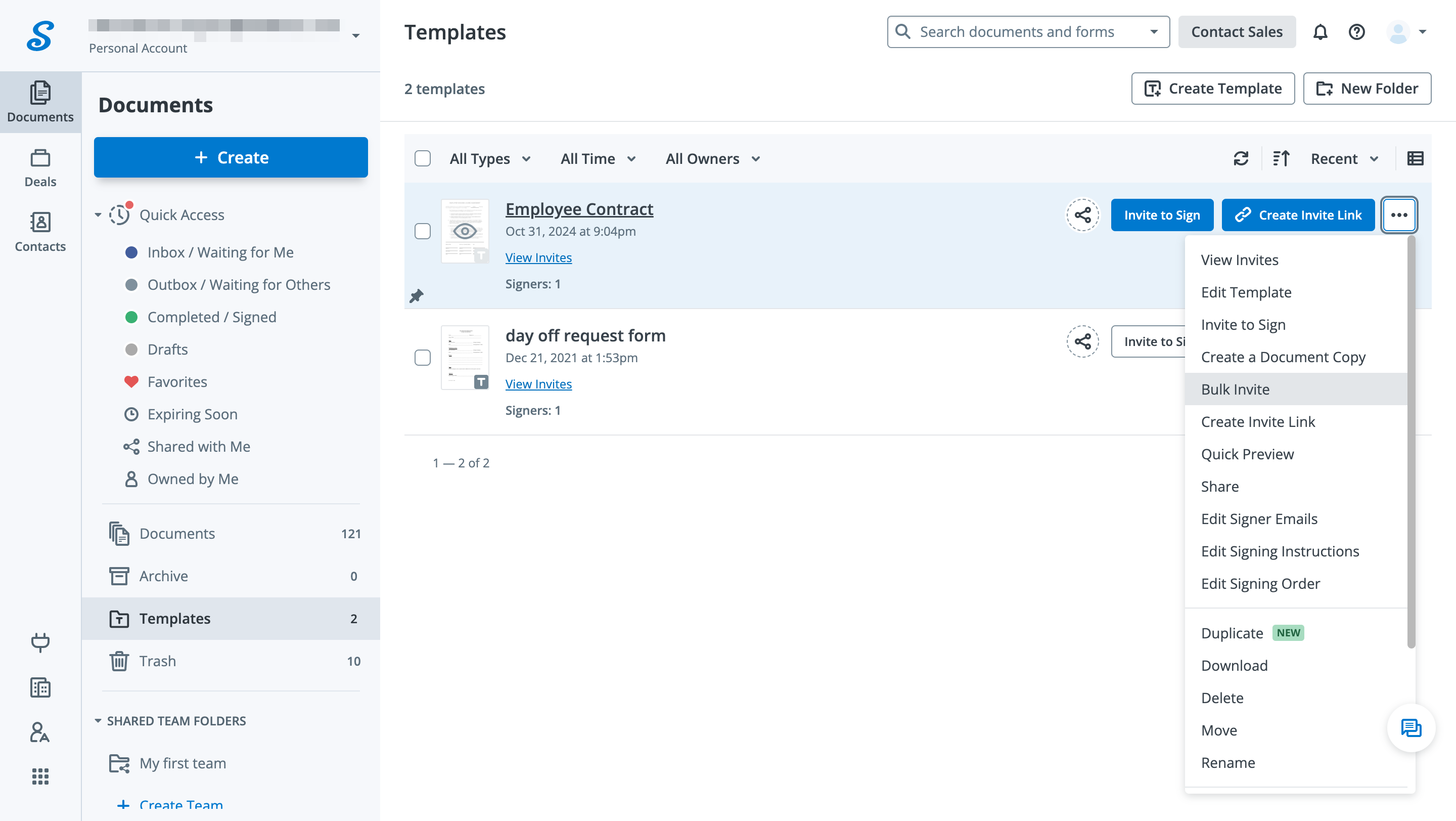
ilustración-guía-llenado

Sube tu archivo CSV

En la ventana emergente Invitación en masa, sube tu archivo CSV y asigna columnas a los respectivos campos de texto prellenados, que son reconocibles por sus etiquetas. Cuando termines, haz clic en Hecho.
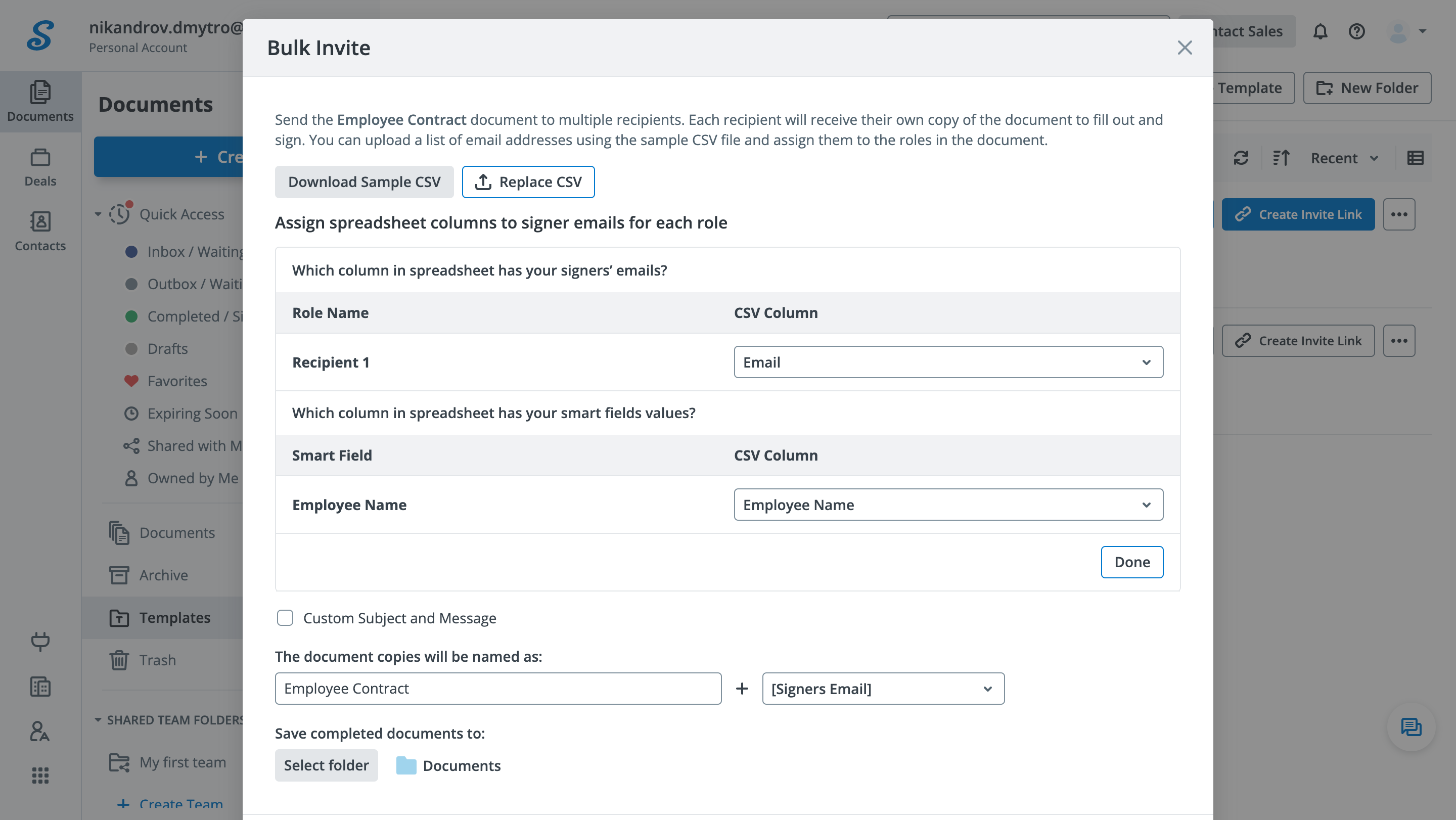
ilustración-guía-llenado

Enviar documentos para firma

airSlate SignNow extraerá datos de tu CSV y los coincidirá con los campos de texto prellenados en tu plantilla. Una vez que hagas clic en Enviar invitaciones, tus firmantes recibirán copias prellenadas del documento.
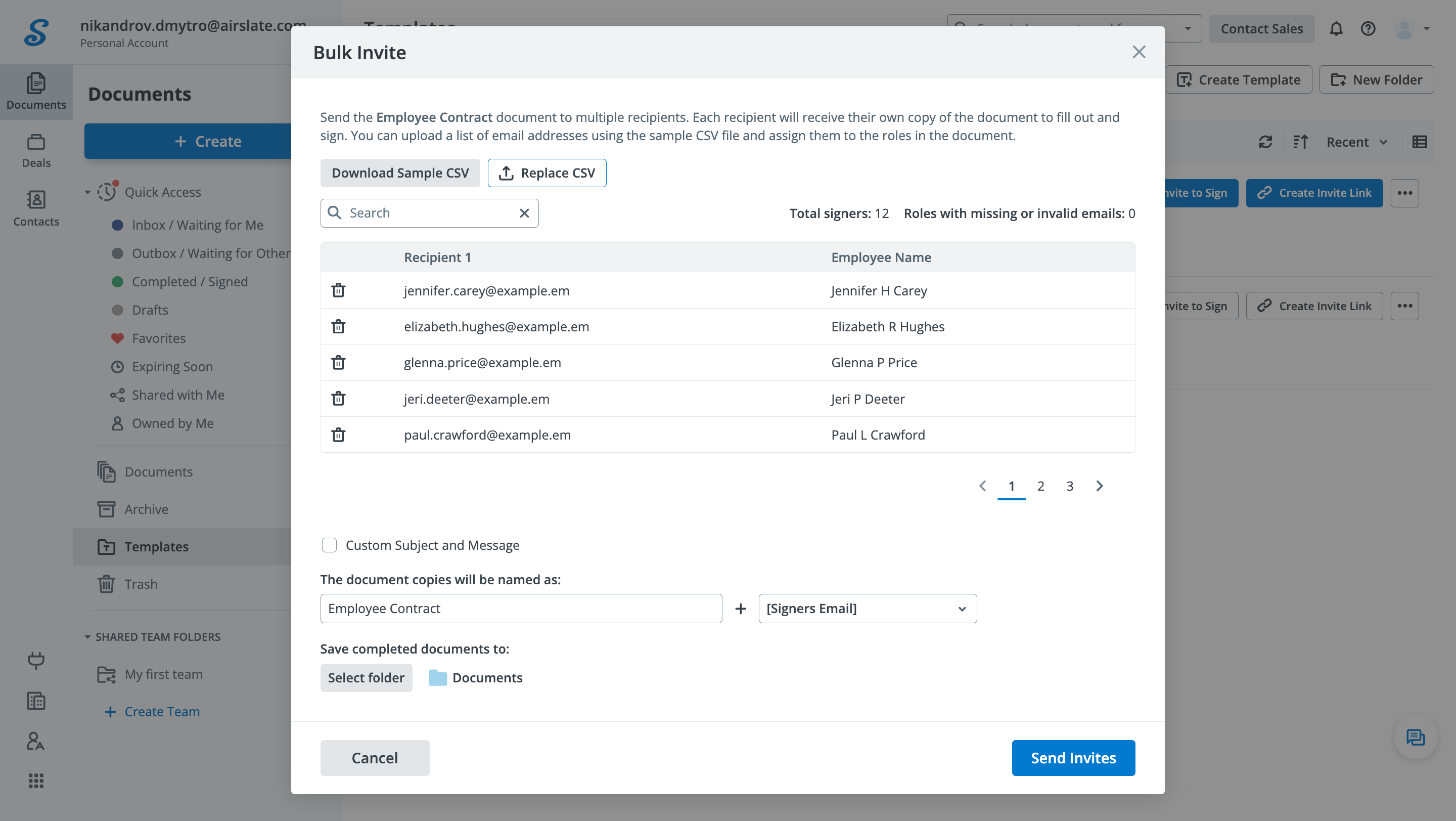
ilustración-guía-llenado

Usar campos de texto prellenados al compartir enlaces de invitación

Para rellenar automáticamente los documentos mediante un enlace de invitación, necesitas modificar la URL incluyendo valores específicos de prellenado. Comienza creando una plantilla y añadiendo campos de texto prellenados, luego genera un enlace de invitación.
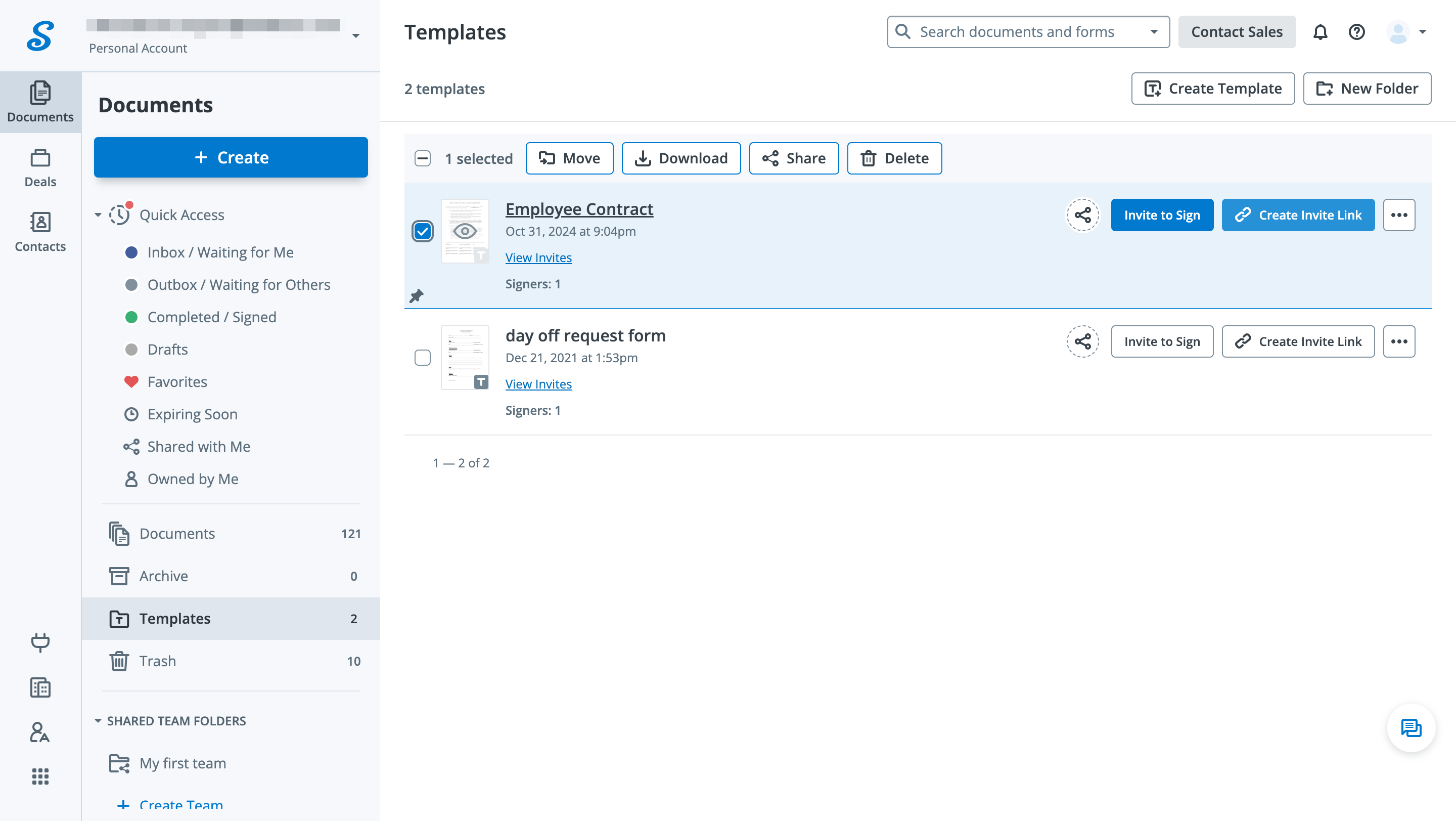
ilustración-guía-llenado

Obtener tu enlace de invitación

Copia el enlace del cuadro emergente y pégalo en cualquier editor de texto o en la barra de URL de tu navegador de internet.
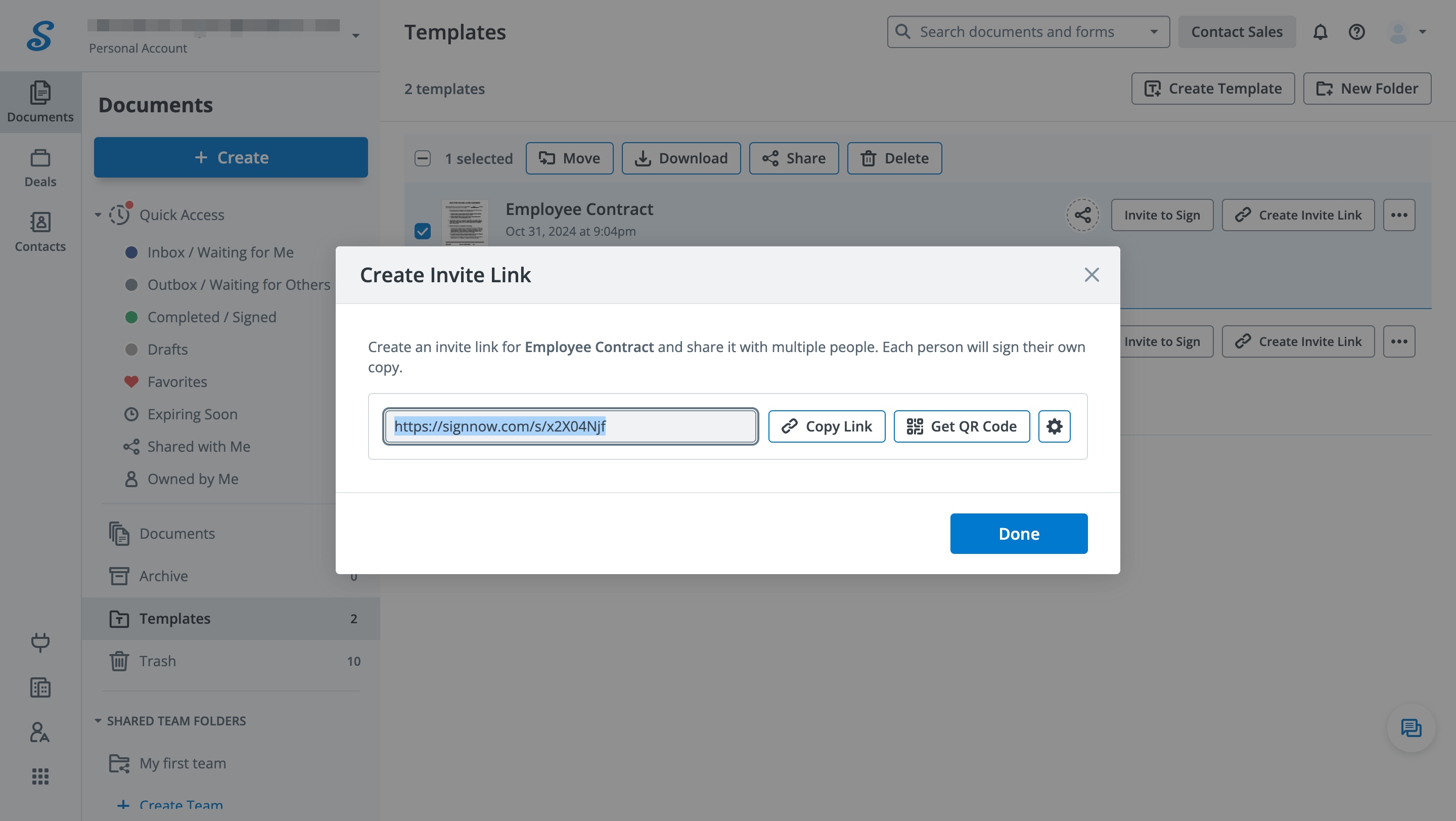
ilustración-guía-llenado

Incrustar valores de prellenado en un enlace de invitación

Editar la URL de la invitación usando la lógica descrita a continuación:

  1. Insertar un signo de interrogación (?) al final de la URL para ingresar parámetros adicionales: https://signnow.com/s/pDe06pMX?
  2. Escribir el nombre de un campo de prellenado y el signo igual (=) seguido de los datos que deseas rellenar: Título=CEO
  3. Para agregar un espacio, inserta (%20): John%20Smith
  4. Separar cada valor con el símbolo de ampersand (&): Nombre=John%20Smith& Título=CEO
ilustración-guía-llenado

Una vez que todo esté listo, comparte el enlace con el firmante. Los valores en la URL se completarán automáticamente en los campos de texto prellenados correspondientes.


walmart logo
exonMobil logo
apple logo
comcast logo
facebook logo
FedEx logo
esté listo para obtener más

¡Obtenga ahora firmas vinculantes desde el punto de vista jurídico!








