Directory Sync
Automated synchronization with Active Directory or cloud directories keeps user lists consistent and reduces admin overhead for employee lifecycle changes.



Formal user provisioning ensures clear permissions, consistent access controls, and accurate audit records, supporting compliance and efficient collaboration across document workflows.

A Team Admin configures user roles, assigns licenses, manages team templates, and reviews audit logs. This role often handles SSO integration, bulk imports, and permission changes while ensuring compliance with organizational policies.
A Standard Member sends and signs documents, uses shared templates, and receives automated reminders. Permissions are limited compared with admins to reduce risk and preserve separation of duties within workflows.
IT administrators, HR, and operations staff typically handle user provisioning and initial permissions setup for eSignature systems, coordinating with security and compliance teams.
Proper coordination between those teams reduces onboarding errors, speeds user activation, and maintains an auditable record of who can send and manage signed documents.
Automated synchronization with Active Directory or cloud directories keeps user lists consistent and reduces admin overhead for employee lifecycle changes.
APIs enable programmatic user creation, updates, and deprovisioning for tight integration with HR and IT systems.
Tailored invitation messages provide role-specific guidance, reducing support requests and clarifying next steps for new users.
Centralized pool management allows flexible seat assignment without purchasing individual licenses per user at the point of creation.
Policies enforce device or network requirements before granting full access, supporting compliance and risk mitigation.
Detailed user activity and onboarding reports help track provisioning metrics and highlight anomalies for review.
Upload CSV files or connect to directory services to create multiple accounts at once, map roles automatically, and reduce manual entry errors during large-scale onboarding.
Predefined permission sets let admins apply consistent access controls and signature capabilities so new members inherit approved workflows and data access restrictions.
Connect the organization to SAML or OIDC identity providers to enable single sign-on, centralized authentication policies, and automated user provisioning from the corporate directory.
Every onboarding event, permission change, and invitation is recorded with timestamps and actor details to support compliance and incident review.
| Feature | Value |
|---|---|
| Default Role | Standard Member |
| SSO Enabled | Optional |
| License Assignment Mode | Manual or Pool |
| Onboarding Email Template | Welcome and setup steps |
| Reminder Frequency | 48 hours |
Administrators can add users from modern desktop browsers or mobile admin apps; feature availability may vary by platform and plan.
For bulk imports, SSO setup, and advanced provisioning use the desktop admin console; mobile interfaces support single-user invites and basic role assignments for on-the-go administration.
A hospital adds a clinician to an eSignature domain using SSO and role templates to limit PHI access
Resulting in faster credentialing and HIPAA-compliant recordkeeping.
A university provisions new administrative staff and assigns FERPA-limited permissions to student records templates
Leading to streamlined onboarding while maintaining student privacy safeguards.
| Feature / Provider | signNow | DocuSign | Adobe Sign |
|---|---|---|---|
| Self-service user add | |||
| Bulk user import | |||
| SAML SSO | |||
| User provisioning API | REST API | REST API | REST API |
| Plan | signNow | DocuSign | Adobe Sign | HelloSign | PandaDoc |
|---|---|---|---|---|---|
| Free trial and entry | Free trial available | Free trial available | Free trial available | Free trial available | Free trial available |
| Seat-based licensing | Per-user seats common | Per-user seats common | Per-user seats common | Per-user seats common | Per-user seats common |
| Enterprise onboarding tools | SSO and API available | SSO and API available | SSO and API available | SSO and API available | SSO and API available |
| Bulk provisioning support | CSV import and API | CSV import and API | CSV import and API | CSV import and API | CSV import and API |
| Admin controls | Role templates and audit logs | Advanced admin console | Centralized admin tools | Admin controls | Admin dashboards |
Organizations make it easy to manage multiple airSlate SignNow accounts, allowing you to apply the same settings to every Member within your Organization. Use the airSlate SignNow Admin Panel to add new users and assign membership roles.
Important: You must log in to your airSlate SignNow account as an Admin or Moderator to access the Admin Panel.
Go to My Organizations in the sidebar on the left (or in your account settings).
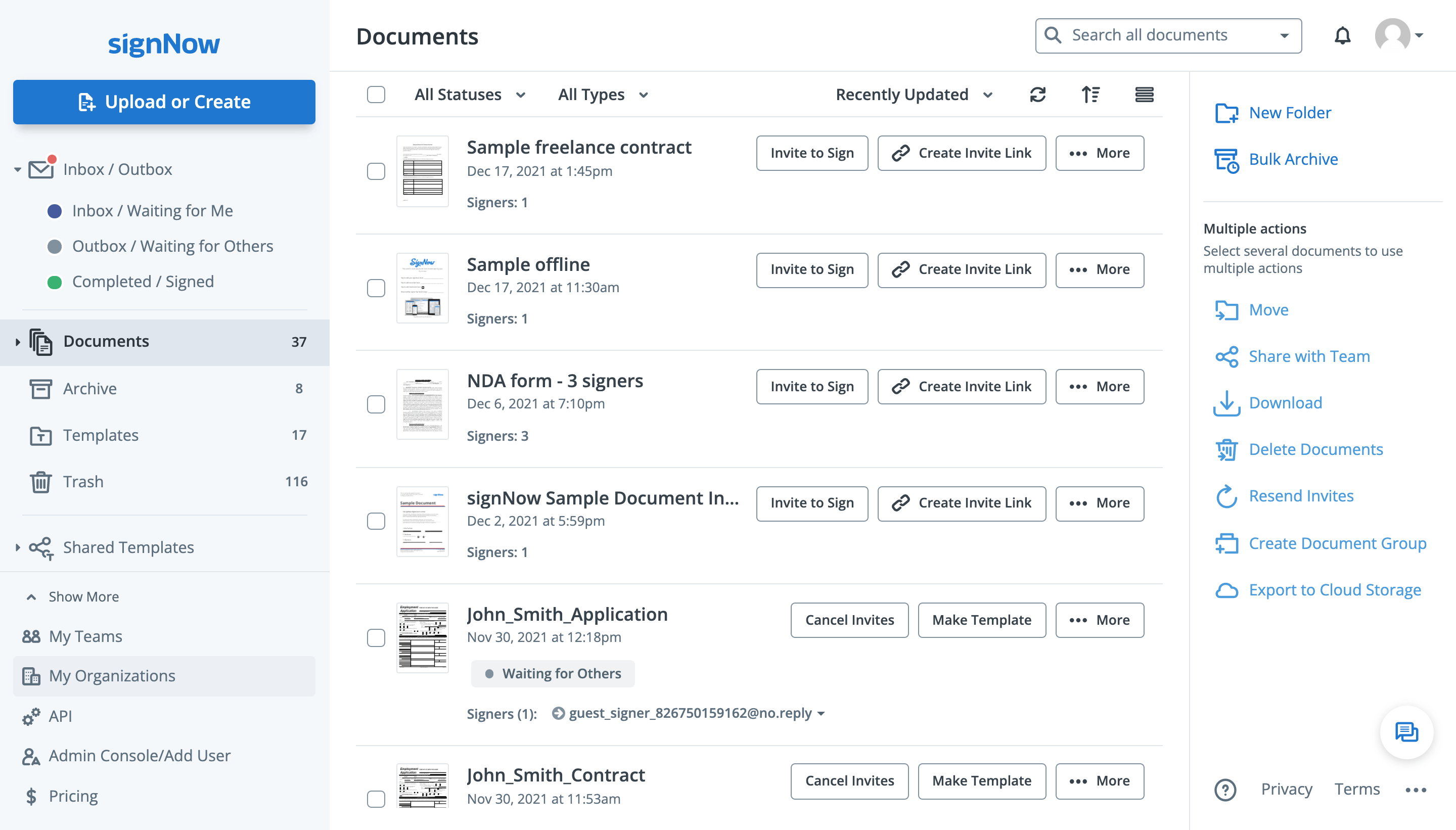
Click Go to Admin Panel next to your current membership or Organization. If you don’t yet have an organization in airSlate SignNow, create one by clicking Create Organization.
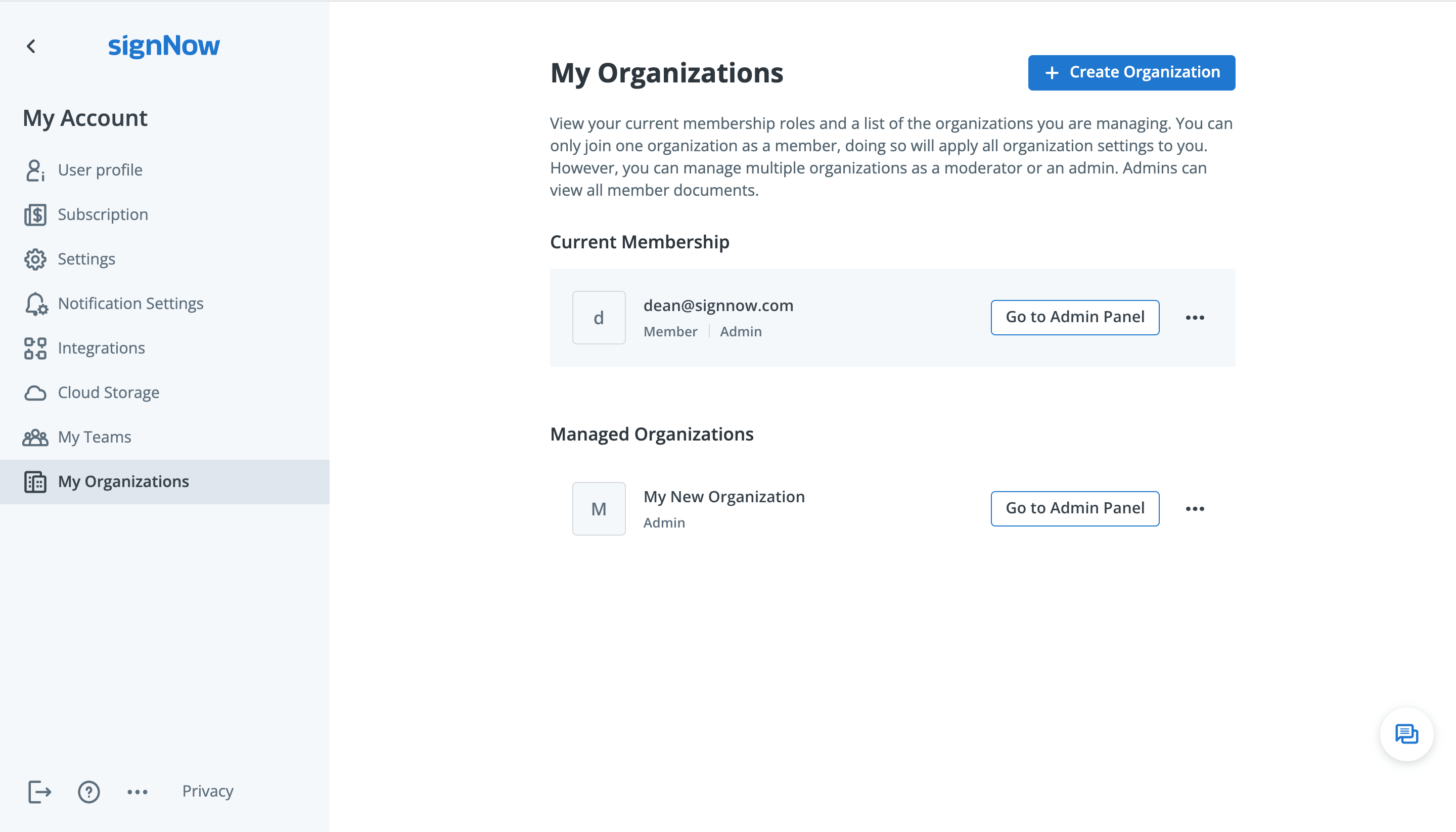
In the Admin Panel, go to the User Management tab.
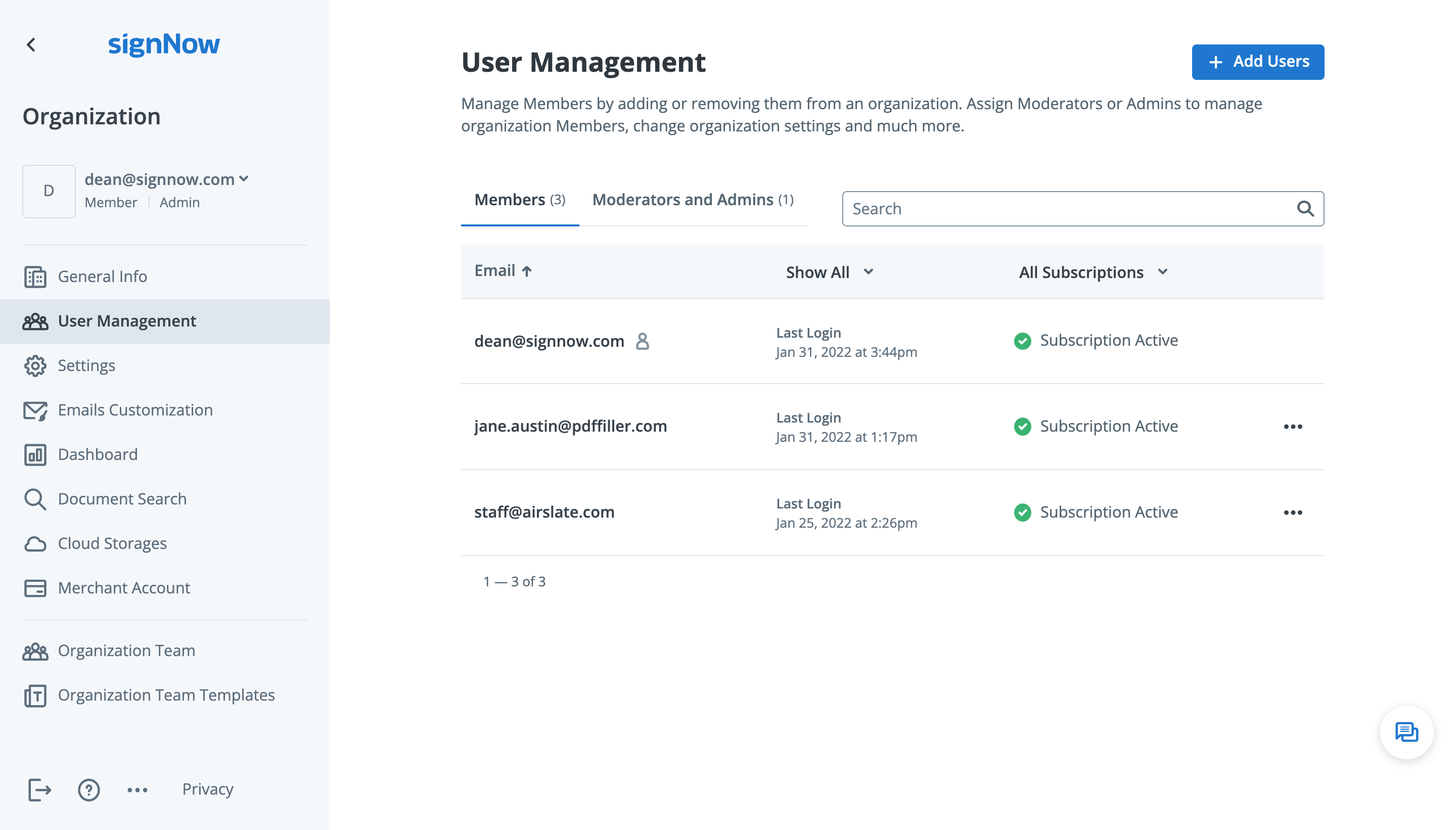
Add new Members to your Organization by clicking Add Users.
In the pop-up window, enter up to 10 email addresses of the users you intend to add and select their membership roles.
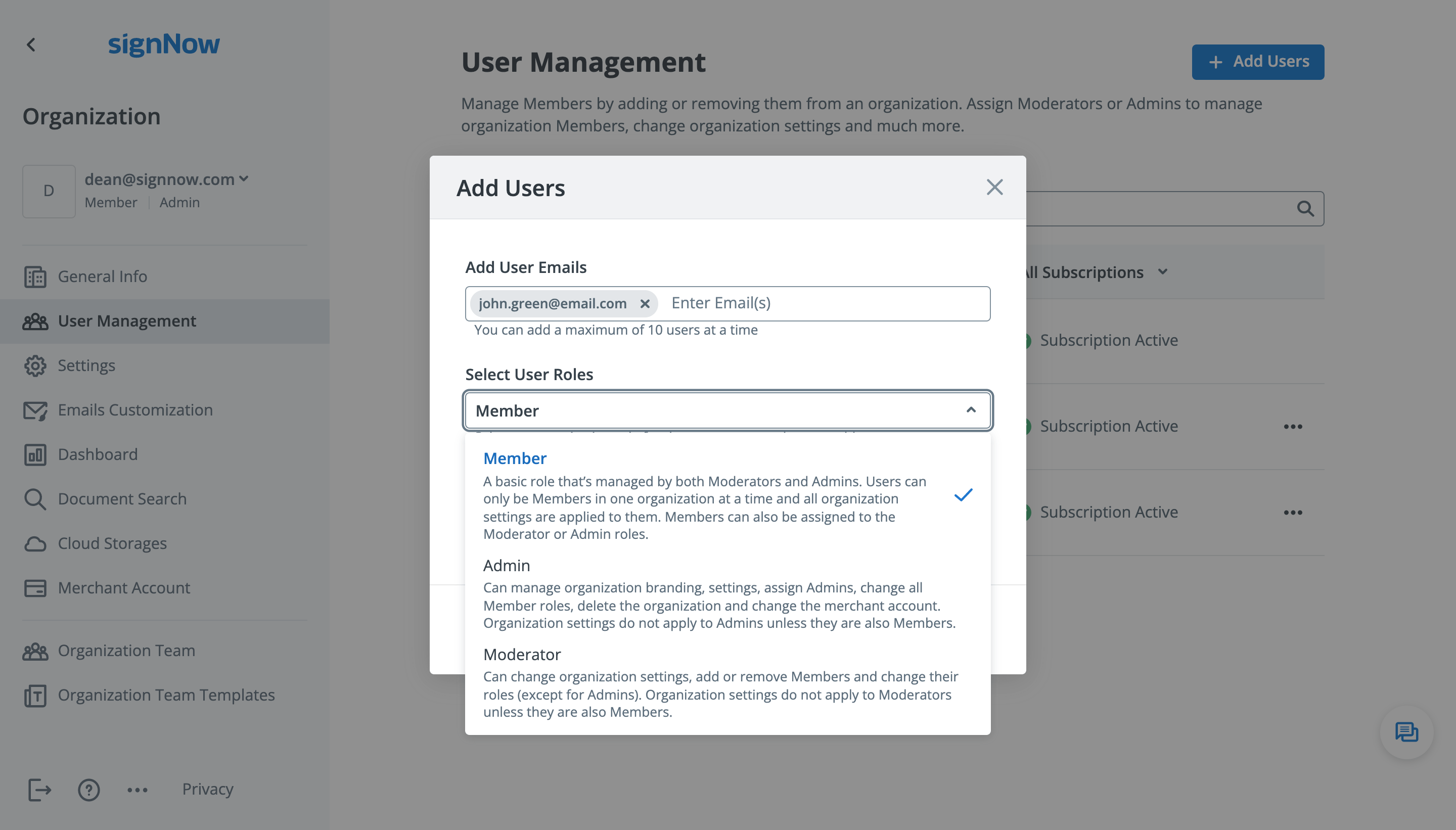
Users within a airSlate SignNow Organization can have different access levels: Member, Admin, and Moderator:
Once you have added email addresses and assigned membership roles, click Add Users.
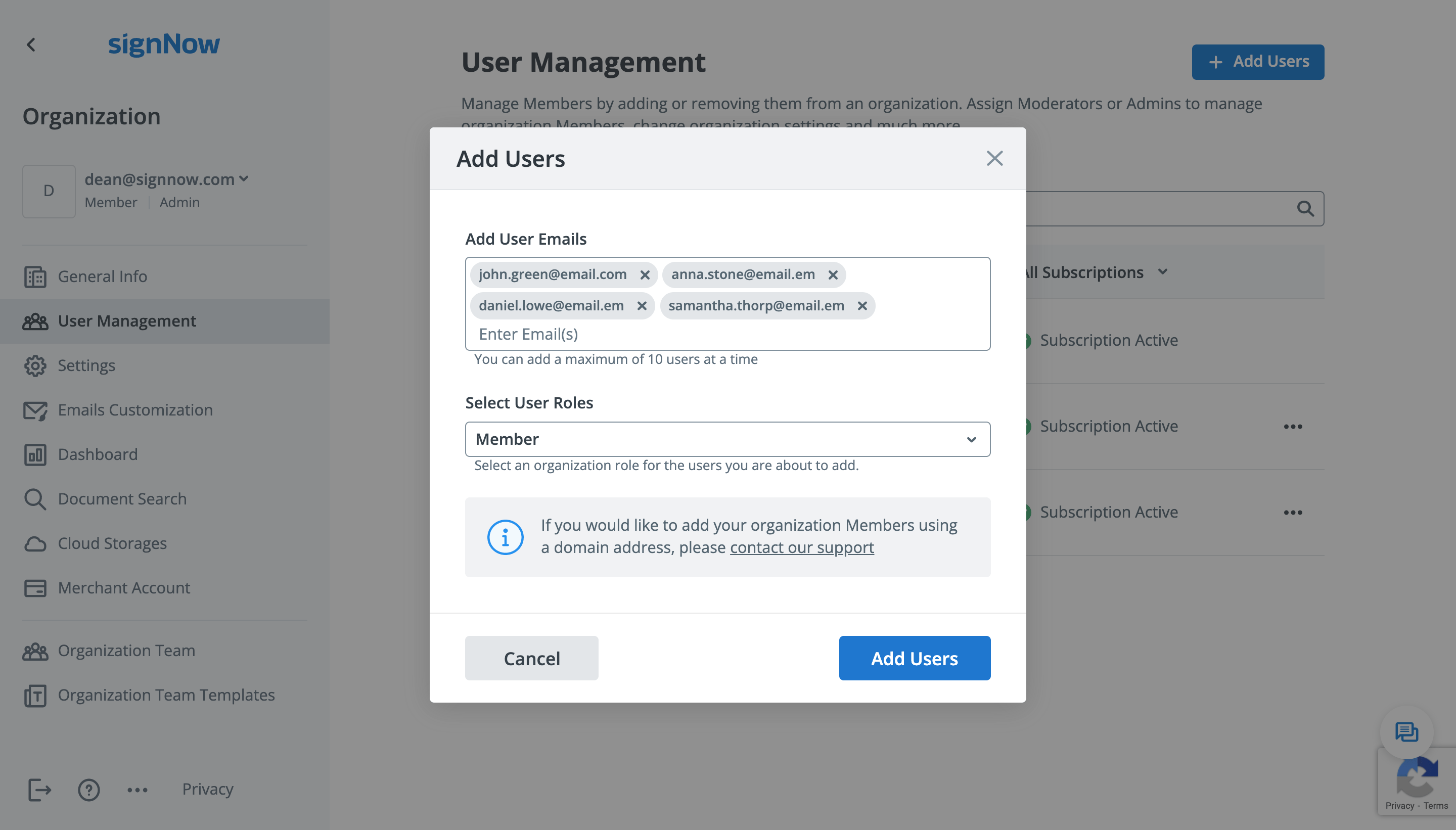
The users you have added will receive an invitation to join your Organization. They will become Members once they accept the invitation.
Please note: You can create up to 50 organizations with any number of members on an Enterprise or Business Cloud subscription plan. The Free Trial plan allows you to create up to 5 organizations with 50 members.