Role Management
Define administrator, sender, and viewer roles with granular permissions to restrict sensitive actions and ensure only authorized users can change organizational settings.




Organizational settings enforce consistency, improve security posture, and align eSignature workflows with legal and operational requirements across teams.

An IT Administrator configures authentication, SSO, API access, and security policies. They review audit logs and integrate signNow with identity providers to ensure consistent user provisioning and secure key management across the organization.
A Compliance Officer defines retention schedules, legal acceptability rules, and ensures ESIGN and UETA alignment for US transactions. They coordinate with vendors to establish Business Associate Agreements when handling protected health information.
IT administrators, legal teams, and operations managers typically lead configuration of account-wide settings to meet security and compliance goals.
Regular reviews by these stakeholders keep settings aligned with policy changes and operational needs.
Define administrator, sender, and viewer roles with granular permissions to restrict sensitive actions and ensure only authorized users can change organizational settings.
Centralize reusable templates with locked fields, conditional logic, and assigned signer roles to reduce errors and shorten preparation time for repeat documents.
Select default signer verification methods such as SSO, two-factor authentication, or knowledge-based verification to match transaction risk levels.
Configure automatic archival and deletion rules, and ensure export options for records subject to audits or legal holds.
Preserve detailed, timestamped logs of all document events, signer actions, and administrative changes for compliance and dispute resolution.
Apply company logos, fonts, and messaging across sent documents to present a consistent, professional appearance while retaining organization-level control.
Connect templates and apply organizational defaults to documents created in Google Docs, enabling one-click send and preserving account-specific signing rules and authentication requirements.
Link signNow with CRM systems so configured templates, signer fields, and retention rules are applied automatically when documents are generated from contact or opportunity records.
Store signed documents in Dropbox while enforcing organization retention settings and access permissions defined in the signNow account.
Use API-based integrations to programmatically enforce organizational policies and apply preconfigured templates and authentication per transaction.

| Setting Name | Configuration |
|---|---|
| Signature Authentication | SSO & 2FA |
| Reminder Frequency | 48 hours |
| Default Retention Period | 7 years |
| Template Visibility | Organization-only |
| Audit Log Export | Monthly |
Administrators should confirm platform compatibility and mobile behavior before applying organization-wide defaults.
Test key workflows on desktop, tablet, and mobile to ensure that authentication, templates, and signing experiences behave as expected under organizational settings.
A hospital configures strict signer authentication and a HIPAA-compliant Business Associate Agreement
Ensures secure, auditable clinical consents, resulting in reduced compliance risk and clearer audit readiness.
A university sets retention rules and limited access for student files
Leading to controlled access to records and simplified responses to student record requests.
| Feature | signNow (Recommended) | DocuSign | Adobe Sign |
|---|---|---|---|
| Organization templates | |||
| Role-based access control | |||
| HIPAA support | Yes (with BAA) | ||
| SSO support |
Annual review
Biannual audit
Quarterly check
Monthly review
As needed per case
| Feature | signNow (Recommended) | DocuSign | Adobe Sign | Dropbox Sign | PandaDoc |
|---|---|---|---|---|---|
| Free trial or tier | Free trial available | Free trial available | Free trial available | Free trial available | Free trial available |
| API access availability | Yes, with plans | Yes, with plans | Yes, with plans | Yes, with plans | Yes, with plans |
| Bulk send capability | Yes | Yes | Yes | Yes | Yes |
| HIPAA / BAA option | BAA available | BAA available | BAA available | BAA on request | BAA available |
| Enterprise SSO & SAML | Supported | Supported | Supported | Supported | Supported |
airSlate SignNow Organizations allow teams to improve collaboration, save time on document and user management, brand eSignature workflows, and more. An Admin and Moderators can configure an Organization’s settings which will apply to all members’ accounts. Let’s walk through the entire process of changing an Organization’s settings.
Note: to configure settings you should log in to your airSlate SignNow account as an Admin or Moderator.
Select My Organizations in the left-hand sidebar.
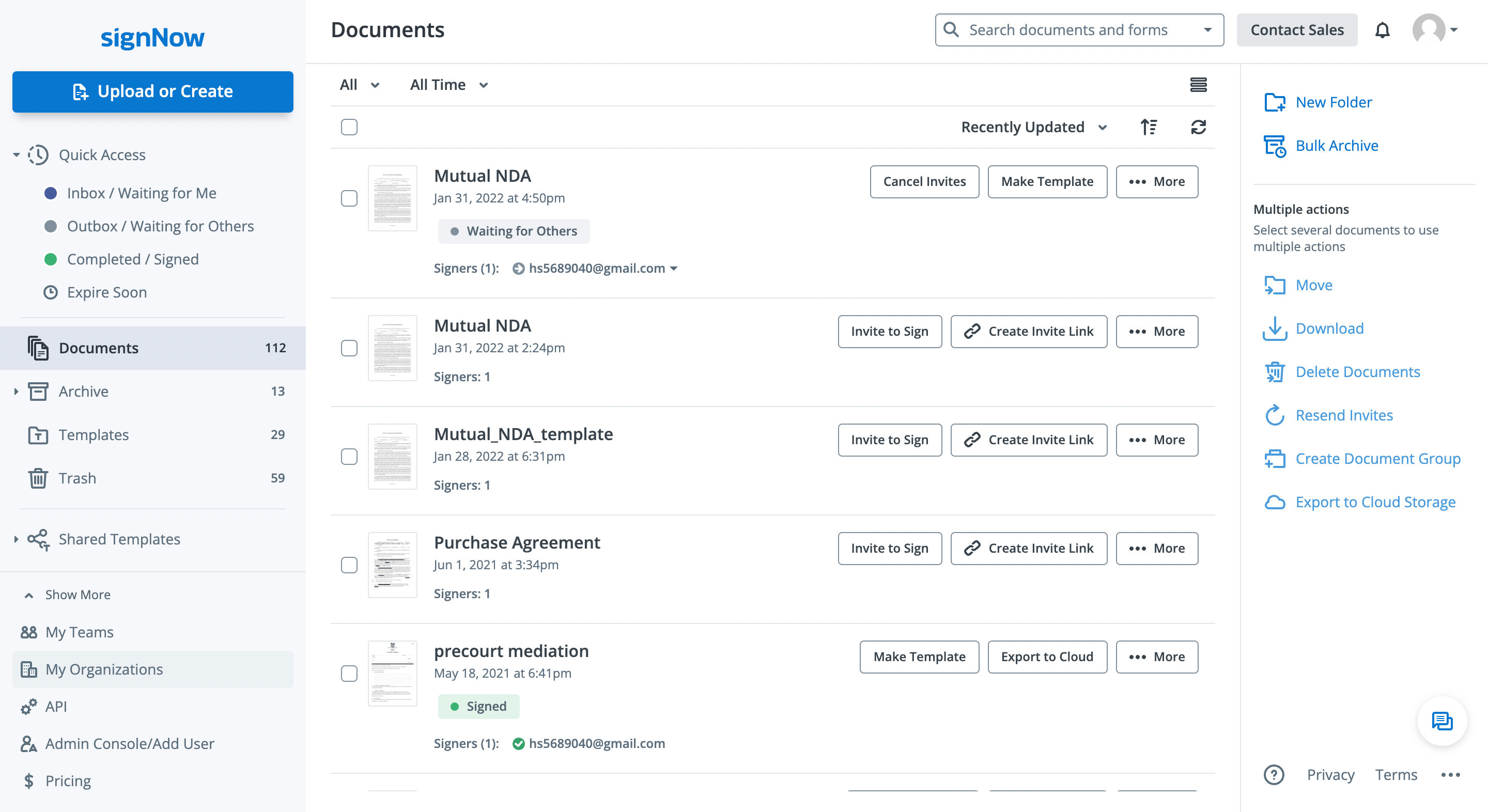
Alternatively, select your user profile in the upper right corner and click My Account > My Organizations.
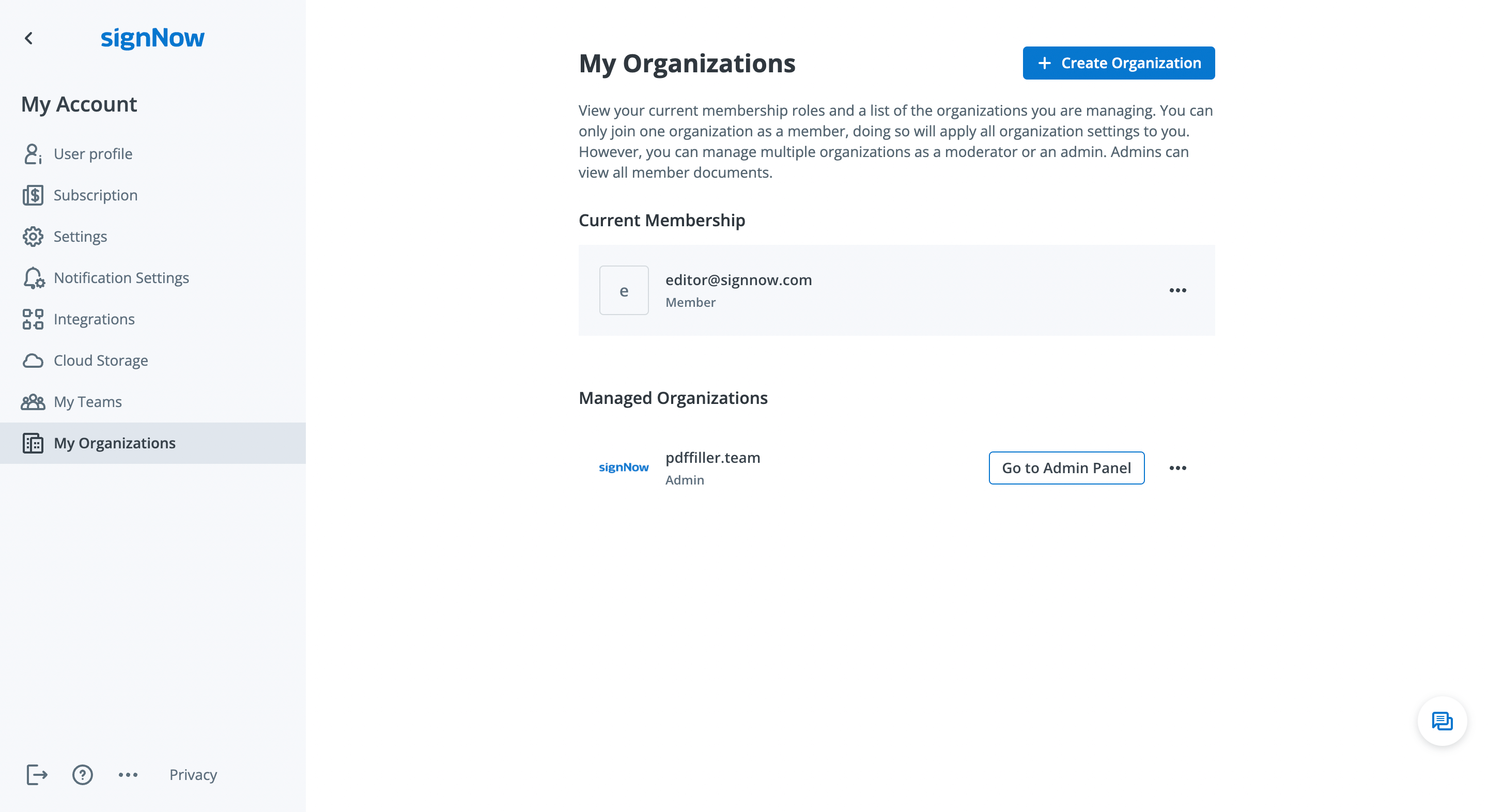
Select Go to Admin Panel next to your current membership or organization.
Click the Settings tab in the Admin Panel to access the settings mode.
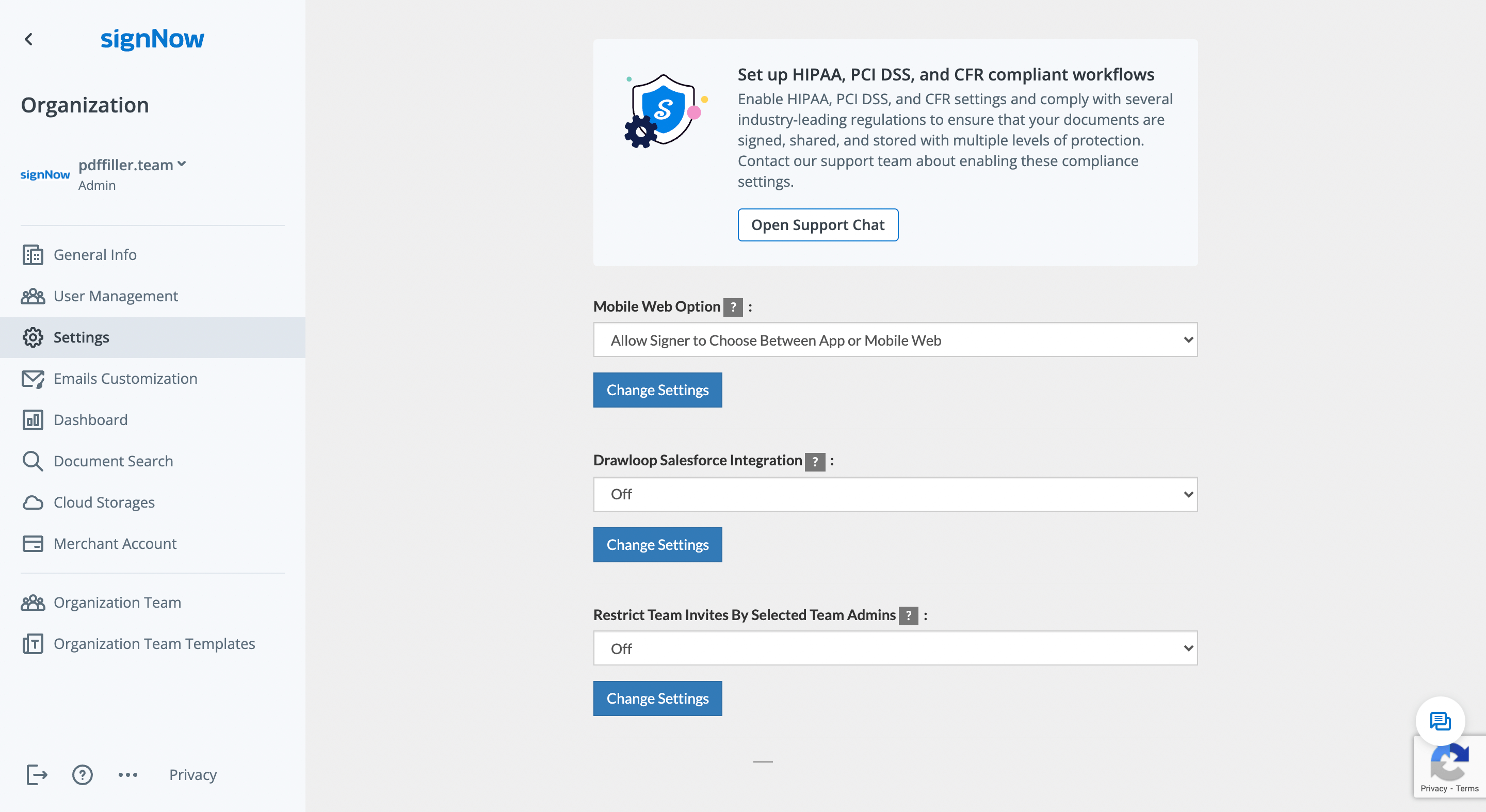
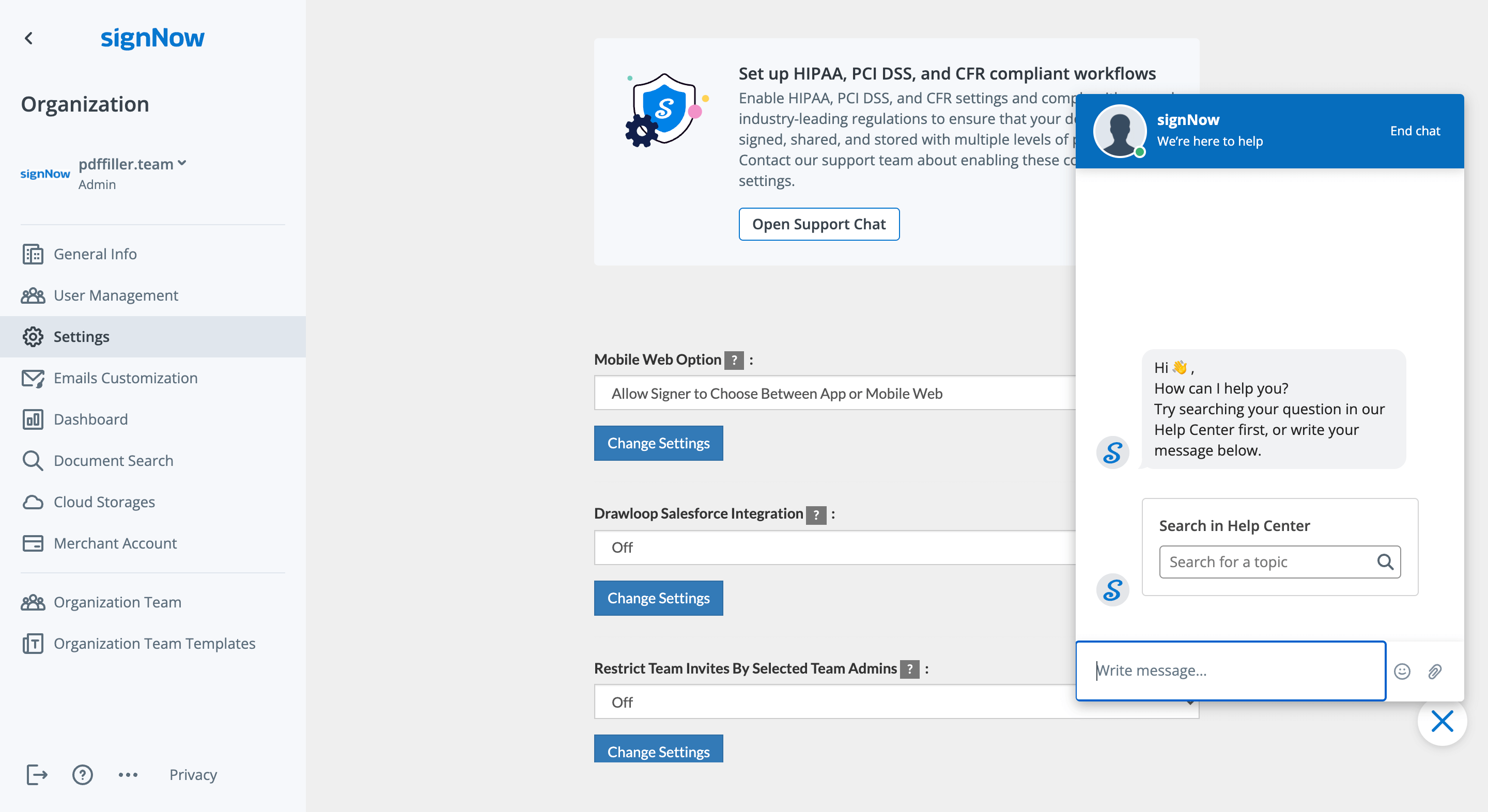
Here you can change the following options across your Organization:
To change a setting, press the Change Settings button or select the option in the dropdown.
airSlate SignNow helps Organizations maintain industry-leading security and compliance standards such as HIPAA, PCI DSS, 21 CFR Part 11, and SOC 2 Type II. Contact our support team by clicking Open Support Chat to learn how to enable these compliance settings for your Organization.