eSign Shopify Invoice for Customer

Streamline your invoicing process with airSlate SignNow's intuitive eSignature solution. Send, sign, and manage invoices seamlessly for a cost-effective business workflow.

Award-winning eSignature solution

What esign shopify invoice for customer means for merchants

The esign shopify invoice for customer describes a process that lets Shopify merchants send invoices that customers can sign electronically, preserving legal intent and simplifying payment workflows. In practice this integrates an eSignature provider into Shopify order and invoicing flows so customers can review, sign, and return invoices online. For U.S. businesses this approach supports ESIGN and UETA compliance when implemented with auditable logs, signer authentication, and secure storage. Using a compliant provider such as signNow (used across industries in the United States) helps maintain consistent records and reduces manual handling of signed invoices.

Why use electronic signature on Shopify invoices

Digitally signing invoices reduces processing time, creates an auditable record, and lowers the chance of disputed payment terms while aligning with U.S. electronic signature law and common business controls.

Why use electronic signature on Shopify invoices

Common challenges when enabling esign on Shopify invoices

  • Managing signer identity and authentication without disrupting checkout or invoicing flows can be technically complex.
  • Ensuring invoice templates include required legal language and signer fields often needs manual template setup.
  • Keeping signed documents stored securely and meeting retention policies requires integration with compliant storage.
  • Reconciling payment status and signed invoices across Shopify, accounting, and CRM systems adds operational overhead.

User roles involved in the esign Shopify invoice workflow

Store Owner

Store owners configure the Shopify integration and approve invoice templates. They set billing terms, choose authentication levels, and define retention policies so signed invoices meet internal and regulatory requirements.

Accounts Receivable

AR staff send invoices, track signature status, and match signed invoices to payments. They use audit logs to resolve disputes and to support accounting reconciliation and financial reporting.

Typical users and teams for esign shopify invoice for customer

Merchants, finance teams, and customer service commonly deploy e-signed Shopify invoices to streamline billing and reduce disputes.

  • Small merchants using Shopify for subscription or custom-order billing.
  • Accounts receivable teams managing approvals and signed payment terms.
  • Customer success teams requiring signed consent for custom services.

Implementations vary by business size and compliance needs, but shared goals are faster collections, clearer records, and reduced manual signing steps.

Core tools for effective esign Shopify invoice for customer workflows

These capabilities help ensure signed invoices are accurate, secure, and integrated with existing business systems.

Bulk Send

Send identical invoice templates to multiple recipients in one operation, maintaining individualized links so each customer signs their own copy while saving time for billing teams.


Reusable templates

Create and store invoice templates with predefined fields and signature anchors to streamline recurring invoices and ensure consistent document structure across customers and orders.

Automated reminders

Configure reminder schedules that send follow-up signing requests automatically, improving completion rates without manual tracking and reducing days sales outstanding.

Conditional fields

Show or hide invoice fields based on order values or product types, reducing signer confusion and ensuring only relevant fields are presented during signing.

Embedded signing

Allow customers to sign invoices directly within a secure browser session or mobile view, preserving context and reducing abandonment compared with redirect-based flows.

Audit reporting

Detailed reports compile signature timestamps, IP addresses, and verification steps so signed invoices stand up to internal reviews and external audits.

be ready to get more

Choose a better solution

Integrations and document features that support Shopify invoices

Select integrations and template tools that make signed invoices reliable and easy to manage across systems and storage locations.

PDF template mapping

Upload invoice templates and map Shopify order fields to fixed PDF placeholders so the resulting document includes accurate line items, totals, and signature blocks for consistent customer presentation and records.

Accounting sync

Two-way synchronization with accounting platforms posts signed invoices and payment status to ledgers automatically, reducing manual entry and helping maintain accurate financial records for audits.

Cloud storage connectors

Connect to enterprise cloud storage such as Google Drive, Dropbox, or AWS to archive signed invoices in the desired repository with metadata for easy retrieval and compliance retention.

Customer identity

Support for email verification, SMS codes, and SSO ensures the signer is authenticated consistently with business risk and compliance policies while keeping the process straightforward for end customers.
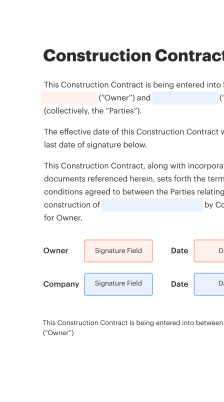
How the signed Shopify invoice process flows

A signed invoice workflow typically moves from invoice generation to signature capture, verification, and storage with audit logging at each step.

  • Invoice generation: Shopify creates an invoice or draft document.
  • Signature request: Integration sends a signing link to the customer.
  • Verification: Customer verifies identity and signs electronically.
  • Finalization: Signed copy stored and payment reconciliation begins.
Collect signatures
24x
faster
Reduce costs by
$30
per document
Save up to
40h
per employee / month

Quick setup: enable esignatures for a Shopify invoice

A concise four-step flow to enable signed invoices on Shopify using an integrated eSignature provider.

  • 01
    Install connector: Add the eSignature app or integration in Shopify.
  • 02
    Configure templates: Map invoice fields and add signature placeholders.
  • 03
    Set authentication: Choose email, SMS, or SSO verification.
  • 04
    Test and deploy: Send test invoices and verify audit logs.
be ready to get more

Why choose airSlate SignNow

  • Free 7-day trial. Choose the plan you need and try it risk-free.
  • Honest pricing for full-featured plans. airSlate SignNow offers subscription plans with no overages or hidden fees at renewal.
  • Enterprise-grade security. airSlate SignNow helps you comply with global security standards.
illustrations signature

Suggested workflow configuration for invoice signing

A recommended configuration table outlines typical settings and values to support a reliable esign shopify invoice for customer process.

Setting Name Configuration
Signature field mapping Auto-map Shopify order fields
Reminder Frequency 48 hours
Authentication level Email plus SMS
Storage destination Cloud archive
Retention policy Seven years

Device and platform considerations for signing Shopify invoices

Signed invoices must be accessible from desktop and mobile browsers and should support common mobile form factors for best customer experience.

  • Desktop browsers: Chrome, Edge, Safari
  • Mobile support: iOS and Android browsers
  • API requirements: RESTful JSON endpoints

Test signing on multiple devices and browsers, verify responsive layout and PDF rendering, and confirm that authentication flows (email, SMS, SSO) work consistently across platforms before live deployment.

Core security and protection features to use

Encryption in transit: TLS 1.2+ protected
Encryption at rest: AES-256 storage
Access controls: Role-based permissions
Authentication options: Email, SMS, SSO
Audit trail: Detailed timestamp logs
Document integrity: Tamper-evident seals

Industry examples: how businesses use esign on Shopify invoices

These case examples illustrate typical implementations of esign shopify invoice for customer across sectors.

B2B wholesale orders

A midsize distributor sends invoices for bulk orders that require buyer signature on payment terms

  • Adds a signature field and two-step approval
  • Reduces payment disputes and accelerates collections

Leading to faster settlement and clearer contractual evidence for accounting.

Custom services billing

A design agency issues post-delivery invoices requiring client sign-off on scope changes

  • Uses inline signature and optional ID verification
  • Confirms client acceptance and authorizes payment

Resulting in fewer scope disputes and a documented acceptance trail for project billing.

Best practices for secure and accurate signed Shopify invoices

Adopting consistent procedures improves reliability of signed invoices and reduces exposure to disputes and compliance issues.

Standardize invoice templates across orders
Use controlled templates with fixed signature anchors and mapped order fields to reduce template errors and ensure necessary legal language and terms are consistently presented to customers for signing.
Choose appropriate authentication levels
Match authentication to transaction risk: email verification for routine invoices and multi-factor or knowledge-based checks for high-value or regulated transactions to protect against fraud.
Retain signed records and logs
Implement secure archival with metadata and retention schedules that satisfy internal controls and regulatory obligations, and ensure easy retrieval for audits and customer inquiries.
Monitor sign rate and exceptions
Track completion metrics, identify recurring failures, and adjust reminder cadence or template complexity to improve signer experience and reduce outstanding invoices.

FAQs and troubleshooting for esign shopify invoice for customer

Common questions about setup, signing failures, and recordkeeping when implementing signed invoices on Shopify are answered below.

Feature availability for signing Shopify invoices across providers

A concise feature comparison shows common capabilities relevant to signed Shopify invoices among leading eSignature providers.

Criteria signNow (Recommended) DocuSign Adobe Acrobat Sign
Embedded signing
API access REST API REST API REST API
Bulk send
HIPAA support Available (enterprise) Available (enterprise) Available (enterprise)
be ready to get more

Get legally-binding signatures now!

Retention and deadlines relevant to signed invoices

Define retention windows and deadlines that align with accounting, tax, and regulatory obligations when storing signed invoices.

Record retention period:

Seven years recommended

Signature retrieval SLA:

48 hours max

Dispute window:

90 days typical

Backup frequency:

Daily snapshots

Audit log retention:

Minimum seven years

Compliance risks and potential penalties to consider

Invalid consent: Enforceable risk
Data breach: Regulatory fines
Retention lapse: Audit failures
Incorrect authentication: Disputed signatures
HIPAA violations: Financial penalties
Contract disputes: Litigation exposure

High-level pricing and compliance comparison

Overview of entry-level pricing and compliance options for providers that integrate with Shopify for signed invoices.

Plan type signNow (Recommended) DocuSign Adobe Acrobat Sign HelloSign PandaDoc
Free plan Free trial Free trial Free trial Free plan (3/mo) Free plan (limited)
Starting price $8 / user $10 / user $9.99 / user $0 / user $19 / user
API access Included Included Included Included Included
HIPAA compliance Enterprise available Enterprise available Enterprise available Enterprise available Enterprise available
Phone support Paid plans Paid plans Paid plans Limited Paid plans
walmart logo
exonMobil logo
apple logo
comcast logo
facebook logo
FedEx logo
be ready to get more

Get legally-binding signatures now!