Government Proposal Software for Product Quality

Streamline your document workflows with airSlate SignNow, the easy-to-use solution that boosts efficiency and reduces costs.

Award-winning eSignature solution

What government proposal software for product quality does

Government proposal software for product quality combines document preparation, controlled approvals, and verifiable signing to support compliant procurement and quality submissions. It centralizes templates, enforces version control, and captures audit trails and authentication evidence for each proposal. In the United States, compliant platforms support ESIGN and UETA standards and can align with sector rules such as HIPAA and FERPA when handling sensitive data. Practitioners rely on integrations, role-based permissions, and automated workflows to reduce errors and accelerate review cycles without compromising record integrity.

Why use digital proposal tools for product quality

Digital proposal tools reduce manual errors, shorten approval cycles, and provide verifiable records required for audits and contract awards. Solutions that support U.S. eSignature laws and standardized workflows improve consistency and traceability across procurement and quality assurance processes.

Why use digital proposal tools for product quality

Common challenges in government proposal quality workflows

  • Manual signature collection causes delays and increases risk of missing approvals or late submissions.
  • Version control issues lead to inconsistent technical specifications and conflicting quality statements across documents.
  • Proving compliance during audits is difficult without immutable audit trails and reliable authentication records.
  • Integrating signed documents with procurement systems and records repositories often requires custom connectors and effort.

Representative user profiles

Procurement Officer

Responsible for assembling proposal packages, confirming regulatory compliance, and obtaining required approvals. They need template controls, bulk send capabilities, and clear audit trails to demonstrate adherence to procurement timelines and legal requirements.

Quality Manager

Oversees product quality documentation, test reports, and certification sign-offs. They require version control, signature delegation, and integration with quality management systems to ensure proposals reflect the latest specifications and approvals.

Typical roles that use proposal software for product quality

Teams involved in procurement, quality assurance, and vendor compliance commonly use these tools to streamline approvals and preserve evidentiary records.

  • Procurement officers managing bid packages and compliance documentation for federal or state contracts.
  • Quality assurance managers tracking product specifications, test reports, and sign-offs across supplier submissions.
  • Vendor compliance teams preparing attestations and ensuring required signatures before proposal submission.

These users rely on role controls, audit logs, and integrated workflows to maintain consistency and demonstrate adherence to policy during reviews and audits.

Essential features for product quality proposal workflows

Effective solutions combine signing, automation, and integrations to meet government procurement and quality documentation needs.

eSignature

Legally enforceable electronic signatures with evidence of signer identity and timestamping to meet U.S. ESIGN and UETA requirements for procurement and quality attestations.


Templates

Centralized, reusable templates for proposals and test reports that enforce fields and reduce document variation while ensuring consistent presentation across suppliers.

Workflow Automation

Conditional routing, sequential approvals, and automatic reminders that accelerate review cycles and reduce manual follow-ups for multi-stakeholder quality reviews.

Audit Trail

Immutable logs recording signer events, IP addresses, and timestamps to provide clear, court-admissible evidence of the signing process.

Integrations

Connectors to common systems like Google Workspace, CRMs, and document repositories to maintain single-source data and streamline proposal assembly and storage.

Mobile Support

Responsive signing and review on mobile devices with offline capability to collect signatures when connectivity is limited during field inspections.

be ready to get more

Choose a better solution

Integrations and customization that simplify submission workflows

Integration and template features reduce manual steps by connecting proposal systems to content sources and downstream records repositories.

Google Docs integration

Bi-directional integration that allows draft proposals to be prepared in Google Docs and converted into controlled templates for signing, preserving formatting and embedded tables without rekeying content.

CRM connectivity

Native connectors to CRMs and vendor management systems enable automatic population of vendor data into proposal templates and synchronization of signed documents back to contract records for lifecycle management.

Cloud storage links

Direct connections to cloud repositories such as Dropbox or other S3-compatible stores allow signed files to be archived automatically with metadata for retention and retrieval.

Custom fields

Configurable data fields, conditional logic, and calculated values that enforce quality metrics and ensure required test result entries before submission.
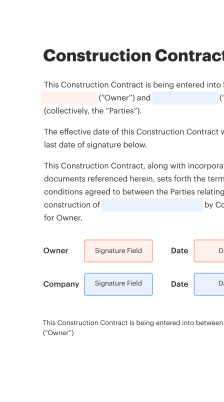
How a typical proposal signing process works

The core flow moves a draft through configuration, review, signature, and archival while preserving evidence of every action.

  • Draft proposal: Prepare the document with required quality attachments.
  • Configure workflow: Assign approvers, set signature order, and authentication.
  • Obtain signatures: Send for signing via web or mobile with audit logging.
  • Archive records: Store signed files with retention and export options.
Collect signatures
24x
faster
Reduce costs by
$30
per document
Save up to
40h
per employee / month

Quick setup: Getting started with proposal signing workflows

A straightforward four-step setup will prepare teams to create, route, and retain quality proposals with verifiable signatures.

  • 01
    Create account: Set up organization and basic user roles.
  • 02
    Upload templates: Store standardized proposal and quality forms centrally.
  • 03
    Configure fields: Place signature, date, and data fields on documents.
  • 04
    Define workflow: Set approval order and authentication requirements.
be ready to get more

Why choose airSlate SignNow

  • Free 7-day trial. Choose the plan you need and try it risk-free.
  • Honest pricing for full-featured plans. airSlate SignNow offers subscription plans with no overages or hidden fees at renewal.
  • Enterprise-grade security. airSlate SignNow helps you comply with global security standards.
illustrations signature

Recommended workflow configuration for proposal approvals

Suggested settings help standardize routing, notifications, and security controls for multi-stage proposal reviews and sign-offs.

Setting Name Configuration
Approval Chain Sequential multi-step approvals with backups
Reminder Frequency 48 hours with three automated reminders
Auto-archive Archive signed files after final approval
Signature Order Enforce strict signer order for attestations
Authentication Method Email OTP or two-factor authentication

Platform and device requirements for reliable signing

Ensure your environment meets minimum browser and mobile requirements to avoid compatibility issues when preparing or signing proposals.

  • Desktop browsers: Chrome, Edge, Firefox supported
  • Mobile OS: iOS and Android recent versions
  • Tablet support: Responsive UI for tablets

Verify that users run current browser versions, enable TLS connections, and have access to supported mobile apps where offline signing or camera capture of attachments may be required for field inspections.

Security and protection features to expect

Encryption at rest: AES-256 encrypted storage
Encryption in transit: TLS 1.2+ for data transfer
Access controls: Role-based permissions
Audit logging: Immutable signature trail
Compliance attestations: SOC 2 Type II evidence
Sensitive data handling: HIPAA and FERPA support

Practical examples from government procurement and quality teams

Two concise examples show how controlled signing and workflows improve product quality proposals in public-sector contexts.

State Department of Transportation

The agency standardized contract quality submissions to reduce review time and errors by centralizing templates and approvals.

  • Automated template enforcement ensured consistent technical specifications across vendors.
  • Centralized audit trails reduced document disputes and eased internal reviews.

Leading to faster award decisions and clearer quality accountability across suppliers.

Municipal Purchasing Office

A city purchasing office replaced paper attestations to meet submission deadlines and support audits with verifiable records.

  • Role-based routing decreased routing errors and mis-sent approvals.
  • Encrypted records maintained evidence for post-award inspections.

Resulting in demonstrably faster compliance checks and improved supplier responsiveness during procurement cycles.

Best practices for secure and accurate product quality proposals

Follow a consistent set of practices to reduce errors, demonstrate compliance, and simplify audits when submitting quality-related proposals to government entities.

Standardize template naming and version controls
Maintain a single canonical set of templates with clear version numbers and change logs; require that only authorized users can modify master templates to prevent divergent proposal formats and ensure consistency across submissions.
Require role-based approvals and sequential signing
Define approval chains that reflect organizational responsibility, enforce sequential signing for critical attestations, and capture each approver’s identity and timestamp to preserve accountability and traceability.
Use strong signer authentication and access controls
Apply multi-factor authentication or identity verification for high-risk submissions, restrict document access by role, and regularly review permissions to limit exposure and ensure only authorized personnel can finalize proposals.
Retain complete audit trails and export records
Store signed documents with full event logs, signed PDFs, and metadata; establish retention schedules that comply with procurement rules and ensure exportability for audits and legal review.

FAQs and troubleshooting for proposal signing workflows

Answers to common questions and practical troubleshooting steps for proposal preparation, signing, and audit readiness.

Feature comparison: signNow and major eSignature vendors

A concise technical comparison across core capabilities relevant to government product quality proposals and procurement processes.

Feature / Vendor signNow (Recommended) Adobe Acrobat Sign DocuSign
US ESIGN and UETA compliance
Audit trail and tamper evidence Detailed immutable logs Detailed immutable logs Detailed immutable logs
Native Google Docs integration availability Native integration Requires connector Native integration
Bulk send and mass distribution Yes with Batch Send Yes with Bulk Send
Offline mobile signing capability Yes offline support Limited offline mode Yes offline support
be ready to get more

Get legally-binding signatures now!

Typical timelines and retention checkpoints for proposals

Map timelines and retention requirements to procurement and quality review milestones so submissions meet both deadlines and recordkeeping obligations.

Proposal submission deadline:

Final signed file must be submitted by the published due date and time.

Internal QA review window:

Allow a 48–72 hour internal review period before external submission.

Approval escalation timeframe:

Trigger escalations after 24–48 hours without required approvals.

Record retention schedule:

Retain signed proposals and logs according to agency retention policy.

Post-award audit period:

Keep documentation available for post-award inspection windows as required.

Risks and potential penalties from poor processes

Noncompliance fines: Monetary penalties
Bid rejection: Lost contract opportunity
Data breach: Reputational harm
Audit failure: Corrective action required
Missing signatures: Invalid proposals
Retention violations: Legal exposure

Pricing snapshot across vendors for budgeting

Approximate entry-level pricing and typical licensing models for budgeting and procurement planning. Actual prices depend on contract terms and enterprise agreements.

Vendor / Plan signNow (Recommended) Adobe Acrobat Sign DocuSign OneSpan Sign HelloSign
Entry-level monthly cost (approximate) Starting at about $8 per user per month billed annually Part of Adobe Document Cloud higher tier pricing Entry plans start near $10 per user monthly Enterprise pricing by quote only, focused on volume Starts near $15 per user per month
Typical contract term Monthly and annual subscriptions available Annual enterprise contracts common Monthly and annual options available Annual contracts with volume commitments Monthly and annual subscriptions offered
Bulk licensing availability Available with volume discounts and enterprise options Available via enterprise licensing Available with enterprise plans Available with enterprise agreements Available with team and enterprise plans
Included integrations Common business integrations included and API access Extensive Adobe ecosystem integrations Broad connector marketplace and APIs Focused enterprise integrations and API Standard integrations and developer API
Support and SLA options Email and priority support with paid plans, enterprise SLAs Enterprise SLAs and premium support options Tiered support with enterprise SLA options Enterprise-grade SLAs and dedicated support Standard email and paid priority support
walmart logo
exonMobil logo
apple logo
comcast logo
facebook logo
FedEx logo
be ready to get more

Get legally-binding signatures now!