Handwritten Invoice Template for Banking

Watch your invoicing process become quick and seamless. With just a few clicks, you can perform all the necessary actions on your handwritten invoice template for Banking and other important files from any gadget with internet access.

Award-winning eSignature solution

What a handwritten invoice template for banking is and why it matters

A handwritten invoice template for banking is a digitized document layout that preserves the look of a manually written invoice while enabling electronic completion, signature, and tracking. In banking contexts this template supports client billing, fee adjustments, and internal approvals where a handwritten appearance is required for regulatory or operational reasons. Using an eSignature platform that supports template fields, audit trails, and secure storage eliminates paper-handling delays while keeping records auditable and searchable for reconciliation and compliance reviews.

When a handwritten invoice template for banking improves operations

Adopting a verified handwritten invoice template for banking reduces processing time, standardizes required fields, and preserves a client-facing handwritten format while enabling electronic signature and secure recordkeeping for audits.

When a handwritten invoice template for banking improves operations

Common operational challenges addressed by a template

  • Illegible or inconsistent handwriting increases reconciliation errors and slows approvals.
  • Paper-based invoices require manual filing and complicate access during audits.
  • Maintaining a handwritten look while ensuring signature validity can be technically complex.
  • Coordinating signer order and reminders across teams can cause processing delays.

Representative user profiles and responsibilities

Branch Teller

Handles front-line issuance of client invoices and receipts, often requiring a handwritten style to match customer expectations. Uses templates to speed completion, capture required fields, and request eSignatures while retaining a humanized appearance for clients.

Treasury Analyst

Performs reconciliation and audit preparation for banking invoices, ensuring template fields align with ledger codes and compliance requirements. Relies on consistent templates to reconcile transactions and preserve a detailed audit trail for reviewers.

Teams and roles that commonly use handwritten invoice templates

Financial operations, account management, and branch services frequently need a handwritten invoice template for banking to match legacy formats and meet client expectations.

  • Branch operations staff preparing client billing and receipts for in-person sign-off.
  • Treasury and reconciliation teams standardizing invoice fields for downstream processing.
  • Relationship managers delivering client-friendly invoices that appear hand-prepared.

Across these teams, templates reduce inconsistencies, accelerate approvals, and make it easier to produce audit-ready copies while retaining a handwritten appearance.

Key features to look for in handwritten invoice templates

Select template and eSignature capabilities that support handwritten appearance plus banking-grade controls for field validation, signature integrity, and audit readiness.

Template Editor

A visual editor that preserves handwriting fonts and background images while allowing placement of data-bound fields for amounts, dates, and account numbers to ensure consistent capture.


Field Validation

Built-in validation rules for numeric formats, required fields, and code lookups to reduce entry errors and ensure invoices match ledger expectations before signature.

Signer Authentication

Support for email authentication, SMS one-time passcodes, and optional knowledge-based or multi-factor methods to meet internal verification policies.

Audit Trail

Automated tamper-evident logs recording signer IPs, timestamps, and field-level interactions to create admissible evidence of the signing process.

Bulk Send

Ability to deliver the same handwritten invoice template to multiple recipients with unique prefilled data to accelerate batch billing and reduce repetitive tasks.

Secure Storage

Encrypted archival with retention settings, access controls, and exportable compliance reports to meet internal and regulatory retention policies.

be ready to get more

Choose a better solution

Integrations that make handwritten invoice templates practical

Integrations reduce manual work by connecting templates to document and data systems commonly used in banking and finance.

CRM integration

Sync customer data and invoice history with a bank CRM so template fields populate automatically and client records remain consistent across systems.

Cloud storage

Archive completed handwritten invoices directly to secure repositories like Dropbox or enterprise cloud with retention and access controls.

Accounting systems

Push invoiced amounts and reference numbers into general ledger or accounting platforms for automated reconciliation and reporting.

Google Workspace

Create, import, and update templates within Google Docs and Sheets to maintain collaborative editing and data-driven invoice generation.
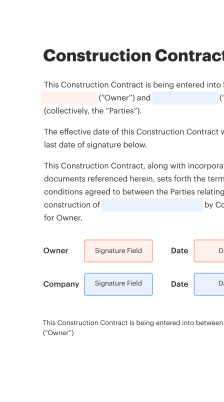
How the electronic handwritten invoice workflow operates

This overview explains the typical flow from template creation through signer completion and archival in a banking environment.

  • Template creation: Upload base image and add interactive fields
  • Pre-fill data: Populate client and account details automatically
  • Signer verification: Authenticate signer identity per policy
  • Finalize archive: Store signed copy with audit trail
Collect signatures
24x
faster
Reduce costs by
$30
per document
Save up to
40h
per employee / month

Basic steps to set up a handwritten invoice template for banking

Follow these concise steps to create and deploy a handwritten invoice template that preserves format while enabling secure e-signing and auditability.

  • 01
    Design template: Capture handwritten layout and required fields
  • 02
    Map fields: Link fields to ledger and reference codes
  • 03
    Set signer flow: Define signer order and authentication
  • 04
    Test and deploy: Validate appearance and audit trail
be ready to get more

Why choose airSlate SignNow

  • Free 7-day trial. Choose the plan you need and try it risk-free.
  • Honest pricing for full-featured plans. airSlate SignNow offers subscription plans with no overages or hidden fees at renewal.
  • Enterprise-grade security. airSlate SignNow helps you comply with global security standards.
illustrations signature

Recommended workflow configuration for handwritten invoice templates

Use these workflow settings to standardize template behavior, notifications, and retention for banking invoices.

Feature Default Configuration
Signer Authentication Method Email + SMS OTP
Reminder Frequency 48 hours
Signing Order Sequential
Retention Period 7 years
Audit Trail Capture Full event logging

Device and browser requirements for using handwritten invoice templates

Ensure signers and administrators use supported devices and browsers to maintain signature capture fidelity and security.

  • Desktop browsers: Chrome, Edge
  • Mobile OS: iOS and Android
  • Supported apps: Platform mobile app

For best results, use up-to-date browser versions and the vendor's official mobile application where available; older browsers or unsupported devices may impact handwriting rendering and signing workflows.

Security and authentication controls relevant to templates

Encryption at rest: AES-256 encrypted storage
Encryption in transit: TLS 1.2+ secure channels
Multi-factor authentication: Optional MFA for signers
Access logging: Detailed activity logs
Role-based access: Granular permission controls
Document locking: Prevent post-sign changes

Practical banking examples using a handwritten invoice template

Two concise examples show how templates keep a handwritten look while enabling secure electronic workflows across common banking scenarios.

Client Fee Adjustment

A branch prepares a handwritten-style invoice for a fee correction using a template that includes prefilled account numbers and amount fields

  • Template auto-populates account and fee codes for accuracy
  • Client signs on a tablet, producing an auditable certificate

Resulting in faster reconciliation and a digital record suitable for internal audit and client delivery.

Loan Payment Receipt

A loan officer issues a handwritten-look receipt after receiving a payment and selecting a template matching regulatory disclosure needs

  • Template enforces required disclosure fields and date stamps
  • Borrower signs electronically with verified identity checks

Leading to consistent receipts with complete audit trails and reduced manual filing demands.

Best practices for secure and accurate handwritten invoice templates

Implement these practical measures to reduce errors, strengthen compliance, and ensure consistent handwritten-format invoicing in banking operations.

Use verified signer authentication workflows
Require multi-factor or strong identity verification for high-value invoices and sensitive accounts to align with internal risk policies and create reliable evidence for audits.
Standardize template fields and naming conventions
Keep field names consistent across templates and systems so integrations and reconciliations map data reliably into ledgers and reporting tools.
Embed retention and access controls in policies
Configure document retention and role-based permissions to match regulatory requirements and internal governance, ensuring signed invoices remain secure and discoverable for audits.
Regularly test cross-device rendering
Periodically validate templates on common browsers and mobile devices to ensure the handwritten appearance, field alignment, and signature capture work as expected for all users.

FAQs About handwritten invoice template for banking

Common questions and practical troubleshooting steps for implementing and using handwritten invoice templates in banking workflows.

Feature availability: signNow vs. DocuSign vs. Adobe Acrobat Sign

A quick comparison of core capabilities important for handwritten invoice templates and banking workflows.

Criteria signNow (Recommended) DocuSign Adobe Acrobat Sign
Handwritten-style template support
API for prefilling fields
Bulk Send capability
HIPAA-compliant options Available Available Available
be ready to get more

Get legally-binding signatures now!

Retention and timeline reminders for invoice handling

Key timeline checkpoints and retention rules to incorporate into template workflows and policies.

Immediate archival:

Within 24 hours

Dispute window:

30 days

Quarterly reconciliation:

90 days

Regulatory retention:

7 years

Template review cadence:

Annually

Regulatory and operational risks to manage

Noncompliance fines: Regulator penalties
Data breach exposure: Customer data risk
Invalid signatures: Rejected documents
Audit failures: Missing records
Operational delays: Processing backlogs
Reputational harm: Loss of trust

Compare entry-level offerings and common features across vendors

Pricing and starter features vary; this table lists introductory plan names and typical starter features for common eSignature vendors used in the U.S. banking sector.

Offering signNow (Recommended) DocuSign Adobe Acrobat Sign Dropbox Sign OneSpan
Entry-level plan name Business Standard Individual Standard Cloud Express
API access available Yes Yes (paid) Yes Yes Yes
Free trial length 14 days 30 days 7 days 14 days Trial varies
Mobile app availability Yes Yes Yes Yes Yes
Enterprise support options Available Available Available Available Available
walmart logo
exonMobil logo
apple logo
comcast logo
facebook logo
FedEx logo
be ready to get more

Get legally-binding signatures now!