Receipt Book Sample for Communications Media

Watch your invoicing process become quick and smooth. With just a few clicks, you can perform all the necessary steps on your receipt book sample for Communications & Media and other important documents from any device with internet access.

Award-winning eSignature solution

What a receipt book sample for communications media is and why it matters

A receipt book sample for communications media is a standardized document used to acknowledge the delivery, receipt, or payment for communications-related goods or services, such as advertising slots, media buys, production services, or distribution fees. It captures essential transaction details—dates, parties, amounts, description of deliverables, and signatures—and can be issued as a physical stub or generated digitally. For communications teams, a clear receipt template reduces disputes, supports accounting and audits, and provides a consistent record across campaigns, vendors, and internal departments while enabling easier conversion to digital workflows.

When a receipt book sample for communications media adds operational value

Using a standardized receipt book sample for communications media streamlines reconciliation, preserves a clear paper or digital audit trail, and reduces administrative overhead across agencies, broadcasters, and in-house communications teams.

When a receipt book sample for communications media adds operational value

Common challenges when using receipt book samples for communications media

  • Inconsistent fields across teams lead to missing transaction details and slower reconciliations, increasing follow-up time with vendors.
  • Paper receipts are prone to loss or damage, making long-term retention and audit readiness difficult for finance and compliance teams.
  • Unclear signature validity or unverifiable signer identity can create disputes about delivery or payment confirmation in media contracts.
  • Lack of version control causes duplicate or outdated receipt templates to be used, complicating reporting and recordkeeping.

Representative users and their needs

Communications Manager

Manages campaigns and vendor relationships and needs concise receipts that list placements, dates, and deliverables to verify fulfillment and authorize payments. They require templates that align with campaign codes and budgeting systems and that can be archived for audit.

Finance Analyst

Processes payments and reconciles spend; requires receipts that match invoice line items, include vendor tax information, and support quick search and retrieval. They value digital receipt records with reliable timestamps and signer verification.

Who typically uses receipt book samples in communications operations

Communications teams, media buyers, production managers, and finance staff commonly rely on receipt book samples to capture transaction details consistently.

  • Media buyers and planners who need documented proof of placements and spend reconciliation with vendors.
  • In-house communications and marketing operations teams tracking payments to creative vendors and distribution partners.
  • Accounting and procurement teams ensuring receipts match invoices and contractual deliverables for audit purposes.

Standardizing receipt formats improves interdepartmental handoffs and reduces disputes while making it easier to migrate records into digital signature and document management systems.

Essential features for effective receipt book samples in communications media

A useful receipt solution combines secure signing, flexible templates, searchable storage, and automation to reduce administrative time and improve compliance across media operations.

Template Library

A centralized repository of branded, pre-configured receipt templates with editable fields for campaign codes, tax information, and custom notes to ensure consistency across teams and faster issuance.


Reusable Fields

Saved field sets for common items such as vendor name, insertion order number, and media type to speed creation and reduce data entry errors during high-volume campaigns.

Audit Trail

An immutable record of signer identity, IP address, and timestamp that supports dispute resolution and financial audits while maintaining a clear compliance record for transactions.

Bulk Issuance

Bulk Send functionality to distribute many receipts at once with individualized fields, reducing manual workload for recurring or multi-venue media buys and ensuring consistent records.

Role Permissions

Granular user roles and permissions to control who can create, sign, and archive receipts, helping teams meet internal segregation-of-duties and approval workflows.

Searchable Archive

Indexed storage with metadata and full-text search so finance and audit teams can retrieve receipts by campaign code, date range, or vendor quickly.

be ready to get more

Choose a better solution

Integrations and templates that simplify receipt workflows

Integrating receipt samples with common productivity and storage tools accelerates processing and ensures receipts appear consistently across platforms and teams.

Google Docs integration

Create receipts from Google Docs templates, populate fields automatically from a sheet, and capture signatures without exporting, which reduces manual steps and preserves formatting across devices.

CRM integration

Link receipts to CRM records so transactions attach to vendor or client accounts, enabling finance and account teams to see receipts within the customer lifecycle for faster reconciliation.

Cloud storage

Store signed receipts in Dropbox or Google Drive with folder rules and retention policies to keep records organized and discoverable for audits and reporting.

Custom templates

Use brandable receipt templates that include campaign codes and customizable fields so teams can standardize receipts across different media channels and vendors.
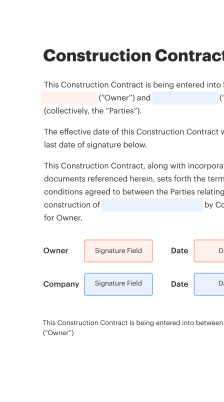
How to create and use your receipt book sample for communications media online

Creating a digital receipt book sample for communications media involves preparing a template, populating transaction details, capturing a signature, and storing the record with an audit trail.

  • Prepare template: Design fields that match campaign and accounting needs.
  • Populate details: Fill in vendor, deliverable, date, and amount.
  • Capture signature: Collect signer authentication and timestamp.
  • Archive record: Store the signed receipt with searchable metadata.
Collect signatures
24x
faster
Reduce costs by
$30
per document
Save up to
40h
per employee / month

Quick setup steps to use a receipt book sample for communications media

Follow these steps to prepare and start using a receipt book sample tailored to communications media transactions.

  • 01
    Define fields: List required fields like date, vendor, campaign code, and amount.
  • 02
    Choose template: Select a consistent layout for paper and digital use.
  • 03
    Assign roles: Decide who issues, signs, and archives receipts.
  • 04
    Enable storage: Set retention schedules and backup location.
be ready to get more

Why choose airSlate SignNow

  • Free 7-day trial. Choose the plan you need and try it risk-free.
  • Honest pricing for full-featured plans. airSlate SignNow offers subscription plans with no overages or hidden fees at renewal.
  • Enterprise-grade security. airSlate SignNow helps you comply with global security standards.
illustrations signature

Workflow settings recommended for receipt automation

Configure these workflow elements to automate receipt issuance, reminders, and archival while keeping control over approvals and retention.

Setting Name (Header) and Configuration Default Configuration for workflow setup and automation
Reminder Frequency for signer notifications 48 hours with two automatic reminders
Approval routing for finance sign-off Two-step approval before archival
Retention period for communications receipts Seven years archived with backups
Template assignment by campaign type Auto-assign template per campaign code
Audit trail retention and export Exportable logs stored 7 years

Supported platforms and device considerations for issuing receipts

Receipt creation and signing should work across desktop browsers, tablets, and mobile devices to match the distributed nature of communications operations.

  • Desktop browsers: Chrome, Edge, Safari supported
  • Mobile devices: iOS and Android native support
  • Offline access: Limited offline signing capability

Ensure device security—regular OS updates, secure browser settings, and access controls—so receipts signed on the go remain verifiable and protected within your document retention policies.

Core security and protection features to consider

Encryption at rest: AES-256 encryption for stored documents
TLS in transit: Transport Layer Security for uploads
Access control: Role-based permissions and SSO
Audit logging: Immutable activity records and timestamps
Data residency: Configurable regional storage options
Document redaction: Selective masking of sensitive fields

Real-world examples of receipt book samples for communications media

These two examples show how standardized receipts support different communications workflows and downstream processes.

Local Radio Ad Buy

A station account executive issues a receipt detailing airtime date, spot length, and campaign code

  • Includes insertion order reference for reconciliation
  • Confirms billing amount and payment terms for finance

Resulting in faster invoice matching and on-time vendor payment that preserves advertiser relationships.

Production Services Delivery

A production house provides a receipt listing delivered files, format specifications, and delivery timestamps

  • Notes additional post-production hours and approval sign-off
  • Records release of master files to broadcaster or digital distributor

Leading to clear transfer of ownership and reduced disputes over final deliverables.

Best practices for secure and accurate receipt book samples

Adopt consistent procedures and security controls to ensure receipts are reliable records that support financial, legal, and operational needs in communications workflows.

Standardize required receipt fields across teams
Define a minimal set of mandatory fields—such as deliverable description, date, amount, vendor name, and approval signature—so every receipt contains the information needed for accounting, auditing, and dispute resolution without gaps.
Use authenticated digital signatures for critical transactions
Capture signer identity through authentication methods like email validation, SMS codes, or SSO to ensure signatures are attributable and defensible in case of contractual or compliance review.
Retain receipts with clear retention policies
Implement retention schedules aligned with tax and corporate requirements, store receipts in encrypted archives, and automate deletions or archival to meet legal obligations while minimizing storage risk.
Train staff on issuing and approving receipts
Provide brief training and a single reference template so staff consistently complete required fields, understand approval authorities, and know how to escalate discrepancies to finance or legal.

FAQs About receipt book sample for communications media

Answers to common questions about using, signing, and managing receipt book samples for communications media, focused on practical steps and compliance considerations.

Digital signing vs. paper receipts: capability comparison

This comparison highlights common capabilities across representative eSignature providers for core receipt handling tasks relevant to communications media teams.

Feature or Criteria for Comparison signNow (Recommended) DocuSign Adobe Sign
Legally binding in the United States
Bulk Send / mass issuance
HIPAA compliance support Available Available Available
API availability and SDKs REST API REST API REST API
Offline signing capability Limited Limited Limited
be ready to get more

Get legally-binding signatures now!

Regulatory and operational risks of poor receipt handling

Audit failures: Incomplete records trigger penalties
Data breaches: Exposed PII or financial data
Contract disputes: Unclear proof of delivery
HIPAA exposure: Protected data mishandling risks
Tax noncompliance: Missing documentation liabilities
Operational delays: Payment hold-ups and exceptions

Feature and plan comparison across leading eSignature providers

Comparing plan characteristics and common enterprise features helps communications teams choose a provider that meets security, integration, and volume needs.

Subscription Plans Comparison signNow (Featured) DocuSign Adobe Sign HelloSign PandaDoc
Starting Price Low-cost tiers and per-user plans Tiered per-user pricing Bundled with Adobe plans Small-business plans available Tiered plans for sales teams
Typical Business Plan Business or Business Premium tiers Standard or Business Pro tiers Business and Enterprise tiers Professional plan options Business Growth and Enterprise
Free Trial Available Yes, trial period offered Yes, trial available Yes, trial available Yes, trial offered Yes, trial available
Bulk sending support Included in higher tiers Available in certain tiers Available in enterprise Available in paid plans Available in paid plans
API and developer tools Full REST API and SDKs Extensive APIs and SDKs APIs with Adobe integrations API available API available with webhooks
walmart logo
exonMobil logo
apple logo
comcast logo
facebook logo
FedEx logo
be ready to get more

Get legally-binding signatures now!