Retainer Invoice Template for Banking

Streamline your invoicing process with airSlate SignNow’s user-friendly and affordable solution, designed to enhance efficiency and ensure secure eSignatures.

Award-winning eSignature solution

What a retainer invoice template for banking is and why it matters

A retainer invoice template for banking is a standardized document used by banks, legal teams, and finance providers to bill clients for upfront retainer fees and to record ongoing retainer balances. It combines clear client identification, service descriptions, retainer amount, billing period, payment instructions, and signature fields to create a single record that supports reconciliation, client communications, and regulatory review. When implemented with an electronic signature and a secure workflow, the template reduces manual entry, enforces consistent terms, and provides an auditable trail that suits banking controls and internal accounting procedures.

Why use a dedicated retainer invoice template in banking workflows

A consistent retainer invoice template improves billing accuracy, accelerates collections, and creates a repeatable record for audits and client disputes while fitting into standard banking controls.

Why use a dedicated retainer invoice template in banking workflows

Common challenges when managing retainer invoices in banking

  • Inconsistent invoice fields lead to reconciliation errors between treasury and client accounts.
  • Manual signature collection slows client onboarding and delays fund availability.
  • Poor version control increases regulatory risk and complicates audit responses.
  • Lack of authentication can expose banks to repudiation and compliance gaps.

Representative user profiles for retainer invoice workflows

Relationship Manager

A Relationship Manager issues retainer invoices to new or existing corporate clients, reviews required documentation, and confirms payment terms. They rely on templates to standardize language, capture client signatures, and expedite fund setup while ensuring client contact information and authorized signatory details are accurate for reconciliation and regulatory inspections.

Corporate Counsel

Corporate Counsel reviews retainer language and approval fields, ensuring contractual terms meet internal and regulatory requirements. They validate retention amounts, dispute resolution language, and signature authentication methods, and they maintain version control for legal defensibility during audits or client disagreements.

Who typically uses retainer invoice templates for banking

Front-line and back-office teams use retainer invoice templates to standardize billing, approvals, and recordkeeping across client accounts.

  • Relationship managers who set up client retainer agreements and request initial payments.
  • Compliance and audit teams that review retained funds and documentation trails.
  • Finance and treasury staff responsible for applying payments and reconciling ledgers.

Coordinated use across these roles reduces disputes and ensures a single source of truth for retainer balances and client commitments.

Additional features to strengthen retainer invoice management

Consider these extended capabilities to improve control, integration, and client experience when issuing retainer invoices in banking.

Prepopulated Fields

Pull client data from CRM or core banking systems to reduce manual entry and ensure consistency across documents and records.


Conditional Logic

Show or hide fields based on account type, amount thresholds, or selected services to simplify the signer experience and enforce required disclosures.

Recurring Retainers

Automate creation and distribution for ongoing retainer arrangements with scheduled invoices and automatic balance updates.

Payment Link Integration

Embed secure payment links or ACH instruction fields to allow immediate electronic settlement and faster fund availability.

Template Versioning

Maintain version history and require re-approval when legal terms change to preserve auditability and enforce the latest contractual language.

Third-party Integrations

Connect with accounting, CRM, and document storage systems to automate posting, client updates, and archival processes.

be ready to get more

Choose a better solution

Core features to include in a banking retainer invoice template

Design templates with specific fields and controls to ensure clarity, enforce approvals, and support automated posting to bank systems.

Client Identification

Include standardized client identifiers (legal name, account number, tax ID) and verified authorized signer details to reduce ambiguity and support reconciliation with core banking ledgers and KYC records.

Clear Payment Terms

Specify retainer amount, replenishment triggers, acceptable payment methods, and settlement instructions to prevent disputes and align with treasury processing requirements and cutoff times.

Approval Workflow

Embed multi-step approvals for internal authorization, requiring designated approvers to sign or approve before funds are drawn or invoices are finalized, ensuring internal controls and segregation of duties.

Audit Metadata

Automatically capture signature timestamps, IP addresses, user IDs, and version history to create an immutable audit record for compliance and internal review.
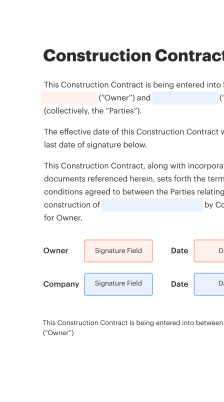
How the electronic retainer invoice process works

This sequence explains the typical flow from template creation to signed retainer and ledger posting in a banking environment.

  • Template Design: Build fields for client, amount, dates, and payment instructions.
  • Authentication Setup: Require appropriate signer identity verification.
  • Send for Signature: Distribute via secure web or mobile channels.
  • Finalize and Record: Capture signed copy and post to accounting systems.
Collect signatures
24x
faster
Reduce costs by
$30
per document
Save up to
40h
per employee / month

Quick step-by-step: set up a retainer invoice template

Follow these four practical steps to configure and deploy a secure retainer invoice template for banking clients.

  • 01
    Create Template: Define header, client fields, retainer amount, and terms.
  • 02
    Add Authentication: Select required signer verification methods and MFA options.
  • 03
    Configure Workflow: Set signing order, reminders, and approval gates.
  • 04
    Deploy and Test: Run a pilot with a test client to confirm receipts.

Audit trail checklist for retainer invoice transactions

Ensure each signed retainer includes essential audit metadata to support compliance reviews and dispute resolution.

01

Timestamp:

Capture date and time of events.
02

Signer Identity:

Record authenticated signer details.
03

IP and Device:

Log IP and device metadata.
04

Version History:

Store prior and current versions.
05

Access Logs:

Track user access and downloads.
06

Signature Certificates:

Attach cryptographic evidence when available.
be ready to get more

Why choose airSlate SignNow

  • Free 7-day trial. Choose the plan you need and try it risk-free.
  • Honest pricing for full-featured plans. airSlate SignNow offers subscription plans with no overages or hidden fees at renewal.
  • Enterprise-grade security. airSlate SignNow helps you comply with global security standards.
illustrations signature

Recommended workflow settings for retainer invoice processing

Use these workflow settings as a baseline configuration when automating retainer invoice distribution, authentication, and record retention in banking environments.

Setting Name Configuration
Primary Reminder Frequency Default Setting 48 hours
Signer Authentication Requirement and Policy MFA on high-value
Document Retention Period for Banking Files 7 years
Template Access Control for Banking Teams Role-based only
Automated Escalation and Approval Workflow 72-hour escalation

Platform requirements for using a retainer invoice template across devices

Ensure device and browser compatibility, strong authentication support, and secure storage before deploying templates to users.

  • Mobile OS Support: iOS 13+ and Android 9+
  • Browser Compatibility: Latest Chrome, Edge, Safari
  • Connectivity Requirements: TLS 1.2+ internet connection

Confirm internal IT policies allow these platforms, validate authentication methods on each device type, and provide users with simple guidance to avoid connectivity or signing problems during client interactions.

Security controls to protect retainer invoice documents

Encryption at rest: AES-256 strong encryption
Encryption in transit: TLS 1.2+ secure channels
Access controls: Role-based permissions
Authentication options: Multi-factor available
Document watermarking: Optional dynamic watermark
Audit logging: Immutable activity records

Practical examples of using a retainer invoice template in banking

Two concise case scenarios show how templates support onboarding, compliance, and reconciliation in banking operations.

Commercial Client Onboarding

A regional bank uses a standardized retainer invoice template to collect initial advisory retainers during corporate account opening

  • Template enforces required client identifiers and signature fields
  • This reduces onboarding time and centralizes records

Leading to faster account activation and clearer audit evidence.

Legal Hold and Fee Management

A bank legal team issues retainer invoices to cover anticipated litigation costs, using the template to capture scope and replenishment terms

  • The template includes automated notifications for low balances
  • This maintains continuous funding and avoids service interruptions

Resulting in consistent fee coverage and simplified monthly reconciliation.

Best practices for secure and accurate retainer invoices

Adopt consistent controls and document hygiene to reduce errors, support compliance, and improve client trust when issuing retainers.

Standardize required fields and terminology across templates
Use a single canonical template set that includes mandatory client identifiers, explicit retainer amounts, replenishment rules, and payment instructions to reduce ambiguity and ease reconciliation across treasury and accounting systems.
Use strong signer authentication and explicit consent records
Require appropriate identity verification such as multi-factor authentication or knowledge-based checks for high-value retainers and ensure signature intent is recorded to support legal validity under ESIGN and UETA.
Integrate templates with accounting and CRM systems
Automate posting of signed retainer invoices to the general ledger and update client records to remove manual data entry, reduce latency, and maintain synchronized records for audits and client inquiries.
Maintain clear retention and archival policies
Define retention periods, secure backups, and access controls for signed retainers consistent with internal policy and applicable regulations to ensure availability for audits and regulatory requests.

FAQs About retainer invoice template for banking

Common questions and answers addressing setup, signing, compliance, and troubleshooting for retainer invoice templates used in banking operations.

Feature and compliance comparison for retainer invoice eSignature solutions

Compare essential capabilities and compliance support across common eSignature vendors relevant to retainer invoice workflows in banking.

Comparison Criteria and Technical Feature Name signNow (Recommended) DocuSign Adobe Sign
Audit Trail Availability
HIPAA BAA Option Available Available Available
Bulk Send / Bulk Send Support Limited
Native CRM Integrations Salesforce native Salesforce native Salesforce native
be ready to get more

Get legally-binding signatures now!

Potential risks and compliance penalties to avoid

Failed recordkeeping: Regulatory fines
Unauthorized access: Data breach costs
Signature repudiation: Legal disputes
Incorrect billing: Client chargebacks
Retention lapses: Noncompliance penalties
Poor audit trail: Extended investigations

Pricing and plan comparisons for common eSignature providers

Overview of typical entry-level pricing, trial availability, API access, and compliance options for major eSignature platforms used in banking contexts.

Plan or Pricing Tier signNow (Recommended) DocuSign Adobe Sign PandaDoc Dropbox Sign
Starting Monthly Price From $8/user/month From $10/user/month From $29.99/month From $19/user/month From $15/user/month
Free Trial Duration 14-day trial 30-day trial 7-day trial 14-day trial 14-day trial
API Access Included Available on paid plans Available with developer account Available with paid plan Available on higher tiers Available with paid plans
Enterprise Discount Options Custom pricing Custom pricing Custom pricing Custom pricing Custom pricing
HIPAA / BAA Support BAA available BAA available BAA available BAA by request BAA available
walmart logo
exonMobil logo
apple logo
comcast logo
facebook logo
FedEx logo
be ready to get more

Get legally-binding signatures now!