Sickness Billing Format for Client for Businesses

Streamline your billing processes with airSlate SignNow’s easy-to-use eSigning solution. Save time and reduce costs while enhancing client satisfaction.

Award-winning eSignature solution

What a sickness billing format for client for businesses is and when to use it

A sickness billing format for client for businesses is a standardized invoice and documentation template used to charge clients or insurers for services related to employee or patient illness, occupational health visits, telehealth consultations, or sick-leave administration. The format typically includes client and patient identifiers, service dates, diagnosis or service codes, itemized charges, hours or units billed, required attachments such as medical notes, and signature fields. When used alongside a compliant eSignature platform, the format supports secure approvals, reduces disputes, and helps maintain an audit trail for billing and compliance reviews.

Why standardizing your sickness billing format matters

A clear, consistent billing format reduces rejected claims, speeds up client approvals, and improves record keeping for audits and compliance while helping teams track billable items reliably across cases and locations.

Why standardizing your sickness billing format matters

Common billing challenges businesses face

  • Inconsistent templates across teams cause missing fields and delayed reimbursements.
  • Incomplete medical documentation increases claim denials and client disputes.
  • Manual signature collection slows invoicing and lengthens payment cycles.
  • Weak audit trails complicate compliance reviews and regulatory response efforts.

Typical user roles for billing templates

Billing Specialist

A billing specialist prepares and submits sickness invoices, verifies service codes and attachments, follows up on denials, and reconciles payments. They rely on standardized templates to ensure every required field and supporting document is included to reduce rework and speed collections.

HR Manager

An HR manager reviews sick-leave claims, approves employer reimbursements, and ensures internal policies are followed. They use templates to capture necessary employee details, dates, approvals, and any medical documentation while maintaining confidentiality and auditability.

Organizations that rely on sickness billing formats

Clinics, occupational health providers, HR departments, managed care organizations, and staffing firms commonly adopt standardized sickness billing formats to streamline invoicing and documentation.

  • Small healthcare practices and community clinics that bill insurers or corporate clients.
  • Human resources teams managing employee sick-leave charges and reimbursements.
  • Third-party administrators and occupational health vendors supporting corporate programs.

Standard formats help these users improve accuracy, reduce claim cycles, and maintain legally defensible records when combined with compliant signature and storage practices.

Advanced features to support enterprise sickness billing

Larger organizations benefit from advanced controls, automation, and integrations that reduce manual work and support compliance at scale.

Bulk Send

Bulk Send enables dispatching standardized billing documents to many clients or payers at once, with individualized fields auto-populated to reduce repetitive tasks and speed large-scale invoicing operations.


Conditional Logic

Template conditional logic reveals or hides sections based on service type or payer rules, ensuring only relevant billing lines and attachment requirements appear for each case.

API Access

A robust API allows systems to generate, populate, send, and retrieve signed sickness invoices programmatically, integrating billing into broader operational workflows and EMR systems.

Advanced Auth

Multi-factor and knowledge-based authentication options help verify signer identity for high-value or sensitive invoices and support stricter compliance needs.

Enterprise SSO

Single sign-on simplifies user access and aligns with corporate identity providers, reducing password sprawl while centrally managing user lifecycles and policies.

Retention Controls

Custom retention and legal hold capabilities let administrators enforce company retention policies and preserve documents during litigation or audits.

be ready to get more

Choose a better solution

Core tools that improve sickness billing efficiency

Key capabilities to include in a platform for managing sickness billing formats focus on templates, secure signatures, integrations, and auditability.

Template Builder

A drag-and-drop template builder lets administrators create billing formats that enforce required fields, embed instructions for preparers, and include conditional sections for different service types to maintain consistency and reduce manual errors.

Electronic Signatures

Compliant eSignature capabilities provide tamper-evident signed documents, signer authentication options, and signature timestamps to support legal acceptance and reduce delays in client approvals for billed services.

Integrations

Prebuilt connectors to EHRs, HR platforms, CRMs, and cloud storage enable automatic population of client and patient data, push signed invoices into accounting systems, and reduce duplicate data entry across systems.

Audit Trails

Comprehensive activity logs capture document events, signer IPs, and timestamps to support internal reviews, billing audits, and regulatory inquiries with a clear record of each transaction step.
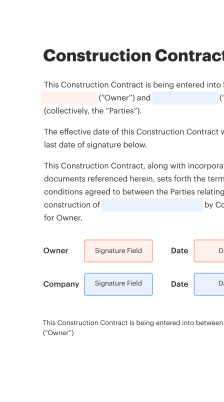
How the billing format works in a digital workflow

This outlines the typical electronic flow from template creation to finalized billing and storage.

  • Create template: Build and save the standardized format
  • Populate data: Enter client and service details
  • Request signature: Send for electronic approval
  • Archive record: Store signed invoice with audit trail
Collect signatures
24x
faster
Reduce costs by
$30
per document
Save up to
40h
per employee / month

Quick setup steps for a sickness billing format

Follow these concise steps to create a usable billing template and begin sending invoices securely.

  • 01
    Define fields: List client, patient, service, and billing fields
  • 02
    Set rules: Make required fields mandatory
  • 03
    Attach docs: Include places for medical notes and PDFs
  • 04
    Add signature: Place electronic signature and date fields

Detailed steps to complete a sickness billing invoice

Follow these operational steps when preparing, sending, and closing a sickness billing transaction.

01

Patient data:

Confirm name and identifiers
02

Service details:

Enter dates and procedure codes
03

Itemize charges:

List unit costs and totals
04

Attach records:

Upload medical notes and forms
05

Approval:

Send for client or employer signature
06

Archive:

Store signed invoice securely
be ready to get more

Why choose airSlate SignNow

  • Free 7-day trial. Choose the plan you need and try it risk-free.
  • Honest pricing for full-featured plans. airSlate SignNow offers subscription plans with no overages or hidden fees at renewal.
  • Enterprise-grade security. airSlate SignNow helps you comply with global security standards.
illustrations signature

Recommended workflow configuration for sickness billing

Example workflow settings to automate routing, reminders, and retention for sickness billing templates.

Feature Configuration
Reminder Frequency 48 hours
Signer Order Sequential
Auto-Archive Delay 30 days
Notification Channel Email
Retention Policy 7 years

Device and platform considerations for billing templates

Create and review billing templates on modern browsers and mobile apps to support signers and administrators across locations and devices.

  • Desktop browsers: Chrome, Edge, Safari
  • Mobile apps: iOS and Android supported
  • PDF support: Fillable and flattened PDFs

Ensure your chosen eSignature provider offers responsive signing experiences, consistent rendering of fields on small screens, and integration options for desktop and mobile workflows to avoid layout issues and signer confusion.

Security and protection controls to include

Encryption at rest: 256-bit AES encryption
Transport security: TLS 1.2+ for data in transit
Access controls: Role-based permissions
Audit logging: Immutable activity records
Authentication options: Multi-factor authentication
HIPAA safeguards: BAA support available

Real-world examples of sickness billing formats in use

Two practical case summaries show how standardized formats reduce errors and improve timeliness for different business contexts.

Healthcare clinic

A suburban urgent care adopted a structured sickness billing format including patient identifiers and ICD codes to standardize claims submission

  • The template enforced mandatory attachments for medical notes and test results
  • It reduced missing-field denials and manual follow-up by staff

Leading to faster reimbursements and fewer claim rejections, improving monthly cash flow and administrative efficiency across the clinic network.

Occupational health provider

A corporate occupational health vendor implemented a client-facing sickness invoice capturing visit dates, work restrictions, and employer reference numbers

  • The format included electronic signature fields for employer authorizations
  • It enabled consistent delivery of documentation to payroll and benefits administrators

Resulting in streamlined client approvals, clear audit trails for workplace incidents, and reduced time spent reconciling billable services.

Best practices for secure and accurate sickness billing

Adopting consistent controls and review steps reduces errors, protects patient data, and speeds payment cycles for sickness-related billing.

Use a single standardized template across teams
Maintain one master billing format to minimize variations; keep it centrally managed and version controlled so changes are reviewed, approved, and rolled out uniformly to billing staff and client-facing teams.
Require supporting documentation before submission
Make uploaded medical notes, diagnosis codes, and employer authorizations mandatory attachments in the template to avoid claim denials and to provide complete context for payers and clients.
Apply role-based access and separation of duties
Limit who can edit templates, who can approve invoices, and who can access signed records to reduce fraud risk and ensure only authorized personnel handle sensitive billing tasks.
Retain signed records according to policy and law
Establish retention schedules that reflect regulatory and contractual obligations, ensure secure backups, and automate archival so older records remain discoverable for audits and disputes.

FAQs and troubleshooting for sickness billing formats

Answers to common questions and solutions for issues that come up when using standardized sickness billing formats and electronic signatures.

Feature availability: signNow compared to other providers

A concise capability comparison showing common requirements for sickness billing formats across leading eSignature providers.

Capability signNow (Recommended) DocuSign Adobe Sign
U.S. ESIGN and UETA validity
HIPAA-ready options BAA available BAA available BAA available
Bulk sending support Limited
API for automation REST API REST API REST API
be ready to get more

Get legally-binding signatures now!

Typical retention and submission timelines to track

Common deadlines and retention expectations help teams avoid late submissions and comply with legal or contractual requirements.

Claim submission window:

Submit within payer-specific timeframe

Medical record retention period:

Keep records per state law

Invoice payment terms:

Follow agreed client terms

Audit response timeframe:

Respond within request window

Document purge schedule:

Purge per retention policy

Key risks if billing formats are not compliant

Regulatory fines: Monetary penalties
Claim denials: Lost revenue
Data breaches: Patient privacy exposure
Contract disputes: Legal costs
Reputational harm: Client trust loss
Operational delays: Longer payment cycles

Pricing and plan snapshot for common providers

High-level plan characteristics across providers; confirm current pricing and plan specifics directly with vendors for procurement decisions.

Providers signNow DocuSign Adobe Sign HelloSign PandaDoc
Free tier or trial Free trial available Free trial available Trial only Free tier available Free eSign plan
Entry plan focus SMB eSign features Individual and small business Enterprise and document cloud Small teams and individuals Sales and documents
API access availability Available on plans Available on paid plans Available with enterprise Available with paid plans Available on paid plans
Common integrations Google, Dropbox, Salesforce Salesforce, Microsoft Adobe apps, Microsoft Google, Dropbox CRM, Google Drive
Support level Email and chat Phone and email Enterprise SLAs Email support Email and chat
walmart logo
exonMobil logo
apple logo
comcast logo
facebook logo
FedEx logo
be ready to get more

Get legally-binding signatures now!