Software Design Proposal for Technology Industry

Empower your business to send and eSign documents effortlessly. Experience a cost-effective solution that enhances efficiency and collaboration.

Award-winning eSignature solution

What a software design proposal for the technology industry includes

A software design proposal for the technology industry is a formal document that outlines technical scope, architecture choices, development milestones, acceptance criteria, and contractual elements for prospective vendors or internal teams. It typically combines design diagrams, API specifications, data flow and security requirements, resource estimates, timelines, and cost assumptions. In procurement or client engagements it serves both as a technical brief and a commercial offer, enabling reviewers to compare approaches, evaluate risks, and confirm compliance with industry standards and legal requirements before work begins.

Why structured proposals matter for technology projects

A clear, consistent proposal reduces ambiguity between stakeholders, documents scope and assumptions, and creates an auditable record for approvals and contracting.

Why structured proposals matter for technology projects

Common challenges when preparing proposals

  • Unclear scope leading to scope creep and missed expectations during development.
  • Inconsistent formatting that slows reviewer comprehension and comparison between vendors.
  • Manual signature steps causing delays in approvals and extended procurement cycles.
  • Difficulty demonstrating compliance with data protection or sector-specific regulations.

Representative users and their priorities

Technical Lead

The Technical Lead prepares diagrams, API specifications, and nonfunctional requirements. They prioritize clarity of interfaces, scalability assumptions, and test criteria to reduce rework and support accurate time and cost estimates.

Procurement Manager

The Procurement Manager coordinates signatures, contract language, and vendor qualifications. They focus on auditability, compliance documentation, and clear acceptance milestones to shorten procurement cycles and limit legal risk.

Teams that commonly create and review design proposals

Cross-functional teams must coordinate to ensure proposals are technically accurate and contract-ready.

  • Engineering managers and architects who define technical approach and constraints.
  • Legal and procurement teams who validate contract language and compliance terms.
  • Product owners and stakeholders who approve scope, acceptance criteria, and budgets.

Combining technical, commercial, and legal review stages reduces rework and accelerates approvals.

Advanced features that speed proposal workflows

For enterprise projects, advanced controls, integrations, and automation reduce manual effort and improve governance across proposal lifecycles.

API access

Programmatic APIs enable automation of document generation, embedding signature flows into procurement systems, and integrating signing events with ticketing and billing workflows for seamless handoffs.


Bulk Send

Send a single proposal template to many recipients with individualized fields so large vendor or customer cohorts can receive tailored proposals without manual duplication.

SSO and SAML

Enterprise single sign-on integration enforces corporate identity policies, simplifies user provisioning, and reduces password-related support overhead when reviewers and signers access proposal tools.

Conditional fields

Show or hide form fields based on prior inputs so proposals adapt to selected options and reduce signer confusion while enforcing required data capture.

Compliance modules

Built-in compliance settings and the ability to execute a Business Associate Agreement support sector requirements such as HIPAA where applicable to proposal content and handling.

Custom branding

Customize email and document appearance to include corporate identity, ensuring a consistent and professional presentation during procurement and client reviews.

be ready to get more

Choose a better solution

Core capabilities to look for when using proposals

Select tools that combine document templates, secure signing, role-based workflows, and audit trails to support legal and technical review needs.

Templates

Reusable proposal templates let teams predefine sections for architecture, SLAs, pricing, and signature blocks so each new proposal starts from a compliant base with consistent structure and required fields.

Role routing

Assign roles and automatic routing to route proposals through technical reviewers, legal, procurement, and executive signatories in a controlled sequence without manual handoffs or lost emails.

Audit trails

Comprehensive logs record who viewed, edited, and signed each document, including timestamps and IP addresses, supporting dispute resolution and regulatory audits.

Field controls

Place required fields, checkboxes, and text areas to capture acceptance criteria, version numbers, and signatures so proposals are complete before signing and archival.
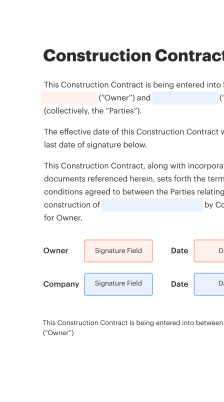
How online proposal creation and signing typically works

Digital preparation and execution compress review cycles by combining templates, approvals, and secure signatures into a repeatable flow.

  • Draft: Author the proposal in your document tool.
  • Upload: Import to the eSignature platform for fields.
  • Assign: Set signer roles and routing order.
  • Sign: Recipients complete signatures and receive copies.
Collect signatures
24x
faster
Reduce costs by
$30
per document
Save up to
40h
per employee / month

Step-by-step: preparing a proposal document

Follow a structured sequence to produce a complete, review-ready software design proposal that supports approvals and compliance checks.

  • 01
    Define scope: List features, boundaries, and assumptions.
  • 02
    Specify architecture: Describe components, interfaces, and data flows.
  • 03
    Detail timeline: Provide milestones, acceptance, and dependencies.
  • 04
    Attach terms: Include contract clauses and signature pages.

Checklist: preparing and sending a digital proposal

Use a checklist to ensure every technical and contractual element is included before routing for signatures.

01

Confirm scope:

Verify features and exclusions are clear.
02

Attach diagrams:

Include architecture and data flow visuals.
03

Add acceptance tests:

Define pass/fail criteria for deliverables.
04

Set signer roles:

Identify approvers and signing order.
05

Apply templates:

Use an approved document template.
06

Enable audit:

Turn on full event logging.
be ready to get more

Why choose airSlate SignNow

  • Free 7-day trial. Choose the plan you need and try it risk-free.
  • Honest pricing for full-featured plans. airSlate SignNow offers subscription plans with no overages or hidden fees at renewal.
  • Enterprise-grade security. airSlate SignNow helps you comply with global security standards.
illustrations signature

Recommended workflow configuration for proposal approvals

A standard workflow configuration balances review controls with automation to keep approvals timely and auditable.

Workflow Setting Name and Details Default configuration values for each workflow setting
Signature Reminder Frequency Setting Hours 48 hours
Automatic Expiration Period Setting Days 30 days
Approval Sequence Configuration Order Sequential with parallel reviewer step
Template Locking and Version Policy Lock after routing starts
Audit Trail Retention and Export Policy 7 years exportable logs

Platform and device compatibility for proposal creation and signing

Digital proposal workflows should support common desktop and mobile environments to ensure reviewers and signers can act from any device.

  • Desktop browsers: Chrome, Edge, Firefox supported
  • Mobile devices: iOS and Android apps available
  • Document formats: PDF, DOCX, and image types

Ensure the chosen platform aligns with your users' devices and policy requirements to avoid access friction during review and signing.

Standard security and protection controls to include

Encryption: AES-256 in transit and at rest
Access controls: Role-based permissions and MFA
Authentication: Email plus optional SSO
Document integrity: Tamper-evident signature records
Audit logging: Detailed event trail retained
Data residency: Configurable storage region options

Example use cases from the technology sector

Real-world scenarios show how a structured proposal and secure signing accelerate procurement and reduce risk across teams.

Enterprise SaaS Integration

A mid-size vendor submitted a detailed integration proposal including API contracts and data mappings

  • Reusable templates for interface specs
  • Clear SLAs and acceptance tests

Resulting in faster legal review and an eight-week reduction in onboarding time.

Custom Development Contract

An engineering firm prepared a modular design proposal with milestone-based payments

  • Built-in security requirements and test criteria
  • Included template signature pages and BAA options

Leading to transparent invoicing and quicker sign-off from the customer procurement team.

Best practices for secure and accurate proposal workflows

Adopt consistent methods and controls to reduce errors, strengthen compliance, and keep review cycles short while preserving an auditable record.

Create standardized proposal templates for technical and contractual sections
Develop and maintain approved templates that include architecture diagrams, data protection clauses, acceptance criteria, and signature blocks so every proposal meets internal and external compliance expectations before circulation.
Enforce reviewer roles and multi-stage approval gates
Configure workflows to require technical review, security sign-off, legal approval, and procurement acceptance in sequence so changes are captured early and sign-off occurs only after all disciplines validate the document.
Use secure authentication and tamper-evident signing
Require multi-factor authentication or enterprise SSO for signers where appropriate and preserve tamper-evident records to ensure signatures remain valid and defensible in audits or disputes.
Maintain version control and retention policies
Label drafts and signed copies clearly, retain final signed proposals per organizational retention schedules, and archive earlier drafts to preserve the negotiation history for compliance and continuity.

FAQs and troubleshooting for proposal signing

Answers to common questions and remedies for issues encountered during proposal preparation, submission, and signing.

Feature availability across major eSignature providers

Compare essential capabilities for proposal workflows and signing. signNow is listed first as a Recommended option to reflect availability and configuration suitability.

Feature and Availability Comparison Criteria signNow (Recommended) DocuSign Adobe Acrobat Sign
Bulk Send capability for mass proposals
Enterprise API access and developer tools
HIPAA Business Associate Agreement available
SSO and SAML single sign-on
be ready to get more

Get legally-binding signatures now!

Typical timeline elements in a proposal lifecycle

Define and track key dates to manage expectations and keep procurement and delivery aligned.

Proposal submission deadline:

Date when proposals must be submitted

Review and redline period:

Window for comments and revisions

Final approval milestone:

Target date for legal and executive sign-off

Contract execution date:

Effective date for the signed agreement

Project kickoff meeting:

Start date for engineering work

Risks and consequences of poor handling

Contract disputes: Increased litigation risk
Regulatory fines: Potential financial penalties
Project delays: Missed delivery milestones
Data breaches: Exposure of sensitive information
Rework costs: Higher implementation expense
Reputation damage: Client trust erosion

Pricing and feature summary for common vendor choices

High-level comparison of pricing tiers, integrations, and enterprise support options for five popular eSignature providers used in technology proposals.

Vendor Pricing and Feature Summary signNow (Recommended) cloud eSignature with API access and team templates DocuSign enterprise and individual plans with broad integrations Adobe Acrobat Sign integrated with Adobe Document Cloud and enterprise tools Dropbox Sign streamlined eSignatures focused on simplicity and integrations OneSpan Sign enterprise-grade security for regulated sectors
Entry-level plan characteristics and suitability Basic eSignature and templates for SMB use Personal and small-team plans with core signing Individual and small business plans within Adobe ecosystem Simple signing flows with Dropbox integration Enterprise-first plans with advanced security
API and developer support availability Full REST API, SDKs, and developer docs Extensive REST API and SDKs with examples Robust APIs tied to Adobe services REST API with developer guides Secure API with enterprise developer support
Bulk sending and template automation Bulk Send and team template features supported Bulk send via advanced plans Template-driven workflows available Batch sending supported in paid plans Bulk and high-security template workflows
Regulatory and compliance support offered Offers HIPAA BAA options and compliance controls HIPAA support via BAA and compliance resources HIPAA support with enterprise agreements BAA available for qualifying accounts Strong regulatory compliance focus and auditing
Enterprise support and SLAs Paid plans include dedicated support and SLAs for teams Enterprise support and onboarding services available Enterprise support through Adobe enterprise agreements Business-level support with integrations assistance Enterprise-grade SLAs and professional services
walmart logo
exonMobil logo
apple logo
comcast logo
facebook logo
FedEx logo
be ready to get more

Get legally-binding signatures now!