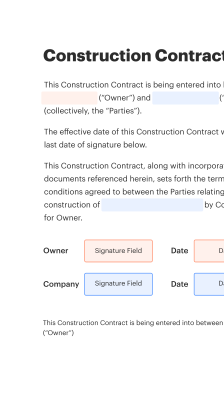
What is the real estate document sign
The real estate document sign refers to the process of electronically signing documents related to real estate transactions. This includes agreements, contracts, disclosures, and other essential paperwork that must be completed during property sales, leases, or purchases. By utilizing eSignature technology, users can efficiently manage these documents without the need for physical signatures, streamlining the entire transaction process.
How to use the real estate document sign
To use the real estate document sign, start by uploading the necessary documents to the airSlate SignNow platform. Users can fill out the required fields directly within the document, ensuring all information is accurate. Once completed, the document can be sent for signature to relevant parties, such as buyers, sellers, or agents. Recipients will receive an email notification prompting them to review and sign the document electronically, making the process straightforward and efficient.
Steps to complete the real estate document sign
Completing the real estate document sign involves several clear steps:
- Upload the real estate document to the airSlate SignNow platform.
- Fill in all necessary fields, including names, dates, and property details.
- Review the document for accuracy before sending it out.
- Send the document for signature to all required parties via email.
- Monitor the signing process through the dashboard to ensure all signatures are collected.
- Once signed, download or store the completed document securely.
Legal use of the real estate document sign
The legal use of the real estate document sign is supported by the Electronic Signatures in Global and National Commerce (ESIGN) Act and the Uniform Electronic Transactions Act (UETA). These regulations establish that electronic signatures hold the same legal weight as traditional handwritten signatures in the United States. This means that documents signed electronically are legally binding, provided all parties consent to use electronic methods for signing.
Key elements of the real estate document sign
Key elements of the real estate document sign include:
- Authentication: Ensuring that signers are verified through secure methods.
- Audit trails: Maintaining records of all actions taken on the document, including timestamps and IP addresses.
- Compliance: Adhering to federal and state laws regarding electronic signatures.
- Accessibility: Allowing users to sign documents from various devices, including desktops and mobile apps.
Security & Compliance Guidelines
When using the real estate document sign, it is crucial to follow security and compliance guidelines to protect sensitive information. Users should ensure that the platform employs encryption for data transmission and storage. Additionally, implementing multi-factor authentication can enhance security. Regular audits and compliance checks should be conducted to ensure adherence to legal standards and to safeguard against unauthorized access.