Audit trail
Enregistrement horodaté de chaque action liée au document, incluant refus, motif et identité du destinataire pour une traçabilité complète.




Inclure une option de refus protège la clarté contractuelle et améliore la traçabilité des interactions signataires.

Le responsable juridique utilise l'option de refus pour consigner formellement les objections contractuelles, analyser les motifs et déclencher des workflows de révision. Cette pratique aide à constituer un dossier probant en cas de litige et assure la conformité avec les exigences de conservation de preuves.
Les équipes RH s'appuient sur le refus pour gérer les cas où un candidat ou un employé refuse une clause particulière. Elles enregistrent le refus, engagent des discussions et adaptent les documents, tout en gardant une traçabilité complète des échanges.
Responsables juridiques, équipes RH et représentants commerciaux utilisent le refus pour gérer les exceptions avant signature.
Le refus documenté alimente l'audit interne et oriente les décisions de reprise ou d'archivage.
Enregistrement horodaté de chaque action liée au document, incluant refus, motif et identité du destinataire pour une traçabilité complète.
Envoi d'alertes aux parties concernées lorsqu'un refus survient, avec options de rappel et de routage vers les responsables.
Formulaires de motif standardisés pour capter des données exploitables sur les raisons du refus et faciliter l'analyse.
Points d'API pour pousser les événements de refus vers des systèmes tiers comme CRM, ERP ou outils de gestion documentaire.
Gestion des permissions basée sur rôles pour déterminer qui peut voir, modifier ou initier des actions après un refus.
Politiques de rétention et chiffrement pour conserver copies et logs selon exigences réglementaires et internes.
Synchronisation des versions et capture du refus directement depuis un document Google Docs, permettant la mise à jour collaborative et l'archivage automatique du document révisé.
Transmission des refus vers Salesforce pour créer des tâches, suivre les objections commerciales et déclencher des actions de relance ou d'escalade selon les règles CRM.
Archivage sécurisé des documents refusés dans Dropbox avec métadonnées du refus pour conservation et audit selon la politique de l'entreprise.
Appels API permettant d'enregistrer un refus, récupérer l'audit trail et déclencher des workflows backend personnalisés.

| Feature | Configuration |
|---|---|
| Notification on refusal | Immédiate par email |
| Reminder Frequency | 48 heures |
| Escalation rule | Après 3 refus non résolus |
| Archive policy | Conserver 7 ans |
La fonction de refus fonctionne sur navigateurs modernes et applications mobiles pour assurer l'uniformité de l'expérience.
Pour une performance optimale, maintenir les navigateurs et applications à jour et vérifier les paramètres réseau et de sécurité de l'organisation.
Un client B2B refuse une clause de SLA en recevant le contrat
Enclenche renégociation et validation contractuelle, résultant en un accord modifié et signé.
Un candidat refuse une clause de non-concurrence dans une offre d'embauche
Conduit à révision de l'offre, menant à une acceptation ultérieure ou archivage de la réponse.
| Criteria | signNow (Recommended) | Papier |
|---|---|---|
| Traçabilité horodatée | Oui | Non |
| Archivage sécurisé | Chiffré | Physique |
| Rapidité de résolution | Immédiate | Lente |
| Intégration workflow | API et webhooks | Manuel |
7 ans selon politiques internes
Snapshots quotidiens hors site
Disponible 90 jours après clôture
Procédure conforme après période
Conserver selon lois sectorielles
| Criteria | signNow (Recommended) | DocuSign | Adobe Sign | Dropbox Sign | PandaDoc |
|---|---|---|---|---|---|
| Plan de base mensuel | À partir de $8 | À partir de $10 | À partir de $9 | À partir de $15 | À partir de $19 |
| API disponible | Oui | Oui | Oui | Oui | Oui |
| Audit trail complet | Oui | Oui | Oui | Oui | Oui |
| Intégrations natives | Google, Salesforce, Dropbox | Large écosystème | Adobe Cloud | Dropbox, Google | CRM et stockage |
| Chiffrement des données | AES-256 | AES-256 | AES-256 | AES-256 | AES-256 |
Lors de l’envoi de documents pour signature, activez l’option permettant aux destinataires de refuser votre document au lieu de le signer et de le soumettre.
Cette fonctionnalité est particulièrement utile lors des négociations de contrats, car un destinataire peut préciser ses raisons de refus et demander des modifications avant de signer.
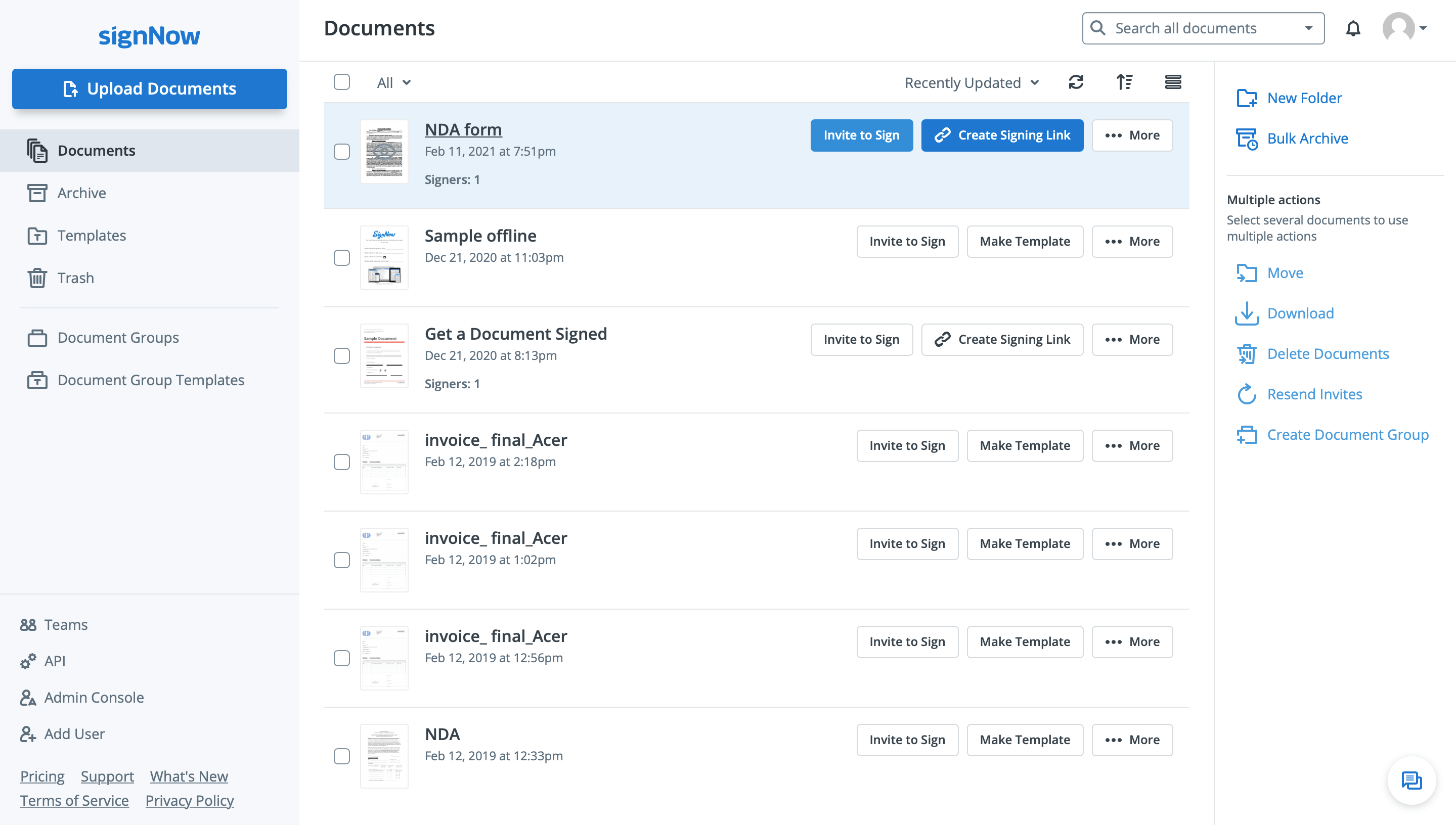
Cliquez sur le bouton Inviter à signer à côté du nom du document que vous souhaitez envoyer pour signature.
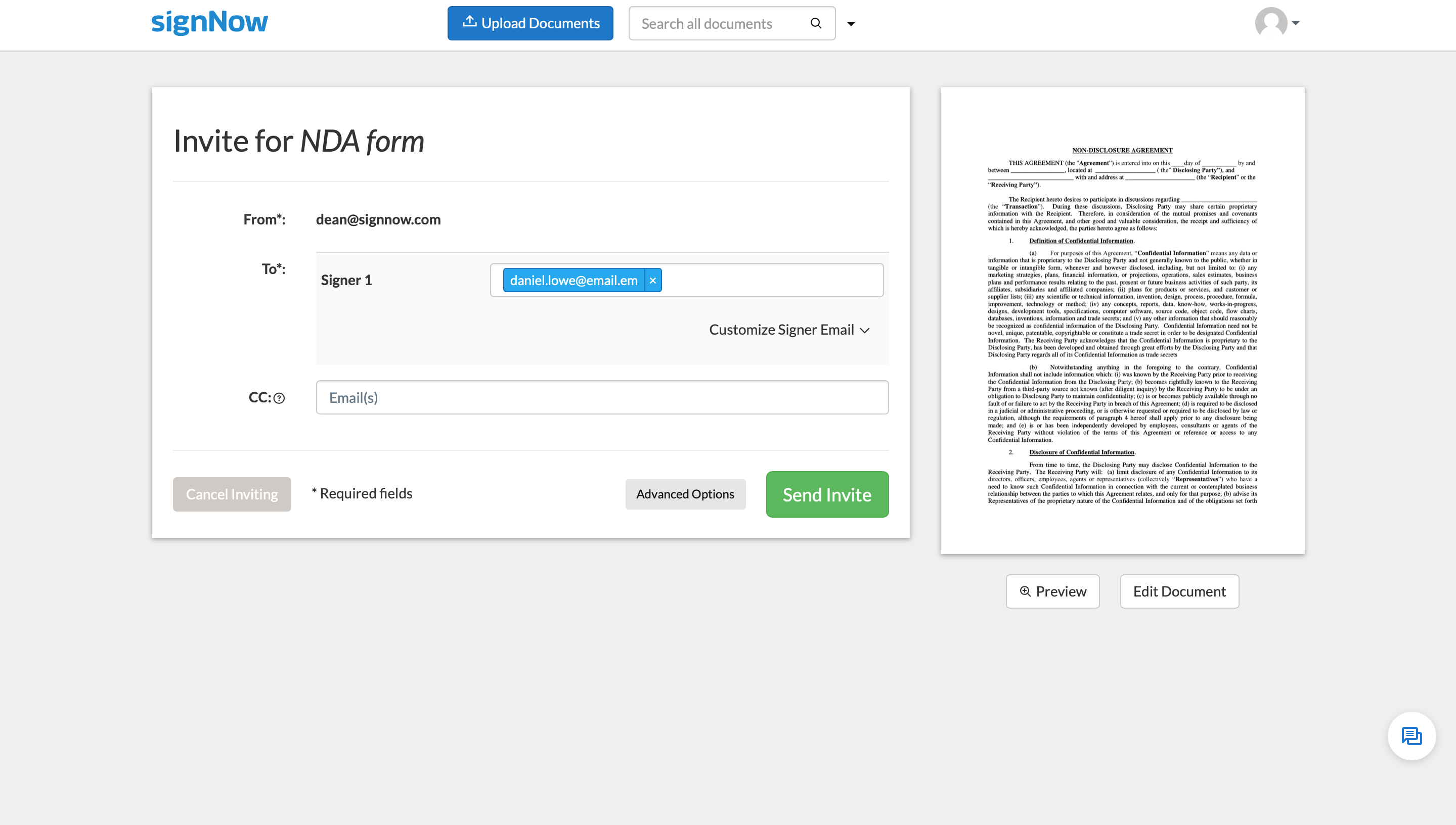
Après avoir ajouté l’adresse e-mail d’un destinataire, cliquez sur Options avancées en bas du formulaire de demande.
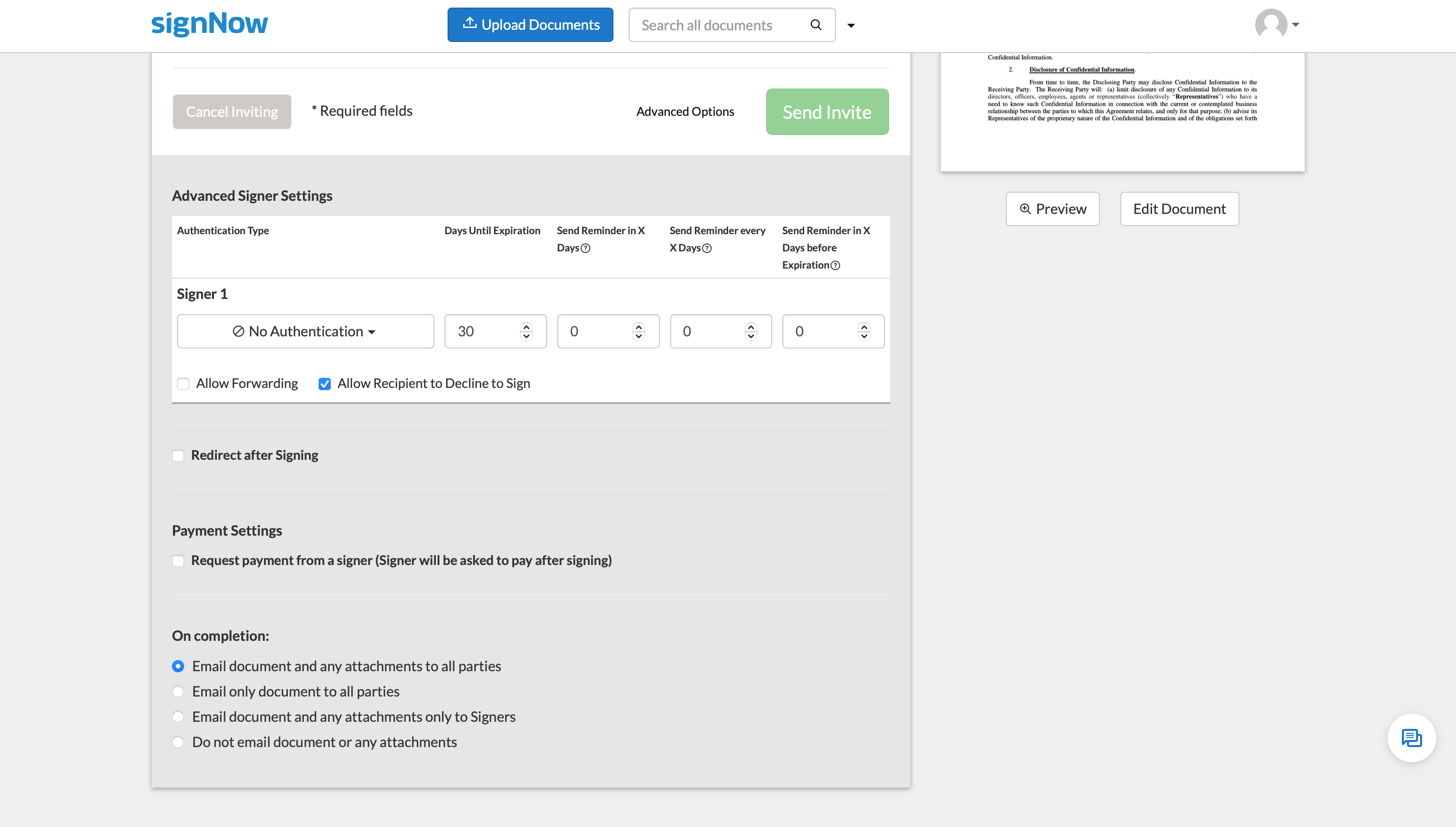
Dans le tableau Paramètres avancés du signataire, cochez la case Permettre au destinataire de refuser de signer. Ensuite, cliquez sur Envoyer l’invitation.
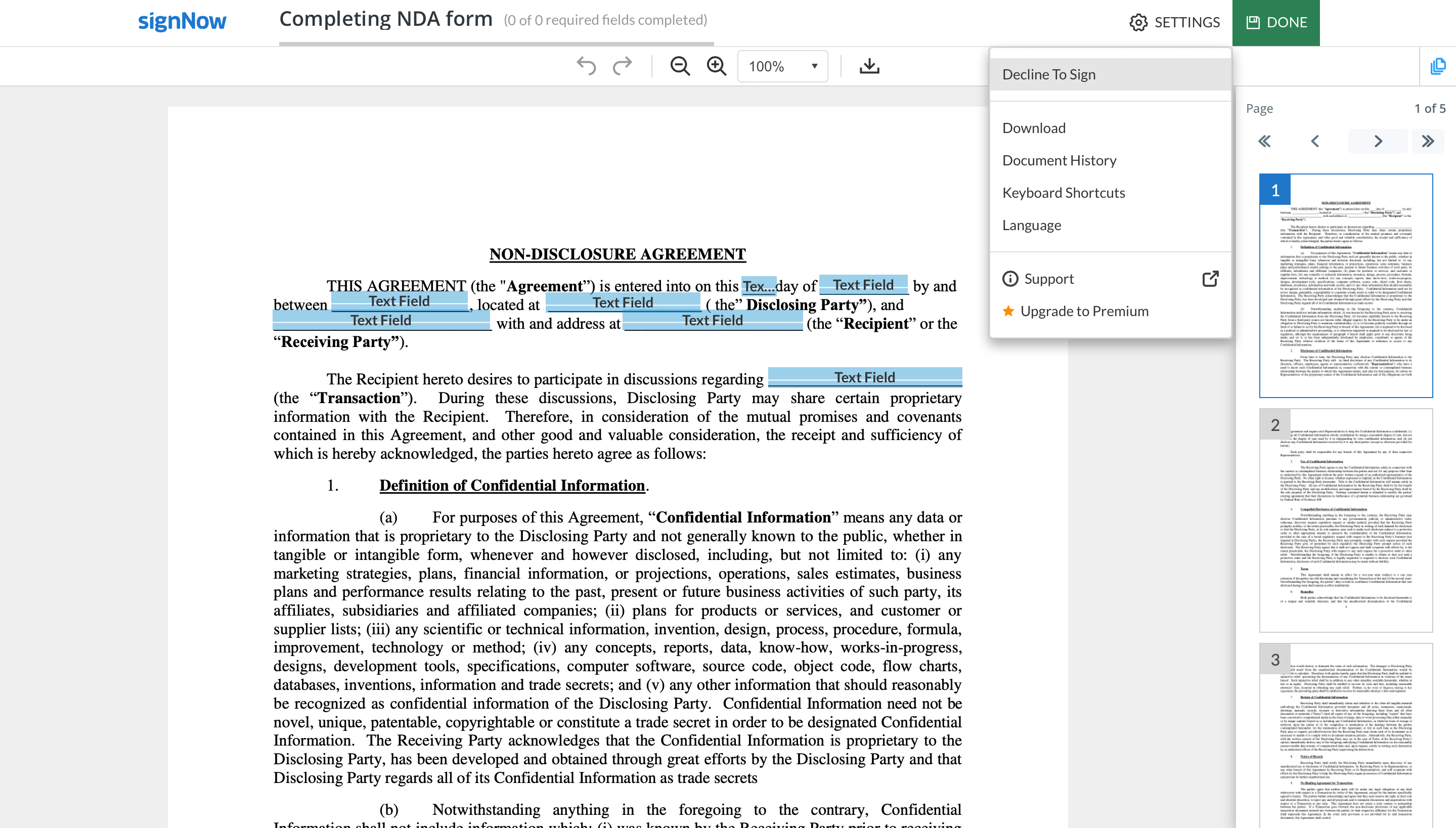
Une fois que votre destinataire ouvre le document dans l’éditeur airSlate SignNow, il peut cliquer sur Paramètres en haut à droite de l’écran, puis sélectionner Refuser de signer.
Le destinataire sera invité à fournir ses raisons de ne pas signer le document. Après avoir refusé votre invitation, le signataire peut toujours revenir en arrière et signer le document à tout moment avant son expiration.
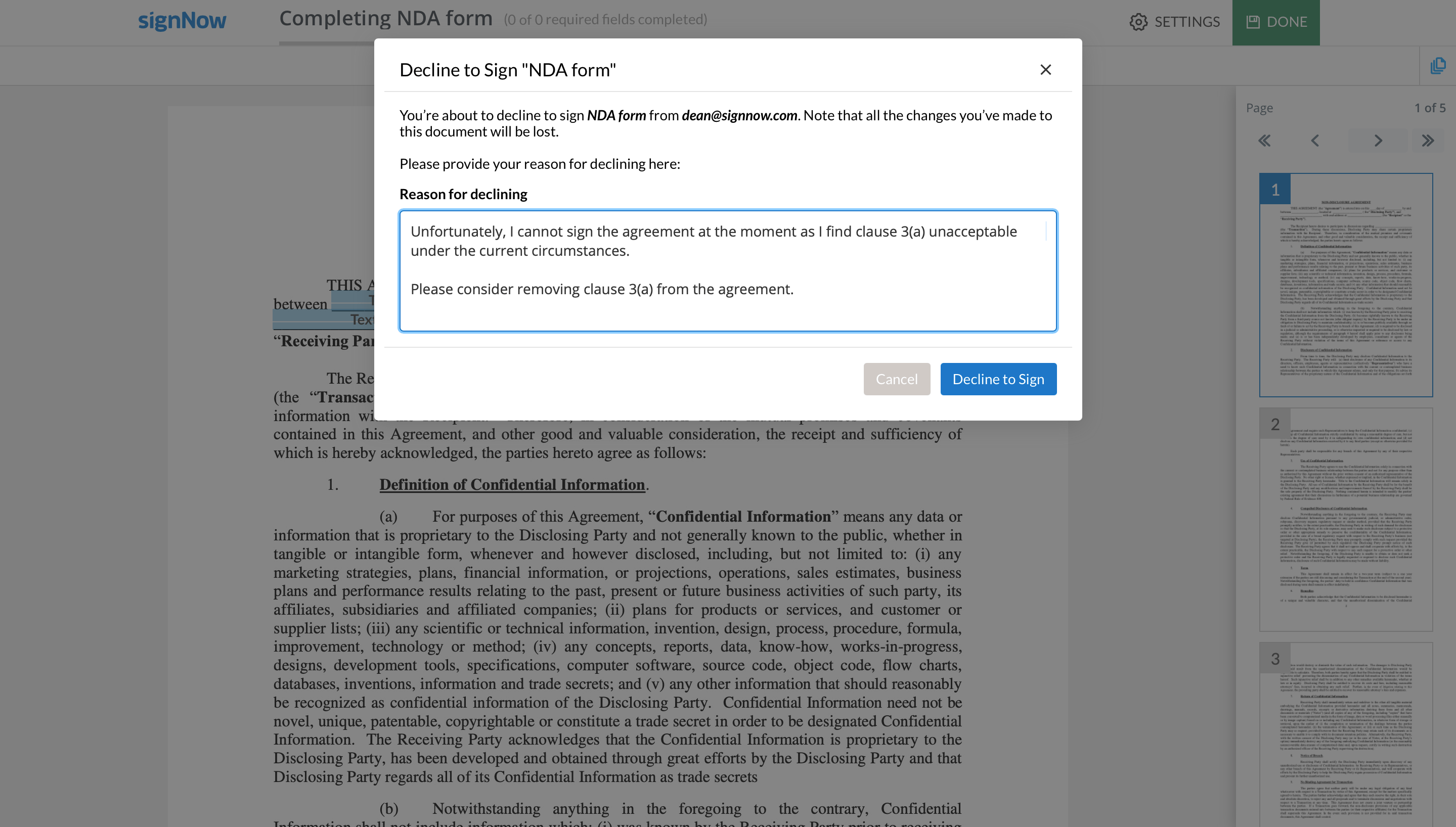
Si un signataire refuse votre invitation, vous recevrez une notification par e-mail instantanée avec ses raisons de refus. Vous pouvez alors apporter des modifications au document et le renvoyer.











