Rendre Un Champ De Formulaire Obligatoire Pour La Signature électronique

Rendez un champ de formulaire obligatoire avec airSlate SignNow. Exigez que des champs spécifiques soient remplis avant qu'un destinataire ne puisse soumettre votre document. Évitez les allers-retours avec des documents complétés.

Solution eSignature primée

What it means to make form field required

Making a form field required ensures a signer cannot complete or submit a document until a specific field is filled or an action is taken. In eSignature platforms such as signNow, required fields enforce data collection, reduce incomplete submissions, and prevent downstream processing delays. This setting applies to text fields, checkboxes, dates, and signature placeholders and can be combined with conditional logic and validation rules to ensure accuracy and completeness before a document is finalized.

Why require fields in signed documents

Requiring fields improves data quality, prevents incomplete agreements, and reduces manual follow-up. It supports consistent workflows and helps demonstrate that all necessary information was captured prior to finalizing a signature.

Why require fields in signed documents

Common challenges when enforcing required fields

  • Senders may overuse required flags, causing signer confusion and increased abandonment rates during completion.
  • Poorly labeled required fields lead to incorrect data entry or misinterpretation by signers and reviewers.
  • Conditional requirements that are misconfigured can block legitimate signers from completing forms or skip needed information.
  • Platform differences in mobile versus web behavior may allow bypassing or inconsistent enforcement across devices.

Typical users and administrators

Office Manager

An office manager configures templates and marks fields required for standard internal documents. They maintain templates, verify required-field labels match policy, and train staff to avoid over-constraining signers while ensuring completeness for routine workflows.

IT Administrator

An IT administrator integrates required-field settings with identity controls and API workflows. They enforce organization-wide configurations, manage role permissions for editing templates, and ensure required-field enforcement aligns with security and audit requirements.

Teams that commonly enforce required fields

Enforcement of required fields is useful across departments that collect structured data or approvals, including legal, HR, sales, and operations.

  • Human resources teams collecting employee onboarding, tax, and benefits information.
  • Sales operations ensuring contracts include key commercial terms before signature.
  • Legal and compliance staff guarding mandatory disclosures and regulatory fields.

Adopting required fields helps these teams reduce rework, maintain audit-ready records, and meet internal data policies without manual checks.

Core tools for managing required fields effectively

Use these features together to enforce required inputs while keeping signer experience straightforward and compliant.

Template library

Maintain a centralized set of templates with required fields predefined so teams consistently collect the same mandatory information across repeated processes and reduce setup time.

Conditional logic

Apply conditional rules to require fields only when specific answers or selections are present, preventing unnecessary mandatory entries and improving completion rates.

Field validation

Use validation rules like format masks and character limits alongside required flags to ensure collected data meets expected syntax and reduces follow-up corrections.

Role assignment

Assign required fields to particular signing roles so obligations appear only to relevant parties and avoid exposing fields to unintended users.

Preview & test

Preview signing sessions on desktop and mobile to confirm required fields behave correctly and that conditional logic enforces completion as intended.

API control

Use the signNow API to programmatically set or override required flags during automated document generation and preserve enforcement across integrations.

soyez prêt à en obtenir plus

Choisissez une meilleure solution

Integrations that support required-field workflows

Making fields required works reliably when signNow integrates with document sources and business systems, preserving required settings through the flow.

Google Workspace

Import documents from Google Drive while maintaining required-field settings, allowing users to prepare forms in Docs or Drive and send them for signature without reapplying field constraints.

CRM systems

Integration with CRM platforms pushes customer data into required fields, reducing manual entry and ensuring contracts or forms are prepopulated with the information required for signature.

Dropbox

Using Dropbox to source documents preserves template field placements and required flags, enabling seamless sending and centralized storage of fully executed records.

Zapier and automation

Connectors like Zapier trigger signNow flows with preconfigured required fields when backend events occur, streamlining form generation and enforcing mandatory inputs automatically.

How required fields behave across signing flows

Required fields block completion until populated and appear with a visible indicator for signers; behavior is consistent across browser and app flows.

  • Visual indicator: Required fields show an icon or color cue.
  • Blocking behavior: Form cannot be finalized until fields are filled.
  • Conditional logic: Requirements can depend on other field values.
  • Template reuse: Required settings persist in saved templates.
Collecter les signatures
24x
plus rapide
Réduire les coûts de
$30
par document
Économisez jusqu'à
40h
par employé / mois

Step-by-step: How to make a form field required

Follow these concise steps in signNow to mark fields as required before sending a document for signature.

  • 01
    Open document: Upload or select a template.
  • 02
    Add field: Place the text, date, checkbox, or signature field.
  • 03
    Set required: Enable the Required flag in field options.
  • 04
    Save template: Save and preview enforcement before sending.

How audit trails capture required-field events

Audit trails record actions related to required fields so administrators can verify when fields were set, changed, or satisfied during signing.

01

Field created:

Timestamped entry
02

Required flag set:

User and time recorded
03

Field completed:

Signer action logged
04

Field modified:

Change history tracked
05

Signature finalization:

Completion snapshot
06

Exportable log:

Downloadable record
soyez prêt à en obtenir plus

Pourquoi choisir airSlate SignNow

  • Essai gratuit de 7 jours. Choisissez le forfait dont vous avez besoin et essayez-le sans risque.
  • Tarification honnête pour des forfaits complets. airSlate SignNow propose des abonnements sans frais supplémentaires ni frais cachés lors du renouvellement.
  • Sécurité de niveau entreprise. airSlate SignNow vous aide à respecter les normes de sécurité mondiales.
illustrations signature

Recommended workflow settings for required fields

Configure these settings to balance enforcement with signer usability when making a form field required.

Setting Name Configuration
Reminder Frequency 48 hours
Expiry Timeout 30 days
Signer Role Assignment Per template
Conditional Logic Rules Enabled
Notification Settings Email and SMS

Supported platforms and device behavior

Required fields are enforced on modern browsers and on official mobile apps; compatibility ensures consistent signer experiences across devices.

  • Web browsers: Chrome, Edge, Safari supported
  • Mobile apps: iOS and Android native apps
  • Offline behavior: Limited enforcement offline

For best results verify browser and app versions are up to date; test required-field behavior across desktop, tablet, and mobile before broad rollout to minimize device-specific issues and signer confusion.

Security and protection related to required fields

Encryption at rest: AES-256 storage
Encryption in transit: TLS 1.2+
Access controls: Role-based permissions
Audit logs: Immutable entries
Two-factor auth: Optional MFA
Document watermarking: Visual protection

Practical examples of required-field usage

Two short case examples show how making form fields required reduces errors and accelerates approvals across common business processes.

New-hire Onboarding

A human resources team uses required fields for Social Security number, emergency contact, and tax elections to avoid incomplete profiles

  • Required fields include SSN, W-4 entries, and emergency contact details
  • This ensures accurate payroll setup and compliance data before employment begins

Resulting in faster onboarding, fewer follow-ups, and complete personnel records ready for audits

Sales Contract Approval

A sales operations group marks pricing, term length, and signature blocks as required on contracts to eliminate omissions

  • Required fields are pricing table entries, term duration, and authorized signature
  • That guarantees revenue terms are captured and approvals routed correctly before execution

Leading to fewer billing delays, consistent contract data, and reliable downstream invoice generation

Best practices when making a form field required

Follow these practices to enforce required fields effectively while minimizing signer friction and support requests.

Use required fields sparingly and intentionally
Limit required flags to truly mandatory data points. Overuse increases signer friction and abandonment; evaluate whether data can be optional or collected later to improve completion rates.
Label fields clearly with guidance
Provide concise field labels and helper text to explain expected formats or legal reasons for collection, reducing entry errors and clarifying signer responsibilities.
Combine validation with required flags
Apply format masks, character limits, and conditional logic together with required settings to ensure collected data is accurate and reduces the need for manual corrections.
Test across devices before deployment
Preview and test templates on desktop browsers and the mobile app to confirm required fields behave consistently and to identify any device-specific issues prior to production use.

FAQs about how to make form field required

Answers to common questions about required fields, troubleshooting behavior, and compatibility when using signNow to enforce mandatory inputs.

Quick comparison: required-field support across vendors

A concise feature comparison shows how platforms enforce required fields and where differences appear in APIs and mobile behavior.

Feature signNow (Recommended) DocuSign Adobe Sign
Ability to make a field required
Support for conditional required fields
Enforcement on mobile and tablet apps
API support for setting required fields REST API REST API REST API
soyez prêt à en obtenir plus

Obtenez des signatures juridiquement contraignantes dès maintenant !

Document retention and required-field recordkeeping

Retention policies should preserve final signed documents and their audit trails, including records of required-field enforcement and completion.

Retention minimum period:

Keep records for at least seven years when applicable

Audit log preservation:

Retain audit logs for statutory or policy timelines

Access review schedule:

Quarterly access and permission reviews

Backup frequency:

Daily backups recommended

Deletion and legal holds:

Implement holds for litigation or compliance

Regulatory and operational risks

Non-compliance fines: Potential monetary penalties
Invalid agreements: Legal enforceability issues
Data breaches: Exposure and liability
Operational delays: Processing interruptions
Reputational harm: Loss of trust
Recordkeeping gaps: Audit failures

Pricing and plan differences relevant to required fields

Plan features and pricing influence access to templates, API calls, and compliance options that affect required-field use in production.

Vendor signNow (Featured) DocuSign Adobe Sign PandaDoc OneSpan
Starting monthly price $8/user/month $10/user/month $9.99/user/month $19/user/month Contact sales
Free tier availability Free plan available No free plan No free plan Free trial available No free plan
HIPAA compliance option Available on select plans Available Available Available Available
API access included Included in paid plans Included in paid plans Included in paid plans Included in paid plans Enterprise only
Enterprise feature availability Enterprise options available Enterprise plans available Enterprise plans available Enterprise add-ons Enterprise security suite

Comment rendre un champ remplissable obligatoire avec airSlate SignNow

Recevoir un formulaire rempli pour découvrir que certaines cases ont été laissées vides peut entraîner des retards coûteux dans vos processus documentaires. Pour éviter cela, rendez vos champs obligatoires d'un simple clic.

Ajouter des champs remplissables à un document

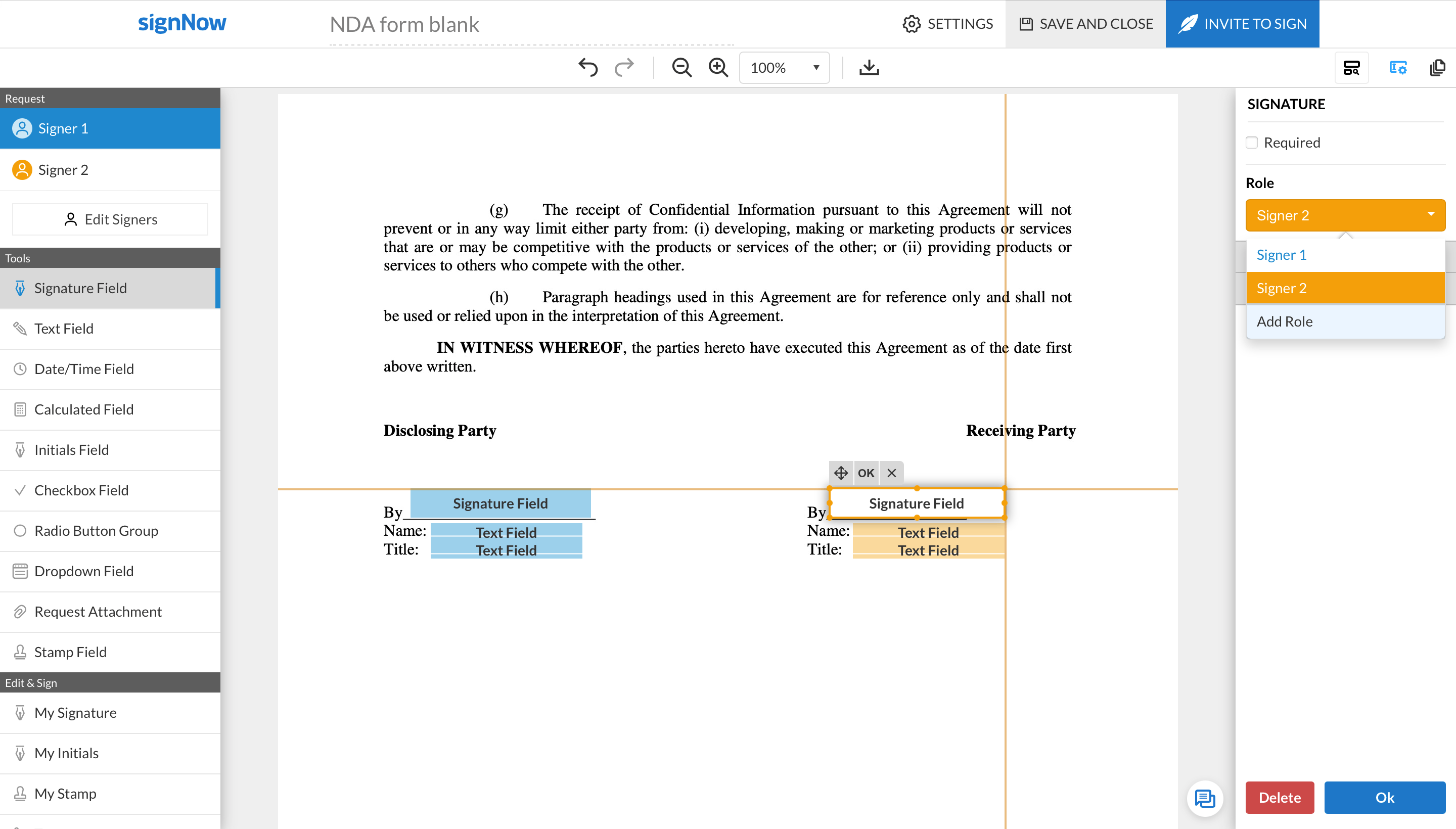
Ouvrez votre document dans l'éditeur et insérez des champs remplissables en utilisant la barre d'outils à gauche. Sélectionnez le type de champ que vous souhaitez ajouter, puis cliquez à l'endroit du document où vous souhaitez que le champ apparaisse. Ajustez le positionnement et la taille de vos champs et attribuez des rôles si nécessaire.

illustration-guide-remplissage

Rendre les champs obligatoires

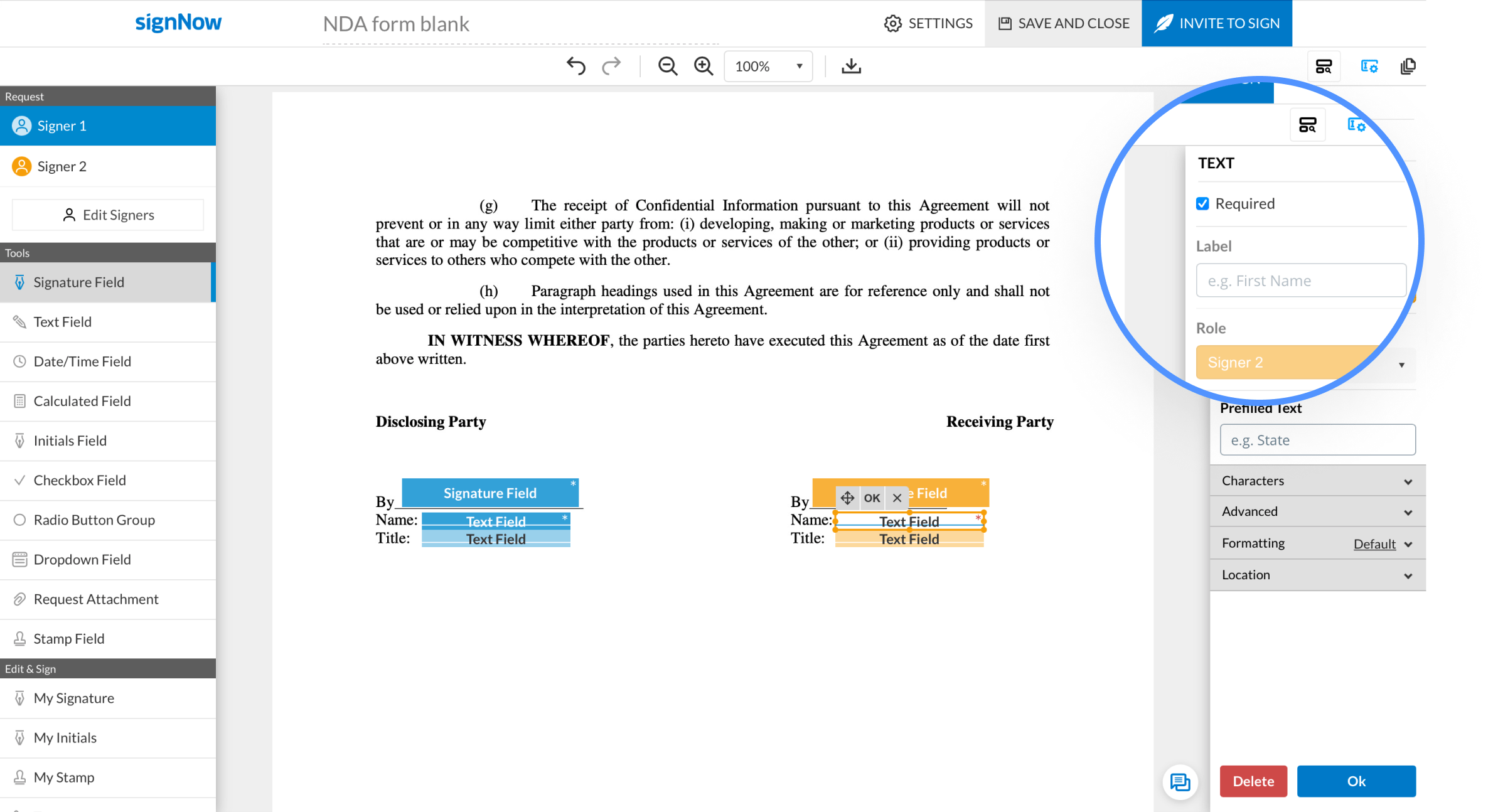
Sélectionnez n'importe quel champ de votre document que vous souhaitez rendre obligatoire et cochez la case Obligatoire en haut de la barre latérale droite. Répétez le même processus pour chaque champ à rendre obligatoire.

illustration-guide-remplissage

Vous remarquerez que les champs obligatoires sont mis en évidence par des couleurs plus foncées que les champs optionnels. Cela facilite la distinction entre les deux.

walmart logo
exonMobil logo
apple logo
comcast logo
facebook logo
FedEx logo
être prêt à en obtenir plus

Obtenez dès maintenant des signatures juridiquement contraignantes !