Establishing secure connection…Loading editor…Preparing document…

Lease Agreement

This template is fully customizable. Edit the text, fill out the fields, and send it for signature. Give it a try!
Lease Agreement

What a Lease Agreement Does and when it applies

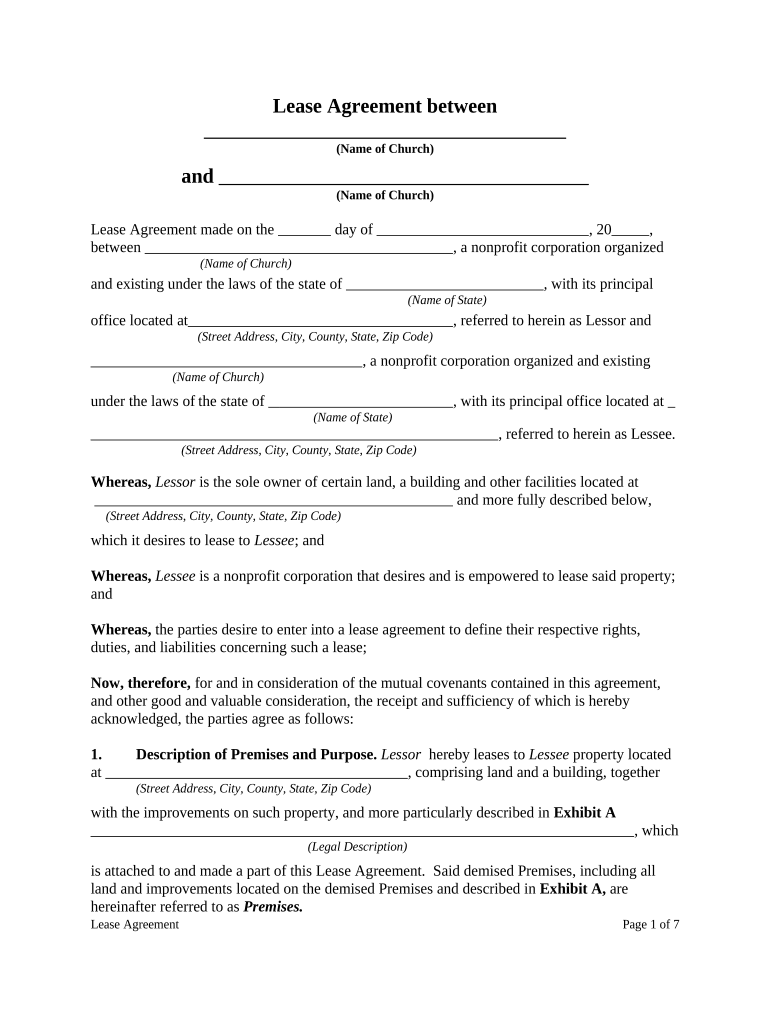
A Lease Agreement is a written contract that creates a landlord–tenant relationship by granting possession of real or personal property to a tenant for a defined term in exchange for rent and other obligations. Typical leases cover parties, property description, term length, rent amount and schedule, security deposit, permitted uses, maintenance responsibilities, defaults and remedies, and termination procedures. Leases may be short-term (month-to-month) or long-term (one year or more) and can include addenda for pets, parking, or utilities. Properly executed leases allocate risk, set expectations, and provide an enforceable basis for eviction, damages, or other remedies.

Why a clear Lease Agreement matters

A well-drafted Lease Agreement reduces disputes, preserves legal rights, and establishes responsibilities for both landlord and tenant in plain, enforceable terms.

Why a clear Lease Agreement matters

Who typically completes and signs a Lease Agreement

Landlords, property managers, tenants, and attorneys commonly prepare or review leases to ensure legal compliance and clarity.

  • Individual landlords and tenants: Small-scale owners or renters who need a clear, simple contract covering rent, term, and basic obligations.
  • Property managers and brokers: Handle standardized lease templates, move-in inspections, security deposits, and renewals for multiple units.
  • Legal and accounting advisors: Ensure lease language aligns with local landlord–tenant law, tax treatment, and corporate policies.

Common signing authorities

Landlord / Manager

Property owner, corporate representative, or authorized property manager who holds authority to lease the premises. For corporations or LLCs, the signer should be an officer or an agent with documented signing authority; list job title and legal entity to avoid enforceability issues.

Tenant / Authorized Signer

Individual tenant, authorized occupant, or corporate designee signing on behalf of a business. When a business signs as tenant, include the corporate name, signer title, and evidence of authority (board resolution or power of attorney) to bind the entity.

Essential Lease Agreement clauses to include

A professional lease should be comprehensive and structured so courts and mediators can enforce its terms without ambiguity.

Parties

Identify full legal names and business entities for landlord and tenant, including mailing addresses and contact details to ensure proper notice and attribution.
Premises

Describe the property precisely (unit number, street address, included parking/storage) and list any excluded areas or shared facilities.

Term and Renewal

State start and end dates, renewal terms or notice periods for nonrenewal, and conditions for holdover tenancy or early termination.

Rent and Fees

Specify rent amount, due date, acceptable payment methods, late fees, returned-check charges, and any prorated first/last month calculations.

Security Deposit

Detail deposit amount, permissible deductions, interest handling (if required by state law), and statutory timelines for return after tenancy ends.

Maintenance & Repairs

Allocate responsibility for routine maintenance, major repairs, utilities, and alterations; include notice and access provisions for inspections and repairs.

How to complete a Lease Agreement step by step

Follow this sequence to reduce errors and ensure the lease is complete and legally enforceable.

  • 01
    Prepare draft: Populate template fields and attach exhibits or disclosures.
  • 02
    Review legal issues: Check local rent, habitability, and disclosure laws before finalizing.
  • 03
    Obtain signatures: Collect signatures from all parties and authorized agents.
  • 04
    Distribute executed copy: Provide signed copies to all parties and store originals securely.

Where to file or send an executed Lease Agreement

Leases typically circulate among landlord, tenant, and property manager; some long-term leases should be recorded with the county recorder.

  • Landlord records: Keep original executed lease in landlord's records and send a copy to tenant.
  • Tenant copy: Provide tenant with a signed copy for their records and proof of tenancy.
  • County recording: Record only when the lease creates a recordable interest (terms vary by jurisdiction).
  • Legal counsel: Send lease to attorney for review when complex rights or obligations exist.

Digital signing and eSubmission considerations

Ensure consumer-facing disclosures are presented when required and retain a reproducible copy to satisfy ESIGN retention and proof requirements.

  • ESIGN / UETA: Meet intent, consent, attribution, and retention tests per 15 U.S.C. §7001 and UETA (1999).
  • Authentication: Choose email, SMS, or KBA where stronger identity proof is required.
  • Audit trail: Retain timestamps, IP addresses, and signer actions for enforceability.

How to set up an online lease-signing workflow

Configure these settings to create a reliable, auditable routing and signing flow for leases.

Field Configuration
Authentication method Email link, SMS code, or knowledge-based authentication
Signing order Sequential or parallel signer routing with role assignments
Template use Save reusable fields and clauses to reduce manual entry
Integrations Link to accounting, property management, or cloud storage systems

Downloading, saving, and attaching documents

After execution, store the lease and any supporting attachments in durable formats and locations that meet legal and business needs.

Download formats

Export executed lease as PDF/A, DOCX, or flattened PDF to preserve signatures and ensure long-term readability and compatibility.

Cloud storage

Save copies to secure document storage (encrypted at rest) and retain a controlled folder per property or tenant for auditability.

Attachments

Attach exhibits such as move-in checklists, posted-rules, or floor plans and reference them in the lease to make them enforceable.

Template reuse

Keep a clean template version separate from executed files to prevent accidental reuse of signed content.

Practical tips for accurate Lease Agreement completion

Small accuracy steps reduce disputes and enforcement costs; follow these guidelines consistently.

Standardize the template language
Use consistent clause wording across units and properties to simplify compliance checks and minimize interpretation disputes in court or mediation.
Verify names and authority
Confirm signers' legal names and, for businesses, obtain proof of signing authority such as a corporate resolution or signed power of attorney.
Record financial terms explicitly
Spell out rent, security deposit handling, prorations, late fees, and returned-check charges to avoid ambiguity and state-law challenges.
Keep an executed file for each lease
Store a single signed PDF and an index with dates, received payments, and communications to support dispute resolution and audits.

Key timelines and notice deadlines in a Lease Agreement

Important dates control rent, renewal, termination, and statutory obligations; document them clearly.

Effective date:

Date when tenancy and rent obligations begin.

Rent due dates:

Monthly due date and grace period if applicable.

Renewal notice:

Advance notice required to renew or terminate tenancy.

Security deposit return:

State-specific deadline for returning deposits after termination.

Recording window:

If recording is elected, follow county recorder timelines and fee schedules.

Common preparation mistakes to avoid

  • Using informal or handwritten terms that differ from the template, creating ambiguity and impeding enforcement in court.
  • Failing to confirm signatory authority for business tenants, which can render the agreement unenforceable against the entity.
  • Ommiting attachments or exhibits by reference, or including them without clear integration language into the lease body or signature block.
  • Neglecting consumer or statutory disclosures required by local landlord–tenant law, which can trigger statutory rescission rights or penalties.

Penalties and legal risks from incorrect leases

Unenforceable terms: Courts may strike illegal clauses.
Incorrect parties: Mismatched names can void obligations.
Missing signatures: Unsigned agreements may be unenforceable.
Late or wrong dates: Can affect notice periods.
Recording failures: May harm third-party priority.
Tax penalties: May implicate IRC §6501 or §6721 consequences.

Common eSignature vendor comparison for Lease Agreement workflows

Basic plan features and pricing vary by vendor; signNow is listed first for parity in comparison across typical criteria.

signNow DocuSign Adobe Sign PandaDoc HelloSign
Starting Price $8/user/mo $15/user/mo $14/user/mo $19/user/mo $15/user/mo
Free Trial 7-day trial Verify with vendor Verify with vendor Verify with vendor Verify with vendor
Bulk Send Yes Yes Yes Yes No
Audit Trail Yes Yes Yes Yes Yes
HIPAA Compliant Yes Yes Yes No No
Envelope Cap No envelope cap 100 envelopes/user/yr Varies by plan Varies by plan Varies by plan

Frequently asked questions about Lease Agreements

Answers to common practical and legal questions when preparing, signing, or storing a Lease Agreement.


Need help? Contact support

be ready to get more
Join over 28 million airSlate SignNow users