Establishing secure connection…Loading editor…Preparing document…

Debt Payment Agreement

This template is fully customizable. Edit the text, fill out the fields, and send it for signature. Give it a try!
Debt Payment Agreement

What a Debt Payment Agreement Is and when it applies

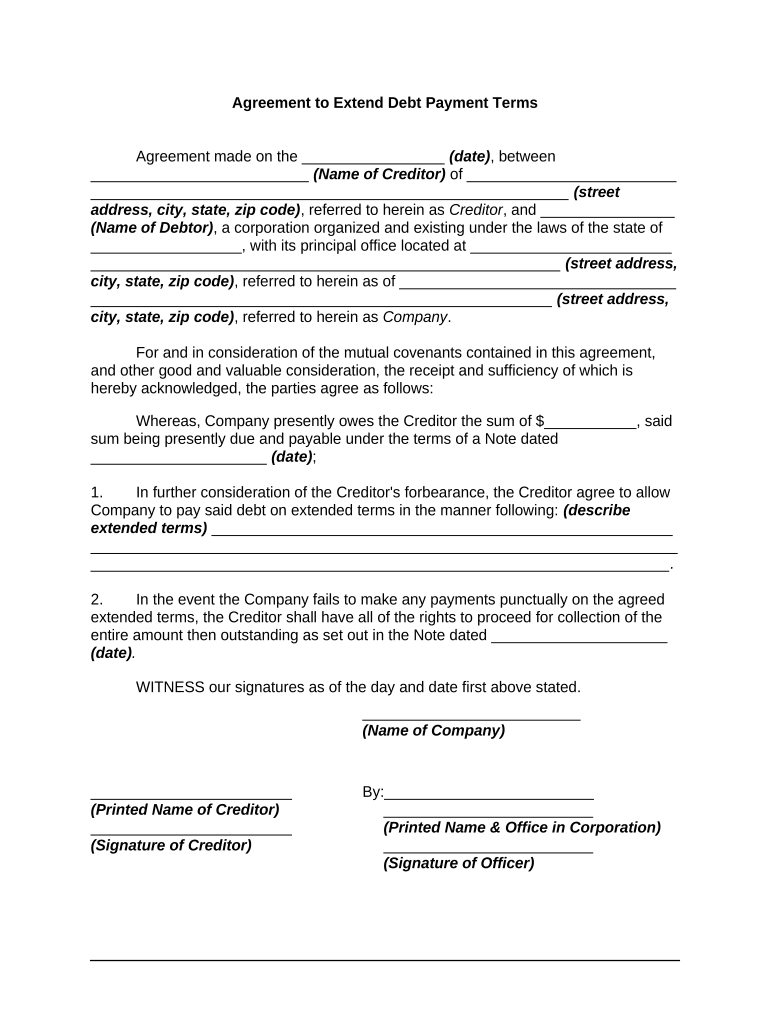
A Debt Payment Agreement is a written contract that records the terms under which a debtor repays an owed sum to a creditor. It identifies parties, the outstanding balance, payment schedule, interest or fees, events of default, and remedies such as acceleration or collection costs. The document creates enforceable obligations when executed by authorized signatories and properly retained. Parties often include guarantors, collateral descriptions, and governing law clauses to reduce ambiguity and to support collection or enforcement actions if payments are missed.

Why a clear Debt Payment Agreement matters

A precise written agreement reduces disputes, documents mutual expectations, and preserves rights to collect. It clarifies amounts, timelines, interest, cure periods, and remedies, which helps both creditors and debtors plan and avoid costly litigation or regulatory misunderstandings.

Why a clear Debt Payment Agreement matters

Who commonly prepares and signs this agreement

Use parties and role descriptions in the signature block to ensure the person signing has authority and to reduce later challenges to enforceability.

  • Lenders and creditors — Banks, commercial lenders, and private creditors use agreements to set repayment terms and preserve collection rights.
  • Borrowers and guarantors — Individuals or entities who accept payment terms and want clear timelines and default cure language.
  • Legal and collections teams — Counsel or in-house collections groups prepare enforceable language and track compliance with consumer protection rules.

Step-by-step: completing a Debt Payment Agreement

Follow these steps to create a clear, enforceable agreement and reduce later disputes.

  • 01
    Identify Parties: Record legal names and capacities.
  • 02
    State Amounts: List principal, interest, and fees clearly.
  • 03
    Set Schedule: Specify dates, amounts, and methods.
  • 04
    Sign and Date: Authorized signatories must execute the document.

How to set up an online workflow for this agreement

Configure a digital workflow to place fields, assign signers, and capture an audit trail before sending for signature.

Field Configuration
Signature Field Mandatory for each signer; include date fields.
Initials Field Use for page-by-page acknowledgement when needed.
Payment Field Optional: link to payment processor for immediate collections.
Authentication Choose email link, SMS code, or stronger methods.

Where to send and how to submit the finished agreement

Decide routing and final delivery before signing to ensure the correct party receives and retains the executed copy.

  • Primary Creditor: Send the executed original to the creditor's records custodian.
  • Debtor Copy: Deliver a signed copy to the debtor for their records.
  • Counsel: Provide counsel with a copy if legal review occurred.
  • Accounting: Share with accounting for payment tracking and reconciliation.

Digital signing and technical considerations

Use a provider that meets your compliance needs (ESIGN/UETA, HIPAA if PHI is involved) and retains a tamper-evident audit trail.

  • File Formats: PDF, DOCX supported
  • Authentication: Email, SMS, KBA options
  • Integrations: CRM and storage connectors

Essential clauses and features to include

A professional agreement includes clauses that reduce ambiguity, allocate risk, and provide clear enforcement paths.

Payment Terms

Specify amounts, due dates, frequency, late fees, rounding rules, and acceptable payment methods to avoid disputes about timing or sufficiency.
Interest Rate

State the APR or contractual interest method (simple/compound), applicable caps, and whether statutory usury rules may apply under governing law.

Default Remedies

Describe cure periods, acceleration rights, collection costs, and whether interest continues after default to allow immediate enforcement.

Security and Collateral

If secured, identify collateral precisely, reference security instruments, and indicate filing or recording obligations and priority.

Representations

Short warranties about authority, enforceability, and absence of conflicting obligations reduce later defenses to enforcement.

Governing Law

Name the state law that governs interpretation and dispute resolution, and specify forum selection or arbitration clauses if applicable.

Data and security items to capture

Encryption: AES-256 at rest
Transport Security: TLS 1.2/1.3
Audit Trail: Timestamps and IP address
Access Controls: Role-based permissions
HIPAA BAA: Required if PHI included
Retention: Tamper-evident storage

Common mistakes to avoid when preparing this agreement

  • Using informal or vague payment descriptions such as 'pay when possible' that leave dates and amounts ambiguous and invite disagreement.
  • Failing to identify signer authority or corporate capacity, which can give rise to defenses that the contract is unenforceable.
  • Omitting interest method or late fee calculations, leading to disputes about amounts owed after missed payments.
  • Not capturing a clear cure period or notice procedure for default, making it harder to enforce acceleration provisions.

Legal risks and consequences of an incorrect agreement

Enforceability Risk: Invalid signature or capacity
Usury Exposure: Excess rate may be void
Statute Limits: Claims time-barred
Tax Consequences: Forgiven debt may be taxable
Collection Costs: Unexpected expense exposure
Regulatory Fine: Consumer law violations

Key dates and typical deadlines to track

Monitor these dates to keep payment and enforcement timelines clear and to meet notice or filing requirements.

Effective Date:

Date obligations begin and determine other timing

First Payment Due:

Date when the initial payment must be received

Cure Period Deadline:

Final date to cure a missed payment before default

Acceleration Notice:

Date by which creditor may accelerate unpaid balance

Record Retention Start:

Begin retention count on execution date

Supporting documents and export options

Attach and export companion records to make enforcement straightforward and to preserve evidentiary chains.

Security Instrument

Attach mortgage, deed of trust, or UCC-1 financing statements that describe collateral and establish priority where applicable.

Payment Ledger

Include an amortization or payment ledger as an exhibit to show how each payment applies to interest and principal.

Notice Templates

Provide standard cure and default notice templates to streamline communications and preserve consistent timing.

Export Formats

Save executed copies in PDF/A for long-term retention; include the audit trail metadata alongside the file.

Practical examples of how parties use a Debt Payment Agreement

Two concise examples show common ways these agreements are applied in real situations.

Small Business Loan

A local supplier documents a $25,000 short-term loan to a retailer.

  • The schedule requires monthly principal and interest payments over 12 months.
  • The written agreement included default remedies and a personal guaranty to provide the creditor enforcement options without immediate litigation, improving collection predictability.

Consumer Settlement

A creditor and consumer agree to settle a disputed balance for an installment plan.

  • Payments are biweekly with a fixed amount.
  • The settlement agreement records consideration, a release of past claims, and a clause requiring the creditor to report fulfillment upon final payment, giving the consumer clear path to credit repair.

eSignature vendor comparison for executing the agreement

Compare typical plan-level features and compliance options relevant to signing and storing Debt Payment Agreements; signNow appears first for reference.

signNow DocuSign Adobe Sign PandaDoc HelloSign
Starting Price $8/user/mo $15/user/mo $14/user/mo $19/user/mo $15/user/mo
Free Trial 7-day free trial Varies Varies Varies Varies
Bulk Send Yes Yes Yes Yes No
Audit Trail Yes Yes Yes Yes Yes
HIPAA Compliant Yes Yes Yes No No

Frequently asked questions and practical answers

Answers to common legal and operational questions about Debt Payment Agreements, e-signing, notarization, and document changes.


Need help? Contact support

be ready to get more
Join over 28 million airSlate SignNow users